Home Blog Page 69

PBI-Colombia accompanies campesina Jani Silva in the Amazonian Putumayo region where oil companies operate

Montreal-based journalist Lital Khaikin writes that the Calgary-based oil company Gran Tierra operates in the Putumayo region of Colombia.

She further notes that campesina leader Jani Silva is accompanied by “volunteer, unarmed bodyguards with the Peace Brigades.”

Khaikin’s article also explains:

“Brent Patterson, director of Peace Brigades International—Canada, said the Comandos de la Frontera and the Carolina Ramírez Front, non-state armed groups active in the region, are suspected by human rights monitors [of threats against Silva, including a threat to blow up an armoured car provided to her by a state protection agency].”

“Javier Gárate, U.S. Policy Advisor at Global Witness explained that oil companies in Putumayo have long collaborated with armed groups who control territories, transport corridors, and charge extortion fees. ‘[Without that collaboration] oil companies wouldn’t be able to function in Putumayo,’ he said.”

“Silva herself has recently stated, ‘We can’t deny the evident complicity between armed groups and oil companies, through the company’s sub-contractors.'”

The full article can be read at Justice for Jani Silva: Colombian campesina activist Jani Silva threatened in Putumayo (by Lital Khaikin, rabble.ca, February 7, 2025).

Commission investigation of the RCMP C-IRG nears 2-year anniversary as PRGT pipeline decision nears

Photo: An RCMP cruiser blocks the Morice River Service Road on Wet’suwet’en territory in November 2021. Photo by Lee Wilson/APTN.

As the B.C .Supreme Court is set to rule on February 18 on an abuse of process allegation about RCMP C-IRG actions on Wet’suwet’en territory, the two year anniversary on March 9 of the CRCC systemic investigation into the C-IRG, and a decision on the Prince Rupert Gas Transmission pipeline coming as early as next month, we look at the status of the formal public complaints against the C-IRG.

The Ottawa-based Civilian Review and Complaints Commission for the RCMP (CRCC) has now posted on its website: Update on the status of C-IRG-related public complaints and reviews (as of September 30, 2024).

The C-IRG is the controversial Community-Industry Response Group of the Royal Canadian Mounted Police (RCMP).

The CRCC “Update” includes a table on the “Breakdown of Public Complaints Received” on complaints received in relation to RCMP C-IRG “enforcement operations” on Wet’suwet’en territory (the construction of the Coastal GasLink pipeline), the Fairy Creek watershed (Tea-Jones Group logging of old-growth forest), and Argenta-Johnson’s Landing (Cooper Creek Cedar logging of forested mountainside).

Focusing on public complaints about the C-IRG on Wet’suwet’en territory, the chart reveals that only 5 of the 302 complaints received were accepted.

Those 5 complaints appear to have contained 35 allegations relating to Neglect of Duty (12), Oppressive Conduct (7), Mishandling of Property (5), Improper Attitude (4) Improper Use of Force (3) and Irregularity in Procedure (3).

Then in the “Breakdown of Allegation Outcomes” chart, it says that 22 of the 35 allegations of complaints about C-IRG actions on Wet’suwet’en territory were investigated by the RCMP. The next chart provides the “breakdown” that 0 of the 22 allegations were supported following a formal investigation.

Another chart then shows that the CRCC received 1 request for a review of a complaint relating to Wet’suwet’en territory.

From another chart, it would appear that the CRCC made 15 recommendations related to that 1 complaint reviewed on Wet’suwet’en territory. It then notes that 8 of those recommendations were supported by the RCMP, 4 were partially supported, and 3 were not supported.

Then on another webpage that has a search function, the CRCC provides a summary of the reviewed public complaints.

There one can find a 6-page “Final Report” on “RCMP members enforcing the Coastal GasLink injunction against Indigenous land protests unreasonably prevented a journalist from entering a large exclusion zone, threatened him with arrest without grounds, and detained him without authority (24-207)”.

The complaint specifies: “The media editor complained that the RCMP’s use of access control points and exclusion zones interfered with the reporter’s access to the area, violating the reporter’s individual constitutional rights as well as the constitutionally protected freedom of the press. The editor also complained that the RCMP arbitrarily detained the reporter, interfering with his ability to cover the story.”

The ”RCMP’s investigation and decision” section of this final report by the CRCC (the Commission) notes: “The RCMP investigated the allegation and determined that the restrictions on journalists were within the authority of the police, and that they did not unreasonably interfere with the reporter’s ability to take photographs or report on the situation. The Commission was asked to review the matter.”

The ”Commission’s review” notes: “The reporter travelled to the first of the Wet’suwet’en protest camps. He walked five more kilometres to the next camp and stayed the night. He was awakened before 5 a.m. by news that the RCMP had moved in and made arrests at the first camp, including two journalists.”

Fast-forwarding to the conclusion, the final report says: “The RCMP Commissioner wrote that he could not fully support the Commission’s recommendation about a standardized national policy for accrediting media access, although he supported the intention behind the recommendation. The RCMP Commissioner did not believe that this would be feasible for unplanned events. He acknowledged that there was little clarity or consistency in how the reporter was treated in this case. He stated that, as a result, he would direct RCMP policy centres to study the creation a standard method of accrediting journalists that would be useful for both planned and unplanned events.”

“The Commission welcomed the RCMP Commissioner’s response.”

CRCC systemic investigation

The CRCC notes: “The CRCC’s systemic investigation [of the RCMP C-IRG] does not replace the public complaint and review processes. These processes are separate, though findings and outcomes from one process may inform the other.”

That systemic investigation was announced 23 months ago on March 9, 2023. On June 7, 2023, about four months into the investigation, the CRCC told Peace Brigades International-Canada: “The CRCC strives to complete its systemic investigations within 12-18 months; however, the timely provision of requested information and access to RCMP personnel will largely determine when the CRCC’s report will be available.”

Photo: On March 22, 2023, PBI-Canada hand-delivered to the CRCC office in Ottawa this letter calling for the suspension of the C-IRG during the CRCC systemic investigation.

As the 24-month mark now approaches we continue to wait for the conclusion of that investigation or at least an “investigation update” (the last update provided by the CRCC was 14 months ago on November 23, 2023).

Abuse of process court decision, February 18

In the meantime, an abuse of process allegation was launched by three Indigenous land defenders arrested by the C-IRG on Wet’suwet’en territory on November 19, 2021. Court hearings took place in Smithers, British Columbia in January, September, November and December 2024. Justice Michael Tammen of the B.C .Supreme Court will read his decision on this application this coming February 18.

Image by Yintah Access.

 PRGT pipeline decision could come in March

Pipeline Technology Journal reports that a BC government decision on the Prince Rupert Gas Transmission pipeline “is expected by March 2025”. That pipeline would cross Gitxsan, Gitanyow and Nisg̱a’a territories.

On August 22, 2024, Gitanyow land defenders established a blockade on a forest service road to stop trucks working on this project.

Gitanyow Hereditary Chief Gamlakyeltxw has commented: “We saw years and years of fighting [on Wet’suwet’en territory], the [RCMP C-IRG] police violence, and even the company [TC Energy/Coastal GasLink] with harassment and surveillance of land defenders. We don’t want none of that to happen here.”

On January 21 of this year, Gitxsan Hereditary Chiefs met with BC government cabinet ministers to ask for “an immediate independent review” of the “militarized RCMP unit” that “terrorizes land defenders” and to say that they “want the militarized RCMP CRU [the rebranded name for the C-IRG] to be dissolved”.

We continue to follow this situation.

Still from RCMP video of arrest of Sleydo’ on Wet’suwet’en territory, November 19, 2021.

Photo: PBI-Canada was on Wet’suwet’en territory on Saturday November 20, 2021, the day after eleven people (land defenders and journalists) were arrested at Coyote Camp at the 63-kilometre mark on the Morice River Service Road).

Zeferino Ladrillero Human Rights Center calls for the release of Indigenous Amuzga rights defender Kenia Hérnandez

The Zeferino Ladrillero Human Rights Center (CDHZL) “accompanies processes of struggle of different Indigenous communities, peoples and collectives that seek a dignified life through the exercise of the demand of their human rights.” Zeferino Ladrillero is based in the municipality of Atizapán, in the state of Mexico, Mexico.

As one of fifteen member groups within the Civil Society Organizations’ Space for the Protection of Human Rights Defenders and Journalists (Espacio OSC) it is accompanied by Peace Brigades International-Mexico.

Fabiola Vite is a lawyer and the national coordinator of Zeferino Ladrillero.

Kenia Inés Hernández Montalván

Fabiola Vite represents Kenia Inés Hernández Montalván.

The World Organization Against Torture (OMCT) explains: “Kenia Hérnandez is a speaker of the Amuzga language, she graduated with a degree in law to defend the human rights of her community, dedicating herself to the defense of the territory in Guerrero, defending women victims of gender violence, and supporting the cause of political prisoners, for which she is co-founder of the Movement for the Freedom of Political Prisoners of Guerrero (MOLPPEG). In addition, she founded the Zapata Vive Libertarian Collective, which focused on carrying out work with young people from the Guerrero coast.”

Hérnandez is also a beneficiary of the Federal Mechanism for the Protection of Human Rights Defenders and Journalists.

Hérnandez was arrested on October 18, 2020, for the alleged crime of “robbery with violence” at a demonstration at the La Hortaliza highway tollbooth. She has been held in at least three different prisons over the past 4+ years. She is now being held in the Neza Sur Prison in Nezahualcóyotl, in the state of Mexico.

Front Line Defenders has documented that Hernández was sentenced on February 19, 2022, to ten years and six months in prison. It further notes that Hernández was then sentenced on March 10, 2022, to 11 years and 3 months.

On January 27, 2025, it was reported that Hernández could be released from prison after a possible “reparation agreement” with the Federal Roads and Bridges Police (CAPUFE, an entity of the Ministry of Communications and Transportation).

The role of Aléatica

Cambio 22 has reported: “Hernández faces two convictions promoted by the OHL company, which later changed its name to Aléatica.”

Aleatica SAB de CV “is a Mexico-based company engaged in the management of transportation and airport infrastructure. The Company’s concessions portfolio comprises a number of toll roads, which interconnect the urban zones of the Federal District and the states of Mexico and Puebla. Furthermore, it is also involved in the integral management of Toluca International Airport. Aleatica SAB de CV operates in Mexico through a number of subsidiaries.”

Fabiola Vite from Zeferino Ladrillero says: “It is clear to us that, as long as there is no will from Aleatica and subsequently from CAPUFE and the Attorney General’s Office not to stop, Kenia will continue to have up to 50 cases against her.”

And José Antonio Lara Duque from Zeferino Ladrillero has denounced that an investigation of Hernández was carried out by Concesionaria Mexiquense (Conmex), operator of the Circuito Exterior Mexiquense (concessioned to OHL, now Aleatica).

Photo: Jose Antonio Lara.

US, Canadian funds invested in IFM

Empower has reported: “Aleatica, S.A.B. de C.V. (BMV:ALEATIC) operates in Mexico through various subsidiaries generally associated with a concession awarded to each firm. It currently has interests in seven federal and state highways, and receives investment from U.S. and Mexican pension funds.”

Empower highlights: “IFM GIF, Aleatica’s parent company and owner of its controlling shareholder, [the Madrid-based] Magenta Infraestructura, S.L., receives investment from future U.S. retirees.”

This IFM Investors media release notes: “IFM GIF’s investors include a diverse range of pension funds and institutional investors across Australia, the United States, Canada, Asia, the United Kingdom and Europe.”

In this November 26, 2024 report, the University of Windsor (located in southern Ontario, Canada) disclosed that it had CAD $59.9 million invested with IFM. It also appears that IFM subsidiary Atlas Arteria and the Ontario Teachers’ Pension Plan (OTPP) co-own the Chicago Skyway Toll Road (“a 7.8-mile-long toll road that connects the Indiana Toll Road to the Dan Ryan Expressway on Chicago’s South Side”).

Criticism of the Sheinbaum government

As a member of Espacio OSC, Zeferino Ladrillero has also signed a letter that, as La Prensa reports, says that: “A little more than 100 days into the new government [of Mexican president Claudia Sheinbaum], there is a lack of a clear strategy to address the risks faced by human rights defenders and journalists, ranging from homicides, criminalization, smear campaigns, forced displacement, judicial harassment, [and] digital violence…”

The SEMARNAT proposal for the protection of environmental defenders

Zeferino Ladrillero has also spoken about “the murders of environmental human rights defenders Homero Gómez González and Raúl Hernández Romero [in January 2020], who were working for the protection of the Monarch butterfly” and commented that “the recent measure proposed by SEMARNAT [the Ministry of Environment and Natural Resources], to create a special body for the protection of environmental defenders, with the participation of the National Guard, is a reactive and insufficient measure.”

Photo: The deaths of Hernández and Gómez González have been linked to illegal logging and the illegal clearcutting associated with avocado orchards. Canada is the second largest market for avocados exported from Mexico.

The Espacio OSC collective statement issued at that time highlighted: “This proposed measure does not delve into the structural problems generated by policies in relation to megaprojects and that result in serious human rights violations. On the contrary, it is a reactive and limited measure. In addition, it is not focused on generating better conditions for the defense of human rights, but rather consolidates the militarization of territories, thus privileging a development model that prioritizes the overexploitation of natural and cultural heritage, putting these elements above the human rights of people, such as the right to land and territory. water and a healthy environment, among others.”

Militarization

In September 2022, Sociedad Noticias reported that José Antonio Lara, a member and co-founder of Zeferino Ladrillero, recalled that human rights mechanisms around the world clearly state that “the armed forces should only intervene in public security temporarily, in exceptional circumstances, as a last resort, and always under the effective supervision of independent civilian bodies.”

Photo: Since the “War on Drugs” was declared in 2006, Canada has exported $28.8 million of military goods to Mexico ($16.9 million in just the last 5 years). This includes the Newmarket, Ontario-based Terradyne-manufactured armoured vehicles used by the Saltillo Operational Reaction Group (GROMS).

To follow Zeferino Ladrillero

For more on the work of the Zeferino Ladrillero Human Rights Center, you can visit their website and them on Facebook, X and Instagram. We draw particular attention to their work with The Popular Front of the Mountain, the “Make My Freedom Count” and “Together for Freedom” collectives against unjust imprisonment, and the Otomi Indigenous People of San Francisco Magú (who are situated in the municipality of Nicolás Romero) and their struggle to defend their forests against real estate interests.

Ayuuk environmental defender Arnoldo Nicolás Romero, an opponent of the Interoceanic megaproject, killed in Mexico

Photo: Arnoldo Nicolás Romero.

Mongabay reports: “Ayuuk leader Arnoldo Nicolás Romero, a municipal commissioner of the Buena Vista ejido in San Juan Guichicovi, a town and municipality in the Mexican state of Oaxaca, was found dead Jan. 21.”

El Universal highlights: ”Nicolás Romero was known for being a fierce detractor of the Interoceanic Train of the Isthmus of Tehuantepec.”

The Mongabay article by Aimee Gabay continues: “His death points to an escalating crisis in the region, as Indigenous peoples face increased dispossession, criminalization and violence for defending their territories from extractive interests and destructive megaprojects. Since Mexico began to develop the Interoceanic Corridor of the Isthmus Tehuantepec in 2019, a large railroad, highway and port project that runs through several Indigenous territories, including Romero’s, land defenders have faced fines and prison sentences and, in some cases, have been threatened or attacked.”

Carlos Beas Torres, a coordinator of the Union of Indigenous Communities of the Northern Zone of the Isthmus (UCIZONI), told Mongabay: “It was apparently a direct attack because the body was found hidden among bushes about 50 meters [164 feet] from the road that connects the town of Buenavista with Santa Ana.”

The Indigenous Peoples Rights International-Core Group in Mexico has also explained: “In the municipality of San Juan Guichicovi [where Nicolás Romero was killed is] where the ‘Tierra y Libertad’ camp was set up as a protest against the human rights violations of the Interoceanic Train, this sit-in was evicted on April 28, 2023 by elements of the National Guard, the state police and the Secretariat of the Navy.”

That Core Group includes the Tlachinollan Mountain Human Rights Center, Community Technical Consulting (Contec), and Services for an Alternative Education A.C. (Educa Oaxaca), all associated with PBI-Mexico.

PBI-Mexico and international observation mission

The Peace Brigades International-Mexico Project took part in a Civilian International Observation Mission on July 25-27, 2023.

Video: A representative of PBI-Mexico (in green vest) speaks (starting at 35:26) at the observation mission media conference, July 27,2023.

At that time, El Universal Oaxaca reported: “The Interoceanic Corridor of the Isthmus of Tehuantepec (CIIT) project has been developed in Oaxaca through authoritarian methods that include cases of disappearance and forced displacement of indigenous communities, as well as a total of 226 attacks on community defenders including women and children, reveals the report of the Civilian International Observation Mission.”

Canadian links to this megaproject

The Interoceanic Corridor of the Isthmus of Tehuantepec is a megaproject that has been described by a proponent as including “two deep sea ports, railroads, highways, three airports, a gas pipeline and a fiber optic network.”

Calgary-based TC Energy is building the Southeast Gateway pipeline that would connect to the gas pipeline noted above. The Toronto-based Royal Bank of Canada is financing that will develop the associated LNG export terminal. And the Calgary-based railway company CPKC  has been approached by the Mexican government to participate in the railroad aspect of the interoceanic megaproject.

Further research is needed to document and map the role Canadian companies and investment capital may be playing in this megaproject.

We continue to follow this.

Questions arise about Canada’s planned purchase of F-35 fighter jets due to the imminent threat of US tariffs

Photo: A mock-up of an F-35 at Rockcliffe Airport, Ottawa.

US president Donald Trump’s tariff war with Canada is raising questions about the Trudeau government’s $19 billion purchase of Lockheed Martin F-35 fighter jets that would be assembled in Fort Worth, Texas.

CBC reports: “The government’s facing calls to reconsider or cancel major Canadian contracts with the U.S. including a more than $19-billion deal to buy 88 F-35 fighter jets with U.S. defence company Lockheed-Martin.”

Blair and Duclos say contract will not be ripped up

Global News notes: “One of the biggest joint Canada-U.S. projects, the $73.9 billion purchase of 88 F-35 fighter jets, is not a contract that would be ripped up, according to [Bill Blair] the minister [of defence].”

Blair says: “We’ve gone through a long process of selecting the F-35 fighter jet. We remain committed to that. My job was to make sure that the American industry and the American government understands the importance of our shared responsibility and relationship in getting that job done.”

Global New adds: “Procurement Minister Jean-Yves Duclos told reporters on Monday [February 3], before the tariffs were paused, that the government was only looking at limiting non-defence federal contracts to Canadian firms as part of any retaliation.”

Carney comments on defence purchases

But CBC notes: “Liberal leadership contender Mark Carney says if he becomes prime minister [after March 9], he would meet the NATO defence spending benchmark two years ahead of the Trudeau government’s official target.”

The article adds: “To hit that target of two per cent of gross domestic product by 2030, he said Canada must move its defence spending back home. Carney said 80 per cent of defence purchases made by this country involve the U.S. and that has to change.”

Carney did not specify the F-35 in his comments. But it is possible that a different scenario has not been completely ruled out.

Eby asked about F-35 purchase

On Saturday February 1, Global News reporter Paul Johnson asked British Columbia NDP premier David Eby: “We are about to buy a bunch of surveillance planes from Boeing [16 P-8A Poseidon aircraft for $10 billion], replace our fighter jets in a multi-billion dollar deal from Lockheed Martin [$19 billion on 88 F-35s that will be assembled in Texas], might it not be time for Canada to start considering the timing and the terms of major investments in the American economy like that at this point?”

Eby responded: “The prime minister will speak for the national approach… For major defence expenditures, which I know is a priority for the Americans, for the president, he wants to see Canada putting additional money into defence, well, we are all happy to do that work together, but these tariffs will force Canada into procuring from other countries.”

Trudeau has not yet addressed this question, though the comments by Ministers Blair and Duclos suggest no change in policy.

TWZ: unclear how tariffs will affect the F-35

Still, Thomas Newdick, a defense writer with the US-based The War Zone (TWZ), has written: “What’s unclear at this point is whether the tariffs will affect the F-35 — as well as a raft of other military items that are sold between the United States and Canada. There have already been suggestions, however, that Canada might want to look elsewhere for its new fighters, in a snub to the United States. The future of Canada’s P-8 Poseidon maritime patrol aircraft procurement has also been questioned.”

US Department of Defense assessing impacts of tariffs on F-35s

That article adds: “In a comment provided to TWZ, Russell Goemaere, Public Affairs Officer at the F-35 Joint Program Office [at the US Department of Defense in Washington, DC] said: ‘At this time, we are assessing impacts of any tariffs and will work with the government and our industry partners on the way forward.’”

$1 billion of annual exports

More broadly, it is not clear if the threatened Trump tariffs will apply to the export of Canadian-made “military goods” to the United States and how it would impact the Defence Production Sharing Agreement (DPSA) between the two countries.

Two weeks ago, the Ottawa-based Canadian Association of Defence and Security Industries (CADSI) commented: “CADSI is aware that any U.S. tariffs applied to Canadian #defenceexports would have a significant negative impact on our members, and on the highly integrated Canada-U.S. defence industrial base.”

Waterloo-based Project Ploughshares has estimated that the total annual value of Canadian military exports to the United States exceeds one billion dollars.

We continue to follow this.

Additional reading: Could Trump’s Tariffs Doom Canada’s F-35 Acquisition? (Peter Suciu, The National Interest, February 4, 2025).

Canada to designate Mexican cartels as terrorist groups, implications for mining companies and human rights defenders

Video still: On February 4, Public Safety Minister David McGuinty said designating Mexican drug cartels as terrorist organizations would give police “more powers to… track the money, follow the assets and disrupt the activities of cartels.”

CBC reports: “U.S. President Donald Trump dropped his plan to levy tariffs on Canada for at least 30 days after Prime Minister Justin Trudeau made a series of commitments on Monday [February 3] to improve border security.”

That article continues that one of those commitments is that “[Trudeau] promised to list Mexican cartels, the top purveyors of fentanyl and other drugs in Canada and the U.S., as terrorists under Canadian law.”

Mexico News Daily adds: “Trudeau’s action against drug gangs follows in the footsteps of the U.S. president who, on January 20 [the day of his inauguration], signed an Executive Order designating cartels and other organizations as ‘Foreign Terrorist Organizations and specially designated global terrorists.’”

The Canadian Press has noted: “The [executive] order did not list any Mexican cartels by name but said Cabinet secretaries would recommend groups for designation as terrorist organizations in the next 14 days.”

As such, those cartels could be named soon by the U.S. and would presumably inform the designation of cartels by Canadian officials.

The Sinaloa and Jalisco New Generation cartels

In July 2024, CNN explained: “The Sinaloa cartel … is one of the oldest and most established drug trafficking groups in Mexico.” Following the arrest of two of Sinaloa cartel leaders in Texas, CNN further noted: “[Vanda Felbab-Brown, a senior fellow at the Brookings Institute] warned that other Mexican cartels stand ready to take their place, including the Jalisco New Generation Cartel (CJNG).”

Implications for human rights defenders

Disappearances have soared with militarization

In 2018, PBI-UK commented: “PBI has provided protection to at-risk human rights defenders in the country since 2000, an experience that has shown us that in the federal states where a security strategy based on militarisation has been implemented, attacks against activists have increased significantly.”

Now, The Guardian reports: “While [Trump’s] designation of cartels as FTOs [foreign terrorist organizations] itself will not authorise US military action in Mexico, some fear it would be the first step towards it. Trump has already suggested bombing drug labs, and has reportedly discussed sending special forces to kill cartel leaders.”

The Intercept has cautioned: “The current iteration of disappearances in Mexico is linked to former President Felipe Calderón’s 2006 deployment of thousands of troops into the streets in a supposed war on drug trafficking organizations.” NBC adds: “The majority of disappearances have been reported since 2006.”

Searchers disappeared for searching for the disappeared

In April 2022, the UN Committee on Enforced Disappearances said: “Organized crime has become a central perpetrator of disappearance in Mexico, with varying degrees of participation, acquiescence or omission by public servants.”

The United Nations statement on the Committee’s findings further noted: “The Committee was concerned about the situation of human rights defenders, some of whom have been disappeared because of their participation in searches and fighting against disappearances. It was also concerned at the disappearances of more than 30 journalists between 2003 and 2021, none of them has been located.”

The National Guard implicated in human rights violations

In April 2022, the CSO Space for the Protection of Human Rights Defenders and Journalists (Espacio OSC), the Tlachinollan Human Rights Centre, the Saltillo Migrant Shelter and more than 20 other organizations signed this letter that states: “[The United Nations Committee on Enforced Disappearances] has argued that the public security approach adopted by the Mexican State three decades ago has been focused on militarization to combat crime, which has been insufficient and inadequate.”

Their letter further notes that in the context of militarization: “Human rights organizations have documented the involvement of the military, including the militarized National Guard, in cases of torture, repression, enforced disappearance, extrajudicial executions, sexual violence among other human rights violations.”

Cartels accessing US guns and military-grade weapons

A Reuters investigation in December 2023 detailed how the Jalisco New Generation Cartel “bought hundreds of guns from more than a dozen U.S. states, specializing in semi-automatic .50 caliber rifles and FN SCAR assault rifles designed for U.S. special forces, internal ATF reports obtained by Reuters allege.”

Then in January 2024, the Associated Press reported: “Mexico’s army is [also] finding belt-fed machine guns, rocket launchers and grenades that are not sold for civilian use in the United States.”

At that time, Foreign Relations Secretary Alicia Bárcena said: “The [Mexican] Defense Department has warned the United States about weapons entering Mexico that are for the exclusive use of the U.S. army. It is very urgent that an investigation into this be carried out [on how the cartels are acquiring these weapons].”

Illegally mined gold sold to US and European companies

Will Freeman, a fellow for Latin America studies at the Council on Foreign Relations, recently wrote in The New York Times: “Latin America’s criminal conglomerates … have laundered hundreds of millions of dollars through banks and sold billions in illegally mined gold to U.S. and European metal companies [and] source weapons from ‘straw purchasers’, who buy guns on behalf of criminal groups. This is the ecosystem that sustains the cartels: a relatively free criminal marketplace.”

Cartels charge mining companies fees, target mine opponents

In April 2015, The Washington, DC-based think tank InSight Crime reported: “The head of a Canadian mining company has admitted to interacting with Mexico criminal groups in order to facilitate mining operations, illustrating a common regional dynamic that is rarely discussed publicly. …Rob McEwen – the president and chairman of Toronto-based McEwen Mining Inc. – said his company has a ‘good relationship’ with drug cartels in Mexico’s Sinaloa state, reported The Associated Press.”

More recently, in December 2024, the Organized Crime and Corruption Reporting Project highlighted: “The [New York Stock Exchange-listed Ternium S.A. Las Encinas] mine, locals allege, offers more money-making opportunities for local cartels, which often charge fees to operate on their turf… Those who oppose the mines can become targets for the cartels. In recent years, more than half a dozen people who had challenged Ternium’s mines have been kidnapped, murdered, or disappeared.”

On January 28, 2025, PBI-Mexico amplified the concerns expressed by the Human Rights Solidarity Network (Red Solidaria DH) about the disappearance of environmental defender José Gabriel Pelayo Zalgado.

PBI-Mexico accompanied Indigenous Purhépecha lawyer María Eugenia Gabriel Ruiz alleges the indigenous peoples of Michoacán have faced collusion between companies, organized crime and the government. Animal Politico has reported that Pelayo was threatened by the Jalisco New Generation Cartel before being disappeared.

Concerns about potential similar relationships in Colombia have also been explored in investigative journalism in Canadian independent media: “Canadian multinationals benefit from Colombian cartels” (Lital Khaikin, The Breach) and “Toronto gold miners unfazed by paramilitaries’ brutal reign” (Joshua Collins, The Breach).

Questions

Numerous questions arise in this emerging situation:

1- Which Mexican cartels will the Government of Canada name as a “terrorist group” under Canada’s Criminal Code?

2- Public Safety Canada has stated: “It is a criminal offence for anyone in Canada and Canadians abroad to knowingly deal with property owned or controlled by a terrorist group.” What implications could this have for Canadian transnational mining companies operating in cartel-controlled territory in Mexico?

3- In what ways could Canada designating Mexican cartels as terrorist groups further endanger environmental defenders?

4- Voices at Risk: Canada’s Guidelines on Supporting Human Rights Defenders does not currently mention the risks associated with “cartels” or “organized crime”. Will these guidelines be updated?

5- What measures are being put in place to stop the cartels from accessing handguns and military-grade weapons? Are there safeguards in place for the Canadian-made “military goods” used by the Mexican National Guard?

We continue to follow this situation.

PBI-Kenya accompanied Phyllis Omido and CJGEA cautiously celebrate halt to proposed nuclear power plant

Photo: PBI-Kenya meets with the Center for Justice Governance and Environmental Action (CJGEA) to discuss various matters, including potential security issues for the defenders and community members opposing the nuclear plant.

On January 24, 2025, The Star reported: “On Tuesday, President William Ruto chaired the first Cabinet meeting of 2025 [and] a [State House statement to newsrooms announced] the Cabinet approved a series of recommendations [including that the] Nuclear Power and Energy Agency [Nupea would be dissolved].”

That Nairobi-based newspaper article continues: “According to environmental lobby group, Center for Justice Governance and Environmental Action [CJGEA], the decision to dissolve Nupea is a significant step in Kenya’s just energy transition journey. CJGEA has been at the forefront to oppose the plan by Nupea to set up a Sh500 billion nuclear power plant at Uyombo, in Matsangoni, Kilifi North.”

That article further notes: “In a statement, CJGEA executive director Phyllis Omido [said] ‘The Nuclear Energy sector as currently constituted is a form of imperialist agenda. A technology that you buy yet never own, does not deserve the hard-earned money from Kenyans and the yoke of debt that spans generations to come.”

Nuclear project halted

The Stockholm-based Right Livelihood Award Foundation more definitively states: “On Tuesday, January 22, Kenya’s parliament disbanded the agency tasked with developing nuclear projects, essentially putting all nuclear projects on hold. By closing the Nuclear Power and Energy Agency (NuPEA), parliament also eliminated its one-billion Kenyan shilling budget. The decision is a significant success for Right Livelihood Laureate Phyllis Omido, who has long campaigned against an ill-planned nuclear power plant in the Uyombo community.”

They add: “The decision halts nuclear projects planned along Kenya’s coast, including one in Uyombo, Kilifi County.”

And they note: “Despite this major milestone in the campaign, Omido remains vigilant: ‘It does not mean that Kenya has completely stopped its nuclear ambitions … now there will exist an arm within the Ministry of Energy that will look into nuclear.'”

Timeline

On May 21, 2024, as reported by the Right Livelihood Foundation, the police in Uyombo fired 137 live rounds and 70 tear gas canisters near a group of peaceful protestors and arrested two environmental defenders.

Shortly afterwards, on June 14, 2024, PBI-Kenya posted on social media: “The proposed nuclear power plant in Uyombo, Kilifi County has sparked significant concerns from many including @CJGEA & [Right Energy Partnership with Indigenous Peoples].” Their social media post also included an Al Jazeera interview with Phyllis Omido.

On October 11, 2024, PBI-Kenya, in the context of the police violence against community members just a few months earlier, posted that they were “accompanying land and environmental activists from Kilifi County” as they marched to the office of the Governor of Kilifi in opposition to the nuclear power plant.

On July 3, 2024, PBI-Kenya “met survivors of police brutality from the anti-nuclear plant protest in Uyombo.”

That same day, PBI-Kenya also posted on social media: “We held a meeting with [the Center for Justice Governance and Environmental Action-Kenya] discussing the risks of a proposed nuclear power plant in Uyombo, Kilifi County. We covered environmental threats, public health concerns, lack of remediation policies, and potential security issues. Community input and safety must come first.”

A week later, On July 10, 2024, they further posted: “We are in Kilifi County in solidarity with the residents of Uyombo village who were brutalized by [the National Police Service-Kenya] while fighting against the proposed building of a nuclear power plant in their village.”

Construction on the nuclear power plant had been expected to start in 2027 with it due to be operational in 2034.

We continue to follow this.

PBI-Colombia accompanies Humanitarian Caravan that seeks an end to armed violence against civilians in Catatumbo

Photo by the Luis Carlos Pérez Collective Lawyers Corporation (CCALCP).

Update

PBI-Colombia has posted on social media:

“We join the urgent call of the organizations and social movements that during #CaravanaHumanitaria have demanded Humanitarian Agreements Now, an end to human rights violations, and the implementation of the Final Peace Agreement. #Peace Catatumbo”

Proposals from communities

Colombia Informa now reports: “The social organizations and the Catatumbo Humanitarian and Peacebuilding Roundtable, with the support of the organizations attending on February 4, propose a route of action that includes:

-Call to de-escalate the armed conflict and the cessation of hostilities.

-Demand the implementation of mechanisms to protect the civilian population.

-Abide by the 7 Humanitarian Minimums and the Humanitarian Agreement for Catatumbo.

-Develop immediate humanitarian actions, such as dignified, safe, collective and guaranteed returns, verification commissions and humanitarian corridors, among others.

-Demand urgent attention from the national government to the humanitarian crisis.

-Launch the Humanitarian Commission in response to the letter of the social organizations of January 19, 2025, to the actors in confrontation.”

La FM reports: “A humanitarian caravan that left several days ago from various parts of the country, arrived in the municipality of El Tarra [in the department of Norte de Santander in the Catatumbo region] to deliver aid and verify the condition of the communities that have been confined and displaced for several days.”

That article adds: “[A request] made by communal organizations is the installation of a humanitarian corridor in the area, which allows the entry of aid, food kits and the exit of people injured, confined and in poor conditions due to the armed confrontation in Catatumbo.”

The Associated Press further notes: “A humanitarian caravan made up of international organizations, social organizations, the Catholic Church and senators entered Catatumbo, the troubled region of northeastern Colombia on Tuesday [February 4], where two armed actors are clashing, leaving 50,000 displaced and claiming the lives of more than 80 people.”

“The humanitarian caravan seeks to address the situation of violence affecting the civilian population and call on the armed actors to cease the fighting.”

That article also explains: “Catatumbo is a strategic area due to its proximity to the border with Venezuela, its abundant coca leaf fields and the low state presence. President Gustavo Petro declared a ‘state of internal commotion’ in January, an extraordinary legal figure, promising to restore control and bring social investment to the region.”

Earlier in the day, El Pais reported: “In response to the call made by some social organizations, the [Revolutionary Armed Forces of Colombia] FARC dissidents and the National Liberation Army (ELN) assured that they will not attack the humanitarian caravan ‘Let’s embrace Catatumbo’, which is heading on Tuesday morning to the municipality of El Tarra, in that region. …The caravan left from several cities in the country such as Bogotá, Barrancabermeja, Tibú and Ocaña, as well as some townships in the region.”

Implications

The Washington Post has commented: “[The fighting between the ELN and FARC dissidents] is a crushing setback for the ‘total peace’ policy of Colombia’s first leftist president, Gustavo Petro, a former guerrilla member who ran on promises to negotiate peace deals with the country’s armed groups. Analysts say it could further threaten relations between Colombia and its most important ally and benefactor — the United States, where President Donald Trump’s allies have criticized Petro’s peace negotiations and inability to control the cocaine trade.”

It further notes: “[The violence] also underscores a deeper struggle to fully implement the country’s 2016 peace accords… Since the signing of the agreement, at least 441 former combatants have been killed. …The growing threats against these former combatants could further destabilize the country and erode its fragile peace.”

We continue to follow this.

Tweet: “#This Hour Begins Humanitarian Caravan of Catatumbo Initiative driven by social and peasant organizations of the territory national organizations and human rights defenders accompany the journey to Ocaña – Tarra #Let’s Embrace Catatumbo #Peace Catatumbo

Further reading: PBI-Colombia amplifies ASCAMCAT statement about violence by armed groups in Catatumbo (January 21, 2025), PBI-Colombia accompanies CCALCP lawyers collective at community meeting in Caño Indio, Catatumbo on the Peace Agreement (December 3, 2021), PBI-Colombia accompanies Verification Mission to assess and report on the humanitarian crisis in Catatumbo (February 26, 2020).

The rush to deploy “frontline personnel” to the border to avoid Trump’s tariffs overlooks human rights concerns about militarization

RCMP photo: Black Hawk helicopters will be deployed to the New Brunswick-US border on Wednesday February 5.

The National Post reports: “Canada has agreed to deploy its $1.3-billion border enhancement plan along with thousands of frontline personnel to strengthen security on the U.S. boundary in exchange for the White House pausing 25-per-cent tariffs for at least 30 days.”

On February 3, Prime Minister Justin Trudeau said: “I just had a good call with President Trump. Canada is implementing our $1.3 billion border plan — reinforcing the border with new choppers, technology and personnel, enhanced coordination with our American partners, and increased resources to stop the flow of fentanyl. Nearly 10,000 frontline personnel are and will be working on protecting the border.”

The Canadian Press adds: “[Public Safety Minister David] McGuinty said the 10,000 frontline staff Canada is talking about could encompass a broad range of officials, including border officers on the front lines and intelligence officers behind the scenes. ‘So what we’ve managed to do here is take a look at how many people are working, and it’s 10,000. And we’ve got hundreds of new officers,’ McGuinty said. ‘We’ll look to see where it makes most sense to deploy the assets we’ve got, the people, or if we need to we will bump it up.’ The Canada Border Services Agency has 8,500 front-line staff already.”

The border plan also includes “a Canada-U.S. Joint Strike Force to combat organized crime, fentanyl and money laundering.”

Black Hawk helicopters

On January 22, the Royal Canadian Mounted Police (RCMP) began patrolling the Manitoba-Minnesota-North Dakota border with Black Hawk helicopters. On January 28, patrols began on the Alberta-Montana border. Those were extended to the Quebec-Maine-New Hampshire-New York-Vermont border on January 30. They are scheduled to begin on the New Brunswick-Maine border on February 5.

Photo: Heavily armed RCMP officers onboard a Black Hawk helicopter near the Alberta-Montana border, January 29, 2025.

Photo: “Asylum-seekers wait in line to cross into Canada from the U.S. border on Roxham Road in Champlain, New York, on Feb. 25, 2023. Photo by Christinne Muschi /Reuters.”

Poilievre calls for Canadian Armed Forces on the border

The Canadian Press is also reporting: “Conservative Leader Pierre Poilievre is calling on Ottawa to send Canadian Armed Forces troops and helicopters to the U.S. border ‘to spot and intercept risks.’ …Installing border surveillance towers and truck-mounted drone systems to spot incursions and track deportees to ensure they are leaving is also part of Poilievre’s recommendations.”

Photo: A Canadian Armed Forces Boeing CH-47 Chinook helicopter.

2,000 more Border agents

The CBC further notes: “The Opposition leader also said a Conservative government would hire 2,000 more Canada Border Services Agency (CBSA) agents and extend the powers of the agency along the entire border. As it stands, the CBSA is in charge of official ports of entry and the RCMP patrols in between.”

The CBSA as a branch of the Armed Forces

The CBC also reports: “Saskatchewan Premier Scott Moe [has also now] suggested Ottawa look into making the CBSA a branch of the Canadian Armed Forces. The premier said it would make it easier to deploy military troops along the border.”

That article adds: “Moe also suggested the Canadian Armed Forces absorbing the CBSA would help Canada get closer to meeting NATO’s military investment benchmark of two per cent of gross domestic product.”

Border militarization

The California-based National Network for Immigrant and Refugee Rights (NNIRR) has cautioned: “The outcome of border militarization has not been to deter migration, but instead to create more vulnerability. …Border militarization includes not just increased tactics, technology, and strategy, but also rhetoric and ideology.”

The San Diego-based Southern Border Communities Coalition adds: “Turning the region we call home into a war zone doesn’t make us safer. In fact, it leads to more violence, corruption and even death. We can’t afford to continue with harmful enforcement-only policies that militarize our communities.”

Doctors without Borders also says: “Militarization of borders and mass expulsions increase dangers for asylum seekers and migrants.”

And Maria Coronado with the American Civil Liberties Union (ACLU), has commented: “A militarized approach to the border not only harms undocumented people, but it also harms entire communities. Border Patrol agents racially profile and harass people of color across the region. They drive recklessly through our communities and fatally wound our neighbors in vehicle pursuits. [The U.S. Customs and Border Protection] CBP’s use of intrusive surveillance technologies erode border residents’ privacy rights and force them to live under the constant gaze of the federal government.”

Border militarization vs climate mitigation

In October 2021, the Transnational Institute reported Canada spent an average of $1.9 billion a year (over the years 2013-18) on the militarization of its borders while only contributing $149 million a year over the same period on climate financing to mitigate the impacts of climate change that drive forced migration.

The report concludes: “The world’s wealthiest countries have chosen how they approach global climate action – by militarising their borders.”

We continue to follow this.

Additional reading: RCMP Black Hawk helicopters now patrol Quebec-United States border target “individuals who illegally enter Canada” (January 31, 2025), PBI-Canada to follow the human rights implications of RCMP Black Hawk helicopters deployed at US-Canada border (January 30, 2025) and RCMP to deploy Sikorsky-Lockheed Martin Black Hawk helicopters on border as early as January 17 (January 16, 2025).

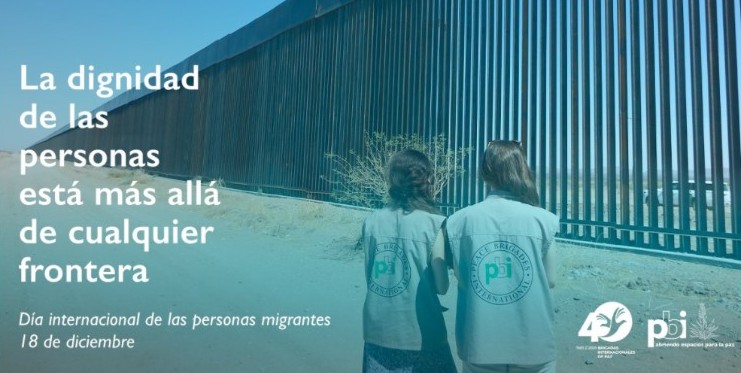
“The dignity of people is beyond any border” 

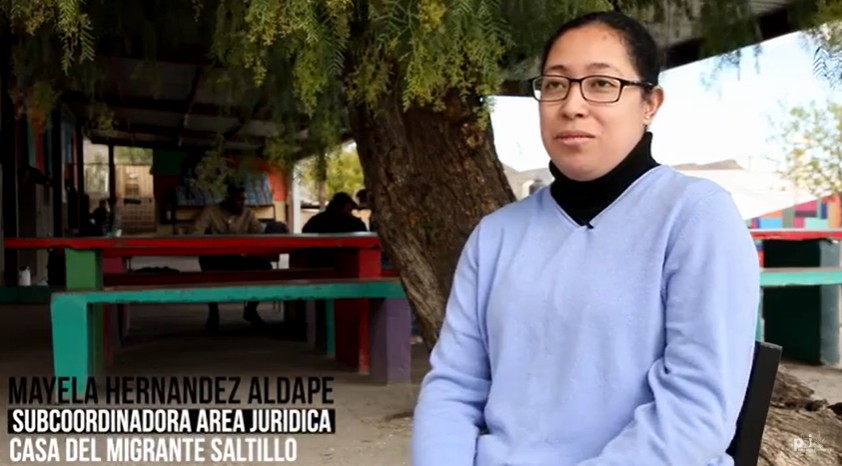
Video: Saltillo Migrant Shelter director Alberto Xicotencátl Carrasco denouncing federal police attempting an immigration check at the Shelter, July 24, 2019.

PBI-Kenya meets with Women Human Rights Defenders, supports their work against the colonial legacy of violence

PBI-Kenya has posted:

Recently, Women Human Rights Defenders (WHRDs) Toolkit Organizers (TOs) Cohort 1 held their first Monthly Movement Meeting of the year at Kwacha Africa in Malindi (Shela Ward). They checked in on each other, mapped out a year-long plan with concrete actions and roles, and wrapped up the day by reflecting on their vision for 2024.

PBI Kenya also visited WHRDs in their respective organizations to strengthen relationships, monitor progress, and gain a deeper understanding of their work. These visits help build trust, provide insights for better collaboration, show solidarity, and ensure accountability.

Colonial context and current issues

The Portuguese presence in Kenya began in 1498. The city of Mombasa was under Portuguese rule from 1593-1698 and then again from 1728-1729. Kenya was then a protectorate of the German Empire from 1885-1890, and then a British colony from 1888-1962. Kenya formally became independent on December 12, 1963.

Photo: A painting of anti-colonial revolutionary and Pan-Africanist leader Thomas Sankara at the Mathare Social Justice Centre in Nairobi.

Photo: PBI-Kenya outside a police station after the arrest of defenders at a Saba Saba march. Saba Saba (seven-seven) refers to an historic protest on July 7, 1990, when Kenyans took to the streets to demand free elections after 26 years of single-party rule.

Issues of concern

Among the issues that defenders contend with in Kenya are violence against women, enforced disappearances, police brutality, the police repression of the protests against the IMF/WB-backed Finance Bill, and police violence against the resistance to the construction of Kenya’s first nuclear power plant in the coastal town of Kilifi.

WHRD Editar Ochieng has commented: “Violence against women is very common in Kibera [an informal settlement in Nairobi] and many people have normalized it. So many women experience violence and they do not talk about it because they think it is normal, especially women experiencing violence in their relationships.”

Photo: Editar Ochieng.

The Johannesburg-based Centre for the Study of Violence and Reconciliation says: “[Sexual and gender-based violence] has deep roots, as African women and girls have been dehumanized as possessions since the colonial era, which has rendered them especially vulnerable in conflict. The norms and prejudices that are the legacies of historical violence against women and girls needs to be confronted.”

Photo: PBI-Kenya supports the creation of community murals in the urban settlements of Nairobi that speak against gender-based violence.

PBI-Kenya has commented: “Enforced disappearances in Kenya can be traced back to the colonial era. Subsequent Kenyan governments have relied on enforced disappearances to oppress the political opposition, instill fear and control the population.” In November 2024, the Kenya National Commission on Human Rights recorded 74 enforced disappearances between June and November 2024.

Video still: Mathare Social Justice Centre co-founder Wanjira Wanjiru: “I’m protesting because you’re killing us! You police! You’re killing us in our communities! People power! When we lose our fear, they lose their power! No more killings!”

PBI-Kenya also works with Perpetua Kariuki of the Kayole Community Justice Centre. She says: “Everyone in the informal settlement knows a person who is a victim of police brutality in some way. We just want to live in dignity.”

Photo: Perpetua Kariuki with Bernard Gachie from PBI-Kenya.

The non-governmental Kenya Human Rights Commission (KHRC) has commented: “Kenya’s police force has historically been an instrument of political control, a consequence that dates back to the colonial period. Before independence, the colonial police were used to suppress dissent and enforce the interests of British Empire. Unfortunately, this oppressive structure continued after independence.”

PBI-Kenya has also noted: “Before, during & after widespread protests triggered by the Finance Bill 2024, many individuals, including activists, human rights defenders & lawyers were disappeared.”

Kenya joined the International Monetary Fund (IMF) on February 3, 1964, just months after independence.

The IMF and World Bank have imposed structural adjustment programs on Kenya. The protests in Kenya in June 2024 related to a $12 billion World Bank loan and a $4.4 billion IMF loan. Al Jazeera notes: “For years, multilateral lenders, especially the IMF, have had bad reputations in African countries for providing loans to desperate countries based on stringent conditions that critics said have always disproportionately affected the poor.”

In July 2024, PBI-Kenya was in Kilifi County in solidarity with the residents of Uyombo village who were brutalized by the National Police Service-Kenya while fighting against the proposed building of a nuclear power plant in their village. Construction on the power station is expected to start in 2027 with it due to be operational in 2034. Construction will cost about 500bn Kenyan shillings (CAD $5.6 billion).

Photo: PBI-Kenya accompanies land and environmental defenders from Kilifi County at a march against the nuclear plant.

For more on PBI-Kenya’s support of grassroots efforts to end gender-based violence, advocacy against extrajudicial killings by police, its work within an alliance of national and grassroots organizations to reform the police, its efforts within a group of organizations whose mission it is to end enforced disappearances and extrajudicial killings by the police, and its support for the community social justice centres in the urban settlements of Nairobi including in Kayole, Kibera, Ruaraka, Kiambiu and Mathare, you can go to their website here.

Photo: PBI-Kenya visits the Mombasa Social Justice Centre.