Home Blog Page 206

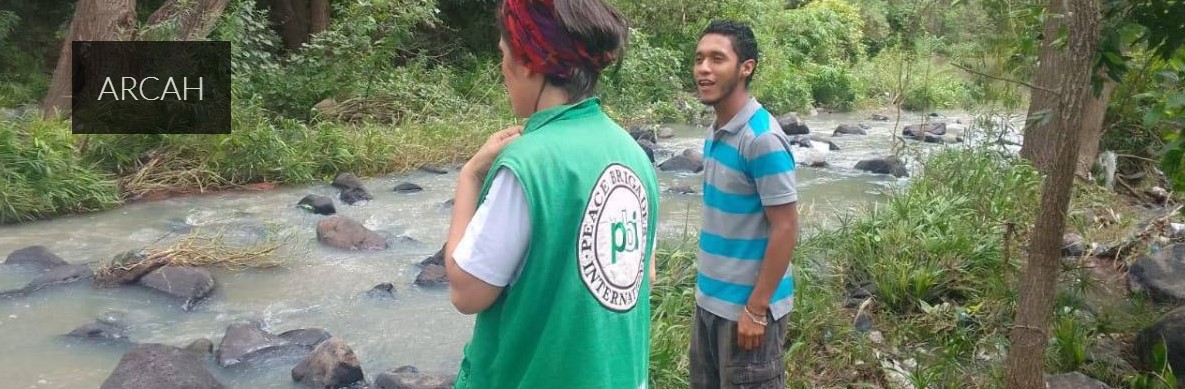
PBI-Honduras accompanies ARCAH in their work defending water from privatization and pollution

On September 29, PBI-Honduras tweeted:

“Starting this month, #PBI officially accompanies @Arcah_hn. We highlight the important work of ARCAH in defending access to water in #Honduras and in the fight against the Law of #ZEDE, repealed by Congress in April 2022.”

On their website, PBI-Honduras further notes:

“The Honduran Alternative for Community and Environmental Vindication (Alternativa de Reivindicación Comunitaria y Ambientalista de Honduras, ARCAH) is a space for community articulation and an anti-capitalist, anti-racist, anti-patriarchal, anti-colonialist and anti-classist social movement that seeks to defend territories and common goods from any project that threatens the peace and cosmovision of communities.

Since its founding in 2017, members of ARCAH have fought against the Jiniguare dam, the El Cortijo poultry company, the Zones for Employment and Economic Development (ZEDE) and other projects in Francisco Morazán, Comayagua, Cortés and Olancho, always through resistance and permanent communication with planet earth.

PBI-Honduras has been accompanying ARCAH since September 2022.”

Prior to this announcement, PBI-Honduras has accompanied ARCAH on several occasions that we have documented on our website including:

– PBI-Honduras accompanies ARCAH at mobilization against water privatization at World Bank in Tegucigalpa (September 14, 2022)

– PBI-Honduras accompanies ARCAH to the Choluteca River affected by poultry company pollution (June 30, 2022)

– PBI-Honduras accompanies ARCAH at media conference that calls on Honduras to sign and ratify the Escazú agreement (May 9, 2022)

– PBI-Honduras accompanies ARCAH and MADJ at launch of the Permanent Assembly of People’s Power in Tegucigalpa (January 12, 2022)

– PBI-Honduras accompanies ZEDEs opponent Christopher Castillo to file complaint after attack (October 18, 2021)

– PBI-Honduras observes court hearing for ARCAH environmentalists defending the Choluteca River (April 16, 2021)

You can find ARCAH on Twitter and Facebook.

Global Witness: 200 land and environmental defenders killed worldwide in 2021

Decade of Defiance, the latest global analysis report from Global Witness, documents that 200 land and environmental defenders were killed worldwide in 2021 and that 1,733 have been killed over the past 10 years (2012 to 2021).

It specifies that in 2021, 54 were killed in Mexico, 33 in Colombia, 8 in Honduras, 4 in Guatemala and 1 in Kenya. That means 100 land and environmental defenders were killed last year in countries where Peace Brigades International (PBI) is physically present.

Fifteen defenders were also killed in Nicaragua. PBI has a team in Costa Rica who support Nicaraguan human rights defenders in exile.

Top findings

Among the report’s top findings:

– “Global Witness recorded that 200 Land and Environmental Defenders were killed in 2021 – nearly four people a week.”

– “These lethal attacks continue to take place in the context of a wider range of threats against defenders who are being targeted by government, business and other non-state actors with violence, intimidation, smear campaigns and criminalization.”

– “This is happening across every region of the world and in almost every sector. Mexico was the country with the highest recorded number of killings, with defenders killed every month, totalling 54 killings in 2021, up from 30 the previous year.”

– “Over 40% of those killed [in Mexico] were Indigenous people, and over a third of the total were forced disappearances, including at least eight members of the Yaqui community.”

– “Where a sector could be identified, just over a quarter of lethal attacks were reportedly linked to resource exploitation – logging, mining and large-scale agribusiness – and hydroelectric dams and other infrastructure. However, this figure is likely to be higher.”

– “In 2021 the disproportionate number of attacks against Indigenous peoples continued once again, with over 40% of all fatal attacks targeting Indigenous people, despite them only making up 5% of the world’s population.”

– “Around 1 in 10 of the defenders recorded killed in 2021 were women, nearly two-thirds of whom were Indigenous.”

1,733 killed over 10 years

The report also notes: “Global Witness started reporting on the killings of Land and Environmental Defenders in 2012. Since then, 1733 defenders have been killed trying to protect their land and resources: that’s an average of one defender killed approximately every two days over ten years.”

In countries where PBI is present, 322 defenders were killed in Colombia over the past decade, 154 in Mexico, 117 in Honduras, 80 in Guatemala, and 6 in Kenya. Fifty-seven defenders were killed in Nicaragua over this same period.

Global Witness has also noted the death of Regan Russell in Canada on June 19, 2020. She died in Burlington, Ontario, on June 19, 2020. The 65-year-old activist was run over by a transport truck in front of Fearman’s Pork Plant as she attempted to give water to the pigs in the trailer of that truck before they were driven into the slaughterhouse.

Wet’suwet’en territory, Canada

The report also includes a three-page (pages 20-22) feature on the Wet’suwet’en struggle against the Coastal GasLink fracked gas pipeline on their unceded territory in northern British Columbia, Canada.

Among the recommendations related to this struggle, Global Witness notes: “The Canadian government should immediately halt the construction and suspend all permits and approvals for its construction of the Coastal GasLink pipeline in the traditional and unceded lands and territories of the Wet’suwet’en people, until they grant their free, prior and informed consent, following the full and adequate discharge of the duty to consult.”

Colombia

The Global Witness report also includes a two-page (pages 31-32) from Colombia environmental defender Oscar Sampayo who says: “I have been actively opposing oil extraction in the Magdalena Medio region for years. The interests of the big oil companies have ended up prevailing over the lives of local communities, who suffer serious environmental and social impacts, as well as a wide range of human rights violations.”

The report concludes with 5 recommendations (on page 36) for governments and businesses to change this ongoing situation.

You can read the full 48-page report by clicking here.

For media coverage on this report please see the BBC article: Over 1,700 environment activists killed in decade – report. The Guardian also reports More than 1,700 environmental activists murdered in the past decade – report and the Associated Press reports Report: 200 environmental activists killed globally in 2021.

To help amplify this report, please retweet this Global Witness tweet:

PBI-UK tweet:

PBI brings concerns to the United Nations in Geneva about Indigenous rights in Honduras, Guatemala, Colombia and Canada

On September 28, Kim-Mai Vu of Peace Brigades International presented to the United Nations Human Rights Council in Geneva, Switzerland during the Interactive Dialogue with the Expert Mechanism on the Rights of Indigenous Peoples.

That presentation highlighted:

“In Honduras, international attention is required towards the promotion of laws to protect and recognize the rights of indigenous peoples in their territories, as well as to achieve truth and full justice in the murder of Berta Cáceres. Crimes such as the murder in 2013 of the Lenca indigenous leader and defender of the Gualcarque River, Tomás García, continue to go unpunished. The pressure on common goods in indigenous territory continues and reports of violence, criminalization and forced displacement multiply in territories such as Azacualpa, Las Vegas de Tepemechín, Locomapa, Jiniguare and Reitoca.

In Guatemala we observe that contrary to the commitments and obligations of the State emanating from the Declaration on the Rights of Indigenous Peoples, ILO Convention 169 and the corresponding Peace Agreement, communities of indigenous peoples living in their ancestral territories are violently evicted and their right to consent violated systematically giving priority to economic interests of landowners and companies. people and indigenous organizations, which defend their rights enshrined in the Peace Agreement and the Declaration, are defamed and criminalized as “usurpers” and even “terrorists”.

In Colombia, 25% of the 195 leaders assassinated in 2021 were indigenous. Therefore, we highlight the importance of the support of the International Community to the new territorial dialogue initiatives that include ethnic communities, just as we welcome the opening of the macro-case to indigenous peoples in the JEP (Special Jurisdiction for Peace). Guarantees are urgently needed in territories, where political elites, local, national and transnational economies and armed actors affect the construction of peace.

The Committee on the Elimination of Racial Discrimination [CERD] has called on Canada to stop construction of the Coastal GasLink pipeline on Wet’suwet’en territory. Canada ratified this International Convention in 1970 and said in 2016 that it supported the Declaration on the Rights of Indigenous Peoples, however, the construction of this gas pipeline without consent continues as does the criminalization of land defenders.”

The video of this presentation (made in Spanish, with English translation) can be seen here (starting at 28:55).

Decolonial Solidarity calls on RBC to defund the CGL pipeline, stop the criminalization of Wet’suwet’en land defenders

Photo by Decolonial Solidarity – RBC at Bank St and First.

The Toronto Star reports: “[RBC CEO Dave] McKay said the bank is poised to release new targets for reducing emissions across its lending portfolio by 2030. The numbers, which he said will be released in the next two to three weeks, will include information on the current level of emissions across the majority of RBC’s lending operations.”

Significantly, Stand.earth has documented: “RBC is among top commercial banks providing the CGL project with working capital, including CAD $275 million in project finance, a co-financed $6.5 billion loan, a $40 million corporate loan, and $200 million in co-financed working capital – while acting as financial advisor for the pipeline.”

And according to the Indigenous Environmental Network and Oil Change International report Indigenous Resistance Against Carbon (page 16), the Coastal GasLink fracked gas pipeline could produce 125 million metric tons of CO2 pollution annually.

Construction on the pipeline is scheduled to be completed in 2023 and would be in service for a minimum of 25 years (to 2048).

Since January 2019, more than 74 land defenders, legal observers and members of the media have been arrested in three militarized Royal Canadian Mounted Police (RCMP) actions on the territory. And over the three-month period of March to May 2022, the RCMP have been at their main camp near the drill pad site 269 times.

That drill pad site is now operational and boring under the Wedzin Kwa river.

Photo: Land defender Sleydo’.

Gidimt’en Checkpoint spokesperson Sleydo’ has stated: “By financing the Coastal GasLink pipeline, RBC is choosing to bypass our right to free, prior, and informed consent and instead justify police violence against unarmed Wet’suwet’en people to push the project through. As an Indigenous woman, I have experienced violence by militarized RCMP to forcibly remove me from my own territory, criminalize me, and jail me. RBC is willing to risk the killing of unarmed Wet’suwet’en people by police to push this project through sovereign lands.”

In response to calls for divestment, McKay says: “The worst thing we can do is take capital away before we decide how we’re going to make the transition. We need a plan.” But a significant part of a transition is respecting inherent rights and the United Nations recognized right to free, prior and informed consent now.

RBC CEO McKay.

More than 392 people have called McKay this week demanding that he defund CGL. To find out how to leave a voicemail for McKay, click here.

For more on Decolonial Solidarity, click here.

COP15: Informal talks in Montreal amid Indigenous concerns about the 30×30 initiative and militarized conservation

Photo: The COP15 summit will take place in Montreal at the Palais des Congrès (201 Avenue Viger Ouest at Rue Chenneville), near the UN biodiversity headquarters (413 Rue Saint-Jacques at Rue du Square-Victoria).

The Guardian has a new feature called The Secret Negotiator in which “a secret negotiator who is from a developing country” comments on the UN COP15 biodiversity conference in Montreal this coming December 7-19.

On September 28, The Secret Negotiator wrote: “Much of the draft agreement is in brackets, reflecting disagreement in the UN process as countries have added suggestion upon suggestion on how the final set of targets should look. An informal meeting in Montreal this week [September 26-30] will try to cut it down to size.”

Bracketed text on Target 3 of the Global Biodiversity Framework. Image from The Conversation, July 25, 2022.

The informal meeting follows Canadian Prime Minister Justin Trudeau’s recent intervention at the United Nations General Assembly high-level week.

On September 21, a Government of Canada media release noted: “[The Prime Minister] made a call to action for renewed commitments from leaders for an ambitious post-2020 Global Biodiversity Framework…”

The Nature Conservancy also quotes Trudeau stating: “On the world stage, including at COP15, we will continue to mobilize global support to reach this [30×30] target and protect biodiversity around the planet. This is the moment for the world to come together and agree on an ambitious global plan to halt and reverse the loss of biodiversity and set our natural world on the path to recovery.”

What countries back 30×30?

According to the High Ambition Coalition, some of the 100+ countries that are backing the 30×30 plan to protect at least 30 per cent of the world’s land and sea area by 2030 include Canada, Spain, Germany, the United Kingdom, the Netherlands, Norway, France, Colombia, Guatemala, Honduras, Kenya, Mexico and Nicaragua.

Indigenous rights, dispossession, militarized conservation

Back on July 1, Mongabay also reported: “Finalizing the new Global Biodiversity Framework (GBF) is taking longer than expected…”

That article highlighted: “Indigenous leaders … are disappointed that the inclusion of language recognizing Indigenous and traditional territories in the final GBF is still up for debate after years of negotiations – as is majority of the IIFB’s [International Indigenous Forum on Biodiversity] proposals.”

Significantly, the Mongabay article also noted: “The first draft GBF targets contained no effective safeguards to protect the lands, rights and livelihoods of IPLCs [Indigenous peoples and local communities] in conservation programs or protected areas, say Indigenous leaders. Since then, Indigenous groups have been calling for the full recognition of their rights over their lands, waters, and territories within the GBF.”

The article warns: “Many Indigenous leaders and human rights advocates say [the 30×30] goal may lead to the mass eviction of Indigenous and local communities for the creation of more protected areas.”

Last year, 49 organizations – including the CS Fund, EDGE Funders Alliance, Fund for Global Human Rights, Grassroots International, Inter Pares, Panta Rhea Foundation, Tides Foundation and the Tikva Grassroots Empowerment Fund – expressed concern with the 30 x 30 initiative, warning: “The Framework’s focus on ‘protected areas’ will likely continue to lead to human rights abuses across the globe.”

One of the signatories, the Swift Foundation, said: “How it’s working right now is a militarized form of conservation. You have guards with guns, people imposing fines, building fences and kicking people out of their traditional lands. And if communities react in defense they are perceived as anti-conservation.”

And in her critique of 30×30, Sophie Grig of Survival International has commented: “Up to 300 million people could be directly displaced and dispossessed. Many will be Indigenous people, who have protected their lands for millennia. Those who have done the least to damage the environment, stand to lose the most. Because they rely on their lands for survival – eviction from these will be completely devastating for them.”

We continue to follow these negotiations.

Further reading: Global Biodiversity Framework to be discussed in Montreal amid concerns about Afro-Colombian ancestral rights and title (August 26, 2022)

PBI presents joint statement at Human Rights Council on the situation in Guatemala

On September 26, Kim-Mai Vu of Peace Brigades International presented at the Human Rights Council in Geneva on the situation in Guatemala.

The joint statement with OMCT SOS-Torture Network and Franciscans International noted:

“In Guatemala, we are alarmed by the increasingly accentuated repressive policies that violate human rights. The deterioration of the rule of law, the cooptation of the justice system, the weakening of national human rights institutions and the closure of civic spaces continue to advance.

We are concerned about the frequency and intensity of attacks against people, organizations and rural and indigenous communities that defend the rights to land, territory and the environment.

At the same time, entire communities are the object of violent and forced eviction attempts by non-state actors, mainly in Alta and Baja Verapaz, without the State reacting or protecting their rights. This is the case of the communities of Las Pilas/Cahabón and Quejec/Tucuru.

None of these attacks has been properly investigated and no one responsible has been prosecuted. Some have even encouraged these evictions, such as the “Association for the Defense of private property”.

Moreover, the State facilitates these illegal and violent procedures by extinguishing the Human Rights Prosecutor’s Office and by creating a Usurpation Prosecutor’s Office that has been used against human rights defenders.

We call on this Council to demand that the State of Guatemala:

– Investigate and prosecute those responsible for attacks against defenders

– Immediately stop violent judicial and extrajudicial evictions

– Install effective mechanisms with sufficient resources to seek solutions engaged in agrarian conflicts

– Renew the mandate of the OHCHR in the country.

Thank you very much.”

To watch the video of this presentation, click here (starts at 13:45).

PBI-Mexico seeks field volunteers, apply by October 28

PBI-Mexico has posted this call for new field volunteers. It highlights that the deadline to apply is October 28. A week of virtual training (part of the selection process) will take place from January 18 to 26, 2023 from 9:00 a.m. to 1:00 p.m. (Mexico City time).

Their post also notes: “The brigadistas commit to a minimum of one year of volunteering in the field that will be developed in two different Work Teams. The Teams are located in the City of Chihuahua, from where they work in the North of Mexico, and in Mexico City, from where the Center and the South of the country work. PBI brigade members live and work together in an office house, participate in all areas of PBI’s work (Physical Accompaniment, Advocacy, Communication/Visibility, Safety and Security Training), including the administrative and internal communication tasks associated with the operation of the organization.”

The entries of new PBI-Mexico volunteers will take place every 2-3 months throughout the year. In 2023, arrivals will begin in the month of February and onwards.

All the details to apply are here.

PBI-Mexico accompanies the mobilizations on the 8th anniversary of the forced disappearance of the Ayotzinapa 43

On September 26, PBI-Mexico tweeted:

“#PBI accompanies the mobilizations on the 8th anniversary of the #Forced Disappearance of the #43 student teachers of #Ayotzinapa.”

El Universal has reported:

“At about 4:00 p.m. on Monday [September 26], the march for the National Day of Struggle will be held 8 years after what happened to the 43 students of the Rural Normal School of Ayotzinapa. The mobilization will advance from the Angel of Independence to the Zocalo of Mexico City, stopping at the anti-monument to the 43 that is located on Paseo de la Reforma at the junction with Bucareli and Avenida Juárez.”

NBC has further reported:

“In 2014, the Mexican government initially reported that 43 students from Ayotzinapa Teachers College who had commandeered some buses to go to a protest in Mexico City had been arrested on Sept. 26 by police in Iguala, then turned over to drug traffickers who killed and incinerated them at a garbage dump.

One month before the eight-year anniversary, a truth commission led by the Mexican government said that six out of the 43 missing students were allegedly kept alive for days and then handed over to a Mexican army commander at a base in Iguala who ordered their execution. 

On Aug. 20, 2022, Mexico’s former attorney general Jesús Murillo Karam, who had presented the 2014 account of the Ayotzinapa case, was charged with forced disappearance, torture and obstruction of justice in connection with the 43 students.

On Sept. 15, 2022, Mexican assistant public safety secretary, Ricardo Mejía, announced the arrest of retired general José Rodríguez Pérez, along with other members of the Mexican army, in connection with the disappearance of the students. Rodríguez Pérez was the commander of the Iguala base in 2014.”

AFP also notes: “Arrest warrants have been issued for more than 80 suspects, including military personnel, police officers and cartel members. But a lawyer for the victims’ families, Vidulfo Rosales [a lawyer with the PBI-Mexico accompanied Tlachinollan Human Rights Centre], told reporters that prosecutors had withdrawn at least 20 of the warrants.”

And earlier in the day, the Mexico News Daily reported:

“The truth commission report – of which a redacted version was made publicly available last month – asserts that the military played a central role in the disappearance of the students. …Revelations about the army’s alleged involvement in the students’ disappearance have triggered protests and attacks at military facilities in the lead-up to the eighth anniversary of the heinous crime.”

PBI-Mexico has accompanied the struggle for the truth since the disappearance of the student teachers eight years ago.

PBI-Mexico visits communities in Morelos and Puebla opposed to the PIM gas pipeline-thermoelectric plant-aqueduct megaproject

PBI-Mexico has posted:

“Opposition to extractivist projects, such as the Morelos Integral Project (PIM), has unified in resistance various towns and ejidos in Morelos and Puebla that are threatened by the privatization of natural assets and the dispossession of their lands by these megaprojects.

The PIM is a megaproject for the generation of electricity consisting of: a gas pipeline of 160 km and 30 inches in diameter that runs underground through the states of Morelos, Puebla and Tlaxcala, two combined cycle thermoelectric plants to generate electricity using natural gas and water, and two aqueducts of 12 km: one to transport the water from the Cuautla River to the two thermoelectric plants and the other to return the liquid to the same river through the Wastewater Treatment Plant (WWTP) of Cuautla, Morelos.

All this accompanied by a line of high voltage towers.

To better understand how PIM impacts communities, we toured several municipalities in the states of Morelos and Puebla, where communities that are directly affected by the project live.

The first stop on our tour to learn about the effects of the PIM was in the municipality of Ayala, Morelos, where we visited a section of the Cuautla River that allows us to witness two discharges into the river: one from the Wastewater Treatment Plant that jumps to the eye by the dark liquid that is poured into the river, and the other, of foamy discharge from the aqueduct that returns the used water from the thermoelectric plant.

From Ayala we continue the road to the east, to Huexca, Yecapixtla, Morelos. Upon arriving in the community of Huexca, the destroyed transit roads of the town were immediately noticed, as a result of the construction of the thermoelectric plant built by the Federal Electricity Commission (CFE).

At our third stop, various artistic murals representing the resistance to the PIM welcomed us to Amilcingo, Morelos. One of the most tragic impacts of the PIM is the persecution and threat suffered by defenders of human rights, land and territory. Among the numerous cases of rape and aggression, the most devastating has been the murder of FPDTA [Peoples Front in Defence of Land and Water] member, human rights defender and social leader, Samir Flores Soberanes.

Huilotepec, Atlixco, Puebla: As we continued our way to Puebla, we met with Mr. Ángel Quintero, Ejidal Commissariat of San Isidro de Huilotepec and Juan Carlos Flores, lawyer and member of the FPDTA, who introduced us to the social and legal struggle against the megaproject.

At the last stop of the tour, we visit the industrial corridor of the municipality in Santa María Zacatepec, Juan C. Bonilla, Puebla, constituted by several textile and automotive companies, located 50 meters from the PIM gas pipeline.”

The full PBI-Mexico article can be read on their website at: Las luchas por la tierra y el territorio en la cuna de Emiliano Zapata.

CGL drilling under Wedzin Kwa begins, Wet’suwet’en hereditary chiefs to hold rally and media conference in Victoria

On September 24, Gidimt’en Checkpoint tweeted: “Uphold your responsibility to stop the destruction of the last pristine water ways on earth. This is not over. You can hear her crying.” In the video with that tweet, you can hear the sound of the Coastal GasLink drill beginning to bore under the Wedzin Kwa river.

Yintah Access Instagram post.

Now, CTV also reports: “Hereditary chiefs of the Wet’suwet’en First Nation and their supporters are planning a rally at the B.C. legislature on Tuesday [September 27] to ‘make an important announcement’ about their efforts to stop a natural gas pipeline under construction on their territory.”

That article adds: “’The Hereditary chiefs will issue formal public comment about a recent incident of being denied access to ancestral lands by Coastal GasLink,’ reads a news release issued Friday to announce the gathering.”

For more on that, please see Brandi Morin’s article ‘Gut-wrenching:’ Drilling starts under Wet’suwet’en river.

Photo by Sidney Coles.

The Wet’suwet’en Hereditary Chiefs, the governance body for the 22,000 square kilometres of Wet’suwet’en territory in northern British Columbia, have not given their free, prior and informed consent for this pipeline to be built.

Since January 2019, more than 74 land defenders, legal observers and members of the media have been arrested in three militarized Royal Canadian Mounted Police (RCMP) actions on the territory. And over the three-month period of March to May 2022, the RCMP have attended the Gidimt’en village near the drill pad site 269 times.

This Gidimt’en video released on September 21 notes further arrests.

Gidimt’en Checkpoint has affirmed: “We will never stop defending our yintah the way our ancestors have done for thousands of years. We need all your support now to ensure it will never be functional.”

Call to defund CGL

Decolonial Solidarity has highlighted: “The RCMP’s militarized backup of corporate destruction puts profit for a few ahead of Indigenous self-determination… This violence is funded by the Royal Bank of Canada: the lead financier of the Coastal GasLink pipeline.”

It adds: “Will you call the executives of RBC and urge the company to defund CGL?”

To make that call, click here.

The rally at the BC Legislature in Victoria is scheduled to begin at 3 pm Tuesday September 27, with the news conference scheduled for 4 pm PT.