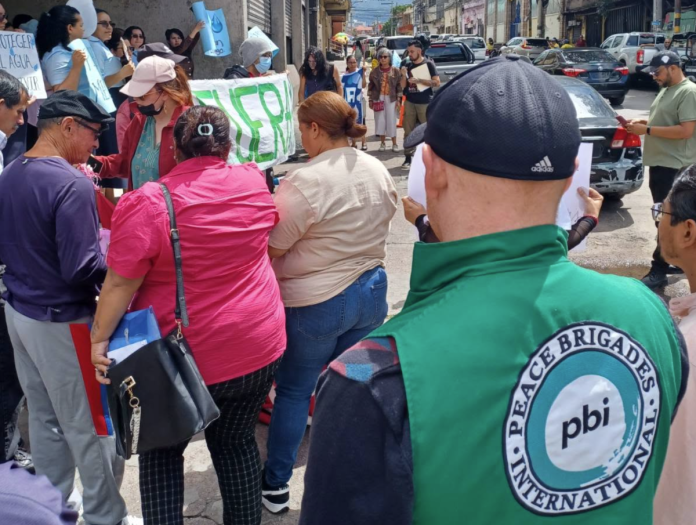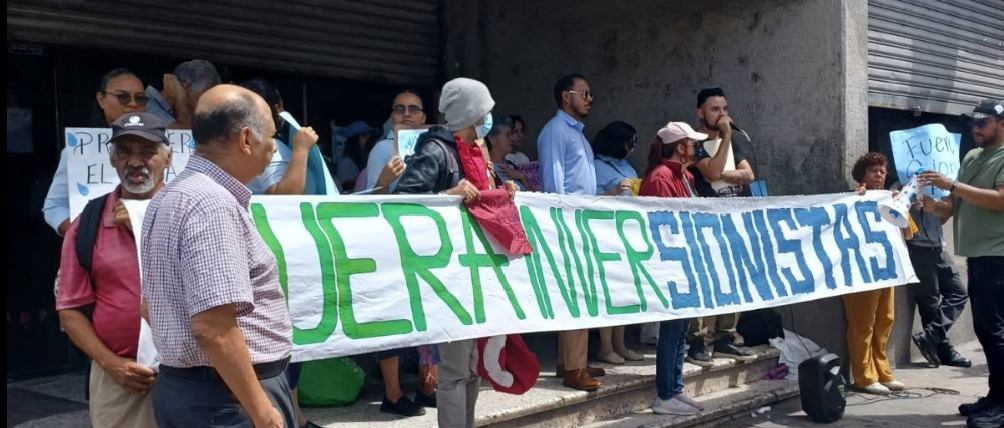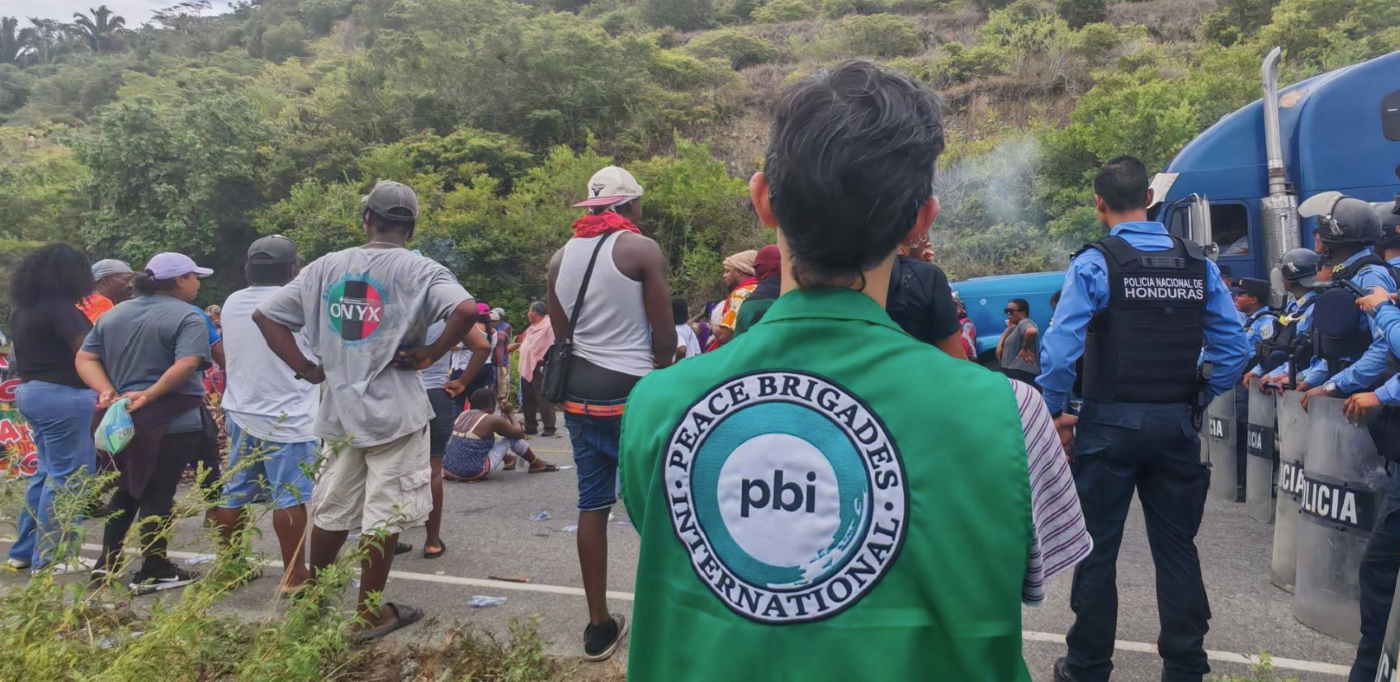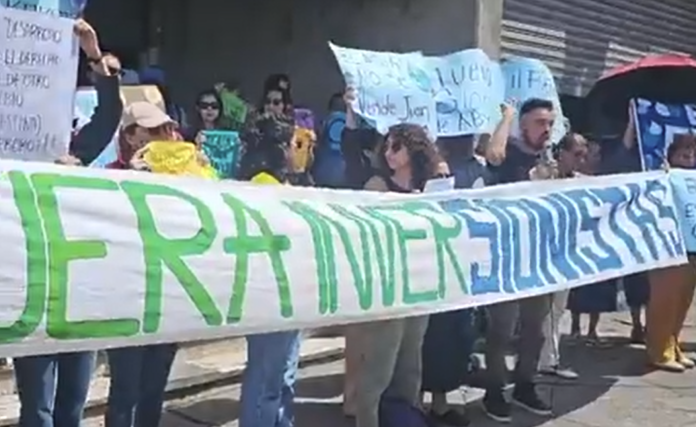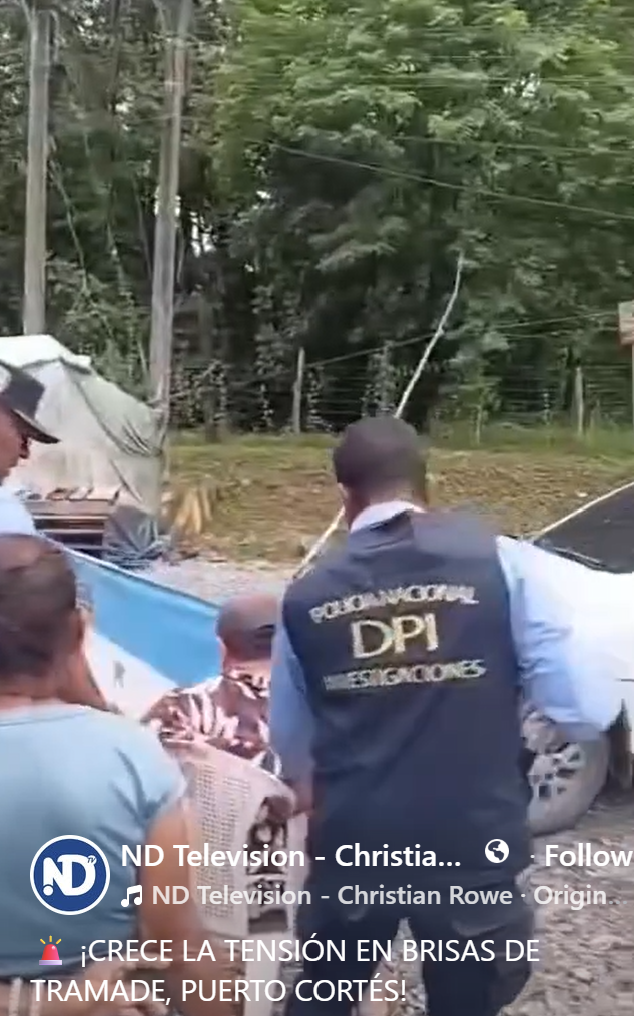
“At a press conference held in front of the Supreme Court of Justice, the Agrarian Platform and the Coordinating Committee of Popular Organizations of Aguán (COPA) expressed their concern over the reform of the criminal code through the Law for the Strengthening and Protection of the Agro-Industrial Sector in Honduras.
As they explained, these reforms could expose #socialmovements, #ruralcommunities, and human rights defenders to the risk of criminalization during their #socialprotest activities.
The protesters also demanded transparent investigations into the recent massacres in the Aguán region, calling for legal safeguards for the #peasantorganizations active in the region.”
Reportar Sin Miedo additionally reports: “In a statement, [the Peasant, Indigenous and Popular Alliance of Honduras] expressed its rejection of the Law for the Strengthening and Protection of the Agroindustrial Sector of Honduras, considering that it shields agribusiness while persecuting communities. They also announced the filing of an appeal of unconstitutionality against Decree 84-2026, for opening the door to treating defenders of the territory and social leaders as terrorists. Among their demands, they call for a prompt and independent investigation of the massacre, an end to the criminalization of social protest, the repeal of repressive penal reforms, and the prioritization of food security over agro-industrial interests. ‘Peasant communities are not a threat to Honduras. They are the ones who produce food and defend life,’ they said.”
MNTV.hn has also previously explained: “The Peasant, Indigenous and Popular Alliance of Honduras (ACAINPH) denounced that the draft ‘Law for the Strengthening and Protection of the Agro-industrial Sector of Honduras’ would represent a risk to agrarian reform and rights of access to land in the country. The organizations pointed out that the initiative, promoted in the National Congress (CN), would grant privileges to agribusiness entrepreneurs and could criminalize protests and peasant demands linked to land conflicts. …The alliance called on social and human rights organizations to monitor the legislative process and defend territorial rights.”
And El Libertador has reported: “[Raul Ramirez of ACAINPH has] warned that, if the law is approved, the organizations will defend their territories. ‘They may approve it, but it is unfair, illegal and unconstitutional. Our defence will be in the streets and on the land’, he said, assuring that the peasant sector will maintain permanent mobilizations.”
“Last May 28th we participated in the conversation ‘Voices in the street: the right to defend human rights and social protest in the context of the World soccer in Mexico’ organized by the Civil Society Organizations Space for the Protection of Human Rights Defenders and Journalists (Espacio OSC).
Events such as the World Cup soccer and others of a mass nature are platforms for civil society to freely exercise its right to protest.”
In other panels in its Instagram post, PBI-Mexico also says:
“The right to defend human rights and engage in social protest in the context of the World Cup in Mexico.
Events such as the World Cup and other large-scale gatherings should serve as platforms for civil society to freely exercise its right to protest.”
“In the conversation ‘Voices in the Street’, human rights organizations, journalists and public institutions warn about risks of criminalization, surveillance and excessive use of force during the 2026 World Cup in Mexico.
We also emphasize the need to strengthen inter-agency prevention, monitoring, documentation and coordination measures in the face of possible human rights violations.
The participants agree that the right to protest, freedom of expression and defence of human rights should be fully guaranteed during the World Cup.”
The World Cup, which runs from June 11 to July 19, 2026, will feature 13 matches in Mexico, split between Mexico City, Monterrey, and Guadalajara. The iconic Azteca Stadium in the capital will host the opening match.
It will also include matches that will be played in Toronto (June 12, 17 and 20) and Vancouver (June 14 and 18).
Journalist Joaquín López-Dóriga has reported: “In the midst of preparations for the 2026 World Cup in Mexico City, families of missing people are preparing protests to make visible a national crisis that they accuse of being ignored.”
EFE adds: “The mothers and fathers are preparing peaceful protests, which they announce they will do from the opening match at the Azteca Stadium on June 11. In addition, these relatives will deliver letters to different embassies, to warn about the security risks that, they say, could also affect tourists.”
We recall the plea from a mother who participated in the Mother’s Day march in Cuernavaca, Morelos, Mexico: “Hopefully just as millions of people will gather to shout a goal, there will also be space to shout for those who are missing.”
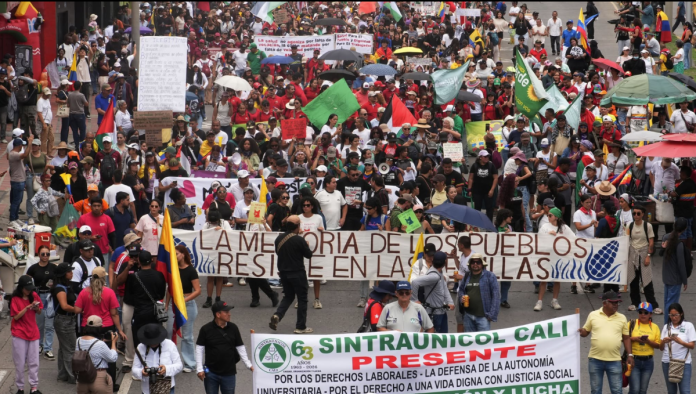
“Five years after the 2021 Social Uprising / National Strike, Peace Brigades International was in Cali accompanying the Association for Research and Social Action (Nomadesc) at various events focused on remembrance, listening, and demanding truth, justice, and reparations for the victims of human rights violations that occurred during the social protests.
We participated in the listening space organized by the Ad Hoc Committee of Experts and in the People’s Public Hearing in Siloé, alongside victims, family members, and social organizations that continue to denounce impunity and defend the memory and dignity of those who were killed, disappeared, and those who continue to face prosecution, injured, persecuted, and displaced in the context of social protest.
We listened to the voices of those who, despite the pain and the multiple and severe hardships they have endured, continue to demand guarantees of non-repetition and the recognition of historical truth.
At PBI, we are deeply concerned about the persistence of high levels of impunity regarding the human rights violations that occurred during the Social Uprising. We are also concerned about patterns of gender-based violence against women, girls, and LGBTIQ+ people, as well as acts of racist and classist violence, documented by organizations such as Amnesty International.
We call on the international community, the diplomatic corps, and our support network to continue accompanying and supporting the efforts of victims, organizations, and independent truth-seeking mechanisms. We also urge national institutions to ensure the necessary resources and conditions so that initiatives such as the Ad Hoc Committee of Experts can continue to create spaces for listening, documentation, and the formulation of recommendations aimed at truth, justice, reparations, and guarantees of non-repetition.”
The Religious Society of Friends (Quakers) organized a presence outside the CANSEC arms show on Wednesday May 27, 2026, in Ottawa.
They also organized a Potluck meal at the Ottawa Meeting House on the evening of Tuesday May 26, the day before the Witness that started at 8:00 am and a Peaceful Faithful Gathering that started at 4:30 pm outside the Cohere Centre.
The CANSEC arms show is an annual event that brings together 60+ international delegations and 300+ companies in a venue with 20,000 attendees to exhibit, market, buy and sell weapons and emerging military technologies.
Potluck, May 26 starting at 6:00 pm.
Witness, May 27 starting at 8:00 am.
Peaceful Faithful Gathering, May 27 starting at 4:30 pm.
Mass mobilization, May 28
Quakers were also present at the mass mobilization that drew hundreds of people to the Cohere Centre on the morning of Thursday May 28 starting at 7:00 am.
Webinars
In the lead-up to CANSEC this year, the Canadian Friends Service Committee (CFSC-Quakers) also organized two webinars in collaboration with Peace Brigades International-Canada to draw attention to the urgency of peace.
The first webinar, held on February 11, 2026, included presentations explaining Canada’s involvement in the arms trade and the impacts this has on other countries. It included Kelsey Gallagher from the Waterloo, Ontario-based Project Ploughshares speaking about the No More Loopholes Act.
The second webinar, held on April 16, 2026, included information on how Quakers in the United Kingdom have nonviolently protested Britain’s biggest arms fair DESI, and a discussion of how Canadians can do the same for CANSEC.
We continue to collaborate with the Quakers to help provide education about peace and opportunities to share these concerns with others.
Photo: A banner with the names of some of the more than 21,000 Palestinian children killed since October 2023 is draped across the main parking lot entrance to the CANSEC arms show with Ottawa Police Service riot police in the background.
Last week hundreds of community members mobilized in Ottawa to uphold the principles of international law and challenge the impunity enjoyed by countries and companies that violate human rights around the world. In doing so, these local activists faced hundreds of heavily-armed officers from two police forces intent on enabling business as usual at Canada’s largest arms and emerging technology trade show.
The Ottawa Citizen newspaper reports: “Around 200 demonstrators were on hand Thursday [May 28, 2026] to protest the CANSEC arms trade show held at the Cohere convention centre in the south end of Ottawa. Demonstrators gathered around 7 a.m. in front of the centre, blowing whistles, banging drums and jeering some CANSEC attendees at they entered the conference.”
That article continues: “Rosie Lucente, a spokesperson for the Shut Down CANSEC campaign, said that it was important to protest ‘the largest weapons trade show in Canada’ and the arms companies that exhibited there. ‘They sell their weapons to Israel, to the Philippine government, to other governments that are carrying out genocide,’ Lucente told the Ottawa Citizen. ‘They fuel dictatorships, and every deal made here at CANSEC is a death sentence to a colonized person, to working people all around the world. This is their playground. This is their marketplace,’ she added.”
The countries at CANSEC
Saudi Arabia, Türkiye, United Arab Emirates: The Canadian Association of Defence and Security Industries (CADSI) published a partial list of the international delegations expected at CANSEC this year. They included, cross-referenced with Freedom House rankings: Saudi Arabia (9/100 – not free), Türkiye (32/100 – not free) and the United Arab Emirates (18/100 – not free).
The Philippines: As noted above, the Philippines (58/100 – partly free) was also present. Global Witness and Kalikasan People’s Network for the Environment (Kalikasan PNE) have reported: “Since 2012, the Philippines has been ranked as the deadliest country in Asia for people protecting land and the environment, with mining linked to a third of all killings documented by Global Witness. …The military has been linked to the highest number of documented killings and detentions of land and environmental defenders in the Philippines over the past decade. These abuses have gone unchecked.”
Peru: Peru (66/100 – partly free) was also present at CANSEC. The Army of Peru posted on X: “#CANADA | The Peruvian Army, through its Defense and Military Attaché, participated in CANSEC, Canada’s most important defense and security fair, to learn about cutting-edge technologies and strengthen its land military capabilities. #NDP [nota de prensa/press release]” Amnesty International has documented: “Authorities [in Peru] used unnecessary and disproportionate force against demonstrators [in 2025]. The victims of excessive force during the 2022-2023 protests had still not obtained justice. Attacks on journalists and human rights defenders intensified.”
The day after CANSEC concluded, Global Affairs Canada published its annual 2025 Annual Report on Strategic Goods and Technologies Pursuant to Section 27 of the Export and Import Permits Act. The Maple reports: “Canada exported $14.6 million worth of military goods directly to Israel last year, according to a report published today by Global Affairs Canada. …$4.3 million of the exported goods fell under an export category that covers ‘Bombs, torpedoes, rockets, missiles, other explosive devices and charges and related equipment and accessories, and specially designed components therefor.’”
This despite Canada’s obligations following the ruling of the International Court of Justice, as well as under the Genocide Convention and the Arms Trade Treaty.
The Dublin-based organization Front Line Defenders (the International Foundation for the Protection of Human Rights Defenders) has documented the killing of 31 Palestinian human rights defenders in 2023 and 2024. Their report for 2025 is expected in the coming months. They have also stated “those defending the right to health and the right to life as doctors, nurses, or ambulance workers, those exposing and documenting war crimes as journalists, and those providing humanitarian support as volunteers or employees of aid agencies were all specifically targeted by Israeli bombs or guns.”
In April 2026, the Committee to Protect Journalists also documented: “The Israel Defense Forces (IDF) has committed more targeted killings of journalists than any other government’s military since CPJ began documentation in 1992.” That amounts to 46 journalists killed by Israeli military drones.
The companies at CANSEC
In September 2025, Amnesty International identified 15 companies “contributing to Israel’s unlawful occupation, genocide or other crimes under international law.” That list of companies includes Boeing, Lockheed Martin, Elbit Systems and Israel Aerospace Industries (IAI), all of which are members of CADSI.
It has been confirmed that Boeing, Lockheed Martin and Elbit Systems was present at CANSEC. It is believed that IAI may have also been present.
In the context of a UN General Assembly resolution and an International Court of Justice advisory opinion in July 2024, Amnesty International has called on States to “bar these companies from trade shows” and for “people around the world” to “mobilize and campaign so that all states abide by their obligations and hold accountable corporations contributing or directly linked to Israel’s crimes.”
Just prior to CANSEC, the International Centre of Justice for Palestinians (ICJP) Canada, in collaboration with Just Peace Advocates, also “formally requested that the Canada Border Services Agency deny entry to representatives of Israeli arms manufacturers Elbit Systems and Israel Aerospace Industries seeking to attend CANSEC 2026 in Ottawa.” They noted: “ICJP Canada argues that representatives of the two companies may be inadmissible under Section 35(1) of the Immigration and Refugee Protection Act (IRPA), based on complicity in war crimes, crimes against humanity, and genocide against Palestinians in Gaza since October 2023.”
The American Friends Service Committee (AFSC) Action Center for Corporate further notes in their research document Companies Profiting from the Gaza Genocide: “Israel’s largest weapons manufacturer, Elbit Systems is one of the primary suppliers of weapons and surveillance systems to the Israeli military, including Skylark and Hermes military UAV drones, which form the majority of Israel’s fleet of large drones and have been used extensively in Gaza.”
That BHRC report highlighted that in 2025 there had been “forty-six attacks against defenders raising concerns about arms and weapons companies and their complicity in conflict and genocide – a significant increase from only two attacks recorded per year in 2023 and in 2024.”
It further noted: “Protesters at arms fairs targeting companies selling weapons to Israel were detained in the United States, Turkey, Switzerland and France, whilst activists in New Zealand faced violence for protesting the militarisation of aerospace technology and its uses against civilian populations.”
Police intimidation at CANSEC 2026
Instances of police intimidation against human rights defenders challenging the CANSEC arms show this year included:
-Surveillance by drones, including at the parking lot of the Hilton Garden Inn Ottawa Airport hotel located 1.2 kilometres from the Cohere Centre. There were also police cars and police on bicycles in place at this parking lot. An area along Alert Road where defenders have previously parked was blocked for the first time this year with “special event parking” signs. At least one defender had their car towed from there.
-Police harassment of defenders parking at the Airport Viewing Area on Alert Road, about 1.5 kilometres from the Cohere Centre. At about 6:30 am, the Ottawa Police Service threatened to tow about a dozen cars parked in the parking lot marked “complementary parking”. They alleged that the owner of the parking lot had contacted them to say parking was not permitted in this area (despite the time, despite the sign). Several police cars were on the scene followed quickly by several tow trucks. In a further act of harassment and surveillance, the police were seen taking photographs of car licence plates.
-The deployment of Ontario Provincial Police (OPP) and Ottawa Police Service (OPS) riot police (public order units) who carried shields.
–This weapon, identified as an Alsetex Cougar 40, was also brandished by the police at CANSEC. This “grenade launcher” can “fire a wide variety of 40mm less-than-lethal rounds produced by Alsetex (flash-bang, tear gas, baton etc.).”
-The stationing of the Ottawa Police Service mounted horse unit on the parking lot of the Cohere Centre. The Manchester, United Kingdom-based Omega Research Foundation has commented: “Any decision to deploy mounted police must be in-line with the international human rights standards of proportionality and necessity and it must be remembered that horses can react unpredictably when frightened or over stimulated, which may lead to nearby protesters or bystanders being injured.”
–It also appears that the police were filming or conducting some form of digital surveillance of the protest. Privacy International has noted: “Intrusive surveillance technology is increasingly used during protests around the world. This technology is often being deployed in secret, without a clear legal basis and without the safeguards and oversight mechanisms applied to other surveillance technologies under international human rights law.”
Policing costs could exceed $1.2 million
Research is required to determined how much public money was spent to have such a large police presence over two days at CANSEC this year.
A starting point to make this determination could be looking at the CTV News investigation into the costs of the 24-hour visit by King Charles to Ottawa in May 2025 that identified nearly $860,000 in police expenses.
That article further specified: “Security was co-ordinated by the RCMP [Royal Canadian Mounted Police], which incurred $253,134 in costs including officer overtime, travel expenses and meals. Public Safety Canada covered $604,732.63 in costs associated with Ottawa Police Service assistance like crowd management, road closures and motorcade co-ordination.”
That report noted an $8.5 million cost related to “events and demonstrations pressures” including “surge capacity costs of reimbursing assisting police services, alongside overtime and non-compensation costs are the primary drivers of event and demonstration-related pressures.”
Along with noting “the visit of King Charles and Queen Camilla to the Nation’s Capital” (that CTV News costed at about $605,000.), the Chief of Police also highlighted “events and demonstrations include the ongoing demonstrations related to the Middle East conflict [and] the CANSEC trade show.”
Journalists excluded
The Ottawa Citizen reports: “This year also saw a number of journalists and media outlets who published articles critical of the defence industry, arms exports and military spending denied entry to CANSEC. …[CADSI spokesperson Monique] Scotti did not address CADSI’s decision to refuse accreditation to some media outlets.”
Alex Cosh from The Maple further reports: “Canada’s largest arms fair has refused media accreditation for multiple independent journalists and media outlets, including The Maple. …In 2023, CADSI refused accreditation to The Breach, another independent news publication, on the basis that it conducts ‘aggressively critical anti-war journalism.’ According to The Breach, a CADSI representative offered access that was conditional on The Breach providing positive coverage.”
Noting the protest against CANSEC that took place in May 2025, the Business and Human Rights Centre (BHRC) documented: “A journalist in Canada was forcefully restrained and arrested by police for covering protests against the CANSEC arms show, targeting companies linked to weapons sales to Israel and the war in Gaza.”
CANSEC 2027
It is expected that the next CANSEC will take place on Wednesday May 26 and Thursday May 27, 2027, at the Cohere Centre.
On May 28, 2026, numerous groups, including the Association of Relatives of the Detained-Disappeared of Guatemala (FAMDEGUA) and the Canada Platform for State Terrorism, released a joint communiqué that states: “27 years have passed since the appearance of the so-called Military Diary or Dossier of Death.”
The “Military Diary” is a 54-page document made public on May 20, 1999, that documents the murder and forced disappearance of 183 people between 1983 and 1985. Operations against the “internal enemy”, including labour organizers, were carried out by a clandestine intelligence unit linked to the National Police.
Those listed in the “Military Diary” who were killed include Amancio Samuel Villatoro, general secretary of the Adams factory union.
Trade unionist Rubén Amílcar Farfán was also killed.
And among those forcibly disappeared was Álvaro René Sosa Ramos, the Secretary of Organization of the Diana company union.
Reflecting on this time, Miguel Angel Albizures, a trade unionist in the 1980s, tells Agencia Ocote: “The workers’ movement, the trade union movement, was seriously affected with the kidnapping and disappearance of many leaders.”
The joint communiqué further states that 27 years after the leak of the Military Diary: “We strongly condemn the constant judicial delays, the actions in favor of impunity generated by the Public Prosecutor’s Office under the administration of former Attorney General Consuelo Porras, the delaying actions and the malicious litigation promoted by the defendants’ defenses, strategies that have unnecessarily prolonged the process and have turned access to justice into a race against time. While those responsible resort to the legal maneuvers of malicious litigation to evade their responsibility, the victims continue to wait for truth and justice.”
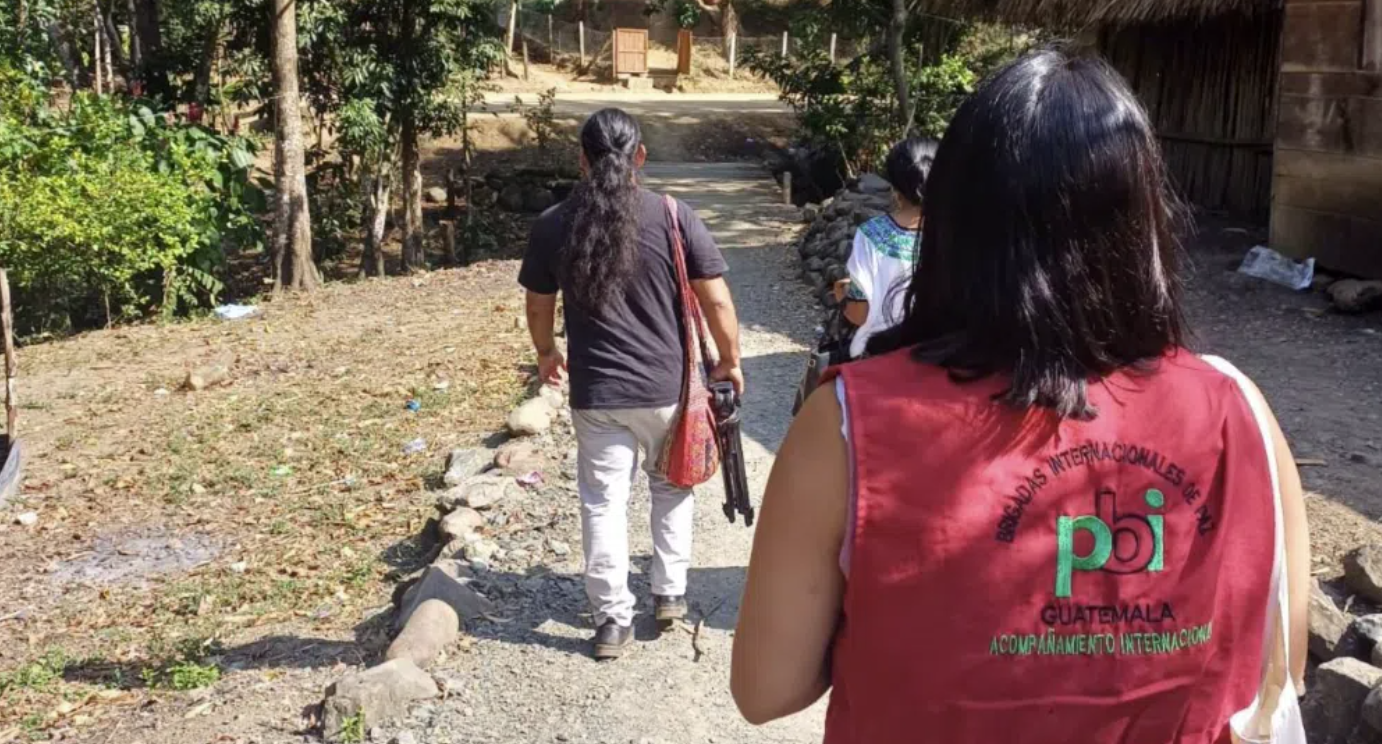
PBI-Guatemala has been accompanying the #CasoDiarioMilitar (Military Diary Case) court hearing process that began in May 2021.
Photo: PBI-Colombia accompanies the Committee for Solidarity with Political Prisoners (CSPP) at the International Workers’ Day march in Bogotá, May 1, 2026.
Peace Brigades International accompanies union and worker movements that experience risks and violence due to their work advancing the interests of working peoples and peasant-farmers in Colombia, Guatemala, Honduras and Mexico.
In 2025, the Americas region remained the deadliest for workers and their representatives, with extra-judicial killings recorded in Colombia and Mexico.
And we continue to call for the safe return of Juan Francisco Palacios Murillo who was forcibly disappeared in Mexico in June 2025.
We further note that the UK-based Business and Human Rights Centre (BHRC) documented that there were at least 42 business-related attacks against unions and 38 business-related attacks against workers in 2025.
The BHRC database further specifies that there were attacks against Silvio Mendoza and Rocío Torres Bobadilla in Colombia, and against the Sindicato de Trabajadores Bananeros de Escuintla (SITRABE) in Guatemala.
We continue to follow all of this with concern.
Over the past year, Peace Brigades International has accompanied and amplified union and worker movement related struggles, including:
We acknowledge the solidarity and support of the Unifor Social Justice Fund in enabling Peace Brigades International to accompany organizations, defenders and communities, to document these accompaniments, and to amplify issues of concern related to union activists and worker movement formations.
—
The twenty-six accompaniments (on average two per month) in 2025-26 sorted by Peace Brigades International field project.
Peace Brigades International-Canada coordinator Brent Patterson moderated a panel on militarism and “organizing for just peace” at the International League of Peoples’ Struggle (ILPS) conference in Ottawa on May 26, 2026.
The panel featured two Indigenous land defenders whose territories are situated within British Columbia, Billie Pierre and Kolin Sutherland-Wilson; Philippines peasant leader Danilo Ka Daning Ramos; Salvadoran activist Maricarmen Guevara; and Mohamad, a representative of the Palestinian Youth Movement.
Kolin Sutherland-Wilson and Billie Pierre
Both Gitxsan land defender Kolin Sutherland-Wilson and Nlaka’pamux land defender Billie Pierre have been criminalized for their resistance to megaprojects, namely the Coastal GasLink pipeline on Wet’suwet’en territory and the Trans Mountain pipeline expansion on Secwepemc territory in British Columbia. Both pipelines were built without the free, prior and informed consent of Indigenous peoples.
In May 2022, CBC News reported that the United Nations Committee on the Elimination of Racial Discrimination (CERD) had sent a third rebuke to the Government of Canada calling on it to stop construction on both pipelines.
That letter stated that the governments of Canada and British Columbia “have escalated their use of force, surveillance, and criminalization of land defenders to intimidate, remove and forcibly evict Secwepemc and Wet’suwet’en Nations from their traditional lands…” The letter further names the Royal Canadian Mounted Police (RCMP) Community-Industry Response Group (C-IRG) and private security forces as the perpetrators.
Danilo Ka Daning Ramos
The International Coalition for Human Rights in the Philippines (ICHRP-Canada) has previously highlighted: “Ka Daning, a farmer himself, is a staunch human rights defender and environmentalist. KMP has effective leadership over a total of 1.3 million rural people with 65 provincial chapters and 15 regional chapters nationwide.”
AlterMidya has reported: “Ka Daning is a survivor of the 1987 Mendiola Massacre. He was among the tens of thousands of poor farmers from Luzon who marched to the then Ministry of Agrarian Reform and later to Mendiola. They were demanding free land distribution to the then Cory Aquino administration when the Philippine Constabulary (now PNP), opened fire at the protesting farmers, killing 13 and injuring scores of others.”
In February 2024, PAN Asia Pacific (PANAP) expressed “deep concern about the reported incidents of surveillance and red tagging that Danilo Ramos, chairperson of the Peasant Movement of the Philippines (KMP), has recently faced.”
They further noted: “Many cases of human rights violations, including political killings, involve activists red-tagged by the government. We are outraged that Ramos is facing real threats to his life for standing up for the rights of landless Filipino peasants.”
Mohamad, Maricarmen Guevara
More about the presentations from Mohamad and Maricarmen soon.
The ILPS
The International League of Peoples’ Struggle describes itself as “an anti-imperialist and democratic formation. It promotes, supports and develops the anti-imperialist and democratic struggles of the peoples of the world against imperialism and all reaction. It has a broad mass character and not subordinate to any political party, government or religion and affords equality to all participating organizations.”
Shut Down CANSEC and The Council of Canadians co-organized a bus tour on Wednesday May 27, 2026, the first day of the CANSEC arms show in Ottawa. Thirty-nine community members registered for this educational excursion.
The promotion on social media highlighted: “Join our ‘Fund Healthcare, Not Warfare’ Ottawa Bus Tour to call for public money to support healthcare, not conflict. The tour is organized by the Council of Canadians and the Shut Down CANSEC campaign, and endorsed by the Ottawa Health Coalition, the Canadian Friends Service Committee and the Ottawa chapter of the Council of Canadians.”
The promotion further explained: “Together, we’ll travel to Ottawa and learn more about how the fight for public healthcare and against militarism are intertwined. This 90-minute bus tour … will include brief stops at Ottawa-area institutions that are profiting from the unprecedented billions being spent on weapons systems, like the Canadian Association of Defence and Security Industries (CADSI), Lockheed Martin, and the CANSEC ‘defence, security and emerging technology’ arms show at the EY Centre.”
Featured speakers at key stops during the bus tour included Laura Shantz, Senior Advisor for Advocacy and Campaigns at the Canadian Association of Professional Employees (CAPE) and Amy Roberts, the president of the Ontario Nurses Association Local 83, which represents nurses at The Ottawa Hospital.
Resource people for the bus tour also included Nikolas Barry-Shaw, the Trade and Privatization Campaigner at The Council of Canadians, and Brent Patterson, the Coordinator of Peace Brigades International-Canada.
The United Nations recognizes health and care workers as “key protectors of the right to health, and thus human rights defenders.” UN Special Rapporteur Tlaleng Mofokeng says they are both “rights holders” and “protectors of the rights of health seekers, since both aspects are interlinked.”
While health care professionals in Canada face a normalization of “hallway medicine” and a prioritization of billions of dollars for the military and weapons purchases, Front Line Defenders has documented that “those defending the right to health and the right to life as doctors, nurses, or ambulance workers, those exposing and documenting war crimes as journalists, and those providing humanitarian support as volunteers or employees of aid agencies were all specifically targeted by Israeli bombs or guns.”
The bus tour visited both The Ottawa Hospital that announced in April 2026 it would be cutting 400 jobs, the majority of which are nursing positions, including about 200 registered nurses, and other frontline health workers, as well as the corporate office of Lockheed Martin, a US-based company that manufactures the Hellfire R9X missile implicated in the bombing of the al-Shifa Hospital in Gaza City in 2023.
Amid the ongoing protests in Bolivia against the government of Rodrigo Paz, activists Adriana Guzmán and Diana Vargas—members of the Anti-Patriarchal Community Feminism movement and Feministas del Abya Yala—were detained on May 22. Along with them, at least 60 other people were arrested during the protests demanding the president’s resignation.
Hours later, the activists were released, though they remain under investigation, in what various organizations denounce as a mechanism of persecution and intimidation against grassroots, feminist, and indigenous leaders.”
Calls for Bolivian president to step down
France 24 reports: “Bolivian riot police clashed with anti-government protesters in La Paz on Friday [May 22] for the second time in a week as unions and Indigenous groups pressed their calls for President Rodrigo Paz to step down. Demands for the business-friendly conservative to resign have persisted despite his promise to respond to the grievances of labor unions and Indigenous communities.”
That article adds: “Trade unions began demonstrating in early May for wage increases, improved fuel supplies and economic stability. But as the weeks passed, the demonstrations snowballed into a full-blown revolt, marked by calls for the resignation of the US-backed Paz.”
Amnesty International
Amnesty International has documented that in 2025: “Environmental defenders faced attacks, persecution and criminalization. Deforestation, wildfires and mining generated pollution and endangered human rights, especially for Indigenous Peoples. Detainees suffered overcrowding and insecurity. There was a risk of impunity in connection with massacres. Feminicides and infanticides were recorded.”
Arming repression
The Observatory of Economic Complexity (OEC) notes: “In 2024, Bolivia imported $4.91M of Weapons, becoming the 112nd largest importer of Weapons (out of 211) in the world. During the same year, Weapons were the 73rd most imported product (out of 96) in Bolivia. In 2024, Bolivia imported Weapons primarily from: Brazil ($1.39M), Czechia ($1.22M), Spain ($854k), Italy ($849k), and Argentina ($278k).”
Their page adds: “The fastest growing origins for Weapons imports in Bolivia between 2023 and 2024 were: Italy ($569k), Spain ($200k), and Germany ($109k).”
Italy, Spain, Germany, along with Brazil, Czechia, Argentina, are expected to be at the CANSEC arms show in Ottawa this coming May 27-28.