


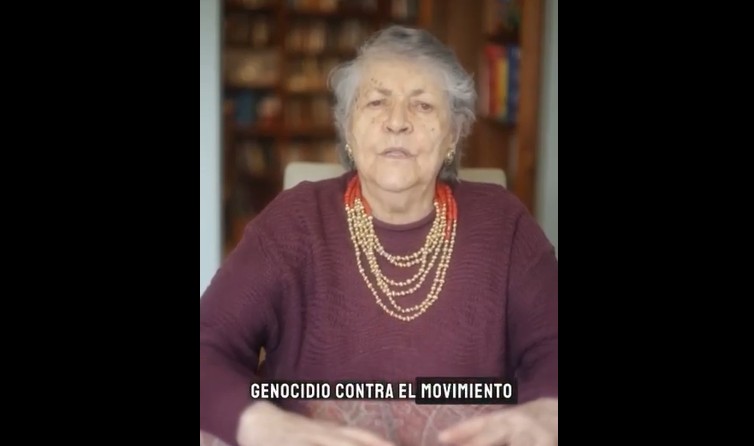
The Association for Social Research and Action (Nomadesc) is calling for social organizations, human rights defenders and Colombian social movements to join with them and sign a letter in opposition to Resolution 294.

The letter expresses “rejection and indignation at Resolution 294 issued by the Presidency of the Republic in which the Colombian government, through the Minister of the Interior Armando Benedetti, that recognizes the paramilitary group Clan del Golfo with the name of ‘Gaitanista Army of Colombia’.”
Resolution 294
On September 10, Infobae reported: “The National Government issued resolution 294 of 2025, through which it recognizes the Gaitanista Army of Colombia, also called Clan del Golfo, as an Organized Armed Group (GAO).”
Furthermore, Deutsche Welle reports: “The Colombian government and the Gulf Clan, the largest criminal gang in the South American country, formally began peace talks on Thursday (September 18, 2025) in Doha (Qatar)… For its part, the Colombian government ‘takes note’ that the Gulf Clan ‘refuses to be categorized as a paramilitary or neo-paramilitary group’…”
Annul resolution 294
The letter comments: “It is not by recognizing the political status of those who have benefited from the action of paramilitarism, drug trafficking and genocide in our country that peace will be achieved in Colombia.”
The letter concludes: “[In memory of] the thousands of victims of the paramilitarism of the Clan del Golfo, we ask you to annul resolution 294 that has generated a feeling of indignation and unnecessary pain. In coherence with historical memory and the overcoming of genocidal practices, we urgently demand the structural revision of the peace policy in Colombia.”
Paramilitarism in Colombia
The National Centre of Historical Memory has previously found that most of the killings during the internal armed conflict in Colombia were perpetrated by far-right militias backed by ranchers and cocaine traffickers to counter leftist rebels.
The Guardian reports: “The report documents 1,982 massacres between 1980 and 2012, attributing 1,166 to paramilitaries, 343 to rebels, 295 to government security forces and the remainder to unknown armed groups.”
Between 1986 and 2013, when the report cited above was published, more than 2,800 labor leaders and union members were killed in Colombia. It has also been reported: “Between 2000 and 2010, 63.12% of the global murders of trade unionists occurred in Colombia, leaving more than 2,800 labor rights defenders dead.”
Paramilitary groups and state security forces are seen as responsible for most of the killings of trade unionists.
Commemoration in 2028 of the Banana Massacre
The letter signed by Nomadesc also highlights: “In 2028, the centenary of the massacre against the workers who worked for the United Fruit Company, murdered on December 5, 1928, is commemorated. The undersigned organizations are coordinating the great pilgrimage in honor of the heroes of the banana strike…”
Time magazine has provided this history of the Banana Massacre:
“In October 1928, banana workers from UFC plantations in the Magdalena zone assembled and created a list of [nine] demands under the labor union Magdalena Workers Union (Unión Sindical de Trabajadores del Magdalena, USTM). Their demands were modest, ranging from higher pay and insurance to the discontinuance of company stores. The most important demand, however, was the recognition of UFC employees as formal company workers entitled to the full protections of Colombian labor law.
United Fruit’s general manager, Thomas Bradshaw, baulked. He refused to recognize and negotiate with the USTM.
In a final effort [after failed negotiations], crowds of workers gathered at Ciénaga to talk with the governor and United Fruit. Neither the governor nor a UFC representative ever arrived, but by nightfall, General Carlos Cortés Vargas, now armed with a new decree to restore order, demanded the crowd disperse and return home. When workers refused, the general’s soldiers lit the plaza up with gunfire.”
As many as 2,000 workers were killed that night.
The University of Toronto Visualizing the Americas project notes: “The people of the banana zone insisted that the military killed hundreds of strikers that night, but when daylight broke, according to official memory, just nine bodies lay in the plaza. Josefa María, who worked from Ciénaga to support the strike, noted that the military had deliberately left each corpse as a symbol: ‘They had only left nine dead bodies, equal to the nine demands that the workers made.’”
In 1970, the United Fruit Company merged with another company to form the United Brands Company.
In 1990, that company was renamed Chiquita Brands International.
Court ruling on the AUC paramilitary and Chiquita
In June 2024, a US federal court found Chiquita Brands International liable for the financing of the United Self-Defense Forces of Colombia (AUC), a right-wing paramilitary, and ordered Chiquita to pay $38.3 million in compensation to the families of eight people killed by the AUC between 1997 and 2004.
The Guardian has reported: “The civil cases were brought by the family members of trade unionists, banana workers and activists who were tortured, killed and disappeared by paramilitaries as they sought to control the vast banana-producing regions of Colombia. …Among the victims who presented evidence was the widow of a union leader who was tortured, decapitated and dismembered by the AUC in 1997.”
The BBC further notes: “The AUC engaged in widespread human rights abuses in Colombia, including murdering people it suspected of links with left-wing rebels. The victims ranged from trade unionists to banana workers.”
In an article about this court ruling, CNN reported: “Rights groups say powerful corporate interests continue to collude with local politicians and criminal groups to repress activism, particularly in defense of the environment, which can be a dangerous business in South America.”
The Clan del Golfo (AGC), that Resolution 294 recognizes as the ‘Gaitanista Army of Colombia’, was formed in part by paramilitary commanders who refused to demobilize in 2005 along with the rest of the AUC.
Accompaniment
Peace Brigades International has accompanied the Association for Social Research and Action (Nomadesc) since 2011, and its president Berenice Celeita since 1999.

