Home Blog Page 3

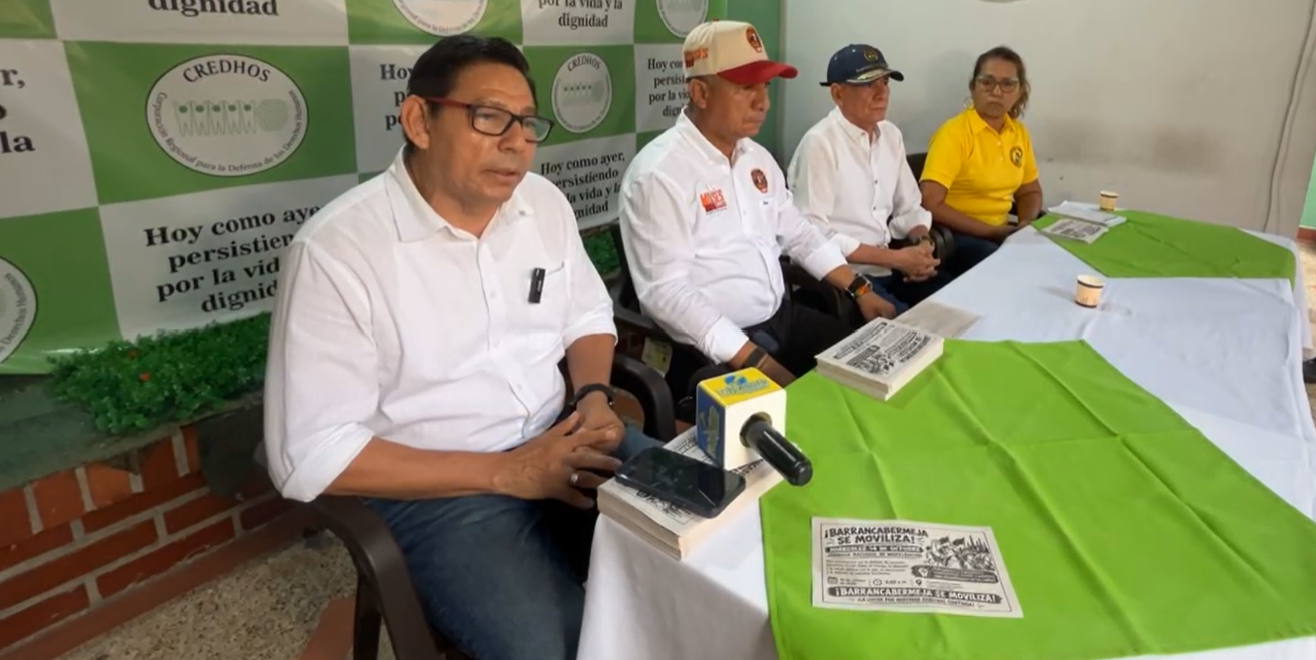
PBI-Colombia notes concern over death threats made against human rights defender from the Justice and Peace Commission

The Peace Brigades International-Colombia Project has posted on social media:

“There is deep concern over death threats made against a human rights defender from the @Justiciaypazcol [Justice and Peace] Commission, who is accompanied by PBI, following a meeting with other defenders from MOVICE [Movement of Victims of State Crimes].  There is an urgent need for effective measures to safeguard the lives and safety of those under threat, to ensure compliance with the precautionary measures issued by the @CIDH [Inter-American Commission on Human Rights], and to investigate both the perpetrators and those behind the threats.”

This follows the Justice and Peace Commission posting on social media:

“#UrgentAlert A human rights defender from our Justice and Peace Commission has received a direct death threat, in a situation that indicates he is being targeted and faces an extreme risk to his life.

This incident confirms the ongoing attacks against those who defend human rights on the Caribbean Coast and the lack of effective protection measures by the State.

We demand immediate action to guarantee the lives and safety of our defenders.

#HumanRights #HumanRightsDefenders #JusticeAndPeace #colombia”

We continue to follow this.

The People’s Front in Defence of Land and Water denounces the murder of Sandra Rosa Camacho in Morelos

Photo from Educa Oaxaca.

The People’s Front in Defence of Land and Water-Morelos, Puebla and Tlaxcala has posted on social media: Sandra’s murder is a femicide, but also a political murder, an attack on the right to organize of peoples, a way of intimidating and sending a message to anyone who wants to organize for the good of their people.”

Educa Oaxaca has also posted: “Sandra had requested security from the governor of the state, Margarita González Saravia, in August 2025, since she felt that her life was in danger due to the collection of rent from organized crime.”

On March 27, La Jornada reported: “Sandra Rosa Camacho Flores, a social activist from the municipality of Temoac, was murdered by armed individuals yesterday afternoon at her home located in the capital of that demarcation in eastern Morelos, and about 79 kilometers from Cuernavaca.”

La Jornada also reported: “The People’s Front in Defense of Land and Water of Morelos, Puebla and Tlaxcala demanded justice for the femicide and political murder of social activist Sandra Rosa Camacho.”

“[She was] murdered in her home on the afternoon of Thursday, March 26, for demanding security and denouncing the caciquismo of a criminal cell that has controlled the municipality of Temoac for at least three three-year terms.”

“Members of the movement pointed out that the crime was committed with the same modus operandi as the murder of Samir Flores Soberanes, and complained to the governor, Margarita González, who, despite the fact that Sandra told her that she feared for her life, did not protect her.”

The article also noted: “The activists and opponents of the Morelos Integral Project (PIM), in addition to demanding clarification and justice for Sandra’s political murder from both the state government and the State Attorney General’s Office (FGE), also asked the governor: ‘How many more lives are the people of eastern Morelos going to continue to put on the line because of the impunity that continues in your government?’”

Peace Brigades International has accompanied the People’s Front of Land, Water and Air of Morelos, Puebla and Tlaxcala since early 2020.

We continue to follow this.

Further reading: PBI-Canada with PBI-Mexico as it accompanies the People’s Front in Defence of Land and Water at activities over four-day period (February 24, 2026).

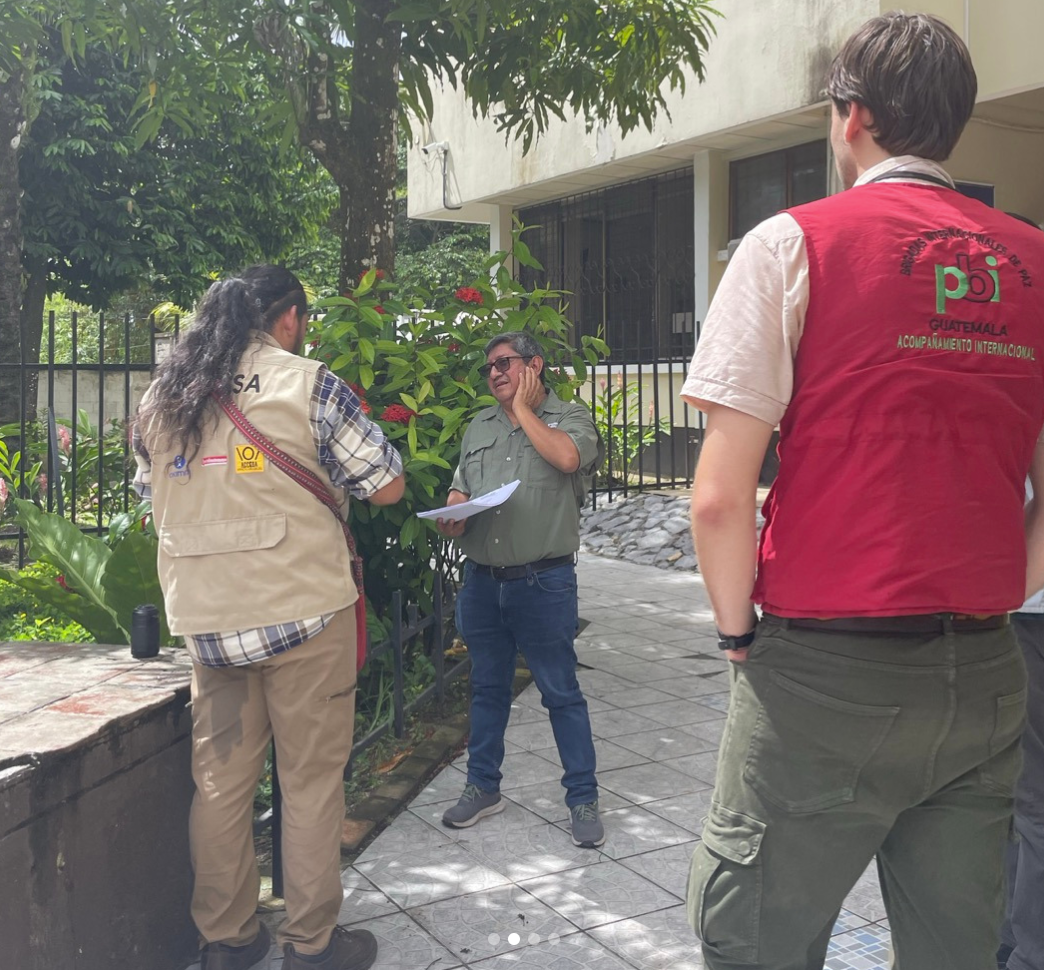
PBI-Guatemala accompanies REDSAG member José Miguel as legal proceedings continue against El Pilar sugar refinery

The Peace Brigades International-Guatemala Project has posted on social media:

“On Monday [March 23], #PBI accompanied José Miguel, a member of @_redsag [the Network for the Defense of Food Sovereignty], to the Multi-judge Court of First Instance for Criminal Matters, Drug-related Offences and Environmental Crimes in Retalhuleu, to attend the hearing against Ingenio El Pilar, which stands accused of pollution and diverting the river in Pajales Sis. The hearing began with the lawyer for Ingenio El Pilar, but the complainant, José Miguel, and his lawyer were barred from the courtroom.

WaterIsLife”

PBI-Guatemala has previously noted:

PBI has accompanied members of the REDSAG Political Council since September 2025, especially José Miguel Sánchez López from the Pajales Sis community in San Andrés Villa Seca, Retalhuleu, and sisters Carmelina and Estela Chocooj from the Soledad Sayaxut community in Cobán, Alta Verapaz.

The Pajales Sis community is located between the El Pilar and Tululá sugar refineries. José Miguel Sánchez López, a member of the Pajales Sis Community Development Council (COCODE), has been speaking out for years about the consequences of both sugar refineries’ poor practices, which have affected community members’ lives. As a result, he has been targeted for criminalization by the sugar refineries.

Legal proceedings

The community currently has two legal proceedings underway: a civil case against the El Pilar sugar refinery for the deterioration of the gabions, which now pose a serious flood risk; and a criminal case for the river’s contamination with agrochemicals from El Pilar. As a result of the latter case, community members, particularly José Miguel Sánchez, have been subjected to threats and defamation.

PBI-Canada visit

On May 2-4, 2023, PBI-Canada visited the South Coast of Guatemala to learn more about the impacts of sugar production on communities and their access to water.

At that time, PBI-Canada saw diminished and polluted rivers attributed to sugar production and visited numerous communities that shared stories about how the water required for sugar mills had dried wells and gardens.

Photo: The entrance to the El Pilar sugar mill. Photo by PBI-Canada.

Photo: PBI-Canada hears testimony in the community of Pajales Sis about the impacts of the El Pilar sugar mill, May 2, 2023.

We continue to follow this.

PBI-Colombia accompanies Justice and Peace and the Amazon Pearl Reserve Zone on International Women’s Day

On March 27, the Peace Brigades International-Colombia Project posted on social media:

“On 8 March, we accompanied @justiciapazcolombia [the Inter-Church Justice and Peace Commission] and @perlaamazonica_zrcpa [the Amazon Pearl Peasant Reserve Zone] to mark International Women’s Day. The women of “My Name is Amazon Pearl Woman” (MEMPA) gathered for a meeting in which they discussed, from the perspective of the women and young people of the La Perla Amazónica Peasant Reserve, their fundamental role in this shared home.

During the event, a collective moment was set aside to honour and reflect on the history of MEMPA, with its important, difficult and also beautiful moments. They also reflected on new productive proposals with a view to transformation for the coming year. It was a day for sharing, playing, eating and laughing.

At PBI, we celebrate the women and young people of the ZRCPA and MEMPA, as well as their work in peacebuilding, the protection of life, biodiversity, and the ongoing defence of their human rights.

#8M #Peacebuilding #ProtectionOfLife”

The ZRCPA is located near Puerto Asis in the department of Putumayo, which is situated in south-west Colombia near the border with Ecuador.

The Inter-Church Justice and Peace Commission has been accompanied by Peace Brigades International since 1994.

PBI-Canada highlights the need to strengthen the Protection Mechanism in Mexico at APG-organized call with Global Affairs Canada

Photo: Mixteca land defender Irma Galindo Barrios went missing on October 27, 2021, in Oaxaca, Mexico while waiting for a meeting with the Protection Mechanism. Despite multiple attacks against Irma, the Protection Mechanism risk analysis had stated her situation was “ordinary”, meaning that “she can wait” and that “her life is not in danger”. (Photo: Family lawyer/Common Dreams).

Along with Canadian civil society members of the Americas Policy Group (APG), Peace Brigades International-Canada participated in a call with the Mexico and Trilateral Affairs Division of Global Affairs Canada.

While our colleagues raised a series of key issues with Global Affairs Canada, PBI-Canada focused on the call to strengthen the Protection Mechanism for human rights defenders and journalists in Mexico.

The Protection Mechanism

We highlighted that Mexico is one of the most dangerous countries in the world for human rights defenders and journalists.

The Civil Society Space of Organizations for the Protection of Human Rights Defenders and Journalists (Espacio OSC), which is accompanied by PBI-Mexico, has documented that 205 human rights defenders and journalists have been killed in Mexico between 2016 and 2025. During this period, there were also 28 attempted murders and 62 disappearances of defenders and journalists.

The Protection Mechanism provides protection measures to about 2,500 defenders and journalists. This can include bodyguards, armoured vehicles and safe houses, but more often assistance hotlines, cameras and physical security measures such as fencing for homes and offices.

The Protection Mechanism is understaffed (just eight analysts), has excessive wait times, has seen its annual budget of about CAD $45 million cut, and needs to strengthen gender, community and intersectional approaches.

Irma Galindo Barrios was forcibly disappeared while waiting for an interview to apply to be admitted into the Protection Mechanism. Several have also been killed once in the Mechanism (including journalist Kristian Zavala in March 2025, and Indigenous Rarámuri leader Julián Carrillo in October 2018). It is also possible given the level of Canadian investment that there are defenders and journalists in the Mechanism in the context of community resistance to Canadian extractivist megaprojects.

Photo: Kristian Zavala. Photo from Article 19/X.

Photo: Remembering Julián Carrillo on Parliament Hill on October 24, 2023, the fifth anniversary of his death.

UPR in January 2024

In January 2024, during the United Nations Human Rights Council Universal Periodic Review (UPR) of Mexico, Canada called on Mexico to: “Strengthen, from an intersectional and gender perspective, the federal Protection Mechanism for Human Rights Defenders and Journalists, specifically in the areas of prevention, protection, investigation, and reparation.”

Canada-Mexico Dialogue in May 2025

We note that in the Canada-Mexico Dialogue that took place on May 8, 2025, in Mexico City, the Protection Mechanism was discussed under the theme of “Freedom of Expression and the Right to Security”.

The report indicates: “Discussions addressed concerns related to attacks on freedom of expression, the influence of social media in spreading hate and discrimination, and the risks faced by journalists and human rights defenders in Mexico and globally. Topics also included the increase of digital threats, the importance of cybersecurity, the issue of disappearances in Mexico, Mexico’s human rights protection mechanisms and the possibility of a database to monitor disappearances. Both countries agreed to share experiences regarding data protection and databases.”

Our efforts so far

In September 2025, just after Canadian prime minister Mark Carney visited Mexico, PBI-Mexico accompanied two human rights defenders from the Espacio OSC to Ottawa to highlight and discuss this recommendation. They met with Global Affairs Canada officials on September 25, 2025.

On February 12, 2026, PBI-Canada and PBI-Mexico collaborated with Espacio OSC to host a 90-minute webinar that featured two of the defenders who had visited Ottawa to help amplify the call to strengthen the Protection Mechanism.

Then on February 27, 2026, PBI-Canada and PBI-Mexico conveyed the same message in a meeting with two officials at the Embassy of Canada in Mexico City just after the Team Canada Trade Mission to Mexico.

Now, March 27, 2026, we have had this meeting with representatives from the Mexico and Trilateral Affairs Division of Global Affairs Canada, as well as the Human Rights and Freedoms Division, and the Embassy of Canada in Mexico.

The upcoming Canada-Mexico Dialogue in May 2026

We look forward to providing further input for the upcoming Canada-Mexico Dialogue on Human Rights and Multilateral Affairs expected to take place in late-May in Ottawa. The thematic issues that could be discussed include gender equality; freedom of expression, media freedom and rights in the digital space; economic rights; addressing global challenges in multilateral settings; and cooperation in regional and international bodies on shared priorities.

We are now planning a second webinar in advance of the Canada-Mexico Dialogue on Human Rights and Multilateral Affairs.

We continue to follow this.

Canadian Foreign Affairs Minister Anand says CORE ombudsperson is “important”, they are trying to fill the position

On September 29, 2025, PBI-Canada and PBI-Mexico accompanied two representatives from Espacio OSC at a meeting in Ottawa with Terrence Cowl, the Deputy Canadian Ombudsperson for Responsible Enterprise (CORE).

The non-governmental organization Above Ground along with the Canadian Network on Corporate Accountability have highlighted concerns about the CORE position having been left vacant for the past ten months.

This week The Globe and Mail reported: “The United Nations Committee on Human Rights, which includes representatives from the United States, France and Spain, criticized [on Monday March 23] Ottawa for failing to fill the post of a watchdog whose job was to investigate human rights abuses by Canadian companies operating abroad.”

The newspaper noted: “’The Committee recommended that Canada urgently appoint a new Ombudsperson for Responsible Enterprise and ensure the office’s independence and adequate resources,’ the panel said in its report.”

It adds: “The panel [also] called on Canada to ‘strengthen mechanisms to ensure that business enterprises under its jurisdiction respect human rights standards, including when operating abroad.’”

The Globe and Mail now reports: “Foreign Affairs Minister Anita Anand says [on Wednesday March 25] a federal watchdog that polices Canadian corporate conduct abroad remains ‘important’ and said Ottawa is trying to find a new top executive to lead the office that has lacked a permanent head for nearly two years.”

Strengthening CORE

On November 14, 2024, Mary Lawlor, the United Nations Special Rapporteur on human rights defenders, posted comments she made earlier in the month “calling for the significant strengthening of the CORE.”

Lawlor highlighted: “I have long-standing concerns, however, as to the adequacy of the CORE, in its current form, to provide any adequate form of redress for human rights defenders and the communities they represent when their rights have been violated or been put at risk by Canadian companies operating abroad. This has been reflected in conversations I have had with human rights defenders since taking up my mandate, who, where aware of the CORE, have repeatedly told me they have no confidence in its effectiveness.”

Among her four recommendations, Lawlor calls on the Government of Canada to: “Provide the CORE with legally enforceable powers to compel evidence and testimony from companies, in line with international standards and best practice on ombudspersons’ offices, to enable effective investigations of all cases and overcome the barriers presented when companies refuse to meaningfully engage with the CORE.”

We continue to follow this.

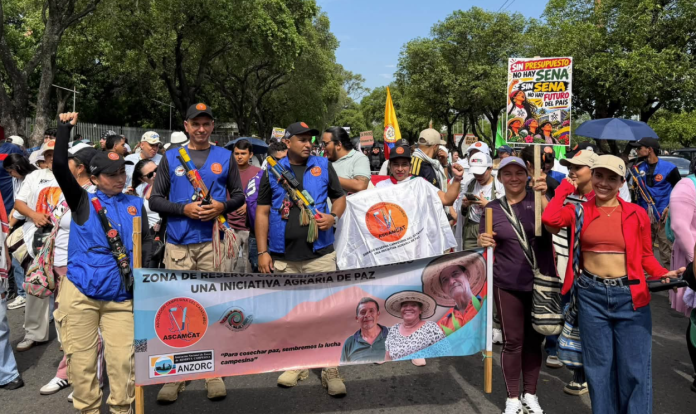
PBI-Colombia accompanies humanitarian caravan to areas impacted by armed conflict in Catatumbo

Vivamos Humanos has posted on social media:

“Today we were with the Humanitarian Roundtable on the first day of the Humanitarian and Institutional Commission in Catatumbo.

Together with the Bari Indigenous People, the Catatumbo Peasant Association (ASCAMCAT), the Mothers of Catatumbo, the Popular Peasant Movement (MCP), the Humanitarian Coordinating Committee, and 22 other institutions, we successfully completed the first day, carrying out activities related to institutional support, health services, and humanitarian assistance. There was massive participation from the communities, providing guidance and support regarding human rights situations amidst a humanitarian crisis that has worsened since last year.

Tomorrow we continue our work in Kilometer 25 and on Friday in Versalles. We reiterate our call for the maintenance of security conditions and guarantees so that we can continue with the mission.”

El Espectador reports: “In the midst of the war waged for more than a year by the National Liberation Army (ELN) and the 33rd Front of the FARC dissidents in Catatumbo – which left the region plunged into the worst humanitarian crisis in the country in the last 20 years – the organization Vivamos Humanos is leading a humanitarian mission together with more than 20 state entities and organizations working in the territory.”

La Opinión also reports: “A humanitarian caravan is currently touring the most affected areas of Catatumbo with a clear objective: to verify on the ground the serious violations of human rights and to provide urgent attention to the communities hit by armed violence.”

That article adds: “The main purpose of this caravan is to verify the effects derived from the recent clashes between the National Liberation Army (ELN) and the dissidents of the FARC’s 33rd Front, as well as to activate an institutional response that allows the restoration of the rights of the civilian population.”

It further notes: “The figures reflect the seriousness of the situation. Since January 2025, when the confrontation intensified, nearly 99,000 people have been displaced, more than 600 confined and around 30,000 peasants forced to leave their lands. To this are added at least 170 homicides and multiple cases of disappearance, in addition to 4,000 emergency evacuations. In 2025 alone, Catatumbo accumulated 262 violent events, consolidating itself as one of the most affected regions in the country.”

We continue to follow this.

PBI-Honduras video includes call from the Arcoíris LGTB Association of Honduras to decentralize the Protection Mechanism

The Peace Brigades International-Honduras Project has posted this short video on social media along with text that says:

“Donny Reyes of @arcoirishn expressed concern about the risks and discrimination faced by LGBTI+ people during the session of the Human Rights Council (@onuderechoshumanos) on the adoption of the 2025 Universal Periodic Review. At PBI, we remind the international community of the need to monitor compliance with these recommendations.”

In the video, Reyes says: “The Sexual Diversity Committee of Honduras submitted 20 recommendations to the UPR [including] to decentralize and strengthen the national protection mechanism for defenders, promoting technical and financial resources for it.”

“We are not asking for Privileges”

One of the recommendations in “We are not asking for privileges: Report prepared for the Universal Periodic Review (UPR) of Honduras, November 2025” published by the Committee for Sexual Diversity of Honduras (CDSH) and Peace Brigades International (PBI) Honduras in April 2025 is:

“Decentralize and strengthen the National Protection System (SNP), providing it with the technical and financial resources necessary for an effective protection response to human rights defenders.”

Canada’s position at the UPR

On November 7, 2025, Canada commented on the protection needs of human rights defenders in Honduras during the Universal Periodic Review (UPR) of Honduras at the United Nations Human Rights Council in Geneva.

Speaking on behalf of Permanent Mission of Canada to the United Nations and the World Trade Organization, Joseph Flores Ayala stated: “Canada recommends that Honduras fully implement the National Protection Mechanism by establishing robust accountability measures for state authorities who fail to provide adequate protection to human rights defenders, including Indigenous rights defenders, environmental rights defenders, and journalists.”

Voices at Risk

Voices at Risk: Canada’s Guidelines on Supporting Human Rights Defenders notes: “LGBTI HRDs are regularly subjected to harassment and intimidation, arrest, physical attack, negative portrayal in news media and social media, and interference with their lawful exercise of rights, such as freedom of expression and freedom of assembly. Some are killed for engaging in their work. LGBTI HRDs may also experience extreme isolation and a lack of political or social support from others, including other HRDs.”

Voices at Risk suggest several “best practices” for Canada’s embassies, consulates and missions including: “Mission staff should acquire a thorough understanding of the local context relevant to the work of LGBTI HRDs, including knowledge of national laws and policies for protecting the rights of LGBTI persons, as well as awareness of societal attitudes towards LGBTI communities.”

Accompaniment

Peace Brigades International began accompanying the Arcoíris LGTB Association of Honduras in 2015.

Additional reading: Honduras Protection Mechanism is inadequate in the face of high levels of intimidation of journalists, says UN rapporteur (OHCHR, November 1, 2023).

PBI-Guatemala accompanies Maya Ch’orti’ Indigenous Council of Olopa at Meeting of Guardians of the Common Home on territorial defence

The Peace Brigades International-Guatemala Project posted on social media:

“On Saturday [March 21], #PBI accompanied the Ch’orti’ Maya Indigenous Council of Olopa Chiquimula at the Meeting of Guardians of the Common Home, held in Mixco. These sessions, organised by the Procladegua Foundation, aim to bring together communities from different regions affected by or at risk of extractivism in their territories. It has been a space for learning and coordination where defenders strengthen their knowledge and tools for community security and the defence of their territory.”

As noted on their website, the Procladegua Foundation “is inspired by objectives of social outreach and cooperation, solidarity and humanitarian assistance.”

Territorial defence against mining

PBI-Guatemala has previously explained: “The Maya Ch’orti’ Indigenous Council of Olopa are fighting for recognition as indigenous communities, the recovery of their spirituality, the defense of their territory and the right to free, prior and informed consultation before the entry of mining projects into their territory. They also seek to minimize the negative impacts of mining activities on the health of the people in their communities, denounce illegal logging and fight against gender violence in their communities.”

They also note: “The communities of Olopa are confronting the company American Minerals S.A., which was granted a 25-year antimony extraction license in 2012, without prior consultation with the communities.”

Canada

The independent Canadian magazine The Walrus has reported that according to Professor Catherine Nolin (University of Northern British Columbia) and geographer Jacqui Stephens Canada’s advocacy through its embassy in Guatemala to create a pro-mining, pro-business environment included forming ties with Otto Pérez Molina, Guatemala’s president from January 2012 to September 2015.

According to the National Security Archive, Pérez Molina was allegedly involved in ‘scorched earth campaigns,’ which annihilated entire Indigenous villages during the country’s civil war.”

In December 2023, the Costa Rica-based La Ruta del Clima (the Climate Route Association) noted: “Los Manantiales corresponds to the transnational company Texas American Minerals, and to the Guatemalan company American Minerals, S.A. …According to one of the people interviewed, the strategy of multinationals is to work through subsidiaries, so that the companies appear to be local, but are linked to foreign capital, in this case Canadian.”

Accompaniment

Peace Brigades International began accompanying the Maya Ch’orti’ Indigenous Council of Olopa in June 2021, following their request, which is based on the serious increase in security incidents, defamation and criminalization.

PBI-Honduras highlights COFADEH concerns about Honduran government’s cancellation of Programme for Memory, Truth, Reparation, Justice and Non-Repetition

The Peace Brigades International-Honduras Project has posted on social media:

“To mark International Day for the Right to the Truth, we highlight the concerns raised by @cofadehddhh [the Committee of Relatives of the Detained and Disappeared in Honduras -COFADEH] regarding the Honduran government’s cancellation of the Programme for Memory, Truth, Reparation, Justice and Non-Repetition, through Executive Decree PCM-004-2026. At PBI, we value the work of COFADEH in the search for #truth and #justice for the families of #disappeared persons in Honduras, and we recall that the right to truth, to #memory and to #reparation is also a human right.

#humanrights #honduras #righttotruth”

Defensores en Linea reports: “In La Merced Park, also known as Plaza de los Desaparecidos, relatives of victims and survivors of the application of the National Security Doctrine held a sit-in on Tuesday [March 24] in the framework of the National Day for the Right to Truth, Memory and Justice.”

That article adds: “In her speech, the general coordinator of Cofadeh, Berta Oliva, pointed out that this date represents a national and international day dedicated to memory, truth and justice. ‘We are in a meeting to remember the importance of memory and to educate those who want to forget or erase the past. The memory of the people is not eliminated by decrees, and those who think so are wasting their time. It is also a day of national outrage over abuses against the justice system and what we consider strengthens the democratic rule of law.’”

It also notes: “The day, which lasted three hours, was attended by representatives of the Union of Workers of the National Agrarian Institute (Sitraina), the College of Pedagogues of Honduras (Colpedagogosh), as well as survivors, relatives of victims of the 80s, friends and international defenders, among others.”

And CHTV Honduras reports: “COFADEH coordinators protest in the lower halls of the National Congress over abuses being committed against the entire apparatus that strengthens the Rule of Law in Honduras. According to Berta Oliva, Executive Director of COFADEH, she states that for many years impunity has been experienced in Honduras, which has made Honduras a totalitarian and failed state in matters of democracy and Human Rights.”

COFADEH

COFADEH posted on social media a video with this text: “The coordinator general of COFADEH Berta Oliva, pointed out during the platoon by heart truth and justice, that Today is a day of national outrage. Outrage at the abuses that are being committed against the justice system and against all the apparatus that should strengthen our democratic State. We can’t keep quiet.”

They also posted: “On the National Day for Truth, Memory and Justice: Berta Oliva reminds those who want to erase it, that memory is not erased by decree that the perpetrators are wrong, memory is the same people.”

We continue to follow this.