Home Blog Page 285

Update on PBI brigadista information webinar, October 24

To register for a PBI brigadista information webinar with Giulia and Valentina, please click here.

PBI-USA and PBI-Canada are jointly organizing a PBI brigadista information webinar that will take place on Sunday October 24 at 2 pm EST.

Join us to hear from frontline PBI volunteers in Latin America about what it’s like to accompany at-risk human rights defenders.

Find out what a day in their life is like, what the application process is like, and ask any questions that you might have about being a brigadista.

To register for this webinar, please click here.

Along with our previously confirmed speakers Charlotte and Anuja, we are glad that Giulia and Valentina will also be participating in this webinar.

Giulia, PBI-Colombia

Giulia has noted:

“My story with PBI began in 2019 when I had the incredible opportunity to get to know the Peace Community of San José de Apartadó and its path of non-violent resistance, a very enriching experience that changed my perspective and opened my eyes to the situation of human rights defenders in Colombia.

What struck me most about PBI’s way of working was the principle of non-interference in the work of defenders, a concept that seems very simple and yet is extremely different from what international organisations usually do.

For me, who during my studies questioned the concept of development and its imposition from the global north on other areas of the world, this principle is extremely important and convinced me that working with PBI will be my way of contributing to the improvement of the human rights situation.”

Valentina, PBI-Colombia

Valentina has stated:

“The principles of non-violence and non-partisanship seemed to me fundamental to the construction of another type of society. It is not usual in almost any type of structure that decisions are taken horizontally, reaching agreements through consensus.

Despite the complexity of the Colombian reality: the increase in murders of human rights defenders, the criminalization of social struggles, impunity and political violence, I am moved that there are people who are fighting for the collective construction of a society in which other alternative forms to violence are possible.”

To register to hear more from, Giulia, Valentina, Charlotte and Anuja, please click here.

PBI-Mexico accompanied lawyer calls for European due diligence legislation instruments for Indigenous rights

On October 13, PBI-Mexico posted this quote from Juan Carlos Flores, a lawyer with the Peoples’ Front in Defence of Land and Water:

“It is necessary for Europe’s due diligence legislation to include instruments that guarantee the opening of a procedure before the European Union justice in case of violations of the human rights of indigenous peoples.”

The same could likely be said about due diligence legislation in Canada.

Canada represents about 75 per cent of the total foreign investment related to the mining sector in Mexico. Put another way, roughly 70 per cent of foreign-owned mining companies operating in Mexico are based in Canada.

Earlier this year, PBI-Mexico posted on Facebook this excerpt: ′′Mexico tops the list of countries with the largest number of mining conflicts in Latin America, with a total of 58 cases, of which 29 belong to Canadian mine projects.”

That figure came from a report by the Observatory of Mining Conflicts (OCMAL).

Global Witness has documented 30 lethal attacks against land and environmental defenders in Mexico in 2020, a 67 per cent increase from 2019. Logging was linked to almost a third of these attacks, and half of all the attacks in the country were directed against indigenous communities.

Canada does not have due diligence legislation in place that recognizes and addresses (through enforcement mechanisms and meaningful consequences) the dangers faced by human rights defenders (HRDs) who challenge the impacts of Canadian transnational corporations and investment banks on their communities.

On May 31, the Canadian Network on Corporate Accountability (CNCA) released draft model legislation to provide parliamentarians with a blueprint for an international corporate accountability law in Canada.

The model legislation can be read here.

The CNCA has noted: “Several European jurisdictions have passed, or are considering, comprehensive human rights due diligence legislation – most notably France’s 2017 Devoir de vigilence legislation, and the 2021 resolution of the European Commission outlining its forthcoming human rights due diligence legislation.”

But it adds: “Canada has failed to establish rules that require Canadian companies to respect human rights and the environment overseas.”

We continue to follow the progress of due diligence legislation in both Canada and the European Union.

Emily of the Canadian Network on Corporate Accountability and Karen from Above Ground introduce draft Canadian due diligence legislation.

PBI COP26 webinar to feature Nicaraguan environmentalist Amaru Ruiz, November 6

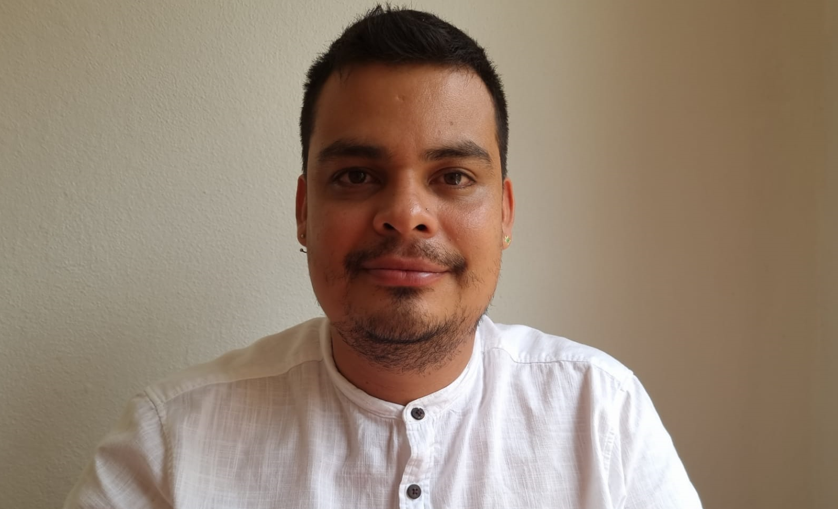
Nicaraguan environmental rights defender Amaru Ruiz Aleman will be speaking on the PBI ‘COP26 and land defenders’ webinar on November 6.

To register to hear him speak, click here.

Cities Defending Human Rights (Ciutats), a project coordinated by the Catalan Fund for Development Cooperation, notes: “He is a biologist, researcher and environmentalist, and the president of Fundación del Río, an institution founded in 1990 focused on conservation and sustainable development in South East Nicaragua.”

“The Indio Maíz Biological Reserve, one of the most important preserved areas in the country, falls within the foundation’s working area.”

That article adds: “At the end of 2018, Ruiz left Nicaragua after receiving numerous threats, being attacked in his own house and having received intel from different sources that the government was planning to arrest and process him. Now in Costa Rica, he is awaiting his right of asylum.”

November 2020 hurricanes

At the beginning of November 2020, hurricanes Eta and Iota, category 4 and 5 respectively, impacted Nicaragua and affected 60% of the territory.

Although it is not known how many people have been forcibly displaced from the Caribbean coastal communities of Nicaragua, Ruiz says: “It is important to say that climate change in the world (…) is generating a displacement of populations that are vulnerable.”

An advocate for Indigenous rights

On October 6, the Associated Press reported:

“One member of an Indigenous community in Nicaragua was killed and three others were missing after assailants shot at them on Nicaragua’s Caribbean coast. Environmentalist Amaru Ruiz, director of the Del Río Foundation, suggested it was the latest attack by settlers who have invaded Indigenous lands.”

That article adds: “Activists say many of the settlers moving onto the lands are former soldiers linked to timber and illegal logging interests.”

Charges against Ruiz

Though living in exile, Ruiz was charged last month with the alleged crime of “spreading false news using information and communication technologies.”

ProtectDefenders.EU explains: “On August 23, a group of non-indigenous individuals perpetrated a massacre against indigenous and land rights defenders in the Mayangna Territory of Sauni As, during which at least 13 people were killed.”

“This attack is part of a context of systematic and widespread violence against the Miskitu and Mayangna indigenous peoples, including intimidation and threats, assassinations, armed attacks, and forced displacement.”

“After this massacre, Ruiz has been targeted by the authorities in Nicaragua and charged with ‘propagation of false news through information and communication technologies’ under Cybercrime Law, in relation to the public statements he made on social media denouncing the massacre. An arrest warrant has been issued against him.”

Threats against Nicaraguan environmental defenders

Global Witness reports that last year: “Nicaragua saw 12 killings – rising from 5 in 2019, making it the most dangerous country per capita for land and environmental defenders in 2020.”

It adds: “In Nicaragua – with the most documented attacks per capita in 2020 – violence against indigenous and afro-descendent communities in the north-east and Caribbean coast regions of the country has accelerated in recent years. Research from the Oakland Institute documents community experiences of violence linked to settlers in indigenous territories and the expansion of cattle ranching, gold mining and logging.”

PBI webinar, November 6

Peace Brigades International will be holding a webinar on COP26 and land defenders that will take place on Saturday November 6 at 1 pm EST (Ontario/Quebec) and 1900 CEST (European time) with simultaneous translation in English and Spanish.

It will feature Ruiz along with land and environmental rights defenders from Colombia, Guatemala, Honduras and Mexico.

To register for this webinar, please click here.

U.S., European and Canadian companies expected at Expodefensa 2021 in Bogota

Photo: Canada presents at Expodefensa in Bogota on December 1, 2015.

On October 7, the International Observation Mission for the Guarantees of Social Protest and Against Impunity in Colombia released its final report.

Participants in this Mission included Peace Brigades International-Canada Board member Heather Neun and Bernadette Perrón and Nathan Brullemans de Brouwer, members of the Quebec-based Projet Accompagnement Solidarité Colombie (PASC).

Notably, the Mission’s recommendations to the International Community include:

4.1. The European Union is required to suspend the sale of military weapons and riot control equipment under criterion 2 of the EU Code of Conduct on arms export. To the United States, and to any country that provides military weapons or riot gear, you are required to suspend sales commercial or donations of such weapons to ESMAD.

This past May, representatives from the PBI-Colombia accompanied organization CREDHOS also told Canadian officials:

“The military and the police are interfering with peaceful social protest. The army is patrolling different urban areas of the cities. We are calling on the international community to ensure that logistical or financial support to the police and national army is stopped because right now they are attacking the people and we don’t want that to continue.”

One of the places that weapons are sold to Colombia is at Expodefensa 2021 that is taking place in Bogota from November 29 to December 1.

This article on the Expodefensa 2021 website notes: “Despite relative interstate stability in the region, countries need security and defence solutions and equipment to maintain or restore border safety, prevent, and combat natural and industrial disasters and protect centres for exploitation of energy resources and mine sites.”

And this media release notes that companies from France, Spain and the USA will be present in national pavilions. It also notes that General Dynamics Land Systems (GDLS) will be present. GDLS has a plant in London, Ontario and manufacture light armoured vehicles.

Exhibitors at Expodefensa 2019 included: Honeywell (USA), Lockheed Martin (USA) and Raytheon (USA) as well as numerous companies from Belgium, France, Denmark, Germany, Italy, the Netherlands, Spain and Canada.

That year, 75 official delegations, 251 exhibitors and 13,000 participants gathered for this arms show in Bogota.

In 2014, the Canadian Embassy in Colombia tweeted: “Do not forget to visit the commercial exhibition at #Expodefensa where you can learn about Canada’s innovation for security and defense.” And in 2015 it tweeted: “Canada joins @mindefensa at #ExpoDefensa, the ideal forum to continue upgrading the defence and security sector in Colombia.”

And in 2017, the Colombian Ministry of National Defence tweeted: “At #ExpoDefensa #ViceDefensa @martinezcuellar meets with delegation of #Canadá with a view to strengthening relations between the two countries in matters of security and defence.”

Expodefensa 2021 takes place not long before the CANSEC 2022 on June 1-2 in Ottawa. This arms show is expected to draw 55 international delegations and 306 exhibitors.

In May 2014, the Canadian Commercial Corporation, a federal government owned Crown corporation, stated it toured the exhibition floor at CANSEC arms show in Ottawa with a delegation from Colombia. That was also the year that Canada sold 24 Light Armoured Vehicles (LAVs) to the Colombian Army and at least 4 Armoured Personnel Carriers (APCs) to the National Police of Colombia.

As we seek to follow-up on the recommendations of the International Observation Mission, we are looking into the implications of arms fairs such as Expodefensa 2021 in Bogota and CANSEC 2022 in Ottawa.

Photo from Expodefensa 2019.

PBI-Guatemala accompanies Olopa communities at ceremony for Indigenous resistance

On October 12, PBI-Guatemala posted: “Today PBI accompanied Olopa communities in a ceremony for Indigenous Resistance.”

The municipality of Olopa is situated about 200 kilometres east of Guatemala City in the department of Chiquimula.

PBI-Guatemala accompanies the New Day Ch’orti’ Campesino Central Coordinator (CCCND) which in turn accompanies the Peaceful Resistance to the Cantera Los Manantiales mine in Olopa. The land on which this extractive project was to be carried out is in the village of El Carrizal in Olopa.

The licence was granted without having carried out a free, prior and informed consultation with the affected Ch’orti’ communities.

The communities soon realized that the antimony extraction was causing a series of negative impacts on the water and the environment.

On February 25, 2019, community members from the municipality of La Prensa and members of CCCND declared themselves to be in a Permanent Assembly and installed a peaceful camp at the entrance of the mine.

The La Prensa camp is active 24 hours a day, Monday through Sunday. On April 8, 2019, a second sit-in was formed at the other entrance to the mine, near the El Carrizal community.

The most recent PBI-Guatemala Monthly Information Package notes: “As in previous months, we maintain regular telephone contact with members from the Olopa and Quezaltepeque communities.”

PBI-Guatemala has accompanied the CCCND since 2009.

PBI brigadista information webinar, October 24

To register for a PBI brigadista information webinar with Charlotte and Anuja, please click here.

PBI-USA and PBI-Canada are jointly organizing a PBI brigadista information webinar that will take place on Sunday October 24 at 2 pm EST.

Join us to hear from frontline PBI volunteers in Latin America about what it’s like to accompany at-risk human rights defenders.

Find out what a day in their life is like, what the application process is like, and ask any questions that you might have about being a brigadista.

To register for this webinar, please click here.

Two of our confirmed speakers are Charlotte and Anuja.

Charlotte, PBI-Colombia

Charlotte has stated:

“What convinced me to get involved with PBI Colombia is the protective role that foreigners (with non-Colombian citizenship) can play in enabling the local Colombian population to develop their own local ways of life, a role that in an ideal post-colonial and decolonial world should not exist.

In addition, the initial and ongoing training within the project in Colombia reassures me that I am not involved in “voluntourism”.

Finally, being able to help and give some protection to the fight against land dispossession and against the model of economic development damaging the environment and local communities are yet more reasons that brought me here.”

Anuja, PBI-Guatemala

And Anuja has shared:

“Every week I gather new experiences: conversations with ambassadors, the Guatemalan authorities, observations of demonstrations and court hearings. But most important are the accompaniment of human rights defenders and environmental and land defenders in their important work. In addition, there is living together with my nine teammates – at PBI it never gets boring!

My most impressive experience so far was my first escort outside the capital, when we visited human rights defenders in prison who had been criminalized for their efforts to defend land and water. In talking to them, I was not only impressed by their ability to continue their struggle despite all the obstacles and difficulties but was also strengthened in my perception of the importance of protective support.”

To register to hear more from Charlotte and Anuja, please click here.

Threats received by No to Mining Front opposed to Canadian mine in Oaxaca, Mexico

On October 11, the No to Mining Front issued this statement saying that they had received threats during a mobilization demanding the cancellation of the Vancouver-based Fortuna Silver Mines/ Cuzcatlán San José mining project.

The mobilization involved setting up blockades on Federal Highway 175 in the vicinity of Magdalena Ocotlán and Monte del Toro.

Educa Oaxaca reports:

At 11 a.m., the municipal and agrarian authorities members of the Front reported receiving threats during the mobilization of people who said they “would bring weapons to get those out of the mobilization.” The authorities of the Front have also received messages saying that: “we already know who they are, that we have them located.”

The No to Mining Front says: “We hold the mining company Cuzcatlán-FSM responsible for any aggression towards the authorities or citizens of the Central Valley.”

The Front also says that Cuzcatlán-FSM has violated Indigenous rights.

The Proceso article about this also highlights: “The Front flatly rejected the ‘Canada-Oaxaca Indigenous Encounters 2021’ promoted by Governor Alejandro Murat and the Ambassador of Canada, Graeme C. Clark.”

Last week, Educa Oaxaca reported that Cuzcatlán-FSM had applied for a third time for a permit for its San José mine and that it seeks authorization to continue to exploit silver and gold there until 2031.

On March 11, Peace Brigades International and Amnesty International co-hosted this webinar that featured Neftali Reyes of Educa Oaxaca and representatives from Magdalena Ocotlán discussing the impacts of this mine.

This Educa Oaxaca report on the webinar highlights: “The representatives of the community located just a few meters from the San José mining project, owned by the FSM company, reiterated that ‘the mining company is affecting us a lot’ with water pollution, mine waste, constant noise and the shortage of water.”

PBI-Mexico began accompanying Educa Oaxaca in May 2013.

PBI-Mexico accompanies criminalized river protector Miguel López Vega at court hearing

On October 11, the Peace Brigades International -Mexico Project posted: “In Puebla, PBI accompanies Miguel López Vega, his defense and members of the Pueblos Unidos [United Peoples] and the Frente De Pueblos [Peoples’ Front] Morelos Puebla Tlaxcala in an audience that unfortunately did not take place.”

It adds: “We call for respect for the right to due process and for an end to criminalization against the people defending the territory and water.”

Last month, PBI-Mexico also posted: “On [September 10] in Puebla we accompanied Miguel López Vega, his defence and members of Pueblos Unidos. We are concerned about the risk that Miguel and other members of the @fpdtampt [Peoples’ Front in Defence of Land and Water] face for their legitimate work in defense of the territory and water.”

Angulo 7 has explained: López Vega, defender of the Metlapanapa River, was arrested after opposing the installation of the storm and sanitary sewer system in the Ciudad Textil Industrial Park, a project that could contaminate the tributary.”

And La Journal de Oriente further reports: “López Vega participated on the eve of his arrest, on January 24, 2020, in resistance actions together with residents of Zacatepec, belonging to the municipality of Juan C. Bonilla, to prevent the progress of the Wastewater Discharge Project of the Textile City from Huejotzingo on the Metlapanapa River. The project would include the installation of Audi and Volkswagen suppliers in that area.”

Prior to his hearing last month, López Vega stated: “Every day there are more polluted rivers, more waste of water from businessmen, but we do not know one, a predator, an environmental polluter who is in jail; but yes to environmentalists who defend water, land, life, who suffer unfair judicial processes and fierce judicial persecution. It is a danger to be a defender in this country. Some take their lives, others their freedom.”

Following the court appearance, La Journal de Oriente reported: “The Criminal Orality Court of the House of Justice of Tlaxcalancingo determined that it will review the suspension of the process against the environmentalist and defender of the Metlapanapa River.”

That article adds: “The judge summoned a second review of the evidence presented by López Vega’s legal defense, in order to determine the suspension of the case [on October 11].”

As noted by PBI-Mexico above, this scheduled hearing did not take place.

PBI-Mexico began accompanying the Peoples’ Front in Defence of Land and Water (@fpdtampt) in early 2020.

RCMP Community-Industry Response Group (C-IRG) deployed against Indigenous land defenders

Video of RCMP Staff Sergeant Jason Charney on Gidimt’en territory.

According to the RCMP: “The Community-Industry Response Group (C-IRG) was created in 2017 to provide strategic oversight addressing energy industry incidents and related public order, national security and crime issues.”

The RCMP adds: “The C-IRG uses a measured approach in facilitating the peaceful resolution of public disorder issues. They proactively engage all stakeholders through open communication and meaningful dialogue.”

This would not describe the experiences of Indigenous land and environmental rights defenders on their territories in Canada.

The C-IRG on Wet’suwet’en territory

Gidimt’en camp media coordinator Jennifer Wickham has commented: “RCMP officers volunteer and request to be on this [C-IRG] team – so we get the gung-ho guys, who have specially requested to come out there and harass us.”

The Guardian reported on the militarized RCMP raid on Wet’suwet’en territory that took place on January 7, 2019.

Significantly, it notes that RCMP commanders instructed officers to “use as much violence toward the gate as you want” to remove a roadblock intended to stop construction of a fracked gas pipeline on their territory.

The Guardian also reported: “Since the January raid, an RCMP detachment known as the Community Industry Safety Office has maintained a large presence in an effort to forestall any resistance to pipeline construction.”

Helping to make the connection, Wickham has explained: “[The C-IRG] work out of the Community Industry Safety Office (CISO).”

The RCMP presence on Wet’suwet’en territory between January 2019 and March 2020 – which included two raids against land defenders – cost more than $13 million, according to documents obtained by CBC News under the Access to Information Act.

Last week, Michael Toledano tweeted: “Members of CIRG – the specialized RCMP unit that protects resource extraction in BC – were spotted on Wet’suwet’en territory. CIRG was active on Wet’suwet’en land since police first forced their way in early 2019 but had recently been diverted to Fairy Creek. They’re back.”

The C-IRG on Ditidaht and Pacheedaht territory

With respect to Fairy Creek, Rita Wong tweeted this past summer: “Today RCMP’s CIRG & ERT unlawfully pepper sprayed peaceful land protectors at #FairyCreek, violently targeting Indigenous women in an arbitrary exclusion zone.”

And in a ruling issued on September 28, B.C. Supreme Court Justice Douglas Thompson stated the RCMP enforcement methods against land defenders at Fairy Creek “have led to serious and substantial infringement of civil liberties”, that there were “disquieting lapses in reasonable crowd control” and that RCMP officers wearing controversial “thin blue line” badges puts the court into disrepute.

The C-IRG on Secwepemc territory

In December 2019, The Guardian also reported: “The RCMP Community Industry Response Group (CIRG) has also recently been deployed to monitor and suppress Indigenous people fighting the proposed Trans Mountain tar sands pipeline.”

The RCMP has maintained this presence on Wet’suwet’en and Secwepemc territories despite this resolution from the United Nations Committee on the Elimination of Racial Discrimination (CERD) calling for the RCMP to be withdrawn from these traditional lands.

The latest on Gidimt’en territory

Most recently, Gidimt’en Checkpoint tweeted: “RCMP Dump Drinking Water at #CoyoteCamp. Officer Charney clearly enjoys his job. Here we see him emptying water cisterns yesterday and threatening to arrest anyone that tries to stop him.”

That tweet thread adds: “The CIRG also rifled through tents, took ATV and truck keys and locked them inside the vehicle. They harassed media and legal observers while standing less than 6 feet away from them without masks.  All under Charney’s command.”

This Canadian Press article also places Staff Sergeant Jason Charney at Fairy Creek in May of this year.

Political accountability

The RCMP fall under the responsibility of federal Public Safety Minister Bill Blair. When the C-IRG was created in 2017, Ralph Goodale was the minister.

When the RCMP are contracted to do policing in British Columbia they also fall under the responsibility of provincial Solicitor General Mike Farnworth.

On January 27, 2020, Farnworth wrote Jennifer Strachan (the commanding officer of the RCMP in BC) that he authorized the “internal redeployment of resources within the Provincial Police Services” on Wet’suwet’en lands in order to “maintain law and order, and to ensure the safety of persons, property and communities in the area.”

Days later the second RCMP raid against the Wet’suwet’en began.

It does not appear that these ministers have been questioned in depth about the formation, funding and behaviour of the C-IRG unit. This leads to a generalized environment of impunity for these police actions against land defenders.

Moving forward

Mi’kmaq lawyer Pam Palmater has written: “If Indigenous peoples are to be safe in their own territories, we need immediate, radical and sweeping changes in the laws, policies and governance of law enforcement in Canada; not the weak recommendations that dance around the edges of the status quo.”

She highlights: “The only way we are ever going to stop RCMP racism and brutality against Indigenous peoples is to declassify, deconstruct and defund the institution itself.”

Gidimt’en land defender Sleydo’ has stated: “We want to live free on our lands, without the constant threat of violence by CIRG, who are illegally occupying Gidimt’en territory.”

For the most recent updates, please follow Gidimt’en Checkpoint on Twitter.

Post from Smogelgem. There is concern that another RCMP raid on Gidimt’en territory is imminent.

Global statement notes attacks against defenders, calls for protection measures to be adopted at COP26

This statement signed by 166 organizations and individuals in the lead-up to the United Nations COP26 climate summit in Glasgow, Scotland notes:

“There are countless examples in all parts of the world of how forests, savannas, fresh water sources, oceans, and even the air itself, are being privatised, polluted and destroyed by industries such as agriculture, timber, pulp and paper, mining and oil and gas extraction.

These and many other industries not only wreak destruction on Mother Earth, but they also have direct and devastating impacts on human rights. Indigenous peoples and local communities living in close proximity to the production, extraction and processing of raw materials suffer dispossession of their lands, impoverishment, deterioration of their health, and destructive impacts on their culture, among many other abuses.

In turn, human rights, land and environmental defenders who seek to prevent these violations suffer threats, criminalisation and violent attacks, and increasingly, killings.

Respect for, protection, promotion and fulfilment of human rights, and the protection of those who defend them, must be an essential and non-negotiable part of measures adopted in upcoming negotiations at the UN Convention of Biological Diversity, COP15, and the UN Framework Convention on Climate Change, COP26.”

The statement was signed by Peace Brigades International (UK), Protection International (Belgium), Global Witness (UK), Comisión Intereclesial de Justicia y Paz (Colombia), Indepaz (Colombia), Friends of the Earth International (Netherlands), ESCR-Net (Switzerland), Forest Peoples Programme (UK), JASS (USA) and many others.

 The letter is available in English, Spanish, French and Portuguese.

In the lead-up to COP26, the Global Women’s Assembly for Climate Justice, Fridays for Future, Global Witness and eight youth climate activists have called on governments to stop the criminalization and killing of land defenders.

PBI webinar, November 6

Peace Brigades International will be holding a webinar on COP26 and land defenders that will take place on Saturday November 6 at 1 pm EST (Ontario/Quebec) and 1900 CEST (European time) with simultaneous translation in English and Spanish.

It will feature frontline environmental defenders from Colombia, Guatemala, Honduras, Mexico and Nicaragua.

To register for this webinar, please click here.