Home Blog Page 286

Gran Colombia Gold and its “free trade” investor-state challenge relating to the communities of Marmato and Segovia

Photo: José Reinel Restrepo, an opponent of the Gran Colombia Gold mine in Marmato, was killed on September 2, 2011.

Toronto-based Gran Colombia Gold has mining assets in Colombia, including Marmato and Segovia, both of which have faced community opposition.

El Burro site, Marmato in Caldas

In the case of Marmato, Gran Colombia’s plan to flatten a mountain and create an open pit mine was met with resistance from artisanal miners who say this plan would destroy their livelihoods and the surrounding environment.

In September 2011, the José Alvear Restrepo Lawyers’ Collective (CCAJAR) condemned the murder of Father José Reinel Restrepo, a vocal opponent of the mine.

Father Javier Giraldo, the founder of the Inter-Church Commission for Justice and Peace, has stated he believes Father Restrepo was murdered by paramilitary groups “secretly co-opted by the armed forces and by the government security agencies” who “do not hesitate to murder the leaders of this resistance.”

Days after Father Restrepo’s murder, MiningWatch Canada sent this open letter to the Canadian Embassy in Bogotá, expressing concern that Canadian mining companies “may well be aggravating or benefiting from violence.”

Gran Colombia provides the latest update on its Marmato Project here.

Segovia, Remedios in Antioquia

In September 2016, Portafolio reported that 15,000 miners participated in a strike “where many of them have prevented entry to the tunnels that are part of the mining system of the multinational in the municipalities of Segovia and Remedios.”

At that time, Gran Colombia said: “The strike has caused a violation of the right to work.”

And between July 21 and September 1, 2017, the towns of Segovia and Remedios were on strike against Gran Colombia and government decrees to curb “illegal” mining that artisanal miners said blocked them from working independently.

Gran Colombia reports on its Segovia Operations here.

Canada-Colombia Free Trade Agreement

In April 2017, Gran Colombia filed a USD $700 million lawsuit against Colombia under the Canada-Colombia Free Trade Agreement.

At that time, the Financial Post reported: “Gran Colombia’s suit alleges that the local government failed to evict illegal miners from their sites of operations in Marmato and Segovia, and didn’t stop the Marxist armed guerrilla group, the ELN, from interfering with their efforts to extract gold in the province of Antioquia.”

It adds: “The company also says the state failed to maintain public order by preventing strikes and riots which have resulted in damage to property. It claims that it has already had to halt operations several times due to the failures of local governments to comply with their legal responsibilities.”

Specifics of the claim

Jus Mundi has noted: “The Claimant alleges that Colombia has breached its obligations under (i) Article 811 of the Treaty by means of the indirect expropriation of its investments; (ii) Article 805 of the Treaty and customary international law concerning the standard of full protection and security; and (iii) Article 805 of the Treaty concerning the fair and equitable treatment standard.”

It adds: “The Claimant submits an ancillary claim under ICSID Arbitration Rule 40, alleging that Colombia has breached Article 814(2) of the FTA by means of its unfounded denial of benefits to GCG [Gran Colombia Gold].”

Updates

Last month, CIAR Global reported: “The miners of the Mutual Association of Miners El Cogote, together with the Mining Tables of the Northeast Antioquia Subregion and Segovia Remedios, were accepted as a non-disputing party in the investment arbitration.”

Last week, PBI-Colombia accompanied the Humanitarian Action Corporation for Coexistence and Peace in Northeast Antioquia (CAHUCOPANA) as it met with United Nations and Organization of American States officials.

PBI-Colombia has previously highlighted that may of the people CAHUCOPANA works with are involved in small-scale artisanal gold mining who are concerned by large-scale commercial mining projects backed by national governments.

We continue to follow this situation.

On October 8, PBI-Colombia accompanied CAHUCOPANA as communities in northeastern Antioquia face difficult human rights situation.

PBI-Honduras concerned by lengthened sentences for defenders for “usurpation” and “forced displacement”

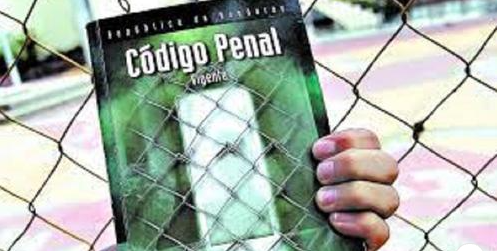
On October 8, PBI-Honduras posted: “We express concern about the increase in penalties for the crimes of usurpation and forced displacement in the Penal Code yesterday in the session of the National Congress. Social organizations denounce the improper use of these crimes to criminalize defenders of human rights.”

PBI-Honduras adds: “The penalties for both crimes [usurpation and forcible displacement] have been raised from 4 to 6 years and from 6 years to 9 years respectively.”

Former UN Special Rapporteur Victoria Tauli-Corpuz has given the example of “usurpation” as when “Indigenous peoples become trespassers or illegal occupants of their own lands.”

The National Network of Women Human Rights Defenders in Honduras further notes that the charges of “usurpation” and “forced displacement” are “used to criminalize and prosecute actions of social protest and demands for the rights of organizations that defend human rights. human rights, articulated in peasant organizations, indigenous peoples, blacks and social movements.”

And Paso de Animal Grande explains:

“The new Penal Code was tested by legislative decree 130-2017, harshly questioned by the national and international community for violating international human rights standards.

It came into force in June 2020 despite massive opposition from Honduran society and international organizations that warned of dire consequences.

The crime of usurpation aimed at criminalizing the defense of the land and contemplated a penalty of two to four years, but with the reform of this October 7, it was increased from four to six years.

The deputy Luís Redondo and the congresswoman Doris Gutiérrez, denounced irregularities among which they mention the criminalization of the right to land to favor the Special Economic Development Zones, ZEDE, whose partners are advancing by leaps and bounds to deprive their territories to settlers from where they have settled.”

Additionally, the Office of the United Nations High Commissioner for Human Rights (OHCHR) suggested that these reforms be subject to a debate with all sectors and reflect on possible consequences in the context of the electoral process facing the country.

The general elections will be held in Honduras on November 28 to elect the President, members of the National Congress and 20 members of the Central American Parliament.

PBI-Colombia accompanies CAHUCOPANA as communities in northeastern Antioquia face difficult human rights situation

On October 8, PBI-Colombia posted: “PBI accompanied @CAHUCOPANA to a meeting with @MisionONUCoI, @ACNURamericas, @MAPPOEA and @ONUHumanRights to talk about the context of the Northeast of Antioquia in the framework of the #DDHH and the protection of the communities in the area.”

Earlier this month, El Espectador reported: “In northeastern Antioquia, the presence of armed groups has been a constant. First came the guerrillas, such as the extinct FARC, during the eighties.”

“Ten years later, with the emergence of the United Self-Defense Forces of Colombia (AUC), the municipality became a place of dispute over the richness of its gold-mined land.”

That article adds: “According to its inhabitants, this wealth has belonged to armed groups and multinationals that, according to trade unionists, committed crimes to keep most of the territory to exploit this mineral with titles in perpetuity.”

CAHUCOPANA further notes: “Faced with the difficult human rights situation in the villages of #Remedios and #Segovia (Antioquia), Cahucopana and members of the Territorial Space for Training and Reincorporation (ETCR) Juan Carlos Castañeda, socialized the territorial problems to delegates of MAPP OEA Mission of UN verification in Colombia, the Second Mission of the UN, the Early Warning System of the Ombudsman’s Office, the United Nations Human Rights Colombia, UNHCR, the UN Agency for Refugees and the USAID Human Rights program.”

“We work together under the need to strengthen the protection and self-protection mechanisms of peasant communities.”

CAHUPCOPANA adds: “With the accompaniment of Peace Brigades International (PBI).”

PBI-Colombia has accompanied the Humanitarian Action Corporation for Coexistence and Peace in Northeast Antioquia (CAHUCOPANA) since 2013.

Canadian union NUPGE calls on Colombian government to implement IACHR recommendations

Photo of NUPGE President Larry Brown.

In this statement, the National Union of Public and General Employees (NUPGE) calls on the Colombian government to implement the recommendations of the Inter-American Commission on Human Rights (IACHR) and to honour the demands of the Colombian people.

Together with its Public Services International (PSI) colleagues, NUPGE sent a letter to Colombia’s president and one to its Congress.

NUPGE President Larry Brown has urged the Colombian government “to accept these observations and put the recommendations into practice, so as to contribute to solving the current social conflict.”

Brown also called on the Colombian government “to give the appropriate and accelerated processing to the bills proposed by the National Strike Committee, in order to advance the solutions that the Colombian people are demanding.”

That includes guarantees for the right to peaceful protest and reform of the national police.

The National Union of Public and General Employees (NUPGE) has over 390,000 members.

To read the full statement from NUPGE, please see: Colombia’s government must honour human rights, demands for justice.

For more, please see PBI-Colombia present as IACHR conducts visit to the Portal de la Resistencia in Bogota to hear from demonstrators (June 11, 2021)

UN recognition of human right to clean environment important for at-risk environmental human rights defenders: David Boyd

On October 8, The Guardian reported: “The UN’s main human rights body [the Human Rights Council] has overwhelmingly voted to recognise the right to a safe, clean, healthy and sustainable environment as a human right, and to appoint an expert to monitor human rights in the context of the climate emergency.”

This United Nations media statement further notes: “In resolution 48/13, the Council called on States around the world to work together, and with other partners, to implement this newly recognised right.”

It adds: “The issue will now go to the UN General Assembly in New York, for further consideration.”

David Boyd, the UN Special Rapporteur on human rights and environment, has commented: “This resolution is especially important for all of the environmental human rights defenders working, often at great personal risk, to safeguard the land, air, water and ecosystems that we all depend on.”

Boyd further urged leaders who will meet at the UN COP26 conference in Glasgow starting on October 31 to put human rights at the centre of their actions.

In the lead-up to COP26, the Global Women’s Assembly for Climate Justice, Fridays for Future, Global Witness and eight youth climate activists have all recently called on governments to stop the criminalization and killing of land defenders.

Global Witness has documented that there were 227 lethal attacks against land and environmental rights defenders in 2020. More than half of this global total were killed in Colombia (65), Mexico (30), Honduras (17), Guatemala (13) and Nicaragua (12).

The Human Rights Council has previously stated: “Human rights defenders, including environmental human rights defenders, must be ensured a safe and enabling environment to undertake their work free from hindrance and insecurity, in recognition of their important role in supporting States to fulfil their obligations under the Paris Agreement.”

PBI webinar, November 6

Peace Brigades International will be holding a webinar on COP26 and land defenders on Saturday November 6 at 1 pm EST (Ontario/Quebec) and 1900 CEST (European time).

It will feature frontline environmental defenders from Colombia, Guatemala, Honduras, Mexico and Nicaragua.

To register for this webinar, please click here.

We will be amplifying their voices, highlighting their stories of resistance, and calling for protection measures to be reflected in the Glasgow Pact emerging from COP26.

Two PBI webinars!

We are pleased to confirm that we will have two webinars in the coming weeks!

On Sunday October 24, we will feature PBI field volunteers talking about their first-hand experiences accompanying at-risk human rights defenders. We have Charlotte from PBI-Colombia confirmed with two more volunteers about to be confirmed as speakers. You can register for this webinar by clicking here.

And on Saturday November 6, we will amplify the voices of land defenders from Colombia, Guatemala, Honduras, Mexico and Nicaragua during the United Nations COP26 climate summit. You can register for this webinar by clicking here.

Top accompaniment posts this week

1- PBI-Colombia accompanies Justice and Peace as embassies visit the Alto Guayabal indigenous reservation

2- PBI-Colombia accompanies NOMADESC at commemoration of those killed at national strike protest in Siloé, Cali

3- PBI-Colombia accompanies ACVC-RAN campesinas at political training school on feminism and the environment

4- PBI-Honduras accompanies CEHPRODEC at ZEDEs and Mining Law appeals at Supreme Court of Justice

5- PBI accompanies CSPP president Franklin Castañeda meeting with UN High Commissioner for Human Rights in Geneva

We also want to highlight that the International Observation Mission to Colombia that PBI-Canada Board member Heather Neun participated in this past July released its final report this week. You can read about the foreign policy implications of that report for Canada in this article.

A lot more has happened this week, and we encourage you to find our daily updates on the News Updates page of our website, on Twitter and Facebook.

This work is made possible through your support. If you are able to make an online donation to allow us to continue, please click here.

We also accept donations by cheque via our mailing address: Peace Brigades International-Canada, 211 Bronson Avenue, Suite 220, Ottawa, Ontario, K1R 6H5.

In solidarity, Brent

PBI-Colombia accompanies Justice and Peace as embassies visit the Alto Guayabal indigenous reservation

On October 8, PBI-Colombia posted: “At the end of September, PBI accompanied @Justiciaypazcol within the framework of the visit of the embassies @IrelandColombia, @NLinColombia and @SwedeninCOL and of the @ComisionVerdadC in the Alto Guayabal indigenous reservation, a week after the murder of Dilio Bailarín.”

On September 29, Irish Ambassador Alison Milton tweeted: “We visit the Alto Guayabal community, Jiguamiando. We are concerned about the situation and we sympathize with them for the murder of Dilio Bailarin. We call for a global humanitarian agreement now! To protect these communities. No more deaths!”

Dutch Ambassador Noorman also tweeted: “We visit the community of Alto Guayabal, Urabá. The situation is very worrying. We sympathize with the guard for the recent murder of #DilioBailarín and we call for a humanitarian agreement now! for the protection of indigenous peoples. No more deaths!”

Dilio Bailarín

On September 20, Contagio Radio reported:

“Dilio Bailarín, who at 5:45 in the afternoon about 20 minutes from the Alto Guayabal Reservation, was attacked with a firearm.

According to the information received, in 2020, Dilio and five other leaders were threatened and persecuted by members of the structures of the Autodenfensas Gaitanistas de Colombia, AGC, which operate in Bajo Atrato, Carmen del Darién.

In 2019, Dilio Bailarín was also a victim of the ELN, as the group tried to kidnap him along with another social leader, however, the community prevented the act.

At this time, human rights organizations, such as the Justice and Peace Commission and international humanitarian organizations are moving to the region to accompany the community that is in fear.

Dilio’s murder has shocked the Embera community and the international community that sponsors the peace-building process in the midst of the armed conflict in the region.

It should be remembered that the Alto Guayabal Biodiverse Humanitarian Reserve is a non-violent protection measure within the territories that are facing the extractive interests of multinationals that are unaware of the rights of the communities of the indigenous peoples.

The Justice and Peace Commission also denounced that despite the precautionary measures of the IACHR, the National Government did not adopt the necessary precautions to protect the life of the indigenous leader.”

The Peace Brigades International-Colombia Project has accompanied the Commission of Justice and Peace since 1994.

Vancouver-based Fortuna Silver Mines seeks permit for San José del Progreso mine in Mexico

A protest outside the Canadian consulate in Oaxaca days after Bernardo Vásquez, an opponent of the Fortuna mine, was murdered on March 15, 2012.

Educa Oaxaca reports that Vancouver-based Fortuna Silver Mines, through its Mexican subsidiary Minera Cuzcatlán S.A. de C.V., has applied for a third time for a permit for its controversial San José del Progreso mine and that it seeks authorization to continue to exploit silver and gold there until 2031.

The communities that make up the No to Mining Front for a Future of All are calling on the Ministry of Environment and Natural Resources (SEMARNAT) to reject this application. They say that the application by Fortuna/Cuzcatlán “minimizes the damage in the territories of Central Valleys and argues that the irregularities and illegality of the project are simply an ‘update of works and activities.’”

Notably, the No to Mining Front also “categorically rejects the ‘Canada-Oaxaca Indigenous Encounters 2021’ promoted by Oaxaca state governor Alejandro Murat and Canadian ambassador Graeme C. Clark”. The “Encuentros Indígenas Canadá-Oaxaca 2021” began on September 20 and concludes on October 8.

The No to Mining Front further states that it has “met on different occasions with representatives of the Canadian embassy to denounce the effects of the San José project.”

The permit application has also been reported on in NVI Noticias and Imparcial Oaxaca.

The Imparcial Oaxaca article notes that on October 8 at the El Panuelito garden there will be “the elaboration of a mural for the life and dignity of Indigenous peoples as a public denunciation of the facts of pollution in the Valleys of Oaxaca”

On March 11, Peace Brigades International and Amnesty International co-hosted this webinar that featured Neftali Reyes of Educa Oaxaca and representatives from Magdalena Ocotlán discussing the impacts of this mine.

This Educa Oaxaca report on the webinar highlights: “The representatives of the community located just a few meters from the San José mining project, owned by the FSM company, reiterated that ‘the mining company is affecting us a lot’ with water pollution, mine waste, constant noise and the shortage of water.”

PBI-Mexico began accompanying Educa Oaxaca in May 2013.

European Union environment ministers agree to negotiating position for UN COP26 climate summit

Photo: EU environment ministers meet in Luxembourg to discuss COP26 summit.

On October 7, Euractiv reported: “EU environment ministers on Wednesday (6 October) agreed on an ambitious stance going into the COP26 climate summit in November, but said they will only implement it if all other signatories of the Paris Agreement commit to do the same.”

“The conclusions passed by the EU’s 27 environment ministers highlighted the urgent need to tackle the climate crisis, saying global warming ‘is a direct and existential threat to humanity and biodiversity that spares no country’.”

The article adds: “Campaigners say this weakens the EU’s stance at COP26, and comes as an uneasy reminder of the failed Copenhagen climate summit in 2009, where Europe only committed to increase its climate ambition if other countries did the same.”

The 30-point statement agreed to by EU environment ministers can be read here.

Point 6 of their statement: “RECALLS that the EU is committed to promoting an equity- and human rights-based approach and respect for the rights of indigenous peoples and local communities and RECOGNISES that climate change policies have gender-differentiated impacts and that gender equality and women’s empowerment need to be promoted for effective climate action.”

Point 9 “NOTES that much more global ambition is needed if we are to arrive in Glasgow with commitments that, in aggregate, keep the 1.5 °C objective within reach, in line with the Paris Agreement.”

And point 24 “HIGHLIGHTS the importance of non-Party stakeholder action and ENCOURAGES their further efforts towards the effective implementation of the Paris Agreement.”

Unfortunately, their agreement does not specifically mention land and environmental rights defenders on the frontlines of the climate crisis.

This is a significant omission given Global Witness has documented that there were 227 lethal attacks against these defenders in 2020. More than half this global total were killed in Colombia (65), Mexico (30), Honduras (17), Guatemala (13) and Nicaragua (12).

Human rights and respect for Indigenous rights

It is positive, however, that point 6 mention a human rights-based approach and respect for the rights of Indigenous peoples.

Violence against women environmental human rights defenders

With respect to their understanding of the gender-differentiated impacts of climate change, the International Union for the Conservation of Nature (IUCN) has noted: “There have been numerous examples of gender-based violence directed against environmental defenders and activists, who try to stop the destruction or degradation of their land, natural resources and communities.”

The Paris Agreement, role of non-Party stakeholder action

It is also important that their statement reflects the importance of non-Party stakeholders and the need to implement the Paris Agreement.

The United Nations Human Rights Council has stated that: “Human rights defenders, including environmental human rights defenders, must be ensured a safe and enabling environment to undertake their work free from hindrance and insecurity, in recognition of their important role in supporting States to fulfil their obligations under the Paris Agreement.”

Canada’s position at COP26

Unlike the EU, Canada’s negotiating position for COP26 has not been made public.

The Canadian minister of environment and climate change was in Milan, Italy on October 1 meeting with other environment ministers to set the final agenda for the COP26 summit when Fridays for Future had a major mobilization in that city.

Fridays for Future demands that governments: “Stop the violence and criminalization against indigenous peoples, small farmers, small fisherfolk, and other environmental and land defenders. Support the work they do.  Respect and listen to our defenders.”

PBI webinar, November 6

Peace Brigades International will be holding a webinar on COP26 and land defenders on Saturday November 6 at 1 pm EST (Ontario/Quebec) and 1900 CEST (European time).

It will feature frontline environmental defenders from Colombia, Guatemala, Honduras, Mexico and Nicaragua.

To register for this webinar, please click here.

We will be amplifying their voices, highlighting their stories of resistance, and calling for protection measures to be reflected in the Glasgow Pact emerging from COP26.

International Observation Mission releases its final report on the right to social protest in Colombia

Photo: Image from the final report of the International Observation Mission.

On October 7, the SOS Mission Colombia media conference highlighted the summer’s International Observation Mission and released its final report.

The International Observation Mission for the Guarantees of Social Protest and Against Impunity in Colombia was comprised of 41 commissioners.

The commissioners included Peace Brigades International-Canada Board member Heather Neun and Bernadette Perrón and Nathan Brullemans de Brouwer, members of the Quebec-based Projet Accompagnement Solidarité Colombie (PASC).

The commissioners from 13 different countries arrived in Colombia on July 3 and released this 32-page preliminary report on July 12.

Now the 84-page final report can be read here. Its 50 recommendations can be found on pages 70 to 76 of the report.

Notably, the recommendations to the International Community include:

4.1. The European Union is required to suspend the sale of military weapons and riot control equipment under criterion 2 of the EU Code of Conduct on arms export. To the United States, and to any country that provides military weapons or riot gear, you are required to suspend sales commercial or donations of such weapons to ESMAD.

4.3. Promote the activation of suspensive clauses in case of violation of the rights of the different free trade and investment agreements, signed by Colombia.

On recommendation 4.1, PBI-Canada notes that Canada exported $460,338.87 of military goods to Colombia in 2020. The bulk of those exports were in category 2-6 which refers to “Ground vehicles and components”. This may be related to the armoured vehicles that Canada has previously exported to both the National Police and the Army.

This past June, Bloc Québécois Member of Parliament Simon-Pierre Savard-Tremblay stated: “We want the Minister for Foreign Affairs to seriously reassess the export licences for military equipment to Colombia.”

Savard-Tremblay highlighted: “As long as there is reasonable doubt that military equipment exported to Colombia is being used against the civilian population in human rights violations, licences should be suspended.”

In May, the New Democratic Party (NDP) also stated with respect to Colombia: “The Liberal government needs to do a lot more to show that they are applying the arms export risk assessment criteria rigorously, to ensure that Canadian arms are not being sold to countries where there are concerns about human rights violations.”

NDP MP Heather McPherson has commented: “The violence and repressive tactics used by the Colombian police and military is shocking and unprecedented. The right to peaceful protest is important for any society.”

As for recommendation 4.3, it is not clear to us at this point if there is a “suspensive clause” in the Canada-Colombia Free Trade Agreement. We do note, however, that Article 2305 states: “This Agreement shall remain in force unless terminated by either Party on six months’ written notice to the other Party.”

NDP MP Alexandre Boulerice has noted: “As a trading partner, [Canada] could put conditions on the Free Trade Agreement if human rights are not respected, including imposing trade sanctions.”

It is our intention to follow up with these Members of Parliament, along with other MPs, officials and organizations, to move forward on these recommendations.

Photo: On July 17, 2021, a Canadian-made INKAS armoured vehicle sold to the Colombian National Police was used to detain delegations heading to the National People’s Assembly in Cali, Valle del Cauca in the context of the National Strike.