

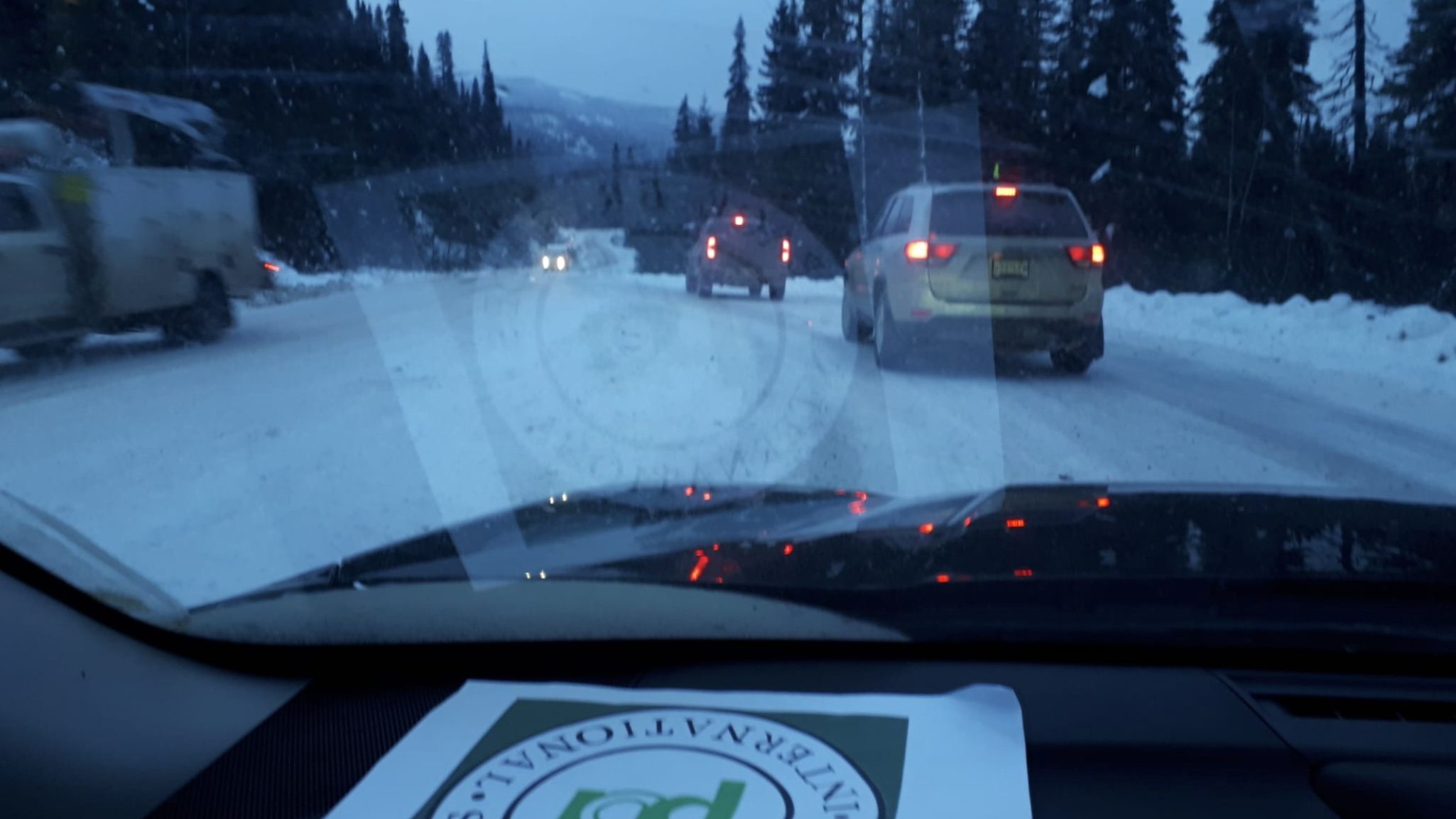
Photo: PBI on sovereign Wet’suwet’en territory in northern British Columbia, Canada, November 2021.
The Peace Brigades International-Colombia Project has previously promoted on Instagram their search for a consultant to “facilitate a participatory process of research, reflection, and collective development aimed” at “designing a Strategic Roadmap to strengthen Decolonial International Protection”.
Their social media post further highlights: “This consultancy is an opportunity to contribute to rethinking, from a critical and collaborative perspective, how to strengthen international protection and support in Colombia.”

Peace Brigades International-Canada is currently in the process of developing a Turtle Island accompaniment project. The PBI global annual review for 2024 highlighted: “This last year also saw our team in Canada begin developing a framework to extend PBI’s protective accompaniment into a ‘Northern’ territory. This transformative proposition would mark a move away from traditional models and start to recognise and address the human rights abuses that threaten us all.”

That posting explains: “Our work focuses on the protection and prevention of attacks against human rights defenders through comprehensive support strategies, international advocacy, monitoring, capacity building, and the development of support and solidarity networks.”
It then notes: “Workers, environmentalists, LGBTQ+ activists, union members, Indigenous and Afro-descendant communities, peasants, anti-imperialists, anti-racists, and anti-militarists—not only defend rights, but are also producing new ways of understanding them, questioning existing hegemonic frameworks and contributing to their redefinition from their own practices of struggle, organization, and resistance, and from their own territories.”
“In this context, PBI Colombia asks: How can we support global networks among peoples, social movements, and communities so that they can effectively generate (self-)protection and also political costs and deterrence?”
It further emphasizes: “This reflection also invites us to broaden our perspective beyond the State as the sole reference point of international law, recognizing other forms of legitimacy and institutionality built from territories and collective struggles. …We share many of the questions raised by social movements, decolonial thinkers, and critics of the NGO world regarding the risks of professionalization, bureaucratization, depoliticization, and financial dependence.”
Further reading
–Annual review: PBI-Canada’s “transformative proposition” of extending PBI’s protective accompaniment into a “Northern” territory (PBI-Canada, October 29, 2025)
–CRCC report on systemic investigation into the RCMP C-IRG could be released within weeks (PBI-Canada, August 19, 2026)
–PBI notes concern at the UN Human Rights Council in Geneva about the digital surveillance of Indigenous land defenders in Canada (PBI-Canada, June 30, 2026)
–How a submarine purchase and arms fairs are worsening security risks for Indigenous land defenders and human rights activists (PBI-Canada, June 13, 2026)
–Canada Investment Summit on September 14-15 could lead to financing for megaprojects opposed by Indigenous land defenders (PBI-Canada, August 25, 2026).


