
Home Blog Page 334

Fracking in Colombia raises concerns about air pollution, the health of local communities in the Magdalena Medio region

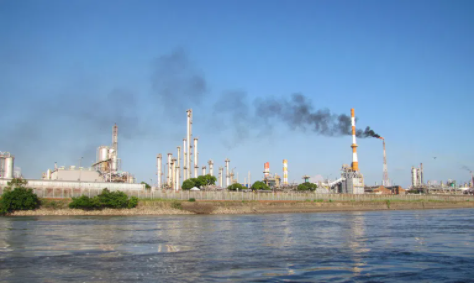
The Ecopetrol refinery in Barrancabermeja. Photo by PBI-Colombia.

Click here to hear Colombian environmental defenders discuss the issue of fracking and public health this Thursday at 2:30 pm COT/3:30 pm EST.

David R. Boyd, the United Nations Special Rapporteur on human rights and the environment, has argued that clean air is a human right. Significantly, it is a human right that is put at risk by the airborne pollution associated with fracking.

The Guardian has reported: “Research has found that fracking and other types of extraction are dangerous for the people who live near drilling sites – causing higher rates of asthma and cancer, as well as preterm births.”

A recent Binghamton University study also found that 20 people lost their lives in Pennsylvania between 2010 and 2017 because of particulate matter pollution emitted by shale gas (fracking) wells. The researchers found that airborne pollution was detectable up to 10 kilometres (about 6 miles) and possibly further downwind from an active fracking well.

Speaking about the situation in California, with low-income of communities of colour nearest fracking sites, Martha Dina Agruello of the Physicians for Social Responsibility says: “Communities need immediate relief to the heath assaults of oil and gas extraction.”

The Alliance for a Colombia Free of Fracking has also highlighted that fracking threatens the health of local communities and ecosystems.

To date, the National Hydrocarbons Agency (ANH) has approved two fracking pilot projects near the community of Puerto Wilches in the Magdalena Medio region of Colombia. One of the blocks where the fracking would take place (the VMM-37 block operated by the American transnational ExxonMobil) is partly owned by Toronto-based Sintana Energy.

Last May, Mongabay reported that ExxonMobil owns the Manatí Blanco-1 well (in the VMM-37 block) that it intends to use for fracking. That well is situated less than 500 metres (1,640 feet) from the community of Terraplén.

The city of Barrancabermeja, which is situated in the Magdalena Medio region, is already the site of Colombia’s largest oil refinery (owned by Ecopetrol) which processes about 250,000 barrels per day. If fracking were to be fully approved, Ecopetrol has stated production at the refinery could increase to 300,000 barrels per day.

Webinar this Thursday

This Thursday April 29 at 2:30 pm COT/3:30 pm EDT, four Colombian environmental will speak about their concerns about fracking and extractivism in the Magdalena Medio region.

Click here to join them in a bilingual English-Spanish webinar.

Webinar panel: Colombian environmental defenders Ivan Madero, Yuli Velasquez, Oscar Sampayo, Yuvelis Natalia Morales, plus Karen Hamilton (Above Ground), Luis van Isschot (Peace Brigades International-Canada).

Fracking puts at risk the precarious peace process in Colombia and further endangers environmental defenders

Click here to join a webinar this Thursday that will discuss the impact of fracking and extractivism on the peace process in Colombia.

Oil Change International has stated that oil producing countries are 50 per cent more likely to have civil wars and has made this link to the armed conflict in Colombia.

Almost 20 years ago, the Christian Science Monitor reported: “Colombia’s two largest guerrilla armies, the Revolutionary Armed Forces of Colombia (FARC) and the National Liberation Army (ELN), oppose foreign involvement in the nation’s oil industry and, according to the Colombian military, the rebels hope that [their 170 bomb attacks on the Caño Limón pipeline will] weaken the government by depriving it of foreign earnings.”

Now, with two fracking pilot projects authorized to proceed in the Magdalena Medio region there are concerns about more violence.

Alexander Rustler, a researcher at the New York City-based Columbia Center on Sustainable Investment, has commented that fracking would put at risk the already precarious peace process in Colombia.

He writes: “The first fracking projects are intended to be carried out in Magdalena Medio, a region in the North of the country that was among the hardest hit by conflict.”

Rustler further cautions: “Fracking’s expansion risks aggravating tensions, potentially causing demonstrations against oil and gas drilling to metamorphose into violent clashes between communities and companies.”

There are already aggravated tensions, including around the San Silvestre wetland that would be put at risk by fracking.

Last month, The World reported: “Every couple of weeks, Yuli Velasquez patrols Saint Silvester Lake near Barrancabermeja, Colombia, looking for signs of pollution.”

That article adds: “[Her organization FEDEPESAN says] that armed groups like the National Liberation Army and the [right-wing paramilitary] Gulf Clan are using the forests around the lake to stash drugs and weapons.”

FEDEPESAN says: “If we patrol the area, they are immediately suspicious, they think we are snitches. So, that turns us into their enemies and puts our lives at risk.”

Furthermore, Infobae has reported that eighteen social leaders in Magdalena Medio were threatened with death last November by the Black Eagles (a paramilitary that is reportedly linked with the Gulf Clan). Six of those threatened are members of the Alliance for a Colombia Free of Fracking.

Amnesty International has also highlighted the context in which Barrancabermeja-based CREDHOS, an organization that defends the right to a healthy environment in the Magdalena Medio region, recently received a death threat from a man self-identified as a member of the Magdalena Medio Block of the armed group FARC-EP.

Meanwhile, Rutas del Conflicto and La Liga Contra el Silencio have reported that more than 70 companies have more than 200 “cooperation agreements” with public institutions such as the Ministry of Defence to provide them with protection.

One of the companies noted in that article is Ecopetrol which was recently awarded a contract to conduct a fracking pilot project near the community of Puerto Wilches, Santander in the Magdalena Medio region.

Webinar this Thursday with environmental defenders

This Thursday April 29 at 2:30 pm COT/3:30 pm EDT, four Colombian environmental defenders will speak about their efforts to protect the San Silvestre wetland, uphold the right to a healthy environment, and stop fracking and environmentally harmful extractivism in this context of legal and illegal armed actors.

To register to hear them, click here.

Webinar panel: Colombian environmental defenders Ivan Madero, Yuli Velasquez, Oscar Sampayo, Yuvelis Natalia Morales, plus Karen Hamilton (Above Ground), Luis van Isschot (Peace Brigades International-Canada).

Hear Colombian human rights defender Ivan Madero speak this coming Thursday April 29

Click here to register to hear Ivan Madero speak on a webinar this coming Thursday.

Ivan Madero joined the CREDHOS (the Regional Corporation for the Defence of Human Rights) Board of Directors in 1993.

He was already an experienced political activist at that point.

Ivan says: “In 1988, I was detained by the army in a demonstration. I was detained for various days. I was assaulted, tortured. There was a high chance that they would assassinate me. In this moment, there was a searching committee. They saved my life.”

He would have also known that joining CREDHOS would be dangerous. Seven CREDHOS activists were killed between 1991 and 1992 following the investigation by CREDHOS into the murder of Leonardo Posada Pedraza by paramilitary forces.

In this PBI-Colombia video about the armed conflict in Colombia in 1995, Ivan tells the story of having to spend Christmas at the PBI house for safety reasons. Ivan says: “It was a very special moment, there was a high risk, but in PBI we found fraternity, affection, a good reception, and this was very important.”

PBI-Colombia has also noted: “Ivan and his wife, after sleeping in different places every night accompanied by PBI, decided to leave [in 2000].” That meant ten years of exile in Spain, with part of that time spent in Calgary, Alberta.

In 2010 Ivan returned to Colombia and became the president of CREDHOS.

Ivan has experienced numerous security incidents since then.

In November 2013, Ivan, who was residing at the CREDHOS headquarters at that time for security reasons, had to take shelter on the second floor of the building to evade a man who had forcibly entered the building.

Ivan and his family also received death threats in January 2014 and June 2015. And in July 2016, Ivan received a death threat both via a call on his cellphone, a text message, and a call to the CREDHOS office telephone.

And when Ivan was in Vancouver during our speaking tour in November 2019 he was interviewed by The Voice. That article reported: “Madero, speaking through an interpreter, said he recently found out that a paramilitary leader had put a CAD $2,000 bounty on his head and that a grenade had been ordered to be planted in his car.”

Most recently, on March 24 of this year, following a death threat against CREDHOS, Ivan and his family received a death threat via a voicemail sent to his personal phone that gave details of his movements and planned travels.

Hear Ivan speak this Thursday April 29

This coming Thursday at 2:30 pm COL/3:30 pm EDT, Ivan will be speaking about his fight against fracking in the Magdalena Medio region of Colombia and the threats environmental defenders experience due to this activism.

To register for this webinar, click here.

Ivan in 2012: “The political deterrence that PBI creates is fundamental. Receiving the accompaniment of Peace Brigades has been important in the life of CREDHOS. It allows you to move, it allows you to continue doing this work.”

Amnesty International video expresses global solidarity with threatened Colombian human rights defender Jani Silva

This letter to Jani from the world video affirms global support for Colombian human rights defender Jani Silva.

On April 22, Amnesty International launched its ‘A Letter from the World’ campaign to demand that Colombian authorities immediately take effective measures to guarantee the safety of Jani who has experienced multiple threats.

Amnesty International has highlighted: “Jani Silva has dedicated her life to protecting the Amazon and the life that exists in it from efforts by armed groups and multinational companies to take control of her territory.”

She has suffered death threats in retaliation for her work, but the Colombian authorities have not developed a comprehensive and efficient plan to guarantee her safety.

Amnesty International notes: “Since January 2020, state protection has proven insufficient to prevent seven security incidents that Jani Silva has experienced, including persecution by unknown persons, illegal digital surveillance by the Colombian Army, death threats, multiple gunshots within meters of her home, and the uncovering of a plan to assassinate her.”

In this video, 14 public figures, including artists, singers and comedians from seven countries, read aloud a letter of support to Silva.

Silva is accompanied by the Inter-Church Justice and Peace Commission, which in turn has been accompanied by PBI-Colombia since 1994.

PBI-Canada expresses its appreciation to our friends at Amnesty International for this campaign and their ongoing work.

20-year-old Yuvelis Natalia Morales is fighting fracking in Colombia, hear her story on April 29

Click here to register to hear Yuvelis Natalia Morales speak on April 29.

Twenty-year-old Yuvelis Natalia Morales is a member of the Committee for the Defence of Water, Life and Territory of Puerto Wilches (AguaWil).

The group was formed to stop fracking in the community of Puerto Wilches, which is situated in the department of Santander in the Magdalena Medio region.

To date, two fracking pilot projects have been approved near Puerto Wilches: the ExxonMobil Platero project and the Ecopetrol Kale project.

This past week, Calgary-based Canacol Energy welcomed this news and announced it is conducting tests to also pursue fracking in the area.

Yuvelis’ activism against fracking has had unfair consequences.

On January 29, 2021, in the evening hours, two unknown men broke into her home and threatened her with death warning they “could kill her any day.”

She was with her sister at the time.

Yuvelis says: “My mom told me I had to leave the house because by coming to kill me, they were going to kill them all. I cried every night. And there has been so much pressure that I am hiding here, but continuing the fight, away from the river that saw me born, saw me walk, taught me to walk and has fed me fish and dreams.”

Hear Yuvelis on April 29

Yuvelis will be speaking about her opposition to fracking on a bilingual webinar happening on Thursday April 29 at 2:30 pm COL/3:30 pm EDT.

Click here to register for this webinar.

Visibility and international solidarity are important tools to protect at-risk environmental defenders in Colombia.

“We defend water because it is the most important resource on which our community depends.” Image by CREDHOS.

Innu Elder Tshuakuesh Elizabeth Penashue to speak on her opposition to fighter jets, militarization of Indigenous territories

Penashue with Peace Brigades International activist Anne Harrison in 1995.

This evening, Innu Elder Tshuakuesh Elizabeth Penashue will be speaking on a webinar about Indigenous struggles against the militarization of their lands.

You can register to hear her and others speak tonight by clicking here.

Innu resistance to fighter jets

Years ago, Penashue stated: “Canada sees our land as uninhabited land. It is inhabited by the Innu, and it is inhabited by wildlife.”

Just last September, when announcing “air defence exercises” near Goose Bay, Labrador, the Department of National Defence confirmed Penashue’s comment when it stated: “[The] exercise flights will be conducted over sparsely populated Arctic areas and at high altitudes where the public is not likely to hear or see them.”

That “5 Wing Goose Bay” air base was established after World War II.

Penashue has stated: “In the years that the military has been in Goose Bay, the Innu’s culture has collapsed. The use of our lands by others, without our being consulted, has caused stress in our family relationships and links to our family violence. The Innu did not welcome foreign domination. It happened against their will.”

There was similarly no consultation about the NATO low-level flight testing for the cruise missile over Nitassinan that begin in the late 1980s.

During the resistance against that, Penashue noted: “I went to the bombing range with others. We put tents on the base to protest. We were jailed many times, in Goose Bay and Stephenville. We walked from Toronto to Ottawa, and they put us in jail there, too.”

That low-level testing finally came to an end in 2005.

There have been other significant resistance struggles to Canadian military bases on Indigenous territories in this country.

Dene lands in Alberta

Dene Su’lene’ land defenders have stated: “In 1952, we were forcibly evicted from our homelands [so that 4 Wing Cold Lake could be constructed].”

“In Suckerville [on the shores of Primrose Lake], our people had a 7-day sit-in, refusing to leave. Reluctantly, after heavy coercion from the government, a deal was made.”

They add: “Our people left peacefully under the understanding that this was to be a short-term lease purely for military use, and that the 4,490 square miles of land was to be returned or re-negotiated after 20 years.”

Then in June 2001, Dene Su’lene’ Warriors established a Peace Camp blockade 300 metres from the gate to the military base that also includes the Cold Lake Air Weapons Range (CLAWR) where live fire training exercises are conducted.

Land defender Brian Grandbois was one of the opponents of the military base at that time. In an interview, he told The Dominion: “My great-great-great-grandfather is buried there on a point on that lake where they bomb.”

The Dene Warriors who set up the blockade stated: “They play with their air weapons and their fighter jets and all of their killing machines right on the homeland of the Dene who have confronted the giant military range by an unarmed peace camp.”

In August 2020, the Minister of National Defence announced that a $9.2 million contract had been award for “the design of a new fighter jet facility at 4 Wing Cold Lake, one of two main operating bases for Canada’s future fighter aircraft.”

“Forward Operating Location” for fighter jets in Nunavut

Nunatsiaq News recently reported that a “forward operating location” in Iqaluit, Nunavut is being contemplated that “includes three hangars capable of housing F-18 fighter jets.” This would be part of the “modernization” of NORAD.

This past January, the Royal Canadian Air Force conducted “High Arctic air training” exercises with two CF-18 fighter jets out of Iqaluit.

Militarization of territory

Part of this is happening due to climate change.

The Globe and Mail has reported: “In frank comments to the Ottawa Conference on Security and Defence, deputy minister Jody Thomas said that Beijing is turning its attention to the Northwest Passage as melting ice opens up Arctic sea lanes to shipping and resource exploitation, including fish, petroleum and critical minerals.”

Hence, Canada is seeking to “project force into the region” to counter their presence.

As we reflect on this militarization of territory, it’s also important to link it to the RCMP occupation of Wet’suwet’en territory to facilitate the construction of the Coastal GasLink fracked gas pipeline that lacks free, prior and informed consent.

And to recall the words of Lenca land defender Berta Caceres who said less than a year before she was assassinated: “Our Mother Earth – militarized, fenced-in, poisoned, a place where basic rights are systematically violated – demands that we take action.”

The webinar these issues and more starts at 7 pm EDT tonight.

To register for it, click here.

Join us on Thursday April 29 for a webinar about fracking in Colombia

Our next webinar will take place on Thursday April 29 at 3:30 pm EDT and as with our previous webinars it will have simultaneous translation in English and Spanish.

You can register for it here.

This webinar will feature four frontline environmental defenders in Colombia, all of whom have recently received death threats, who will be speaking against the two fracking pilot projects that are set to begin in the ecologically sensitive Magdalena Medio region.

One of those projects, the ExxonMobil Platero project, is situated on the VMM-37 block in which Toronto-based Sintana Energy holds a 30 per cent interest.

And just this week, Calgary-based Canacol Energy announced that it was pleased about the approval of these two fracking projects and that it was now also exploring the possibility of fracking in the Magdalena Medio region.

The webinar will also include a discussion about community concerns of environmental harm and the criminalization of defenders opposing the Calgary-base Parex Resources Aguas Blancas conventional oil field that is also in the Magdalena Medio region.

The webinar will also feature Karen Hamilton from Above Ground who will speak about the support from Export Development Canada for oil and gas operations in Colombia and concerns about the new Canadian Ombudsperson for Responsible Enterprise.

And the webinar will be moderated by Luis van Isschot, a member of PBI-Canada’s Board of Directors whose book The Social Origins of Human Rights: Protesting Political Violence in Colombia’s Oil Capital, 1919-2010 has just been published in Colombia.

You can register for this bilingual webinar by clicking here.

National Strike on April 28 to challenge economic, social and environmental policies of Colombian government

To hear the reflections of Colombian social leaders on the frontlines of the struggle for change the day after this national strike, click here.

There will be a one-day national strike (paro nacional) in Colombia on April 28.

Reuters reports: “Some of Colombia’s biggest unions will hold a strike on April 28 to take to the streets and protest the economic and social policies of President Ivan Duque, chiefly a fiscal reform that looks to raise taxes, including on certain foods.”

Diogenes Orjuela, president of the Central Union of Workers (CUT), says: “We will go on strike on April 28 against Duque’s new package and the tax reform, as well as labor and pension reforms.”

The article adds: “Protesters will also march to reject measures that would increase the retirement age and make it easier to hire and fire workers, though the government has not yet presented either reform to congress.”

Orjuela says Indigenous communities, farmers, and student groups will also join the strike.

And Jhonatan Varón of the Central Union of Workers in the department of Tolima has highlighted: “We are also for the comprehensive implementation of the Peace Agreement, the defense of sovereignty considering that the Colombian state has opened up the possibility that glyphosate and fracking will poison our territories, and protection of social leaders who continue to be victims of political genocide by paramilitary groups and by the state itself, for not guaranteeing the lives of those of us who think differently.”

Webinar on April 29

The day after the national strike, Colombian environmental defenders will participate in a PBI organized webinar about fracking in Magdalena Medio.

Just two weeks ago, the Petroleum Industry Workers Union (USO) joined the Alliance for a Colombia Free of Fracking to oppose fracking in the ecologically sensitive Magdalena Medio region, the site of two recently approved fracking pilot projects.

This webinar will provide the opportunity to hear directly from Colombian activists about their reflections on the national strike and their ongoing work.

To register for this bilingual webinar, click here.

The webinar will include Ivan Madero (CREDHOS), Oscar Sampayo (CRY-GEAM), Yuvelis Natalia Morales (AguaWil) and Yuli Velasquez (FEDEPESAN).

#ParoNacional28A

Webinar will share concerns about Canadian oil and gas company Parex Resources in Colombia

Click here to register to hear Ivan Madero, Oscar Sampayo and Karen Hamilton speak on April 29 about Parex Resources in Colombia.

This past December, Ivan Madero of CREDHOS and Oscar Sampayo of CRY-GEAM spoke at this media conference to express their concerns about Calgary-based Parex Resources and their Aguas Blancas oil field in Colombia.

They will share the latest on this situation on this webinar that will take place just one week prior to the Parex Resources virtual shareholders meeting on May 6.

Previously expressed concerns include:

In January 2017, CRY-GEAM posted this video on Facebook noting concerns about the absence of needed environmental documents and in April 2017 this photo of a truck on Facebook with concerns about runoff into the Colorada River.

In April 2017, CRY-GEAM also posted this video on Twitter with the text: “Parex in Simacota, Campo Aguas Blancas, without archaeological management plan, without environmental permit, above the law and communities. Who responds?”

Export Development Canada financing

According to Export Development Canada, its financing and support to Parex Resources has included: $25-50 million (07-05-2018), $50-100 million (22-02-2019), and $50-100 million (27-05-2019).

In its most recent financial statement (for year end 2020 posted on March 3, 2021), Parex Resources notes: “The Company has also provided a general security agreement to Export Development Canada (“EDC”) in connection with the performance security guarantees that support letters of credit provided to the Colombian National Hydrocarbon Agency (“ANH”) related to the exploration work commitments on its Colombian concessions (see note 24 – Commitments). This performance guarantee facility has a limit of $150.0 million (December 31, 2019 – limit of $150.0 million) of which $21.9 million (December 31, 2019 – $25.4 million) is utilized at December 31, 2020.”

Note 24 in that financial statement adds: “At December 31, 2020 EDC has provided the Company’s bank with performance security guarantees to support approximately $21.9 million (December 31, 2019 – $25.4 million) of the letters of credit issued on behalf of Parex. The EDC guarantees have been secured by a general security agreement issued by Parex in favour of EDC. The letters of credit issued to the ANH are reduced from time to time to reflect completed work on an ongoing basis.”

Karen Hamilton from Above Ground will help us understand what this means and share her analysis of the role EDC has played in financing oil and gas operations where human rights and environmental concerns have been expressed.

Criminalization of social leaders

Without a resolution to the concerns, community members undertook a blockade of the Parex oil field in March 2020. By September of that year, Parex had taken two social leaders to court over this protest claiming it had harmed their good name. But by October, a municipal court had dismissed the company’s challenge against the social leaders. Madero and Sampayo spoke about this at their media conference last December.

Fracking

Colombian energy minister Maria Fernanda Suarez had named Parex as one of the companies interested in pursuing a fracking pilot project in Colombia. While Parex did not bid for a contract, this webinar will also discuss the ExxonMobil Platero project (with connections to Toronto-based Sintana Energy) and the Ecopetrol Kale project.

Please register now to hear more about Parex Resources and the risks faced by environmental defenders opposed to conventional extractivism and fracking.

The image above is of Adolfo Salinas Coba, one of the social leaders taken to court by Parex, who says: “We defend water, because water is life, and I would not exchange a glass of water for a glass of oil.” Last month, CREDHOS tweeted: “We highlight the struggle of the Bajo Simacota community against contamination by oil spills caused by Parex.”

Non-Mining Front meets with Mexican Secretary of the Environment about permit for the San José mine

On April 21, the Oaxacan Collective in Defence of the Territories posted an update about the Vancouver-based Fortuna Silver Inc. San José mine in Mexico.

Their article highlights that the Non-Mining Front for a Future of All met with the Secretary of the Environment and Natural Resources (SEMARNAT), Maria Luisa Albores Gonzalez, on April 15 to demand the denial of the Environment Impact Assessment for the controversial Canadian-owned San José mine.

This dialogue was first demanded in December 2020 when the Non-Mining Front blocked federal highway 175 to get a response from the environmental protection authority.

At this meeting, participating communities told the Secretary of their declarations of Forbidden Territory for Mining, which prohibit any exploration, exploration or mining activity in the Central Valleys of Oaxaca.

They also highlighted their “very strong concern in our territories due to the decrease of water and the pollution of it in the Coyote and Santa Rosa Rivers.”

And they affirmed: “Mining does not represent any development option in the Central Valleys of Oaxaca, so we demand to stop the expansion that [Fortuna Silver subsidiary] Cuzcatlán wants to do through MIA San José II.”

This follows the news from earlier this month.

On April 2, Sin Embargo reported: “SEMARNAT reported this week that the dialogue between federal authorities and the Front began since 14 December 2020 on the orders of President Andrés Manuel López Obrador. Last Saturday [March 27] they committed to water quality studies to detect potential damage from the waste spill on the El Coyote River in 2018, ‘which was not served by past administration authorities.’”

Concerns about this water contamination and a new operating permit for Fortuna Silver were highlighted by Educa Oaxaca and community members on a webinar this past March 11 organized by Peace Brigades International and Amnesty International Canada.

We continue to follow this situation closely.

To read the full article in Spanish, click here.