Home Blog Page 160

RCMP 150th anniversary and the role of the federal police in the repression of Indigenous peoples

Photo: The Emergency Response Team, an RCMP unit deployed against Wet’suwet’en land defenders in January 2019, at the RCMP Musical Ride in June 2019. The RCMP stated in 2015 that the ERT had been part of the Sunset Ceremonies in Ottawa for about 10 years.

This coming Tuesday May 23 marks the 150th anniversary of the formation of the Royal Canadian Mounted Police (RCMP).

The RCMP will be holding a “musical ride” in Ottawa to mark the anniversary.

It was on May 23, 1873, that the House of Commons passed the Act establishing the North-West Mounted Police (NWMP) that had been introduced three weeks earlier by Canada’s first prime minister, John A. Macdonald.

Photo: Macdonald in 1875.

(The NWMP became the Royal North-West Mounted Police on June 24, 1904, then the Royal Canadian Mounted Police on February 1, 1920.)

Lorne Brown and Caroline Brown wrote in their book An Unauthorized History of the RCMP that: “[The NWMP] was designed to keep order in the North-West, to control the Aboriginal and Metis populations, and to facilitate the transfer of Indigenous territory to the federal government with (in theory) minimal bloodshed.”

Photo: North-West Mounted Police near Calgary, 1901.

Mount Royal University professor Sean Carleton writes: “In 1885, the NWMP joined Canada’s military forces in war against different Métis, Cree, Assiniboine, and Saulteaux communities in the west. Afterwards, the police played a key role in forcibly relocating Indigenous peoples onto reserves to help clear the way for the construction of the Canadian Pacific Railway.”

And Steve Hewitt, a senior history lecturer at the University of Birmingham and author of three books about the RCMP, says the job of the NWMP “effectively, was to clear the plains, the Prairies, of Indigenous people. Ultimately, they were there to displace Indigenous people, to move them onto reserves whether they were willing to go or not.”

Much followed.

Journalist Brandi Morin has written in the Toronto Star: “RCMP ripped Indigenous children from their parents’ arms and forcibly took them to attend residential schools designed to assimilate them into the mainstream culture. …Thousands of Indigenous children were severely abused and thousands died attending residential schools.”

Photo: The Scream by Kent Monkman (2016).

(While the RCMP apologized in 2004 and 2014 for their role in the residential school system, they tweeted in 2020 about the “Indigenous children who were sent away to residential schools” and in 2021 the RCMP Veteran’s Association posted an opinion piece that said: “Today’s generations cannot be responsible for the actions of our forefathers.”)

The NWMP/RCMP also enforced the pass system from 1885 to the 1940s to control the movements of Indigenous peoples.

The CBC has reported: “It required all First Nation people living on reserve to get written permission from an Indian agent when they needed to leave their community If caught without a pass, they were either incarcerated or returned to the reserve.”

Now Magazine adds: “For those who experienced it, the system rendered reserves virtual open-air prisons. Because of destroyed documents and because the passes were issued at the pleasure of the Indian Agent, it’s unclear how many people were subject to it.”

Photo: The Pass System.

Significant concerns continue about the present day RCMP.

Mi’kmaw citizen, professor and lawyer Pam Palmater wrote in 2020 that: “The Globe and Mail found that over a 10-year period, more than 36 percent of RCMP killings involved Indigenous peoples. Experts warn that since the RCMP does not collect race-based data, that this number is likely much higher. A 2013 Human Rights Watch report on the RCMP in northern British Columbia documented many reports of physical and sexual assaults by RCMP officers against Indigenous women and girls.”

Palmater adds: “The RCMP’s core values have been grounded in racism and violence against Indigenous peoples since its inception.”

The Globe and Mail editorial board also recently commented: “The only responsible conclusion is that Canada’s national police force needs to be torn down to its foundations, and then those foundations need to be dynamited.”

It is in this historical and present-day context that the Abolish C-IRG coalition is calling for the RCMP’s Community-Industry Response Group (C-IRG) to be immediately disbanded.

This unit, formed in 2017, is used to repress Indigenous land defence struggles on unceded territories in the province of British Columbia.

Photo: The RCMP C-IRG raid on Wet’suwet’en territory, January 2019.

This past March, the Civilian Review and Complaints Commission began a “systemic investigation” of the C-IRG. This investigation will include “whether relevant policies, procedures, guidelines and training … are consistent with applicable jurisprudence/case law and the Canadian Charter of Rights and Freedoms.”

And yet, despite this investigation, the unit has been allocated $36 million by the provincial government of British Columbia to continue its work.

To visit the website of the Abolish C-IRG coalition, click here.

The RCMP 150th anniversary and the ongoing role of the federal police in the repression of Indigenous peoples

Photo: The Emergency Response Team, an RCMP unit deployed against Wet’suwet’en land defenders in January 2019, at the RCMP Musical Ride in June 2019. The RCMP stated in 2015 that the ERT had been part of the Sunset Ceremonies in Ottawa for about 10 years.

This coming Tuesday May 23 marks the 150th anniversary of the formation of the Royal Canadian Mounted Police (RCMP).

It was on May 23, 1873, that the House of Commons passed the Act establishing the North-West Mounted Police (NWMP) that had been introduced three weeks earlier by Canada’s first prime minister, John A. Macdonald.

Photo: Macdonald in 1875.

(The NWMP became the Royal North-West Mounted Police on June 24, 1904, then the Royal Canadian Mounted Police on February 1, 1920.)

Lorne Brown and Caroline Brown wrote in their book An Unauthorized History of the RCMP that: “[The NWMP] was designed to keep order in the North-West, to control the Aboriginal and Metis populations, and to facilitate the transfer of Indigenous territory to the federal government with (in theory) minimal bloodshed.”

Photo: North-West Mounted Police near Calgary, 1901.

Mount Royal University professor Sean Carleton writes: “In 1885, the NWMP joined Canada’s military forces in war against different Métis, Cree, Assiniboine, and Saulteaux communities in the west. Afterwards, the police played a key role in forcibly relocating Indigenous peoples onto reserves to help clear the way for the construction of the Canadian Pacific Railway.”

And Steve Hewitt, a senior history lecturer at the University of Birmingham and author of three books about the RCMP, says the job of the NWMP “effectively, was to clear the plains, the Prairies, of Indigenous people. Ultimately, they were there to displace Indigenous people, to move them onto reserves whether they were willing to go or not.”

Much followed.

Journalist Brandi Morin has written in the Toronto Star: “RCMP ripped Indigenous children from their parents’ arms and forcibly took them to attend residential schools designed to assimilate them into the mainstream culture. …Thousands of Indigenous children were severely abused and thousands died attending residential schools.”

Photo: The Scream by Kent Monkman (2016).

(While the RCMP apologized in 2004 and 2014 for their role in the residential school system, they tweeted in 2020 about the “Indigenous children who were sent away to residential schools” and in 2021 the RCMP Veteran’s Association posted an opinion piece that said: “Today’s generations cannot be responsible for the actions of our forefathers.”)

The NWMP/RCMP also enforced the pass system from 1885 to the 1940s to control the movements of Indigenous peoples.

The CBC has reported: “It required all First Nation people living on reserve to get written permission from an Indian agent when they needed to leave their community If caught without a pass, they were either incarcerated or returned to the reserve.”

Now Magazine adds: “For those who experienced it, the system rendered reserves virtual open-air prisons. Because of destroyed documents and because the passes were issued at the pleasure of the Indian Agent, it’s unclear how many people were subject to it.”

Photo: The Pass System.

Significant concerns continue about the present day RCMP.

Mi’kmaw citizen, professor and lawyer Pam Palmater wrote in 2020 that: “The Globe and Mail found that over a 10-year period, more than 36 percent of RCMP killings involved Indigenous peoples. Experts warn that since the RCMP does not collect race-based data, that this number is likely much higher. A 2013 Human Rights Watch report on the RCMP in northern British Columbia documented many reports of physical and sexual assaults by RCMP officers against Indigenous women and girls.”

Palmater adds: “The RCMP’s core values have been grounded in racism and violence against Indigenous peoples since its inception.”

The Globe and Mail editorial board also recently commented: “The only responsible conclusion is that Canada’s national police force needs to be torn down to its foundations, and then those foundations need to be dynamited.”

It is in this historical and present-day context that the Abolish C-IRG coalition is calling for the RCMP’s Community-Industry Response Group (C-IRG) to be immediately disbanded.

This unit, formed in 2017, is used to repress Indigenous land defence struggles on unceded territories in the province of British Columbia.

Photo: The RCMP C-IRG raid on Wet’suwet’en territory, January 2019.

This past March, the Civilian Review and Complaints Commission began a “systemic investigation” of the C-IRG. This investigation will include “whether relevant policies, procedures, guidelines and training … are consistent with applicable jurisprudence/case law and the Canadian Charter of Rights and Freedoms.”

And yet, despite this investigation, the unit has been allocated $36 million by the provincial government of British Columbia to continue its work.

To visit the website of the Abolish C-IRG coalition, click here.

PBI-Colombia accompanied CSPP and social leaders raise concerns about Frontera Energy with shareholders

Photo: Oscar Ramirez, Ferney Salcedo, Gustavo Torres.

As Calgary-based Frontera Energy holds its virtual annual meeting of shareholders on May 18, three Colombian human rights defenders are raising concerns about the company’s operations in San Luis de Palenque and Orocué, Casanare.

Their short videos (spoken in Spanish with English subtitles) can be seen here:

Click to watch Video 1

Click to watch Video 2 

Click to watch Video 3 

For context on the third video, Troachando Sin Fronteras has reported: “On Thursday, February 14, 2019, in the municipality of Yopal Casanare, its inhabitants and communities from other municipalities held three marches along the main roads, for the defense of water, the environment and the rejection of the judicialization of social leaders. …The marchers in the municipality of Yopal were joined by the population of Orocue, reaffirming their rejection of the environmental damage caused by the oil company Frontera Energy, in the Matemarrano estuary. Gustavo Torres, environmental leader from Orocue, Casanare, said, ‘The right to water is a fundamental right that is enshrined in human rights.’ He explained that the environmental problem in the municipality is serious: ‘Seismic events were made within an estuary rich in flora and fauna, and from where several water tributaries are born.’”

Background from UN Special Rapporteur Michel Forst report

Following his visit to Colombia in 2019, then-UN Special Rapporteur Michel Forst wrote in this report to the Human Rights Council:

  1. In the context of efforts to defend land and environmental rights, at least 202 defenders have been prosecuted since 2012. By way of example, during the Special Rapporteur’s visit, eight leaders from San Luis de Palenque were arrested and accused of collusion to commit an offence, violence against a public servant and obstructing a public road, and two of them with attempted homicide in connection with their participation in and leadership of the social protests between 2016 and 2018 in response to the failure of Canadian public company Frontera Energy to fulfil its obligation to compensate communities affected by environmental damage and to repair damaged roads. These human rights defenders remain deprived of their liberty, three of them in prison and five on house arrest.
  2. The Special Rapporteur is concerned at the apparent connection between Frontera Energy, the army’s 16th brigade and the Attorney General’s Support Office in this criminalization and the possible impact of the agreement between Ecopetrol S.A. and the Attorney General’s Office on the situation. In November 2018, Frontera Energy signed two agreements with the Ministry of Defence for a total of US$ 1,343,106 to secure army protection for its activities. On 4 December 2018, the army and the police accused the aforementioned leaders of being members of “Los Jinetes con Careta”, an illegal armed group whose existence has yet to be recognized by the competent authorities. Furthermore, since 2015, Ecopetrol, the main Colombian hydrocarbon exploitation company, has signed five cooperation agreements with the Attorney General’s Office for a total of US$ 24,698,485 to strengthen the investigative and prosecutorial capacity of the Attorney General’s Support Office to deal – inter alia – with crimes of obstruction of public roads during social protests that affect the functioning of Ecopetrol and/or its associated companies, such as Frontera Energy.

Source: Visit to Colombia, 26 December 2019, page 9.

News articles 

This situation has also been reported on (in Spanish) in various news articles. A partial compilation of those articles (presented chronologically) can be found below:

Frontera Energy suspendió las actividades en el Bloque Cubiro, Violeta Stereo FM Casanare, February 6, 2018

Protestas en San Luis de Palenque, en medio de agresiones de la Policía Militar, Trochando sin fronteras, February 27, 2018

Vuelve y juega: comunidad de San Luis de Palenque volverá a las protestas contra Frontera Energy, Violeta Stereo FM Casanare, April 24, 2018

Hoy se realizaría las audiencias a líder social Ferney Salcedo y otros siete capturados en San Luis de Palenque, Violeta Stereo FM Casanare, November 28, 2018

Familia de líder social judicializado Ferney Salcedo afronta difícil situación, Prensa Libre Casanare, January 24, 2019

Los convenios del Ministerio de Defensa en un caso contra líderes sociales en Casanare, El Espectador, September 15, 2019

Denuncian al Estado Colombiano por detención arbitraria de 8 líderes ambientales ante la ONU, Defender la Libertad, September 16, 2019

Caso San Luis de Palenque: Comunidades, movilización, empresas petroleras y judicialización, Trochando Sin Fronteras, September 17, 2019

Caso San Luis de Palenque: Fiscalía, Fuerza Pública y empresas, una alianza criminal, Redacción Trochand, September 21, 2019

Guerra jurídica y falsos positivos en Casanare: el precio de la protesta social en Colombia, AraInfo, October 11, 2019

Esta es la situación de los ocho líderes ambientales judicializados en Casanare, Colombia Informa, October 31, 2019

Líder social Ferney Salcedo afronta un juicio sin equilibrio: Jorge Cortés, abogado defensor, Radio Noticias de Casanare, March 4, 2020

En libertad 2 de los líderes de San Luis de Palenque, que estaban detenidos por protesta contra petrolera, La Reporteria, August 11, 2020

Líderes sociales de San Luis de Palenque, Casanare, serán libres, pese a la Fiscalía, Frontera Energy y Ecopetrol, Martha Cifuentes, September 16, 2020

FERNEY SALCEDO: EL LÍDER QUE ENFRENTA A UNA PETROLERA AFERRADO AL SANTO ROSARIO, El Nuevo Oriente, September 22, 2020

La disputa legal entre una comunidad y una petrolera en el corazón del Casanare, El Espectador, November 10, 2022

PBI-Canada visit to San Luis de Palenque

On July 1, 2022, PBI-Canada visited with the social leaders in San Luis de Palenque to hear their testimonies of their experiences with Frontera Energy.

Webinar

On October 11, 2022, PBI-Canada and PBI-Colombia collaborated on a webinar featuring Ferney Salcedo and Yulivel Leal, as well as Reymundo Velasquez from the Committee of Solidarity with Political Prisoners (CSPP) and Ninfa Cruz from the Social Corporation for Community Advice and Training (COSPACC).

To watch the webinar in original English/Spanish audio, click here.

Key excerpts from the webinar can be read at PBI-Canada webinar: Frontera Energy vs San Luis de Palenque, Colombia (October 11, 2022).

We continue to follow this situation with concern.

Peaceful Resistance of La Puya expects ICSID ruling in June as consultation process on El Tambor mine set to start this summer

On Sunday May 7, PBI-Canada and PBI-Guatemala visited with the Peaceful Resistance of La Puya at a roadside site that it has maintained for more than ten years at the entrance to the “El Tambor” Progreso VII Derivada gold mine.

During our visit to the site a short drive outside Guatemala City, Felisa Muralles, better known as Doña Licha, told us that a ruling on the mining company’s investor-state dispute settlement (ISDS) challenge against the state of Guatemala could come in June.

Nevada-based Kappes, Cassiday & Associates (KCA) is suing Guatemala for more than USD $400 million (in estimated lost future profits) via the Central America-Dominican Republic Free Trade Agreement (CAFTA) at the International Center for Settlement of Investment Disputes (ICSID), a branch of the World Bank, in Washington, DC.

The ICSID webpage on Case No. ARB/18/43 can be read here.

Notably, this story begins with Radius Gold (whose office is at Suite 650, 200 Burrard Street in Vancouver, British Columbia) securing an exploitation licence from the Guatemalan Ministry of Energy and Mines in 2011.

On March 2, 2012, area residents, who had not been consulted about this mine, set up a 24-hour a day blockade at the entrance to the mine site. Within weeks, on May 8, 2012, the women of the Peaceful Resistance of La Puya laid on the ground, sang and prayed to stop bulldozers from entering the mine.

Doña Licha has previously commented: “In 2012, when we saw the machines arriving at the mine and after being informed of the contamination of the water it was going to generate, we blocked the way. We are very united, but I must say that we are the women who have led this fight, although we receive threats and disqualifications continuously.”

A few months later, in August 2012, Radius Gold sold the mine to KCA. Significantly though, the Canadian company retained an economic interest in the mine, including quarterly royalty payments on the gold production from the mine.

More specifically, Radius Gold noted in its first quarter Financial Review in 2015: “KCA agreed to repay approximately US$400,000 owing to the Company (US$100,000 paid upon signing and approximately US$300,000 to be paid once KCA has commenced shipment of gold produced from the property). Also upon commercial production, KCA agreed to make quarterly payments to the Company based on the then price of gold and the number of ounces produced from the property.”

Shortly after the sale, then-Radius Gold president Ralph Rushton told La Hora: “Radius continues to feel optimistic that commercial production will be achieved at El Tambor and the company will be paid back for the investment it has made in the region since the discovery of gold in El Tambor in 2000.”

It’s unclear if Radius Gold could receive any of the USD $400 million if KCA wins its investor-state challenge at ICSID next month. However, it is clear, if the mine does proceed, the Vancouver-based company will profit from it.

Could the mine still proceed?

In February 2016, the Peaceful Resistance won a Guatemalan Supreme Court ruling to provisionally suspend the mine. By that point, the mine had operated for almost two years. On May 21, 2021, the court lifted that suspension, but the authorization for the mine to begin operation has not yet been granted.

That authorization is subject to a consultation process that is scheduled to begin in three months, so possibly around August of this year.

In February of this year, Peaceful Resistance member Álvaro Sandoval told Prensa Comunitaria journalist Regina Pérez that the Ministry of Energy and Mines is already beginning to exclude representatives from the areas of influence of the mine.

Doña Licha shared with us the concern that while the state of Guatemala has sought the assistance of the Peaceful Resistance with the ISDS challenge at ICSID, the state is also simultaneously pursuing an exclusionary consultation process that could open the way for the Progreso VII Derivada mine as well as 20 more mines in the immediate area.

There are Indigenous Xinka and Maya Kaqchikel on these lands who have opposed mining in this area since Radius Gold first established its mine.

May 23rd anniversary of violent eviction

In just a few days from now, on May 23, the Peaceful Resistance of La Puya will mark the 9th anniversary of the violent eviction of its blockade by the police.

Video of police attack, May 23, 2014.

Additional video.

Photo by Guatemala Human Rights Commission-USA.

Photo: Doña Licha shows a hematoma caused by a tear gas canister fired by riot police. (Reuters/Jorge Dan Lopez)

Photo by Prensa Comunitaria

Despite the removal of their blockade, the Peaceful Resistance has had the tenacity to maintain a presence on the road site all these years.

Their resistance to the mine remains firm.

They continue to maintain, as they did more than 10 years ago, that there is “extensive evidence” that the mine would lead to water depletion and contamination.

When we visited the Peaceful Resistance site, we walked up the road and saw one of three tailing ponds left by the Radius Gold/KCA mine. We were told about concerns about arsenic in the water (arsenic is found in arsenopyrite, the same rock in which gold is often embedded, and can be released during the mining process). We were also told that another of the tailing ponds had overflowed at one point.

As these key dates approach, we continue to follow the situation at La Puya.

For more on our time in Guatemala, please see Photo-journal of PBI-Canada visit with PBI-Guatemala accompanied organizations, defenders and communities.

Canada has imported 1.46 million metric tons of sugar from Guatemala since 2015

Photo: On May 2, 2023, PBI-Canada heard about the impacts of the El Pilar sugar mill on the nearby community of Pajales Sis.

On May 2-4, PBI-Canada visited the South Coast of Guatemala to learn more about the impacts of sugar production on communities and their access to water.

Just two weeks prior to our visit, the United States Department of Agriculture released its annual report on sugar production in Guatemala.

Among the findings in that report:

– “In marketing year (MY) 2023/2024, Guatemala is forecast to produce 2.6 million metric tons of sugar from sugarcane from a harvested area of 251,000 hectares.”

– “Exports in MY 2023/2024 are forecast at 1.66 million MT, 4 percent above the revised estimate for MY2022/2023 (1.597 million MT).”

– “In MY1982/1983, Guatemala produced 369,143 MT of sugar, which increased 6-fold its production to 2.58 million MT by MY2021/2022.”

– “In terms of water efficiency, the sugarcane crop system only requires 100 cubic meters of water per ton, while global averages are 175 cubic meters per ton…”

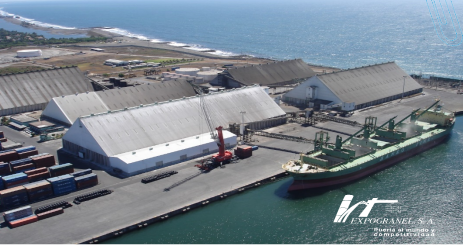
– “Guatemala’s main export channel continues to be Port Quetzal. The sugar industry’s exporter terminal -EXPOGRANEL- maintains its installed capacity to receive 800 MT of sugar per hour bulk vessel filling at a speed of 2,164 MT of sugar per hour.”

Canada has imported 1.46 million metric tons of sugar from Guatemala since 2015

The most recent US Department of Agriculture report and their report from the previous year provide tables that reveals how many metric tons (MT) of sugar Canada has imported from Guatemala on an annual basis:

2022 – 87,050 MT

2021 – 113,650 MT

2020 – 269,770 MT

The UN Comtrade database also notes:

2019 – 333,080 MT

This chart from CENGICAÑA and Global Trade Atlas tells us:

2018 – 203,331 MT

And this USDA report adds:

2017 – 79,281 MT

2016 – 287,529 MT

And from this report:

2015 – 87,142 MT

While the amount of sugar Canada imports from Guatemala does fluctuate from year to year, these numbers from various sources indicate Canada has imported a total of 1,460,833 metric tons of sugar from Guatemala since 2015.

Guatemalan sugar exports to Canada required 146 million cubic meters of water

Given the US Department of Agriculture report notes that “the sugarcane crop system [in Guatemala] only requires 100 cubic meters of water per ton”, we can generally estimate that the 1,460,833 metric tons of sugar that Canada has imported since 2015, has required approximately 146,083,300 cubic meters of water.

Impacts on water

On its recent visit to the South Coast of Guatemala, PBI-Canada saw diminished and polluted rivers attributed to sugar production and visited numerous communities that shared stories about how the water required for sugar mills had dried wells and gardens.

Comunidad del 15 de febrero faces eviction after November 1

On May 4, we met with the “February 15th” community. They told us that their harvest was a failure because of the monoculture in the region. They added that water-takings by the sugar industry makes it impossible to farm and that the sugar plantations can drill much deeper wells than them and take the groundwater that they need for their crops.

As a result of their crop failure, the community is now fearful that they will not be able to make the interest payment on the loan 7 million Quetzal loan for their land. That payment of 5,000 Quetzals (about CAD $875) is due on November 1. If they cannot make that payment, the community faces eviction.

Mapping Guatemalan sugar exports to Toronto and Vancouver

As noted in the US Department of Agriculture report: “Guatemala’s main export channel continues to be Port Quetzal. The sugar industry’s exporter terminal – EXPOGRANEL- maintains its installed capacity to receive 800 MT of sugar per hour bulk vessel filling at a speed of 2,164 MT of sugar per hour.”

Photo: The Expogranel port in Puerto Quetzal in 2020.

In April 2019, PortsToronto reported that the MV Cape brought more than 18,920 metric tonnes of sugar from Guatemala to Redpath Sugar.

Photo: Redpath Sugar Refinery in Toronto.

And in January 2016, Reuben Jentink wrote: “The sugar is loaded onto ships at the Expogranel sugar loading terminal, responsible for the reception, storage, and loading of all sugar product exported from Guatemala’s Pacific coast at Puerto Quetzal.”

Jentink then notes: “The sugar then travels 3662 nautical miles to the Rogers Refinery’s deep-sea wharf located at the Port of Metro Vancouver.”

Photo: Lantic/Rogers Vancouver Cane Refinery.

For more on this, please see our article: How does sugar from Guatemala arrive in Canada? (March 3, 2022).

Redpath and Lantic claim responsible sourcing

Redpath highlights: “’Sustainably Sourced’ and ‘Ethically Grown’ for Redpath means that our raw cane sugar comes from suppliers who: respect and work towards the highest environmental, social, and governance standards; uphold human rights; have been verified through our rigorous Ethical Sourcing Program.”

Lantic/Rogers also produced this ESG Report in June 2021 that says: “Rogers’ raw material sourcing is responsible.” And Redpath says its “Corporate Social Responsibility Program is an ongoing commitment to continuous assessment of our supply chain.”

Members of the Council of Communities of Retalhuleu (CCR) face trial on May 16-18

PBI-Guatemala has noted: “The CCR began to organize in 2015 as a result of adverse effects caused by the expansion of the monoculture of sugar and the use of large-scale agrochemicals and pesticides used by the mills in the region.”

As a result of their defence of the right to water, four members of the CCR are being criminalized by a complainant associated with the El Pilar sugar mill.

Photo: The entrance to the El Pilar sugar mill.

The four criminalized members of the CCR face their next court date on May 16-18.

One of the criminalized defenders, Abelino Mejia Cancino, has commented: “We need people to realize that when they consume sugar, it has an impact on the life of the communities and on the right to water for all. We call for the consumption of what is healthy and good produced by the campesinos and not products made by the big companies.”

On March 13, 2022, Abelino participated in this PBI-Canada webinar. At that time, he said: “There is a year-by-year certification process for the sugar mills. They need to visit not just the sugar mills, but the communities, that they come to see the rivers, they need to see the reality of the poverty the sugar cane industry is leaving here in our country.”

From the Lantic/Rogers and Redpath websites, it appears that the companies conduct their own assessments, rather than being certified by an external body.

Abelino also noted on our webinar: “An international commission needs to come to verify the damage that has taken place. And to say if you aren’t going to protect the environment, we can’t buy your sugar.”

As noted above, Canada has imported 1.46 million metric tons of sugar that required an estimated 146 million cubic meters of water since 2015, the year that the CCR members began to organize and as a consequence face this criminalization.

We continue to follow this situation.

We gratefully acknowledge the research assistance that has been provided by Research for the Front Lines in this development of this report.

PBI-Canada hears testimony in the community of Pajales Sis about the impacts of the El Pilar sugar mill, May 2, 2023.

Peaceful Resistance of Cahabón march in Guatemala City focuses on role of Madrid-based ACS in construction of dams

On May 10, PBI-Canada observed a march in Guatemala City in opposition to the hydroelectric dams built on Mayan Q’eqchi’ territory without consent.

Now, Prensa Comunitaria journalist Regina Pérez reports: “Mayan Q’eqchi’ protesters call attention to the lack of water in their communities in Alta Verapaz, due to the operation of several hydroelectric dams built by ACS’s Spanish company Cobra.”

The article continues: “The Q’eqchi’ women carried empty jars, as a sign that, in their communities, where the hydroelectric plants of the Oxec and Renace hydroelectric complexes operate, water is becoming more and more limited, a very necessary resource for the families, said María Caal, from the Sepoz community.”

“The first request is to know what sanction the Spanish government will impose on Florentino Pérez, who presided over ACS, whose company was subcontracted by the Guatemalan firm Corporación Multi Inversiones (CMI) for the construction of phases II, III and IV of the [Renace] hydroelectric complex. The indigenous population of the affected region claims that they were never consulted by Renace about the project.”

Florentino Pérez, Chairman of the ACS Group

The article concludes: “More than an hour after arriving at the Embassy, Minister Counselor Rafael Chaves Beardo went out to talk to Bernardo Caal and told him that ACS no longer belongs to Perez, since it is no longer owned by the company. However, Caal stated that Perez was the president of ACS when Cobra built part of the complex.”

Actividades de Construcción y Servicios (ACS) in Canada

The most recent annual report from ACS indicates that ACS Group companies include:

RAGADOS CANADA 150 King Street West, Suite 2103 Toronto, Ontario ON M5H 1J9 Canada Telephone: +1 647 260-5001 Fax: +1 647 260-5002 www.dragados-canada.com

Clark Builders Head Office 800 – 5555 Calgary Trail NW Edmonton, AB, Canada T6H 5P9 Canada Telephone: +1 780-395-3300 Fax : +1 780-395-3545 Email: edmonton@clarkbuilders.com www.clarkbuilders.com

ACS Infrastructure Canada, Inc. 155 University Avenue, Suite 900 Toronto Ontario M5H 3b7 Canada Telephone: +1-416-642-2161 Fax: +1-416-642-2162

Canadian engineering company provides conceptual design for Oxec III dam

The march in Guatemala City included a banner that reads: “We demand that the Oxec 3 licence be cancelled.”

In August 2017, Breakbulk Magazine reported that the Oxec II dam was “designed by Hatch Ltd., the Toronto, Canada-based engineering firm.” That article also quotes Hooman Ghassemi, Hatch’s project manager for Oxec II. It then notes: “Ghassemi has been working on Oxec II since 2015 and has just finished the conceptual design for Oxec III.”

Hooman Ghassemi, Hatch Ltd. Oxec II project manager

Commenting on OXEC II, Ian Ainslie, a Hatch project manager based in Niagara Falls, Ontario, also noted: “Hatch has been active in developing hydroelectric sites in Guatemala for over 20 years.” And Hatch’s managing director of power, Jim Sarvinis, says: “Projects like Oxec II are exactly why we do the type of work we do at Hatch.”

Last month, Power Technology noted: “Oxec III is a 75MW hydro power project. It is planned on Cahabon river/basin in Alta Verapaz. According to GlobalData, the project is currently at the permitting stage. It will be developed in a single phase. The project construction is likely to commence in 2025 and is expected to enter into commercial operation in 2027.”

It is not clear what further role Hatch Ltd. may have in the detailed design-build-engineering for the Oxec III hydroelectric dam.

While Hatch has numerous offices in Canada, a central address appears to be: Global Delivery Centre Sheridan Science & Technology Park 2800 Speakman Drive Mississauga Ontario L5K 2R7 Canada Tel: +1 905 855 7600 Fax: +1 905 855 9031

We will continue to follow this.

The Peace Brigades International-Guatemala Project has accompanied the Peaceful Resistance of Cahabón since July 2017.

PBI-Canada coordinator Brent Patterson observed the Mayan Q’eqchi’ march in defence of water in Guatemala City, May 10, 2023.

PBI-Mexico accompanies Mother’s Day events as the situation of enforced disappearances continues

On May 10, PBI-Mexico tweeted:

“In the framework of the commemoration of Mother’s Day, #PBI accompanies several groups throughout the country that denounce and seek answers to the serious situation of forced disappearance that Mexico is going through.
#UntilYouFindThem
#OurGiftIsTheirReturn
#SearchForTheTruth”

The Associated Press reports that there are “more than 112,000 names on Mexico’s list of disappeared people.” That article adds: “So far this year, 4,145 people have been reported as disappeared, according to government figures. While researchers and activists say the real number is likely far larger, the figure represents a more than 20% increase from the same period last year.”

Anadolu Agency adds: “According to investigations by journalists, disappearances in Mexico have risen sharply in the last 17 years. Following the War on Drugs in 2006, the government launched a military strategy that led to increased violence by criminal syndicates in Mexico and destabilized local governments, making them susceptible to corruption. From 2006 until 2022, the number of missing persons increased by 4,086%.”

That article also notes: “Unfortunately, mothers and activists are not immune to retaliation for reporting disappearances. Collectives and social groups have reported cases of harassment, threats and intimidation as they search for the disappeared. The government has reportedly granted protection measures for 120 members of groups searching for missing persons, including 89 women. Since 2021, seven mothers searching for their missing children have been murdered in Mexico.”


PBI-Colombia accompanies ASCAMCAT during processes of organizational and leadership strengthening with communities

On May 9, PBI-Colombia tweeted:

“We accompany @AscamcatOficia [the Peasant Association of Catatumbo] in the municipality of #Hacari during the processes of organizational and leadership strengthening with the Peasant Guard and the communities of the region.”


PBI-Guatemala accompanies the CCDA at hearing on the Manantial case, next court date is May 16

On April 28, PBI-Guatemala posted:

“PBI accompanies members of the Ccda Verapaz to the debate hearing of the Manantial case. This one was suspended due to lack of interpreters and rescheduled for May 16 at Coban Court 2.”

On April 14, PBI-Guatemala had also posted:

“#PBI accompanies members of the CCDA-Verapaces to the hearing of the Manantial case. The case consists of the prosecution of a community that has been settled on land – now in dispute – for more than 20 years. Now, this process has been opened in which they are accused of disturbing possession.

The lawyer considers that this is a case of criminalisation, since the channels for resolving agrarian conflicts have not been exhausted and the case has been taken directly to the criminal courts.”

And PBI-Guatemala has previously explained: “The CCDA of the Verapaces accompanies some 150 Q’eqchi communities, supporting them in the resolution of conflicts related to the possession of the land they inhabit.”

The Guardian has also reported: “A peace agreement in 1996 should have led to land redistribution, but a handful of powerful families still dominates the economy, and Guatemala remains one of the world’s least equal and most violent countries, with the largest 2.5% of farms occupying more than 65% of the land.”

And the Inter-American Commission on Human Rights (IACHR) has previously reported that there is a “pattern of human rights violations when evictions are carried out” in the country. The IACHR says: “The Maya Q’eqchi’ and Poqomchi’ peoples from the targeted communities have been fighting for the State to recognise their right to their land and ancestral territories. The State’s response – in alliance with powerful private actors – has been repression and criminalisation. This in turn contributes to the rising violence and conflict in the communities and region, and is in direct contradiction to the human rights treaties.”

PBI-Guatemala began accompanying the Comité Campesino del Altiplano/Campesino Committee of the Highlands/ CCDA – The Verapaces in July 2018. Las Verapaces is the region formed by the departments of Alta Verapaz and Baja Verapaz.

PBI-Guatemala accompanies family of Luz Leticia at court hearing, next court date June 30

On May 4, PBI-Guatemala posted:

“PBI accompanies the family of #LuzLeticia to the intermediate stage audience. This was suspended as the defendant’s lawyer has not appeared and rescheduled for June 30.”

Luz Leticia Hernández Agustín studied at the Belen Institute, School of Commerce and Faculty of Economics of the University of San Carlos.

Verdad Justicia: “Luz Leticia was born on November 22, 1957, the same day she was detained-disappeared, when she was 25 years old. Her family remembers her as a woman, she was a very intelligent, affectionate woman, such a beautiful smile and a hard worker.”

The Inter-American Commission on Human Rights (IACHR) has noted Luz Leticia and Ana Maria López Rodríguez were “captured on November 21, 1982, by security forces made up of elements of the special operations reaction battalion (BROE) and the intelligence service. (SIM) while they were at the address located in block 4, block “E”, lot 13 of the Monte Real II neighborhood, zone 4 of Mixco.”

On the accused, Prensa Libre also reports: “Cifuentes Cano was the director of a police division and worked closely with the Army in counterinsurgency operations during the de facto government of the dictator Efraín Ríos Montt (1982-1983), as explained by the Prosecutor’s Office before the Fifth Criminal Court of First Instance. The ex-commander is accused of the forced disappearance of the university students Luz Hernández and Ana López, who 40 years later have still not been located.”

Video.