


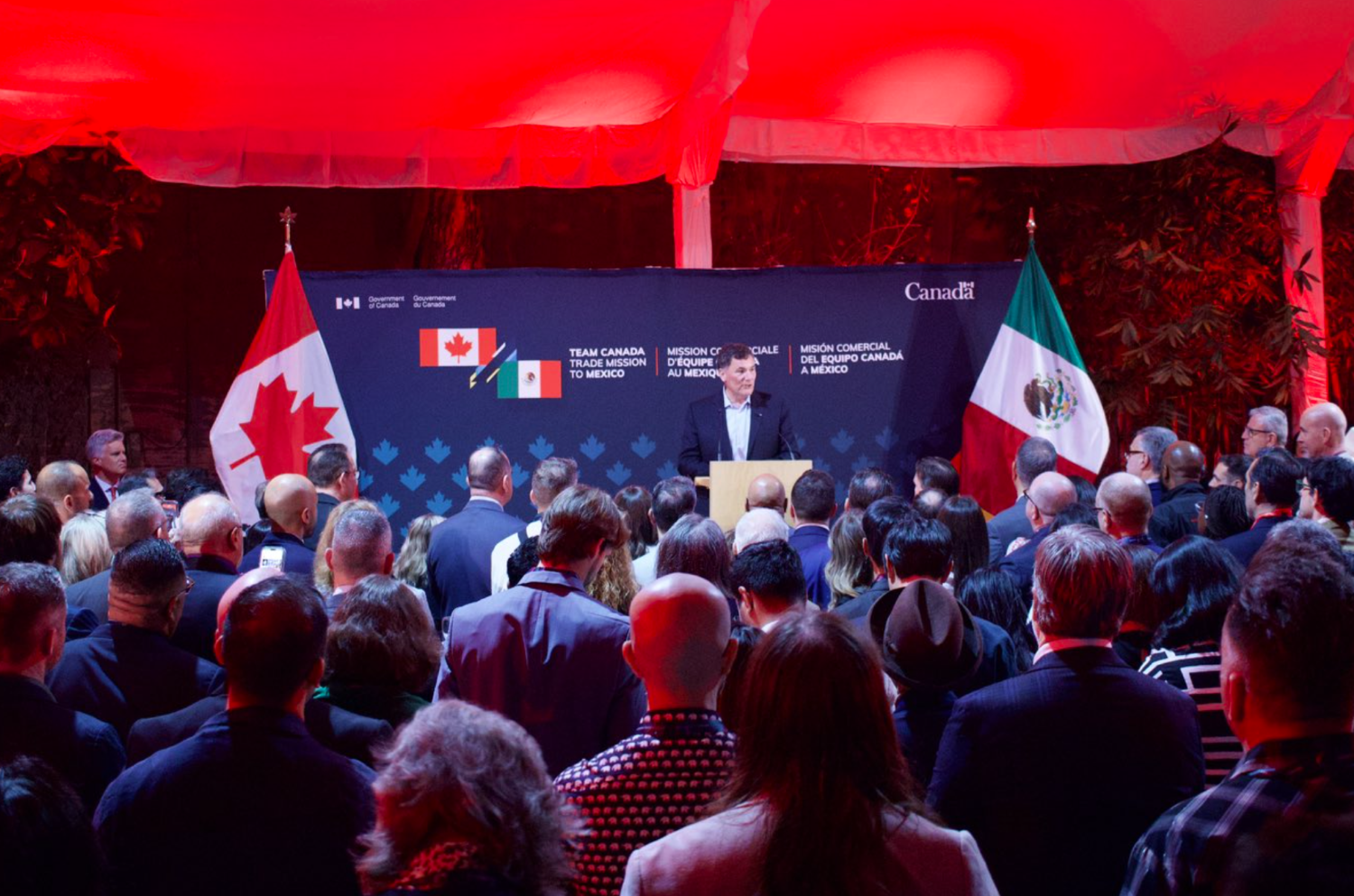
X photo from Dominic LeBlanc.
The Globe and Mail has reported: “A massive Canadian trade delegation will descend on Mexico on Sunday [February 15] … Led by Dominic LeBlanc, the federal minister responsible for North American trade, the trip will include leaders of approximately 250 Canadian businesses as well as government and industry officials [for a total of 370 Canadian delegates].”
The news article further highlights: “[Mexico has] proven an attractive destination for Canadian foreign direct investment, which totalled $46-billion in 2024. More than 60 Canadian auto parts companies and nearly 140 Canadian mining companies operate in Mexico. And a number of Canada’s largest businesses have a sizable footprint in the country [including] TC Energy Corp. [that] has over US$11-billion invested in 3,600 kilometres of natural gas pipelines in Mexico…”
It further notes: “Companies such as Canadian Pacific Kansas City Ltd. are betting on this growth. One reason CP bought the Kansas City Southern Railway in 2021 was to create a continental network that encompassed Canada, the U.S. and Mexico.” In May 2023, Bnamericas reported that the Government of Mexico had invited Canadian Pacific Kansas City (CPKC) to participate in the Maya Train and the Isthmus of Tehuantepec isthmus rail corridor between Oaxaca and Veracruz states.
More mining and energy megaprojects?
The Globe and Mail article also comments: “The regulatory environment can be constraining. [Former president Andrés Manuel] López Obrador reversed an opening of Mexico’s energy market, and around US$3.5-billion worth of investments in Canadian mining projects in the country have been stalled by regulatory challenges, according to the mining committee of the Canadian Chamber of Commerce in Mexico.”
And now Mining.com reports: “Mexico and Canada will present an joint action plan on minerals, infrastructure and supply chains in the second half of the year, Mexico’s Economy Minister Marcelo Ebrard said on Monday after meeting with Canada’s Minister of Trade, Dominic LeBlanc, in Mexico City. ‘We are preparing during the next month the action plan between Mexico and Canada in order to expand investment, increase commerce, reduce regulatory difficulties or obstacles, and facilitate investment,’ Ebrard told journalists. He also said a delegation of Mexico’s finance ministry will visit Canada to continue conversations, without providing a date.”
Security
CBC News adds: “The Canadian delegation arrives as authorities grapple with last month’s kidnapping of 10 workers with the Vancouver-based mining firm Vizsla Silver Corp., in the state of Sinaloa. Five have since been found dead, according to authorities who have linked the case to a faction of the Sinaloa drug cartel.”
The CBC article further notes: “Ottawa is ‘very concerned’ about the case, said LeBlanc, but added there is ‘no daylight’ between the two governments on security matters and the protection of Canadian citizens, businesses and investments in Mexico. He said Canada and Mexico maintain open and transparent discussions on security issues and that President Claudia Sheinbaum’s government ‘has made very, very considerable movement forward in the security context in Mexico.’”
AFP notes: “LeBlanc said that security should be a priority and announced that the Canadian Royal Mounted Police plans to double the number of officials who work in the Canadian Embassy in Mexico this year.”
Security for communities
But The Los Angeles Times also reports on insecurity for communities and environmental defenders. It notes: “The mine workers’ disappearance in late January brought more troops into the mountains as they searched by air and on the ground for signs of them. …Roque Vargas, a human rights activist for people displaced by violence in the area, said that ‘all of the hubbub has scattered the organized crime guys’ but he worries they could return. He and others are also concerned about being mistaken for bad guys and attacked by security forces when they leave their town, because it has happened elsewhere in the state. ‘We’ve practically been abandoned’, he said.”
That report adds: “Mines, along with other businesses like avocado groves and pipelines carrying gasoline, have long attracted organized crime’s attention in Mexico as a source of extortion payments or to steal the extracted material. Saucedo, who has researched cases in Guanajuato, Sinaloa and Sonora, said he has also seen cases where mines take advantage of armed groups to control mine opponents. The Mexican government has said it has no reports that Vizsla was extorted. Sheinbaum said that her administration would talk with all mining companies in Mexico ‘to offer the support they require’.”
Human rights defenders and journalists
PBI-Canada is following the news this week about the Team Canada Trade Mission to Mexico, specifically in relation to the safety and security needs of human rights defenders and journalists in Mexico.
Notably, we are looking to news reports for potential implications of any expansion of Canadian mining, energy/pipeline and transportation infrastructure on the safety and security of human rights defenders and journalists.
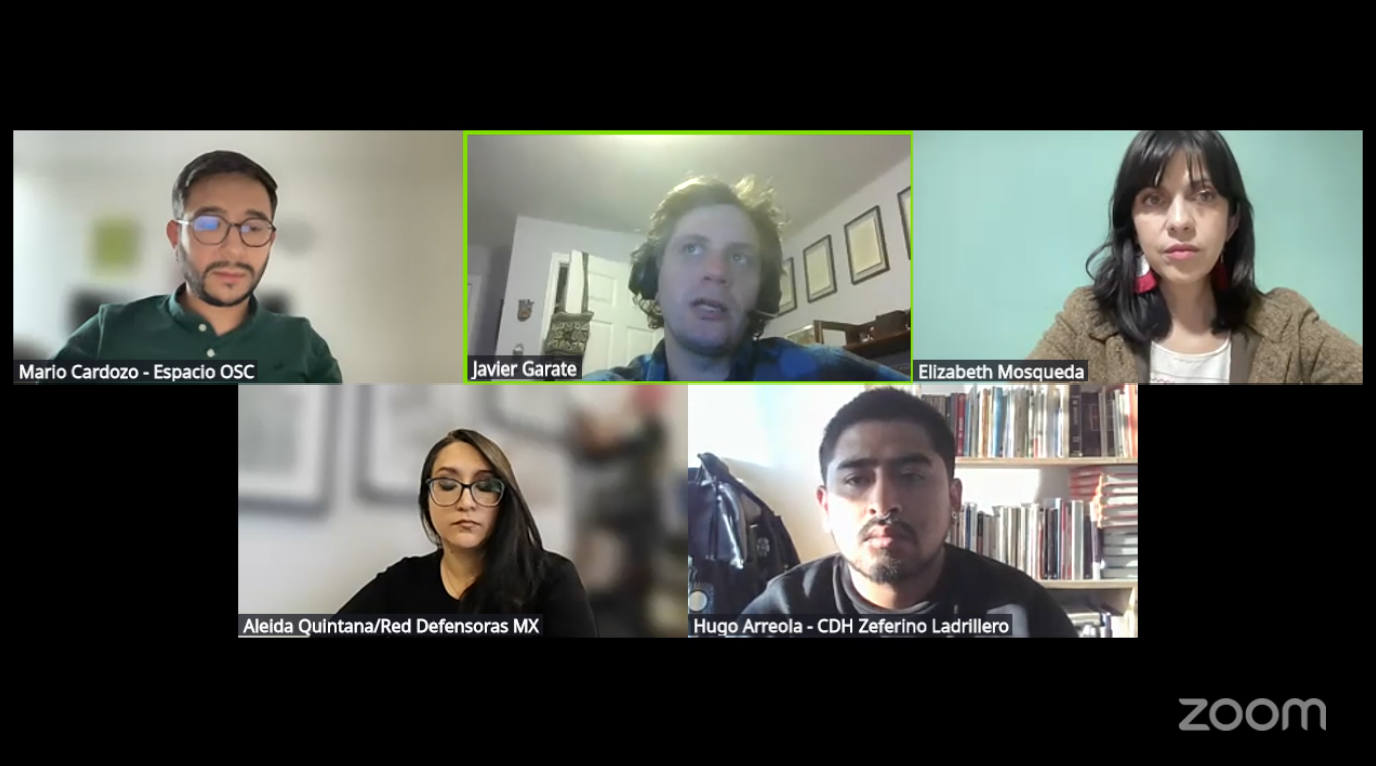
Last week, aware of this Team Canada Trade Mission, PBI-Canada and PBI-Mexico, alongside the Space for Civil Society Organizations for the Protection of Human Rights Defenders and Journalists (Espacio OSC) organized a webinar with the call to strengthen the Protection Mechanism and protective measures for human rights defenders and journalists in Mexico.
Mario Hurtado Cardozo of Espacio OSC commented: “Violence against human rights defenders and journalists doesn’t happen in a vacuum. It happens in a very specific context where you have different interests that all come together: economic interests, state interests, institutional interests, and institutional impunity.”
He highlighted three Canadian mining projects of concern: the Equinox Gold Los Filos mine, Fortuna Silver San José mine and the New Gold Cerro de San Pedro mine. Indigenous communities have also raised concerns about TC Energy pipelines on their territories. And there have been concerns expressed about railway megaprojects including the Mayan Train (that CPKC was invited to join).
You can watch the webinar in Spanish here.
PBI-Canada is monitoring news reports and official announcements from cabinet ministers, Members of Parliament, Embassy officials and corporate representatives to see if some attention is given to these concerns.

