Home Blog Page 6

Lax’yip Firekeepers committed to defending Gitxsan territory in northwest British Columbia from industrial megaprojects

Video still from Lax’yip Firekeepers.

The Lax’yip Firekeepers have stated that they are committed “to defending Gitxsan territory from industrial megaprojects”.

The Gitxsan lax’yip (also known as territories) occupy an area of 33,000 square kilometres in northwest British Columbia.

The Lax’yip Firekeepers are a Gitxsan youth-led initiative focused on land protection, legal education, and intergenerational continuity.

Their founding organizer is Hooxi’i (Kolin Sutherland-Wilson). He is a Gitxsan researcher, land defender, and a hereditary name holder of Wilp Git’luuhl’um’hetxwit, a Fireweed Clan House of Anspayaxw.

This is Kolin speaking about Gitxsan opposition to the Prince Rupert Gas Transmission (PRGT) pipeline this past February 2026.

PBI-Canada has met Kolin three times.

The first time was in November 2021 at the time of the Royal Canadian Mounted Police (RCMP) Community-Industry Response Group (C-IRG) raid against land defenders resisting the Coastal GasLink pipeline on Wet’suwet’en territory.

Then we saw him again on a PBI-Canada convened webinar in March 2024 about Gitxsan and Gitanyow resistance to extractive megaprojects.

And then again in October 2025 at the time of the sentencing hearing for Indigenous land defenders who had been arrested by the RCMP C-IRG in November 2021.

We note that the Lax’yip Firekeepers have asked for people to stand with them in opposition to the PRGT pipeline and to “continue to amplify voices and existing messages from the Gitanyow Hereditary Chiefs, Lax’yip Firekeepers, and Huwlip in opposition of the Prince Rupert Gas Transmission pipeline.”

Instagram post from Lax’yip Firekeepers.

Keeping in mind the post above, PBI-Canada met with Lax Ganeada Hereditary Simooget (Chief) Watakhayetsxw (Deborah Good) along with Wet’suwet’en Heredity Chief Na’Moks in Smithers during a visit to the territory in October 2025.

To follow the Lax’yip Firekeepers on social media, go to their website, their Instagram account, and their Facebook page.

Additional reading:  Lax’yip Firekeepers march in Victoria against PRGT pipeline; Filipino youth draw parallels in the defence of ancestral lands (PBI-Canada article, February 11, 2026).

PBI-Canada following the Mexico-Canada Dialogue on Human Rights and Multilateral Issues in Ottawa

Photo by Canada in Mexico.

Peace Brigades International-Canada is following social media and news reports on the Mexico-Canada Dialogue on Human Rights and Multilateral Issues happening today (May 20) in Ottawa.

We are specifically looking for progress on strengthening the Protection Mechanism for Human Rights Defenders and Journalists.

Today, the Embassy of Canada in Mexico posted on social media: “Protection of vulnerable people; Right to life and physical integrity; Freedom of expression; Gender equality. We are in Ottawa for the Mexico-Canada Dialogue on Human Rights and Multilateral Affairs to discuss our cooperation on these issues.”

The Mexican ambassador to Canada Carlos Joaquín also posted on social media: “The bilateral dialogue between Mexico and Canada has grown into an increasingly close and constructive relationship. Today, with the participation of @feller_jennifer [the Director General for Human Rights and Democracy at the Secretariat of External Relations of Mexico], @cevillanue [the Director General of Human Rights and Democracy at the Secretariat of External Relations of Mexico], and @EmbaMexCan [the Embassy of Mexico in Canada], we held the ‘Mexico–Canada Human Rights and Multilateral Affairs Dialogue’, an important space to continue strengthening cooperation, mutual understanding, and the development of our countries.”

We note that at the Canada-Mexico Dialogue that took place on May 8, 2025, in Mexico City, the Protection Mechanism was discussed under the theme of “Freedom of Expression and the Right to Security”.

Those themes are reflected in today’s Dialogue.

The report from 2025 notes: “Discussions addressed concerns related to attacks on freedom of expression, the influence of social media in spreading hate and discrimination, and the risks faced by journalists and human rights defenders in Mexico and globally. Topics also included the increase of digital threats, the importance of cybersecurity, the issue of disappearances in Mexico, Mexico’s human rights protection mechanisms and the possibility of a database to monitor disappearances. Both countries agreed to share experiences regarding data protection and databases.”

A year prior to this, in January 2024, Canada called on Mexico at their United Nations Universal Periodic Review (UPR) to: “Strengthen, from an intersectional and gender perspective, the federal Protection Mechanism for Human Rights Defenders and Journalists, specifically in the areas of prevention, protection, investigation, and reparation.”

Global Affairs Canada has indicated to PBI-Canada and the Americas Policy Group (APG) that the Protection Mechanism will be raised at the Human Rights Dialogue today (May 20, 2026) in Ottawa.

We continue to follow for news reports and social media posts today as well as an anticipated meeting with Global Affairs Canada officials in the coming weeks to gauge if progress has been made on this area of concern.

PBI-Canada observes Global Sumud Flotilla solidarity rally outside the Prime Minister’s Office in Ottawa

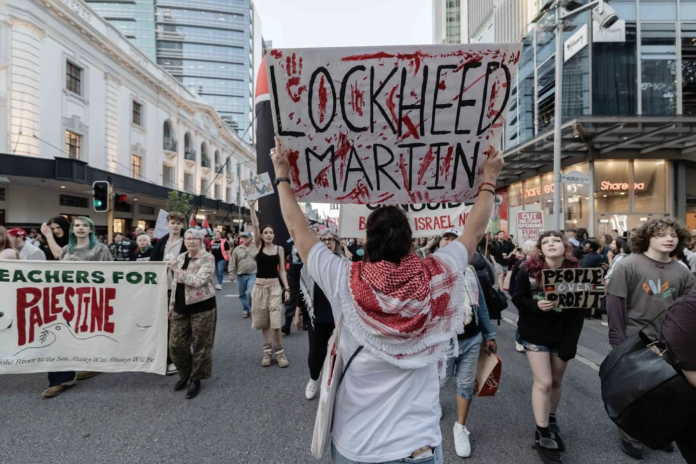
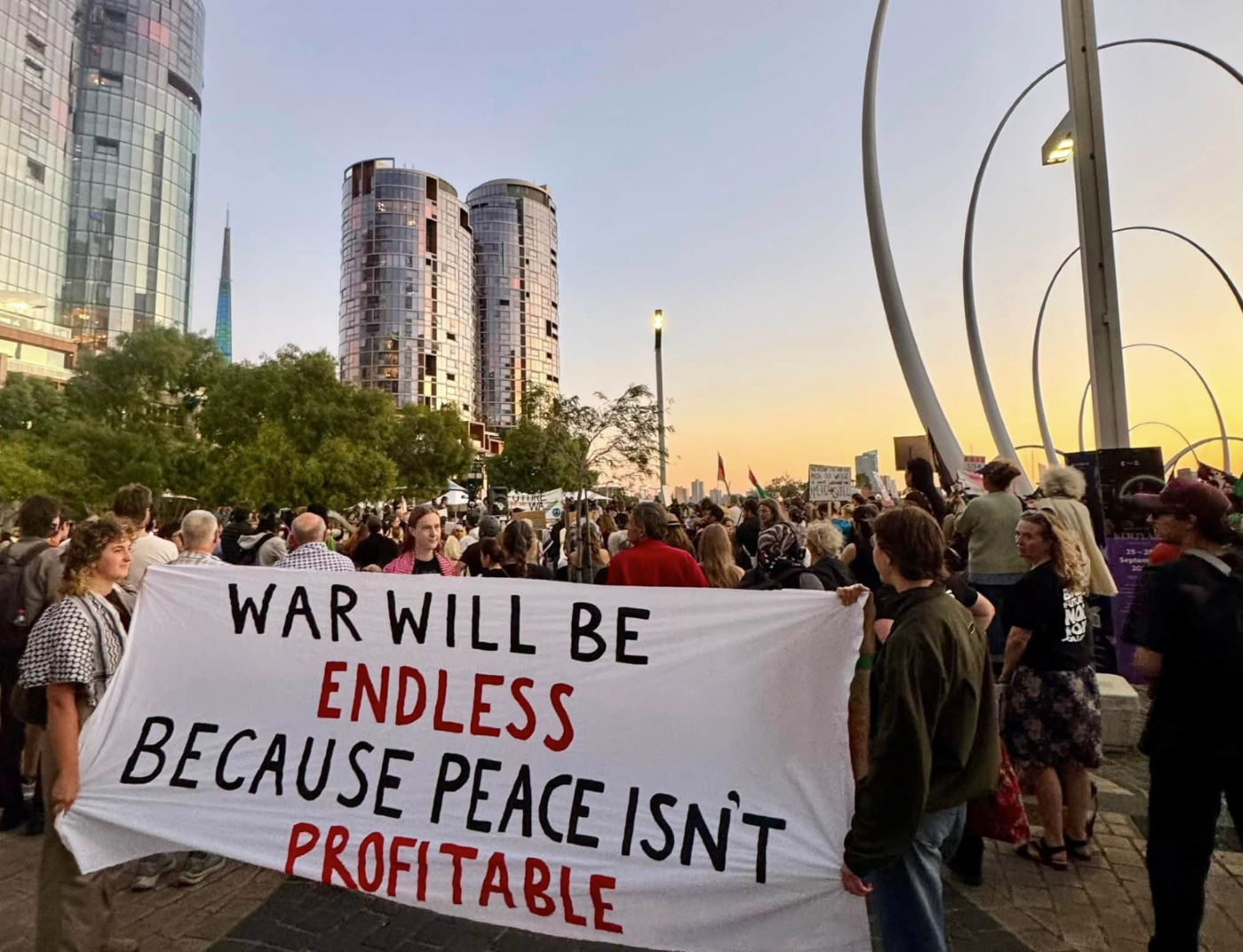
Numerous organizations, including Global Sumud Canada and the Palestinian Youth Movement, held a rally on Tuesday May 19 in front of the Prime Minister’s Office in Ottawa to “protest the unlawful attack on the Global Sumud Flotilla”.

Their outreach highlighted: “We call on Prime Minister Carney to condemn Israel’s illegal attack on a civilian flotilla seeking to deliver humanitarian aid to Gaza and to demand the immediate release of Canadians kidnapped by occupation forces.”

The day after the rally, Canadian prime minister Mark Carney commented: “The abominable treatment of civilians aboard the flotilla, including that which is documented in footage shared by Itamar Ben-Gvir, is unacceptable. …The protection of civilians and respect for human dignity must be upheld everywhere, at all times.”

The Globe and Mail now also reports: “Foreign Affairs Minister Anita Anand says she [has] summoned Israel’s ambassador over the Middle East country’s treatment of a flotilla of activists, including Canadians, bound for Gaza. …Ms. Anand said from what she’s seen from the video, Israel’s handling of the activists as portrayed in the video was ‘deeply troubling and absolutely unacceptable.’ She noted that Canada has already imposed sanctions on Mr. Ben-Gvir.”

CANSEC arms fair

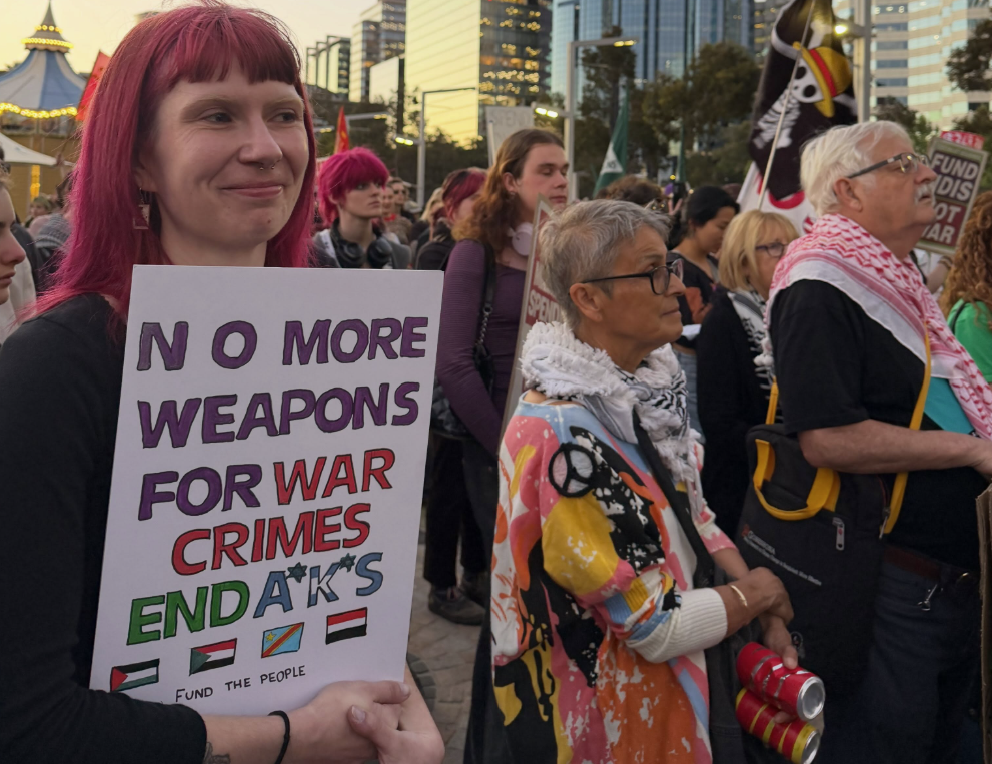
The rally in front of the Prime Minister’s Office articulated five demands: “1. Sanction Israel; 2. Arms embargo now!; 3. Press for an end to the siege on Gaza; 4. Call for the release of all 10,000 Palestinian hostages; 5. Protect all Canadians participating in the flotilla and demand their release.”

We note that while the British, French, Dutch, Spanish and Chilean governments have taken actions to prohibit either Israeli government officials or Israeli weapons companies from arms fairs, the Canadian government has not yet taken similar action with the CANSEC arms fair this coming May 27-28 in Ottawa.

Front Line Defenders statement

A few hours before the rally in Ottawa, Front Line Defenders stated it “strongly condemns the Israeli naval forces’ military interception of the peaceful Global Sumud Flotilla (GSF), which took place in international waters on the evening of 18 May 2026, approximately 250 nautical miles (450 kilometres) from the coast of Gaza.”

Front Line Defenders further notes: “Among the crew members are international human rights defenders, medical personnel, journalists, humanitarian volunteers, and solidarity activists from several countries. …Front Line Defenders expresses deep concern regarding these interceptions of peaceful civilian solidarity missions, as well as the detention and interrogation of human rights defenders. The organisation calls for the immediate and safe release of all detained human rights defenders, humanitarian actors, and solidarity activists of the GSF, as well as the return of all seized vessels.”

We continue to follow this.

Image: Social media post from Global Sumud Canada, Shut Down CANSEC, World Beyond War Canada, International League of Peoples’ Struggles-Canada.

Six Canadian human rights defenders detained after Israeli Navy intercepts the Global Sumud Flotilla in international waters

Video still from Global Sumud Flotilla.

Front Line Defenders has described the Global Sumud Flotilla as carrying human rights defenders, unionists, lawyers and many others.

And just prior to the departure of the Flotilla from Spain on April 12, Amnesty International stated: “Israeli authorities must ensure safe passage for these unarmed activists and human rights defenders.”

The Canadian Press now reports: “Six Canadians are among the activists detained by Israel after its military intercepted boats off the coast of Cyprus [but outside Cypriot territorial waters] that were part of a mission aiming to break Israel’s naval blockade of Gaza, Canadian flotilla organizers said Monday [May 18].”

The Global Sumud Flotilla has identified the six detained Canadians as 1- Safa Chebbi, a grassroots political organizer from Montreal; 2- Omar Shaban, an engineer and organizer in sustainable agriculture from Toronto; 3- Ko Tinmaung, an organizer and activist from Toronto; 4- Sebastian Tow, a community organizer from Vancouver; 5- Michael France, a boat technician and activist from Vancouver; and 6- Norrad Bouzide, a harm reduction worker and advocate from Toronto.

Earlier this month, the Flotilla confirmed reports that individuals detained by Israel in international waters had been subjected to physical and verbal violence, as well as systematic torture.

Image from Global Sumud Canada.

Naval blockade

The Associated Press reports: “Organizers said the boats were intercepted 250 nautical miles from the shores of Gaza.”

The United Nations Convention on the Law of the Sea states: “Every State has the right to establish the breadth of its territorial sea up to a limit not exceeding 12 nautical miles, measured from baselines determined in accordance with this Convention.”

In 2009, when Israel imposed a naval blockade on Gaza, the fishing zone for Palestinians was set at 5.5 kilometres from the coast.

UN Special Rapporteurs have previously argued that the naval blockade is illegal under international law.

Global Affairs Canada

The Canadian Press notes: “Global Affairs Canada acknowledged a request for comment, but hasn’t yet provided one.” CBC also reports: “CBC News reached out to Global Affairs Canada (GAC) for comment but did not immediately hear back.”

We continue to follow this.

For updates, see the Global Sumud Flotilla on Instagram.

Drones are increasingly putting HRDs and communities at risk – what can be done to address their security needs?

Photo: An Inspire 2 drone that can be purchased for as little as CAD $2,000. Photo by Sven Teschke.

Drones are increasingly putting human rights defenders, journalists and communities at risk in countries where Peace Brigades International is present.

Colombia

The Guardian now reports: “Drone strikes by armed groups have surged across Colombia since 2023, opening a dangerous new front in the country’s decades-long conflict. Hospitals, schools, police stations, electricity grids and homes have all been struck, and injuries now number in the hundreds.”

That article adds: “The sound of their buzzing has become a source of terror in many communities. In Putumayo, Indigenous leaders have said that armed actors used drones not only to launch attacks but to intimidate residents, hovering above villages to assert control, according to Human Rights Watch. On a recent reporting trip for the Guardian in Barrancabermeja, a drone followed and monitored this reporter while an interview about illegal armed groups was under way, forcing it to be cut short.”

Mexico

A week ago, The Guardian also reported: “Hundreds of Indigenous families have been forced to flee their homes in the mountains of central Mexico by intense attacks from a local criminal group, including drone bombings, an Indigenous rights organisation said on Monday [May 11].”

That article also notes: “The use of bomb-carrying drones and other powerful and sophisticated weaponry by Mexico’s drug cartels has become increasingly common. As violence has intensified, many poor and rural communities have been forced to flee their homes and seek safety elsewhere.”

It also highlights: “[Carlos González García from the National Indigenous Congress says] the attacks are aimed largely at the armed community police forces established by villagers to protect themselves from the drug gangs. …He accused the local government of being in cahoots with the criminal groups. There are three joint military, national guard and state police bases in the area, but according to González, they have done nothing to halt the violence in this remote part of Mexico.”

Honduras and Guatemala

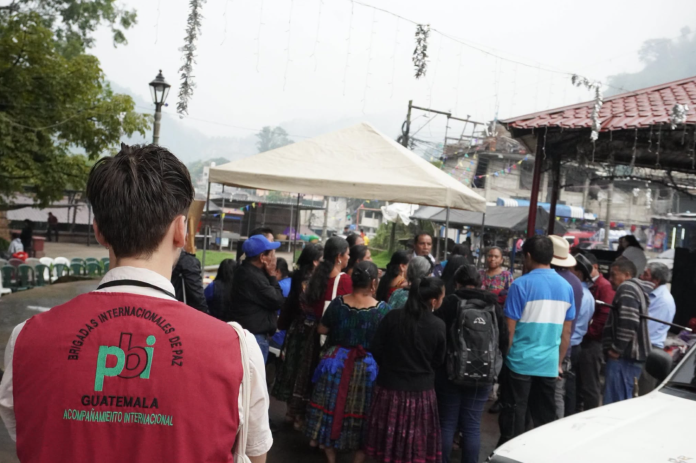
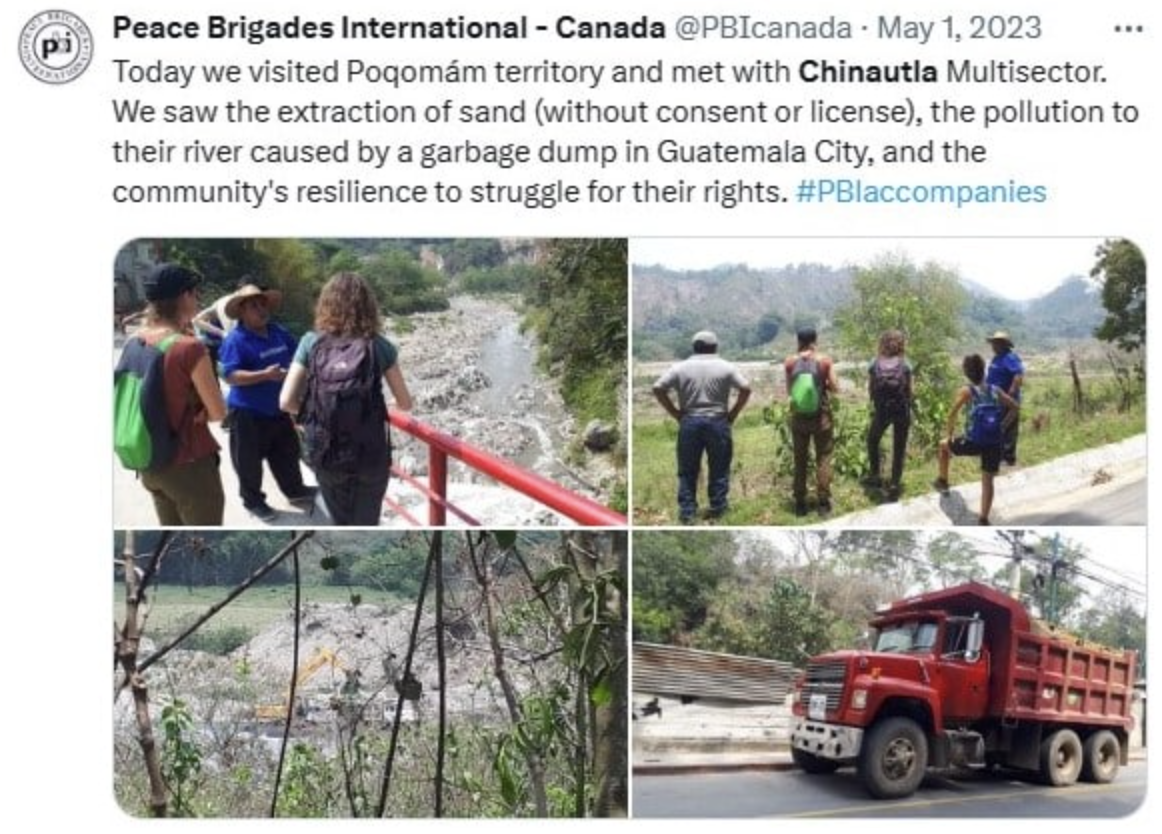
Peace Brigades International-Canada has also heard first-hand testimony from community members about surveillance by drones during our visits to Honduras (in October 2024) and in Guatemala (in May 2023).

Palestine

And while PBI is not present in Palestine, we note that the Committee to Protect Journalists (CPJ) documented in February 2026 that: “Drone killings of press members are on the rise: surging from two in 2023 — the first year CPJ documented such killings — to 39 in 2025. …Of the 39 deaths involving drones that CPJ documented in 2025, 28 were by Israel’s military in Gaza.”

What is to be done?

At this point, it is unclear what can be done to deter the use of cheap commercial drones by illegal groups to surveil and attack communities.

There may be a clearer range of options and sanctions when the surveillance and attacks are committed by State actors (the police, the military) or by State actors in collusion with illegal and/or corporate actors.

PBI-Canada is committed to acknowledging/highlighting this as an emerging issue that did not exist when we were founded as an accompaniment organization and to think through credible and effective strategies to contribute to the safety and security needs of human rights defenders, communities and journalists.

At present there does not appear to be an international convention or language (for example in Canada’s “Voices at Risk” guidelines) that addresses this emerging and increasing technology threat against HRDs.

PBI-Canada notes families of the disappeared plan to protest FIFA World Cup, games to be played in Toronto and Vancouver

Photo: Estadio Azteca in Mexico City where parents of the disappeared are planning to peacefully protest for the return of their children. Photo by ProtoplasmaKid.

On May 10, Peace Brigades International-Mexico accompanied the Mother’s Day march in Cuernavaca, Morelos, Mexico.

At that time, El Universal reported: “On the esplanade of the Plaza de Armas in Cuernavaca, [the mothers of the disappeared] denounced that the enthusiasm for events such as the World Cup contrasts with the reality of those who live in a permanent absence. In Morelos, they pointed out, there are more than two thousand missing people and at the national level the figure exceeds 133 thousand. ‘Hopefully just as millions of people will gather to shout a goal, there will also be space to shout for those who are missing,’ said a mother during the statement.”

Two days before, Canadian foreign minister Anita Anand met with Mexican foreign minister Roberto Velasco by telephone.

Informa Oriente reports: “The relationship between Mexico and Canada continues to strengthen, from economic cooperation to the joint organization of the 2026 World Cup. This Friday [May 8, 2026], authorities from both countries held a conversation to review progress on key issues on the bilateral agenda.”

That article adds: “The Mexican Foreign Ministry also indicated that one of the central issues was the coordination towards the 2026 FIFA World Cup, a tournament that Mexico, Canada and the United States will share as hosts.”

The tournament, which runs from June 11 to July 19, 2026, will feature 13 matches in Mexico, split between Mexico City, Monterrey, and Guadalajara. The iconic Azteca Stadium in the capital will host the opening match.

It will also include matches that will be played in Toronto (June 12, 17 and 20) and Vancouver (June 14 and 18).

Journalist Joaquín López-Dóriga further reports: “In the midst of preparations for the 2026 World Cup in Mexico City, families of missing people are preparing protests to make visible a national crisis that they accuse of being ignored.”

EFE adds: “The mothers and fathers are preparing peaceful protests, which they announce they will do from the opening match at the Azteca Stadium on June 11. In addition, these relatives will deliver letters to different embassies, to warn about the security risks that, they say, could also affect tourists.”

We recall the plea from a mother in Mexico: “Hopefully just as millions of people will gather to shout a goal, there will also be space to shout for those who are missing.”

PBI-Canada is following this closely.

PBI-Canada congratulates the Canadian Labour Congress on resolution supporting arms embargo in solidarity with Palestine

Photo: Ontario Federation of Labour (OFL) delegates celebrate the resolution being approved.

Peace Brigades International-Canada congratulates the Canadian Labour Congress (CLC) for passing a resolution at their 31st Constitutional Convention in Winnipeg, Manitoba today that calls on the Government of Canada to support a two-way arms embargo given the ongoing genocide in Gaza and the West Bank.

We note that arms shipments to Israel put at risk the safety and security of Palestinian human rights defenders and journalists. At least 31 Palestinian human rights defenders were killed by the Israeli military in 2023 and 2024 (Front Line Defenders). Israel also killed 86 journalists in 2025, some of them through the use of armed military drones (Committee to Protect Journalists).

Labour for Palestine comments: “Today, delegates at the CLC voted overwhelmingly in support of the amended resolution that calls on the CLC to cut ties with the Histadrut. In doing so, they voted to stand in solidarity with the workers, trade unions, and the people of Palestine and against Israeli occupation, apartheid, and genocide.”

Their article further highlights: “The resolution adopted by the CLC convention also calls on the Canadian government to support a two-way arms embargo.”

The text of Resolution GEN-134 can be read here.
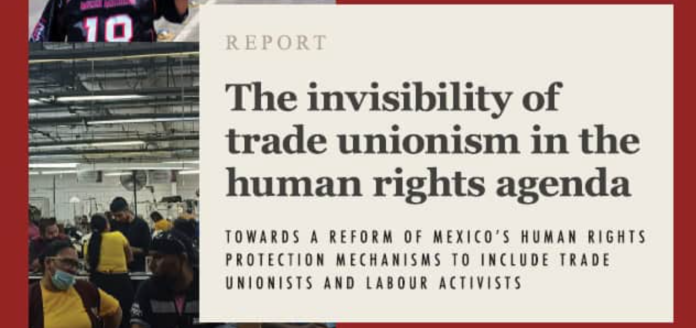
Photo: Text from the CLC resolution passed today.

‘ITUC constitution rejects militarism’

Previously, Kevin Skerrett, an Adjunct Research Professor at Carleton University’s Institute of Political Economy and former researcher with the Canadian Union of Public Employees (CUPE), has explained: “The Constitution of the International Trade Union Confederation (ITUC), a global union federation that represents 191 million workers in 169 countries and territories and has 340 national affiliates, loudly proclaims its rejection of – among other social ills – colonialism, militarism, and racism.”

‘Histradut chair visits Elbit weapons factory’

Skerrett further notes: “With roughly 800,000 members and deep links to the Israeli state and military, [Histadrut] continues to serve as an active participant in the mass dispossession of Palestinians and in Israel’s apartheid regime of systematic discrimination against Palestinian workers, communities, and people.”

Skerrett adds: “During an official tour of a weapons factory operated by Israel’s infamous Elbit Systems Ltd. in November 2023, Arnon Bar-David, the most senior elected chair of the Histadrut, stopped for a horrifying photo opportunity. The shell that Bar-David showed to reporters was described as destined for Gaza, and his handwritten text was reported to read as follows: ‘Greetings from the Histadrut and the workers of Israel.’”

Unifor, labour federations back arms embargo

The passage of this resolution at the CLC convention in Winnipeg follows other trade union resolutions.

On August 26, 2025, the Unifor Constitutional Convention in Vancouver passed a resolution that endorses “the call by Palestinian trade union for an arms embargo on Israel”.

Then in November 2025, the Ontario Federation of Labour (OFL) adopted a resolution against arms shipments to Israel. Another resolution that was passed at the OFL convention called for research to support divestment from “entities that manufacture or distribute arms, ammunition, implements or munitions of war, as well as companies engaged in activities that support or sustain Israel’s illegal occupation.”

Resolutions against the export of weapons to Israel have also been passed by labour federations in New Brunswick (June 2025), as well as in Nova Scotia (October 2025) and Newfoundland and Labrador (November 2025).

Attacks against human rights defenders, journalists

While the actual numbers are much higher, we note that Front Line Defenders has documented that at least 31 Palestinian human rights defenders were killed by the Israeli military in 2023 and 2024.

Their data for 2025 is expected to be released later this month.

The Committee to Protect Journalists (CPJ) has also documented that: “The Israel Defense Forces (IDF) has committed more targeted killings of journalists than any other government’s military since CPJ began documentation in 1992.”

The CPJ adds: “More than 60% of the 86 members of the press killed by Israeli fire in 2025 were Palestinians reporting from Gaza, where human rights groups and U.N. experts agree a genocide is taking place.”

The CPJ further notes: “Israel was responsible for nearly 75% of the journalists and media workers killed by drones from 2023 to 2025.”

The American Friends Service Committee (AFSC) Action Center for Corporate has previously explained: “Israel’s largest weapons manufacturer, Elbit Systems is one of the primary suppliers of weapons and surveillance systems to the Israeli military, including Skylark and Hermes military UAV drones, which form the majority of Israel’s fleet of large drones and have been used extensively in Gaza.”

Attacks against defenders opposing weapons companies

PBI-Canada continues to make the links between the export of “military goods” and surveillance technology and the direct threat to the safety and security of human rights defenders and journalists.

This week the London, United Kingdom-based Business and Human Rights Centre (BHRC) published a report that found there were 46 attacks against human rights defenders who were raising concerns about arms and weapons companies and their complicity in conflict and genocide, noting that this was “a significant increase from only two attacks recorded per year in 2023 and in 2024.”

The BHRC report further notes: “Protesters at arms fairs targeting companies selling weapons to Israel were detained in the United States, Turkey, Switzerland and France, whilst activists in New Zealand faced violence for protesting the militarisation of aerospace technology and its uses against civilian populations.”

The CANSEC “defence, security and emerging technology event”, that will include the participation of Elbit Systems, takes place in Ottawa on May 27-28, 2026. We are following the community opposition to CANSEC on Instagram here and here.

Further reading: PBI-Canada notes Unifor resolution in support of Palestinian workers and their call for an arms embargo on Israel (August 27, 2025).

PBI-Canada notes BHRC report documents 42 attacks against union-human rights defenders in 2025

Photo: Rocio Torres Bobadilla has faced threats and intimidation for her work with the Colombian mine workers union Sintracarbón.

Peace Brigades International-Canada is studying the just-released report by the Business and Human Rights Centre (BHRC) report titled: Navigating a global crossroads: Human rights defenders and business in 2025.

It indicates that there were 42 attacks against unions and 38 attacks against workers.

We note that at least three attacks against unions are listed in the BHRC database as happening in Colombia and Guatemala.

Colombia

Silvio Mendoza – In June 2025, human rights defender Silvio Mendoza, member of the labour union Sintracarbón received threats. Silvio is an active leader of the union and involved in proposals for a more just worker-led energy transition. The threats began after Sintracarbón filed a request with the Labour Ministry calling for the suspension of the collective dismissal of some 300 employees at Prodeco and Carbones de La Jagua (CDJ), subsidiaries of Glencore. This attack is part of broader pattern of intimidation against union leaders in Colombia.

Rocío Torres Bobadilla – In March 2025, human rights defender Rocío Torres Bobadilla, a Colombian environmental and human rights lawyer, faced threats and intimidation. The labour union Sintracarbón, which she advises, filed a request with the Labour Ministry calling for the suspension of the collective dismissal of approximately 300 employees at Prodeco and Carbones de La Jagua (CDJ), subsidiaries of Glencore.

We further note that Bobadilla worked for the PBI-accompanied José Alvear Restrepo Lawyers’ Collective (CAJAR) from 2004 to 2008. And we additionally note that Rosa Maria Mateus Parra from CAJAR has previously accompanied Aldo Amaya the General Secretary of Sintracarbon.

Guatemala

Sindicato de Trabajadores Bananeros de Escuintla (SITRABE) – Since June 2025, members of the Sindicato de Trabajadores Bananeros de Escuintla (SITRABE), a banana workers’ union at the Frutera del Pacífico plantations, part of the Agroamérica group, have allegedly faced persistent harassment including unjustified dismissals, arbitrary transfers, intimidation, surveillance, increased work targets as punishment, and offers of money or promotions aimed at dismantling the union.

ITUC Global Rights Index report

We will further correlate this data with the 2026 13th edition of the Global Rights Index of The World’s Worst Countries for Workers produced by the International Trade Union Confederation (ITUC). The 2025 edition can be read here. We expect the 2026 edition to be released in early June 2026.

Honduras

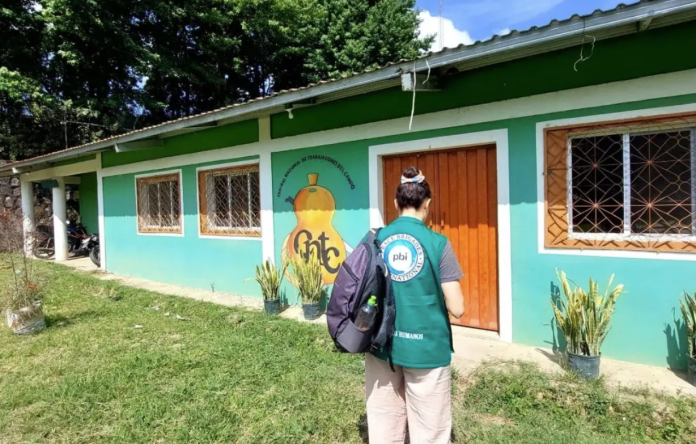
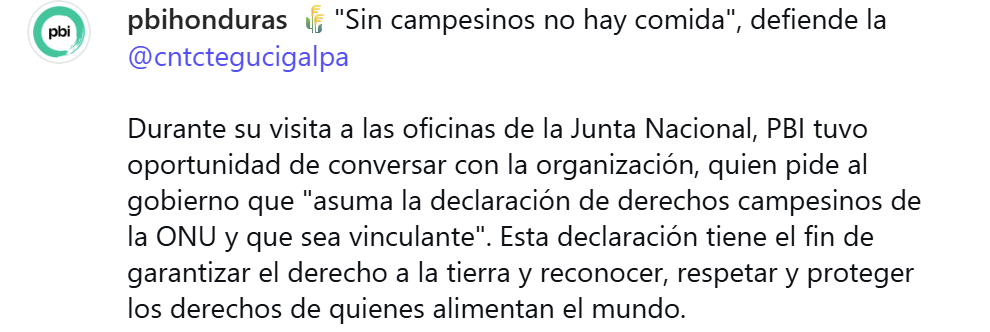
In 2026, we are notably following the attack against members of the National Union of Rural Workers (CNTC) in Honduras.

The Center for the Study of Democracy (CESPAD) has documented: “On April 9, 2026, police and military forces carried out the eviction of 39 peasant families in the community of San Nicolás, Comayagua. Peasant organizations denounced the disproportionate deployment of security forces, including military equipment, as well as the burning of crops and the arrest of 17 people.”

The CNTC is affiliated with the Unified Confederation of Honduran Workers (CUTH) which in turn is affiliated with the International Trade Union Confederation (ITUC), along with 150+ labour organizations including the Canadian Labour Congress.

Peace Brigades International has accompanied the CNTC since May 2018.

PBI-Honduras accompanies ARCAH coordinator Christopher Castillo outside court as he defends Choluteca River from El Cortijo

The Peace Brigades International-Honduras Project has posted on social media:

“’You’re never too young to be a person of integrity,’ says Christopher, general coordinator of ARCAH, after receiving derogatory comments about his age and the work of the #environmental organization during the conciliation hearing with the chicken company El Cortijo, which sued him for defamation.

Christopher defended ARCAH’s efforts to protect the Choluteca River and the public allegations they made against the company regarding alleged #pollution.

During the hearing, in which PBI was denied the opportunity to participate as an international observer, the parties failed to reach a settlement, and the legal proceedings against Christopher remain ongoing.”

Christopher defending the Choluteca River

On May 11, ARCAH had posted on social media:

“Tomorrow Christopher Castillo will appear again in court for a new demand from Mr. Joseph Walter Brenes, owner of the El Cortijo Poultry Company.

Why? Why Christopher, like many voices, said the Choluteca River, is polluted.

Follow the audience on our networks.”

You can find ARCAH on Facebook and Instagram (click to visit them).

Accompaniment

PBI-Canada coordinator Brent Patterson met with Christopher in Tegucigalpa on October 28, 2024, then again on March 3, 2026.

More about that most recent visit at PBI-Canada and PBI-Honduras visit with ARCAH and learn about the struggle to save the Choluteca River.

The Honduran Alternative for Community and Environmental Vindication (Alternativa de Reivindicación Comunitaria y Ambientalista de Honduras, ARCAH) is a space for community articulation and an anti-capitalist, anti-racist, anti-patriarchal, anti-colonialist and anti-classist social movement that seeks to defend territories and common goods from any project that threatens the peace and cosmovision of communities.

Peace Brigades International has accompanied ARCAH since September 2022.

PBI-Canada awaits release of report on CRCC systemic investigation of the RCMP C-IRG between early-July and mid-October 2026

Photo: PBI-Canada on Wet’suwet’en territory, November 20, 2021, just after the November 18-19, 2021, RCMP raid on the territory.

With the appointment of Brent Cotter as the interim Chairperson of the Civilian Review and Complaints Commission (CRCC), a long-awaited report on the systemic investigation of the Royal Canadian Mounted Police (RCMP) Community-Industry Response Group (C-IRG) is expected to be released before October 15, 2026.

In an emailed response, the CRCC tells PBI-Canada: “The Interim Chairperson is expected to make a decision on the report and provide it to the Minister of Public Safety and the RCMP Commissioner.”

They add: “In accordance with the CRCC-RCMP MOU, the Commissioner may provide a response to the CRCC with respect to any finding, recommendation and comment contained in said Report within 60 days. Following the 60-day waiting period, the CRCC can/will make the report public.”

Given this 60-day window, the report is not expected to be made public before July 6, 2026. And given it is not public information when the report is sent to the RCMP commissioner, we anticipate the report within the broad timeframe of early-July (at the very earliest) to mid-October 2026 (at the very latest).

RCMP surveillance

Additionally, the CRCC systemic investigation is expected to include a review of the RCMP’s implementation of past recommendations, including several related to their surveillance and intelligence-gathering activities during National Energy Board hearings on the Northern Gateway pipeline in 2012-13.

In late-April 2026, The Tyee reported that a freedom of information request found that “CRU-BC Intel” is “actively monitoring opposition” to the Prince Rupert Gas Transmission line, as well as “anticipated protest activity” that an RCMP spokesperson says “has come to our attention through open source intelligence monitoring” that, according to the RCMP in an internal document, includes “online activity”.

Journalist Amanda Follett Hosgood explains in her article: “The Critical Incident Secretariat [has] a biweekly meeting that brings together several provincial ministries, resource sector regulators and a controversial RCMP protest-policing unit called the Critical Response Unit — British Columbia, also known as CRU-BC.”

CRU-BC is the rebranded name of the C-IRG.

Investigation launched in March 2023

The systemic investigation into C-IRG activities and operations was launched on March 9, 2023, by Michelaine Lahaie, who was then the Chairperson of the Civilian Review and Complaints Commission for the RCMP (CRCC).

The CRCC systemic investigation promised a detailed examination of RCMP procedures, a review to see C-IRG guidelines are consistent the Canadian Charter of Rights and Freedoms, if C-IRG operations are carried out in accordance with legal standards, and, where appropriate, if C-IRG actions are consistent with the United Nations Declaration on the Rights of Indigenous Peoples.

The systemic investigation was to specifically look into C-IRG operations in three sites, including its actions on Wet’suwet’en territory in response to Indigenous land defenders resisting the construction of the Coastal GasLink pipeline.

The report outlining the investigative findings by the CRCC was completed by March 18, 2026. The term of the CRCC interim chairperson began about a month ago on April 15, 2026. If the interim chairperson sits with the report for an additional month, the report could be made public in mid-August.

Peace Brigades International-Canada has followed this CRCC systemic investigation since it was launched.