Home Blog Page 267

Questions about the fighter jet procurement process

1- When will the Parliamentary Budget Officer conduct a full-cost assessment of the lifespan costs of these fighter jets? While the purchase cost may be $19 billion, the full cost over 30-years has been estimated by community activists at $76.8 billion.

2- Will a calculation be made on the greenhouse gas emissions from this fleet of 88 fighter jets? A basic calculation would suggest the fleet could consume 3.94 billion litres of fuel. At COP26 in November 2021 there was a call for transparency in military emissions.

3- The current fleet of CF-18s has conducted an estimated 1,598 offensive bombing missions over the past 30 years. Murray Brewster of CBC News has reported on DND’s refusal to disclose the casualty figures from its bombing missions in Iraq and Syria. Will a comprehensive report on casualties be released before billions of dollars are spent by Canada on new warplanes?

4- At what point and how will the United States grant its “ultimate certification” of the Canadian government’s choice of a fighter jet? Lee Berthiaume of The Canadian Press has reported: “American officials will need to certify the fighter jet Canada buys at the end of a multibillion-dollar procurement [process].”

5- Reuters has reported: “Finland has chosen U.S. defence giant Lockheed Martin’s F-35 fighters to replace ageing F/A-18 combat jets… 824 million euros will be reserved for the final optimised weapons package and to control future contract amendments.” How much will Canada spend on missiles and bombs for its new fighter jets?

6- Dene Su’lene’ land defenders have stated: “In 1952, we were forcibly evicted from our homelands [so that the Cold Lake base could be constructed].” By October 2001, the Band Council of the Cold Lake First Nation signed a $25.5 million that would allow the military base and weapons range to continue. This amounted to $35 for each acre of the weapons range and $2,500 for each band member. In August 2020, the Canadian Armed Forces statement announced that $9.2-million would be spent on the design of a new fighter jet facility there to house Canada’s new fighter jets. What will be done to return these stolen ancestral lands to the Dene Su’lene’ peoples?

7- Canada’s current fleet of CF-18s intercept about 6-7 aircraft each year 100-200 nautical miles from its coastline (in international airspace, not Canadian airspace), but have conducted approximately 1,598 bombing missions over Iraq, Syria and Libya. This raises the question: What would be the primary mission of Canada’s F-35s?

8- Will there be a parliamentary debate on all of these issues prior to the contract with either Lockheed Martin or Saab being signed in 2022?

PBI-Mexico accompanies defenders opposed to Mayan Train project with Canadian manufacturing, oil and gas connections

Photo from Yucatan Times.

Reuters has reported: “A consortium led by a unit of [Montreal-based] Bombardier Inc. won a bid for the rolling stock and rail systems for Mexico’s flagship ‘Mayan Train’ infrastructure project, the government said on Wednesday [May 26, 2021].”

The article continues: “The project represents an investment of ($1.84 billion) and includes the design, manufacture, delivery, testing and commissioning of 42 trains. …The first tests of the equipment for the project will be carried out by 2023.”

While the 1,470 kilometre long Mayan Train rail line has been presented as a tourist project, others contend it is primarily about shipping freight.

El Pais has reported: “It is estimated that 70% of the revenues will result from the transport of cargo, largely from fuels (to serve the six gas pipelines in the southeast of the country) and products of the region’s thriving agribusiness, such as soybeans or pork.”

The Mexico City-based Project on Organizing, Development, Education and Research (PODER) has also published The train of the elites that lists the companies and energy projects that would benefit from this megaproject.

This report highlights (on page 34): “The main source of income for the Mayan Train will be the transportation of fuels, it seems clear that the Mayan Train will function as a platform infrastructure for the energy sector.”

It then notes: “If this is consolidated, the construction of the train will favor extractive energy projects in the region that have led to environmental and social conflicts and are largely owned by companies with Spanish, Canadian and US capital.”

The chart below from the PODER report notes Vancouver-based Renaissance Oil Corp. and the Regina-based provincial Crown corporation Sask Energy Incorporated.

Earlier this year, Alstom, which is based in Levallois-Perret, France, purchased Bombardier Transportation and announced the headquarters of Alstom of the Americas will be based in Montréal, Quebec.

It is not clear if any other Canadian companies are involved in this megaproject, but EFE and Milenio have previously reported that several had expressed interest in it. Those reports note the Quebec City-based pension fund La Caisse dé depot et placement du Québec and the Toronto-based Canadian bank Scotiabank.

The Peace Brigades International-Mexico Project has commented: “The organizations that we accompany continue to be concerned about [Mexican president Andrés Manuel López Obrador’s] position on the rights of indigenous populations, given that his public discourse seems to respect their autonomy, but he continues to propose initiatives of megaprojects such as the Mayan Train or new mining investments.”

Many organizations have signed this open letter that states the consultation of Indigenous peoples on this megaproject did not meet international standards.

Among the groups that signed that letter are PBI-Mexico accompanied Frente de Pueblos en Defensa de la Tierra y Agua Morelos, Puebla y Tlaxcala; Casa del Migrante Saltillo; Centro Diocesano para los Derechos Humanos “Fray Juan de Larios”, A.C.; Proyecto de Derechos Económicos, Sociales y Culturales (ProDESC); Familia Pasta de Conchos; Centro de Derechos Humanos de la Montaña, Tlachinollan, A. C.; and Comité Cerezo.

Six United Nations Special Rapporteurs, including David R. Boyd from Canada, have previously noted in this letter about the Mayan Train: “Information has been received … on attacks on human rights defenders who have filed legal action, through criminalization, fingering and defamation, denial of their indigenous identity and disqualification from their work. which would have resulted in direct aggression and a growing state of fear of possible acts of violence against them and judicial persecution.”

We continue to follow this.

Questions remain about when the RCMP began planning its militarized raid on Wet’suwet’en territory

Gidimt’en Checkpoint photo.

On December 10, Brett Forester of APTN News reported: “The British Columbia government authorized emergency RCMP redeployment to Wet’suwet’en territory on the same day [Monday November 15] catastrophic floods ravaged critical infrastructure and deluged communities elsewhere in the province.”

The article adds: “Solicitor General Mike Farnworth approved a request for more Mounties under Article 9.1 of the Provincial Police Service Agreement on Nov. 15, which was the same day the request came in, according to a statement provided to APTN News.”

It was also on Monday November 15 that Farnworth commented in this media statement: “The right to protest does not extend to criminal actions.”

Following Farnworth’s approval of the redeployment, RCMP officers began arriving on Wednesday November 17 at the Smithers airport, which is situated about 65 kilometres from Houston and the entry point to Morice River Forest Service Road.

The militarized RCMP raid on Wet’suwet’en territory then took place on Thursday November 18 and Friday November 19.

The APTN article also notes: “Chief Supt. John Brewer, who planned the latest operation … said the plan to open up the road was made before the extreme weather hit…”

In another APTN article published on December 2, Brewer, the Gold Commander for the RCMP Community-Industry Response Group (CIRG), says: “It certainly wasn’t planned during floods. The operation was being planned to open up that road before the floods hit.”

Questions about the timeline remain.

The heavy rains began on Saturday November 13, Gidimt’en land defenders radioed the evacuation order to Coastal GasLink workers on Sunday November 14, and the BC government says it approved the RCMP redeployment on Monday November 15.

If the operation was being planned “to open up that road before the floods hit” (and the heavy rains began on November 13) then the question lingers if the raid was being planned before the evacuation order was radioed (on November 14) and the Morice River FSR road disabled 10 hours later.

If that was the case, then the RCMP justification that the “enforcement was dictated by the actions taken by protesters that blocked the Morice River Forest Service Road that jeopardized the safety and wellness of hundreds of people whose provisions were at critical levels” appears even less credible.

And if the raid was approved on Monday November 15, it is also unclear why Marc Miller, the federal Minister of Crown-Indigenous Relations, said on Tuesday November 16 that there was a window in the next week or so for a resolution to be reached.

In December 2019, scholar Jaskiran Dhillon and journalist Will Parrish reported on RCMP documents including transcripts from police strategy sessions, reports filed after the January 2019 raid on Wet’suwet’en territory and audio and video files.

Their article in The Guardian reported: “The documents show close collaboration between the RCMP and TC Energy: police officers attended company planning sessions and daily ‘tailgate’ meetings, and were privy to CGL’s legal strategy.”

Further research like this may be required to shed more light on what happened in the November 2021 raids.

We continue to follow this.

Zapotec communities reject Vancouver-based Fortuna Silver Mines in Oaxaca, Mexico

Photo: “Municipal and Agrarian Authorities that make up the Front of Zapotec Communities, proceed to the signing of the Assembly Act, formalizing their determination of NO TO MINING!”

Vancouver-based Fortuna Silver Mines began operating its controversial San José mine in Oaxaca through its Mexican subsidiary Cuzcatlán in September 2011. The permit for the operation of this mine expired on October 23 of this year.

This past July, the Ministry of Environment and Natural Resources (SEMARNAT) rejected a new environmental permit for the company, but on October 25, Fortuna stated it had obtained a provisional injunction from a Mexican federal court that allows for the continued operation of the San José mine beyond the expiry of its permit.

On December 10, key excerpts from this statement from the No to Mining for a Future for All Front highlighted that:

“The ten communities that make up the No to Mining for a Future of All Front held an Indigenous consultation in the Regional Assembly in Santa Catarina Minas, Ocotlán.

Despite the agreement made with SEMARNAT on October 25, 2021, to consult the ten communities affected by the mine, the agency belittled that commitment and decided to carry out a consultation leaving out six communities.

Given this, the Authorities of the Front decided not to participate in the consultation process convened by SEMARNAT and to carry out an Indigenous consultation expressed as self-consultation, in exercise of their right of self-determination as a Zapotec people.

On December 10, the first Regional Assembly in Monte del Toro, San Matías Chilazoa, San Martín de los Cansecos, Magdalena Ocotlán, Santa Catarina Minas ratified the determination to cancel the mining concessions. On December 11, a second Regional Assembly will be held in San Dionisio Ocotepec, Tlacolula, in which their rejection of mining will be formalized.

The Authorities demanded that SEMARNAT deny any temporary or definitive permit requested by the mining company Cuzcatlán that allows them to continue operating in our territories.

The mining company is not only polluting the water tables, the decrease in water in the wells derived from its operation, is leaving without the vital liquid to the communities that depend on water for the irrigation of their crops.

The Cuzcatlán mining company say the company generates around 1,200 jobs, but the social and environmental damages affect more than 25,000 people.

The Authorities of the Front reiterate that the mining company Cuzcatlán does not have our consent to carry out exploration and / or exploitation of minerals in our territories and the Central Valleys of Oaxaca.”

Their full statement can be read in Spanish here.

We continue to follow this situation with great concern.

The Peace Brigades International-Mexico Project began accompanying Services for an Alternative Education (Educa Oaxaca) in May 2013.

Photo: “The organization and unity of the No to Mining for a Future of All Front is the strength and the engine to claim our right to autonomy, to the territory as Zapotec communities, therefore, we demand the cancellation of the Cuzcatlán mining project “

Finland chooses F-35 fighter jet, will spend CAD $1.2 billion on “weapons package” for new warplanes

On December 10, Reuters reported: “Finland has chosen U.S. defence giant Lockheed Martin’s F-35 fighters to replace ageing F/A-18 combat jets and plans to order 64 planes with weapons systems in a $9.4 billion deal, the government said on Friday.”

Among the contenders for the Finnish contract were the Swedish Saab Gripen and the American Boeing F/A-18 fighter jets.

It is also widely expected that Canada will choose the F-35 fighter jet in March/April 2022. Just three weeks ago Boeing was eliminated from the Canadian competition leaving Saab as the only contender vying for the contract with Lockheed Martin.

Reuters has previously reported: “Defense analysts had been certain Ottawa would exclude Saab’s Gripen plane. Canada belongs to the consortium that developed Lockheed Martin’s F-35 jet, which defense sources say is the preferred choice of the air force.”

Hangars on stolen land

Today’s Reuters article also notes: “The construction of hangars and other equipment will add a further 777 million euros, and 824 million euros will be reserved for the final optimised weapons package and to control future contract amendments, it added.”

Similarly, contracts have already been awarded in Canada for the construction of hangars for the new fighter jets.

In August 2020, the Canadian government awarded a $9.2 million contract for a new fighter jet facility at the Cold Lake Air Force Base that would house the new warplanes. That work is to start in the summer of 2022 while the jets are to arrive in 2025.

Dene Su’lene’ land defenders have stated: “In 1952, we were forcibly evicted from our homelands [so that the base could be constructed].”

Weapons for the new warplanes

But while Finland will reportedly spend about 824 million euros (CAD $1.2 billion) on the “final optimized weapons package”, it’s not clear how much Canada will spend on weapons to equip its new warplane.

Last year, David Pugliese reported: “The U.S. government has cleared the way for Canada to buy more than $1 billion worth of new missiles and related equipment for the Royal Canadian Air Force’s CF-18 fighter jet fleet.”

“The U.S. State Department approved the proposed sale to Canada for the 50 Sidewinder AIM-9X Block II Tactical missiles, radars and other various equipment for an estimated cost of $862.3 million U.S. ($1.1 billion Canadian). …Besides the 50 Sidewinder missiles, the deal will include training missiles, guidance systems, 38 specialized radar units, 20 Joint Standoff Weapons as well as support equipment.”

The article notes: “The companies involved in the sale are U.S. firms, Raytheon, General Dynamics, Boeing and Collins Aerospace.”

Specifically, the AIM-9X Sidewinder Missile is manufactured by Raytheon. The missile itself carries a 20-pound (9-kg) WDU-17/B annular blast fragmentation warhead. The explosive force of the missile sends nearly 200 titanium fragmentation rods outward in all directions in an annular (ring-shaped) pattern.

We add the question of how much is being spent by Canada on missiles and bombs to our list of Five questions for Ministers Filomena Tassi and Anita Anand on the purchase of Canada’s new fleet of fighter jets.

One of those questions is: The current fleet of CF-18s has conducted an estimated 1,598 offensive bombing missions over the past 30 years. Murray Brewster of CBC News has reported on DND’s refusal to disclose the casualty figures from its bombing missions in Iraq and Syria. Will a comprehensive report on casualties be released before billions are spent on new warplanes?

We look forward to answers and a public debate.

Photo: Royal Canadian Air Force ground crew align a bomb as they mount munitions on a CF-18 fighter jet prior to the first combat mission over Iraq.

Peace Brigades International accompanying the trial of the Guapinol 8 water defenders in Honduras

We are following on a daily basis the trial of the eight protectors of the Guapinol River who have been criminalized and imprisoned for peacefully defending the river against pollution from the Inversiones Los Pinares iron oxide mine.

Global Witness has explained: “On 7 September 2018, a peaceful protest camp set up to oppose the mine was stormed by armed security guards employed by the mining company. One of the protestors was shot and seriously injured. The Honduran police, rather than investigate and prosecute the instigators of this violence, have instead targeted the peaceful protestors themselves.”

This past February, the UN Working Group on Arbitrary Detention said that the detention of the Guapinol 8 was arbitrary, breached a number of human rights standards including the guarantee to a fair trial, and called for their immediate release.

We further highlight that Erika Guevara-Rosas of Amnesty International says: “I have reviewed all the evidence available. We believe that they are being detained solely for their activities in defence of the right to clean water and a safe environment.”

Day 1 – December 1

After 27 months in pre-trial detention, the Guapinol 8 faced their first day on trial on charges of aggravated arson against Santos Hernandez Correa (Los Pinares security guard), unjust detention of Correa, and aggravated arson in damage to Los Pinares.

Guapinol Resiste reported: “Before it could open the trial, the defense clarified that the Public Ministry still does not comply with the court order to deliver the means of evidence that will be used in the trial against the defenders, violating their rights to due process. MP responded by insisting on withholding the pending expert report with arguments that have no legal basis and was once again ordered to hand over the information to the legal team of the defenders, which they must do immediately to guarantee their right to a fair trial.”

Day 2 – December 2

The trial was delayed until December 9 because the Public Ministry (MP) did not have the evidence ready to hand over to the defence.

Criterio reported: “After three years of the events that led to the arbitrary detention of the eight defenders of the Guapinol and San Pedro rivers, the Public Ministry said on the second day of the trial against the environmentalists that it still cannot make available the means of evidence against the accused before the Court and the defense team.”

Day 3 – December 9

Honduras Now reported: “Despite there being no electricity in the court and the inability to publicly broadcast the trial, all parties decided to begin the trial. The prosecutors begin by formalizing the charges against the eight accused water defenders followed by the defense’s response to the official accusations.”

That update further noted that the prosecution then added an additional charge of aggravated damages to Inversiones Los Pinares. The defence argued this is not procedurally permitted, but the court ruled in favour of the prosecution.

Day 4 – December 10: The court is expected to rule on the request by the defence to reconsider acceptance of the fourth accusation against the defenders.

We continue to watch closely from Canada.

For continuous updates, please also see Guapinol Inocente ¡exigimos #Libertad! and Observatorio Justicia Para Guapinol on Twitter.

Vancouver Police Department seeks – and receives – budget increase after highlighting costs of policing climate protests

Photo: Vancouver police at a Wet’suwet’en solidarity action, December 2.

On December 6, CBC News reported: “Vancouver police say climate activists are costing the department millions of dollars in resources.”

“The Vancouver Police Department (VPD) said it spent more than $3 million on protests last year alone — in comparison to $2.5 million in 2019 and $1.5 million in 2018. And the department says climate protests, in particular, are expensive.”

“[VPD Sgt. Steve] Addison said the VPD has monitored more that 750 protests this year — an increase from 589 in 2019 and 563 in 2020.”

The article adds: “The police board is asking the city for a $325 million budget for next year, $4 million more than what city staff had recommended and one of the reasons, Addison said, is the need for more of a police presence at the increasing number of protests.”

Now, Global News reports: “Vancouver City Council has given the green light to its 2022 budget… The final documents will be shared early next year.”

Notably, the VPD’s 2021 operating budget was $316.38 million.

Now, it’s 2022 operating budget will be $341.48 million, which represents a $25.1 million increase over its 2021 budget.

(By way of comparison, the operating budget for the Ottawa Police Service in 2022 will be $346.5 million, an increase of $11.5 million over its 2020 budget.)

We express concern about the criminalization and policing of the Indigenous land defenders and climate justice activists and the prioritization of funding police interventions rather than upholding the United Nations-recognized human right to a safe, clean, healthy and sustainable environment and other human rights.

Related reading: Transnational Institute report highlights Canada spends 15 times more on border militarization than climate financing.

Members of Parliament sign statement opposed to violence against Wet’suwet’en land defenders

Photo by Amber Bracken.

In 2020, there were at least 227 lethal attacks – an average of more than four a week – against land and environmental rights defenders around the world. Over a third of all the attacks were against Indigenous land defenders.

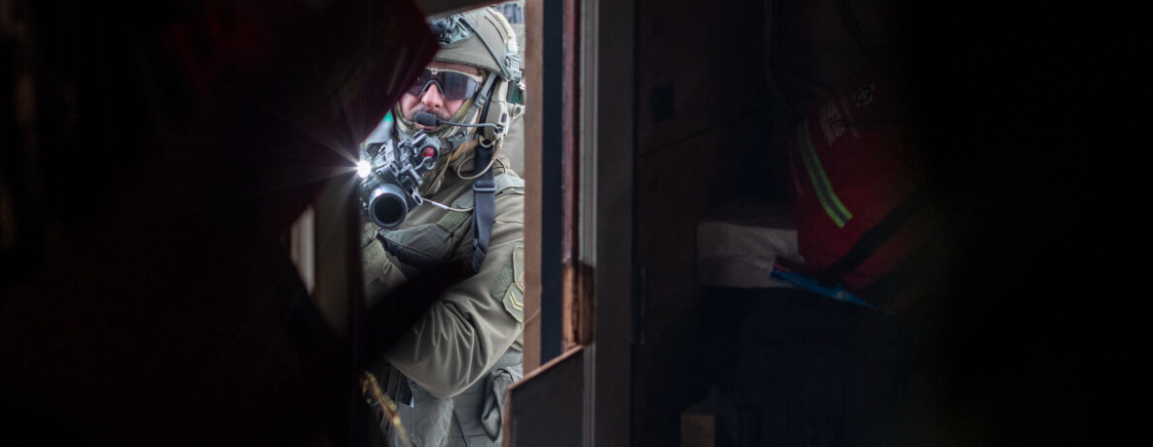
Last month, a two-day militarized RCMP raid on unceded Wet’suwet’en territory in northern British Columbia resulted in 32 arrests at gunpoint.

This follows similar heavily-armed raids in January 2019 and February 2020. Combined, the three raids resulted in 68 arrests.

We believe that a fatality could have occurred during any one of these attacks.

In this video from last month, land defender Sleydo’ yells at an RCMP officer to stop pointing his automatic weapon at her. In this video from 2020, land defender Denzel Sutherland-Wilson also calls on an RCMP sniper to stop pointing their rifle at him.

And notes from an RCMP strategy session prior to the 2019 raid show that RCMP commanders stated that “lethal overwatch is req’d” and that officers were instructed to “use as much violence toward the gate as you want” ahead of the operation to remove a roadblock established by Wet’suwet’en land defenders.

Now, three NDP Members of Parliament – Leah Gazan, Matthew Green and Lori Idlout – have signed this statement in solidarity with land defenders.

That statement says: “Wet’suwet’en land defenders are giving us an opportunity to change course: to be unequivocal in support for Indigenous rights and title and meet the challenge of the climate crisis by halting all new fossil fuel infrastructure.”

It adds: “We uplift the words of the Young New Democrats of Quebec.”

That statement highlights that “the militarized raid on the Gidimt’en Checkpoint and Coyote Camp” has “resulted in the arrests of land defenders and journalists and the removal of the Wet’suwet’en people from their own lands.”

That statement then calls on NDP Leader Jagmeet Singh and Deputy Leader Alexandre Boulerice to publicly denounce this violence and for the immediate withdrawal of the RCMP from Wet’suwet’en territory.

Gazan, Green and Idlout are joined by former NDP MP Romeo Saganash, 15 former candidates (including Avi Lewis and Anjali Appadurai), at least 25 riding associations, Ontario NDP MPP Joel Harden and about 1,000 grassroots party members.

Their call echoes this decision from the United Nations Committee on the Elimination of Racial Discrimination issued in December 2019.

The UN Committee urged Canada to stop construction on the Coastal GasLink pipeline and “to guarantee that no force will be used against Wet’suwet’en peoples and that the Royal Canadian Mounted Police and associated security and policing services will be withdrawn from their traditional lands.”

Canada was required to submit a report on November 15 to the UN Committee on its compliance with the Convention on the Elimination of All Forms of Racial Discrimination, but has now delayed that until an unspecified date in 2022.

We welcome the expression of solidarity with land defenders and place the actions by Canadian police on Wet’suwet’en territory in the context of the global threat against Indigenous defenders of land and territorial rights.

Photo by Amber Bracken.

Year-end request for your support

Thank you for your previous donation to Peace Brigades International through the CanadaHelps.org online giving platform. It was very much appreciated!

To donate again to support our work in 2022, please click here.

I wanted to share with you that in 2021 we organized six webinars that drew more than 650 people, wrote more than 1,000 articles, produced a weekly e-newsletter with a regular readership of 850 people, and increased our Twitter following to 6.800 people.

We also travelled to Wet’suwet’en territory in British Columbia last month to accompany the land defence struggle against a fracked gas pipeline.

Your year-end donation that can be made here would help us do even more in 2022.

Our plans for next year include more advocacy and communications work through webinars, articles, e-newsletters and daily social media posts.

We are also planning observation missions to Secwepemc territory and Colombia, the recruitment of frontline volunteers to accompany human rights defenders in Latin America, a research report on Canadian arms exports to Colombia, and strengthening our advocacy interventions through wider popular engagement.

To support our work through CanadaHelps.org again, please click here.

You continued support is crucial to this work.

Brent, brent@pbicanada.org

Webinar: The Struggle for Justice for Victims of Police Violence in Cali, Colombia

We have registered to watch to the webinar The Struggle for Justice for Victims of Police Violence in Cali, Colombia on Friday December 10 starting at 12:30 pm ET.

The webinar will feature:

Berenice Celeita (Director, Nomadesc) who will discuss  the current human rights situation in Cali, the status of police reform in Colombia, how justice should materialize for the victims of police brutality, and what the international community can do to support Nomadesc’s efforts.

Javier Garate (Advocacy Representative for the US and Canada, Peace Brigades International-Colombia Project) who will examine the security challenges faced by social leaders supporting victims of this recent violence.

Gimena Sánchez-Garzoli (Director for the Andes, WOLA), who recently visited Cali during Representative Jim McGovern’s delegation to Colombia, will moderate the event.

The context for the webinar is the use of force by Colombian security forces against the national strike and social protests in Cali, the country’s third largest city that has a high number of Afro-descendant residents.

The promotion for the webinar notes: “When the violence broke out, human rights defender Berenice Celeita and her team at the Association for Research and Social Action were out in the streets of Cali monitoring and assisting the victims of police violence.”

It adds: “Currently, Nomadesc represents over twenty cases of victims of this recent police violence. Among these cases are the parents of youth killed by the police, women subjected to sexual abuse, torture survivors, and individuals who have permanent ocular injuries due to the actions taken by security forces.”

And it further notes: “Invaluable efforts to secure justice for these cases have unfortunately led to death threats, persecution, monitoring, and surveillance against Celeita.”

The webinar is being sponsored by the Washington Office on Latin America (WOLA), Peace Brigades International, Latin America Working Group (LAWG), Colombia Human Rights Committee, Amnesty International, and Robert F. Kennedy Human Rights.

Simultaneous interpretation between English and Spanish will be available, exclusively on Zoom. Register here.