Home Blog Page 263

PBI-Kenya shocked by killing of land rights activist Elizabeth Ibrahim Ekaru, calls on government to protect WHRDs

Photo: Elizabeth Ibrahim Ekaru

On January 5, PBI-Kenya tweeted: “We are shocked by the killing of Elizabeth Ibrahim Ekaru on Monday 3 January. We urge the government of #Kenya to conduct thorough investigations into her killing and to protect #HRDs #WHRDs.”

Ekaru, who was 47 years old, was a renowned gender and climate change activist, as well an advocate for the land rights of Indigenous women.

The Kenyan newspaper The Star reports: “Her killing while defending land rights, [the Defenders Coalition says], was a true testament to the risks and challenges women activists face while doing legitimate work.”

The article highlights: “They asked the Director of Criminal Investigations to take swift measures to solve the murder of Ekaru and to make public their status report within seven days, on January 11.”

The fuller statement from the Defenders Coalition also notes: “Her killing while defending land rights, is a true testimony of the risks, challenges and attacks that Women Human Rights Defenders continue facing in the line of their work.”

It adds: “We are startled by the escalating attacks on women and more so WHRDs in Kenya. Defenders Coalition has documented alarming cases of femicide in the past few years pointing to a cavalier attitude towards women in the society.”

It cites the murder of woman human rights defender Joannah Stutchbury in July 2021 for protecting the Kiambu Forest, and the targeting of two women environmental activists for pursuing justice for the victims of environmental pollution in in Owino Ohuru Slums in Mombasa.

The statement calls on the Office of the President “to give an update on the progress of the case Joannah Stutchbury murder and all femicide cases in Kenya as a sign of commitment to his word, upholding social justice and signify seriousness of closing matters pertaining crimes against environmental and land rights defenders in Kenya.”

For more: PBI-Kenya saddened and shocked by the murder of Kiambu forest and wetlands defender Joannah Stutchbury in Nairobi (July 20, 2021).

We express our condolences to Elizabeth’s friends and family and draw the attention of the Canadian Embassy in Kenya to this situation.

Healing centres in Mexico and Honduras for women human rights defenders

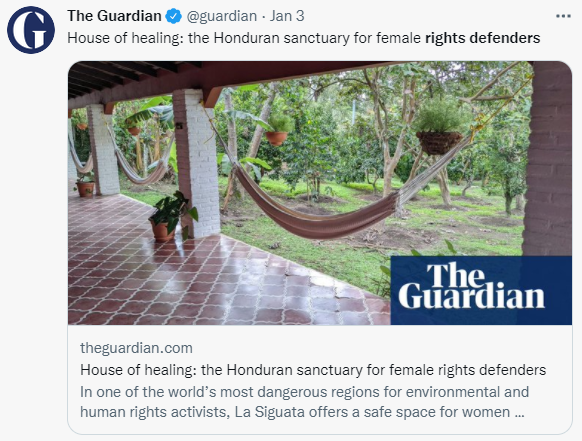
Photo of Rebeca Girón at the La Siguata healing centre in Honduras by Jeff Ernst from his article in The Guardian on La Siguata and La Serena in Mexico.

La Siguata is a healing centre in Tegucigalpa, Honduras for women human rights defenders who are suffering from the trauma of repressive actions against them. It is run by the National Network of Women Human Rights Defenders.

Casa La Serena is another healing centre that is based in Oaxaca, Mexico. Both centres are funded by the Mesoamerican Initiative of Women Human Rights Defenders.

Rebeca Girón of La Siguata in Honduras says: “In the midst of this struggle, we have lost our sisters and our comrades.”

In fact, in La Siguata there is an altar with candles and flowers dedicated to slain Lenca land defender Berta Cáceres who was murdered in 2016 for her opposition to a hydroelectric dam being built without consent on the sacred Gualcarque River.

The altar is also a reminder that Honduras is the country with the highest rate of femicides in Latin America.

Ana María Hernández of Casa La Serena in Mexico notes: “We realised that there was lots of burnout and also strong impacts on women defenders as a result of structural violence, as well as patriarchal violence that was very invisible and normalised.”

She adds: “The very demanding dynamics of women defenders’ activism means that we don’t have time to recover our energies, to connect with our bodies and needs. There is an imbalance between giving and receiving.”

The Guardian explains: “Hernández and colleagues from the Consortium for Parliamentary Dialogue and Equity in Oaxaca developed a holistic approach to help women overcome trauma and recharge, so they can continue their work with renewed vigour.”

It adds: “During their 10-day visits to the centres, women participate in activities from the artistic to the spiritual, in groups and individually, and are given a personalised self-care plan to take home.”

The article further highlights: “In the near future, it is hoped that women from Nicaragua – where the government has brutally repressed dissent, resulting in more than 300 deaths during the wave of protests in 2018 alone – will be able to visit.”

Peace Brigades International works with some of the organizations mentioned in the article including the Mesoamerican Initiative of Women Human Rights Defenders (IM-Defensoras) and the Consortium for Parliamentary Dialogue and Equity in Oaxaca (Consorcio Oaxaca). PBI-Honduras accompanies COPINH, the organization founded by Berta Cáceres. PBI also provides support to Nicaraguan exiles living in Costa Rica.

In 2020, PBI accompanied 54 organizations across our different projects, comprising of 1,803 individuals, 896 of whom are women. That year, 173 PBI volunteers, 77% of whom are women, contributed to our work around the world.

To read the full article in The Guardian, go to House of healing: the Honduran sanctuary for female rights defenders.

Wet’suwet’en water protectors avoid violence as militarized RCMP mobilize for fourth raid for CGL fracked gas pipeline

On January 4, this Gidimt’en Checkpoint media release highlighted: “Two weeks after Wet’suwet’en water protectors evicted Coastal GasLink [CGL] workers and occupied a key pipeline drill site, water protectors executed a strategic retreat to avoid arrest and violence at the hands of dozens of militarized RCMP.”

It adds: “Water protectors vanished into the woods, evading police violence and criminalization. We expect an imminent assault on our people at the direction of Coastal GasLink as we continue to occupy and utilize our yintah [land].”

This follows the RCMP “booking dozens of hotel rooms to bring police from throughout the province to facilitate pipeline construction and to assert control over unceded lands at gunpoint.”

The media release also notes: “In the last couple of days there have been increased patrols by non-local RCMP, C-IRG [Community-Industry Response Group], and helicopter surveillance over private Wet’suwet’en residences far from any project worksites.”

Gidimt’en water protector Sleydo’ says: “Our warriors are not here to be arrested. Our warriors are here to protect the land and the water.”

She adds: “Every time that the RCMP, the C-IRG, has come in to enforce CGL’s injunction they have done violence against our women. They have imprisoned our Indigenous women and our warriors. We will not allow our people to be political prisoners.”

The RCMP have conducted three raids on Wet’suwet’en territory – January 2019, February 2020 and November 2021 – in support of CGL. They have spent more than $20 million over this period and arrested 79 people, including four Hereditary Chiefs.

Gidimt’en Checkpoint video.

Are fighter jets and warships for the Arctic an implicit admission a 2°C global temperature increase will happen?

Is Canada’s apparent commitment to the militarization of the Arctic an acknowledgement that the Paris Agreement will not be fulfilled and that climate breakdown will irrevocably alter this precious ecosystem?

The goal of Paris Agreement reached in December 2015 is to limit global warming to well below 2° Celsius, preferably to 1.5°C, compared to pre-industrial levels. Studies are already telling us what will happen if those limits are exceeded.

Climate change and Arctic ice cover

National Geographic has noted: “Arctic sea ice expands as the sea surface freezes during the winter. At its maximum in March, the ice covers nearly the entire Arctic Ocean. It melts back during summer, reaching its lowest point in September.”

Now, the Arctic Monitoring and Assessment Program says that if the Earth warms to 2° Celsius the chance of Arctic sea ice disappearing entirely during summer months is 10 times greater than at 1.5° Celsius.

Furthermore, a University of Cincinnati study has found: “Most likely, September Arctic sea ice will effectively disappear between approximately 2 and 2.5 degrees of global warming.”

And the Arctic Institute has commented: “A 3 degree Celsius increase in global temperatures could melt 30 to 85 percent of the top permafrost layers that exist across the Arctic region, destroying infrastructure and irreversibly changing the unique terrain and ecosystems at the top of the world.”

Where are we now?

Six years after the Paris Agreement, the global mean temperature for 2021 (based on data from January to September of that year) was about 1.09°C and rising.

While that agreement affirms the goal of the limiting global temperature increase to 1.5° Celsius above pre-industrial levels, the United Nations has warned that the world could surpass that limit in the next two decades and that current commitments to cut greenhouse gas emissions put the planet on track for 2.7° Celsius.

Given the failure of governments to meet their emission reduction commitments, the global temperature increase could be even worse. That creates the conditions for the worst scenarios to unfold in the Arctic.

Transnational corporations getting ready

While we see climate change as a disaster to avert, transnational corporations may see it as an opportunity to reach the estimated 90 billion barrels of oil in the Arctic.

The Guardian recently highlighted that Exxon, Texaco, Chevron and Shell have been preparing for a melting Arctic for years. That article notes: “In 1973, Exxon secured a patent for an oil tanker that could easily navigate a melting Arctic. In 1974, Texaco was granted a patent for a mobile drilling platform in a melting Arctic. Chevron got a patent for its version of a melting-Arctic-ready drilling platform that same year. Shell was a bit behind; it got its melting-Arctic drilling platform design patented in 1983.”

Extractivism leads to militarism

If transnationals are planning for this, what about governments?

It would appear so.

Last year, Canadian defence department deputy minister Jody Thomas stated: “We should not underestimate at all that threat of resource exploitation [including fish, petroleum and critical minerals] in the Arctic by China in particular.”

With surprising frankness, Thomas added: “We have to understand it and exploit it and more quickly than they can exploit it.”

Now commentary in mainstream media is stressing the importance of increased military spending in the context of a melting Arctic.

Yesterday, iPolitics published an article titled: Experts say Canada must defend itself from the Arctic ambitions of China and Russia.

It notes: “As global warming melts glaciers in Canada’s Arctic and sea levels continue to rise, countries like Russia and China are eyeing the shipping routes that have opened up as a result, and threatening our national security in the process, experts say.”

That article highlights the importance of Canada buying new fighter jets.

And the week before, Professor Robert Huebert’s opinion piece in The Globe and Mail highlighted the construction new ships for the Canadian Navy in the Arctic.

Canada’s National Shipbuilding Strategy will see fifteen new Canadian Surface Combatants ships (at a cost of $77.3 billion) and six Arctic and Offshore Patrol ships (at a cost of $4.1 billion), plus two more ships for the Coast Guard (at about $400 million each).

In the context of Arctic defence, Huebert also argues for the purchase of F-35 fighter jets (at a cost of about $76.8 billion) and NORAD modernization (with Canada paying 40 per cent of estimates ranging between $11 billion and $15 billion).

Warplanes and border walls

Last year, the Transnational Institute reported that Canada spent an average of $1.9 billion a year (over the years 2013-18) on the militarization of its borders while only contributing $149 million a year over the same period on climate financing to mitigate the impacts of climate change.

Their study concludes: “The world’s wealthiest countries have chosen how they approach global climate action – by militarising their borders.”

With Canada committed to spending half-a-trillion dollars on the military (total spending over a 20-year period of $553 billion on a cash basis), fighter jets and warships should be understood in the same context as border walls.

Embera reject mining on their lands, say that any investment would be “stained with our blood”

Still from PBI-Colombia video, May 2012.

Indigenous Embera communities continue to reject mining on their territories in the Jiguamiando River Basin in north-western Colombia. This would include access to their ancestral lands by the Vancouver-based MCC Mining Corporation.

This statement from the Embera highlights: “Any investment in our territory can be accused of being stained with our blood and with terrible damage to our mother earth. Currently there are 20 leaders threatened with death.”

The PBI-Colombia accompanied Inter-Church Commission for Justice and Peace has helped to amplify solidarity actions in support of Embera opposition to mining on their lands.

The Commission posted this Open Letter from eight organizations based in Spain and Asturias (an autonomous community in northwest Spain) addressed to Hamyr Eduardo González Morales, the president of Minera Cobre SAS.

That open letter says: “We know that the Minera Cobre SAS and by extension the Canadian MCC [Minera Cobre de Colombia] Mining Corporation, are heirs of the militarization and terror unleashed for the benefit of the Muriel Mining Corporation.”

For context, the Muriel Mining Company was granted mining permits in 2005 that included the sacred Jaikatuma mountain (also known as Careperro mountain) situated in the Uradá-Jiguamiandó Humanitarian Reservation and surrounding territories.

Adriana Arboleda Betancur, a lawyer with the Corporation for Judicial Freedom, has written: “Permits were granted without prior consultation [with the Embera] and misleading some community leaders — who were made to sign meeting minutes, which the company then sought to assert as a consultation.”

Arboleda adds: “Nor were environmental impact studies carried out, despite the fact that this exploitation implied affecting the flow and route of the Murindó River, the source of life of these indigenous communities.”

The Muriel Mining Company began exploration on the mountain on January 5, 2009.

The following day, as the Commission has reported, the Indigenous Embera Katio and Oibida communities in Jiguamiandó saw Colombian Army helicopters escorting Muriel Mining Corporation through their ancestral territory to Jaikatuma mountain.

Embera women led the opposition to the mining company.

Remelina Sinigui of the Uradá-Jiguamiandó reserve has stated: “[When the company arrived] we decided to climb to the top of Careperro Mountain and we stayed there for six weeks until the company workers left.”

She added: “The land is our mother, because she gives us life, she gives us the river, the forests, and for this reason we will continue the struggle.”

Embera land defender Remelina Sinigui.

While a court ruling subsequently suspended Muriel’s operations, MiningWatch Canada has noted: “As of April 2011, Vancouver-based Sunward Resources Ltd acquired Muriel Mining Corporation with intentions to continue to the project, and the national government had yet to implement the court’s decision.”

The open letter from Spanish and Asturian activists to González Morales concludes: “We demand that you suspend all the maneuvers deployed by Minera Cobre SAS and [the Canadian] MCC Mining Corporation, to access by illegal means the ancestral territories of indigenous peoples and black communities.”

PBI-Colombia has accompanied the Justice and Peace Commission since 1994 and the Corporation for Judicial Freedom since 2000. We join with PBI-Colombia in following this situation with great concern.

PBI-Mexico visits Radio Zacatepec, a community radio station under threat for reporting on dangers to the Metlapanapa River

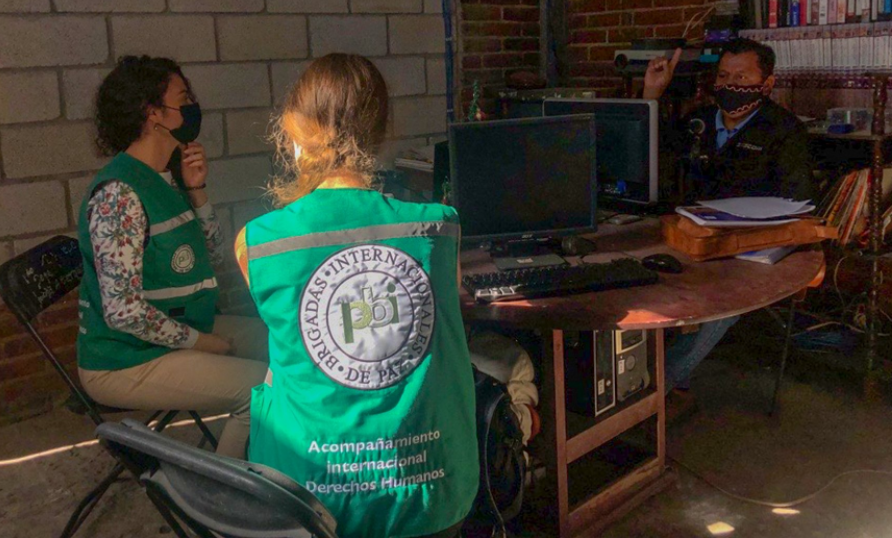
On December 30, the Peace Brigades International-Mexico Project tweeted: “Today we saw the facilities of Radio #Zacatepec in #Puebla. On several occasions, members of this community radio station have faced attacks, arrests or defamations for their work to disseminate and defend the #human rights of individuals and collectives.”

PBI-Mexico adds: “In an interview with Radio Zacatepec we were able to: Tell about the work we do. Express our concerns for the physical and emotional safety of defenders in the region. Reiterate the call to the State to guarantee the right to defend #humanrights.”

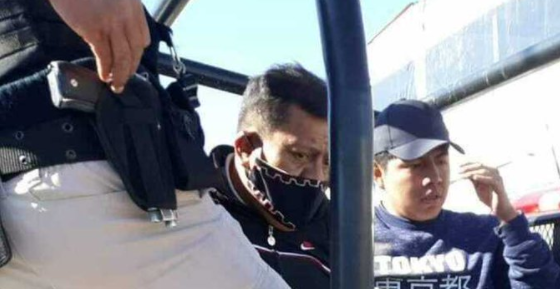
In November 2021, Reporters without Frontiers (RSF en español) tweeted: “We condemn the arbitrary detention by the municipal police of Juan C. Bonilla in Puebla of the communicators Alejandro Torres Chocolatl and Michel Torres of the Zacatepec Community Radio, who were released hours later.”

In December 2019, Pie de Pagina reported: “Members of community radio have received death threats for reporting on the industrial zone that would pollute the Metlapanapa River, which crosses through their community.” That industrial zone involves a wastewater discharge project in the Ciudad Textil Industrial Park that includes the installation of Audi and Volkswagen suppliers in that area.

The article adds:

“This radio has been operating for more than 5 years and since 2016 with a concession for social use, it was one of the first 10 radios in the country to have it after the reform in Telecommunications.

But in its history, Radio Zacatepec has been threatened and dismantled twice before they had the concession and before there was the problem of toxic waste that threatens the Metlapanapa River.

The first time they tried to dismantle Radio Zacatepec was in mid-2014.

At that time, the defenders of the territory of the radio spoke about the siege of a gas pipeline in their territory, which shortly after they would discover that it is an energy and industrial megaproject linked to the Morelos Integral Project, and the gas pipeline circulates from Puebla to Morelos.

The second time [in June 2015] they dismantled it, even when it had no concession, was much more cumbersome. According to Maria Torres’ narration, it was much more violent as they were accused of selling drugs.

Outside the radio there was an operation with hundreds of grenadiers and hundreds of police who entered to uninstall and seize the computers, microphones, and whatever they found in the facilities, of everything but drugs. That night they closed the house where the radio was located.”

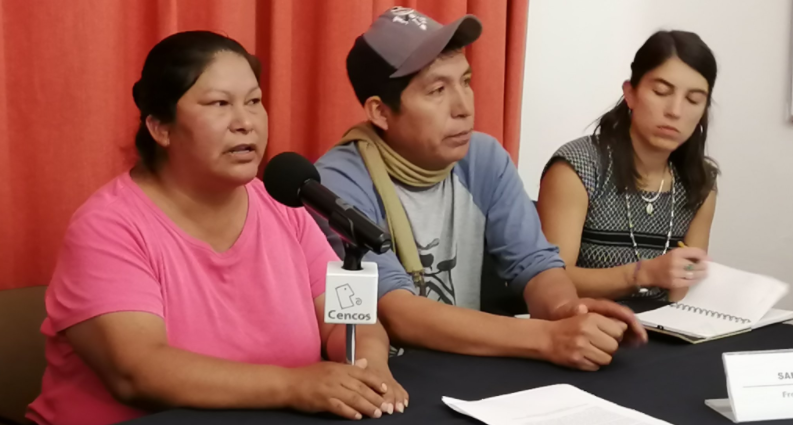
In November 2019, this tweet from Cencos quotes Torres who says: “We have been victims of blackmail, even beatings. It is not fair that we defend our river and that they want to pollute us and that they want to harm us. Just as the radio belongs to the people, we belong to the people … They have threatened me with death.”

Torres with criminalized water defender Miguel López Vega and ally.

Last year, this article in Milenio highlighted the importance of community radio.

It noted: “Community radios are the new bells of the peoples that allow the defense of human rights and the territory, generate identity and allow communication in complicated times such as the COVID-19 pandemic.”

It further noted: “Some community radios operate with loudspeakers, others transmit from social networks and some more occupy the radio spectrum so that their signal reaches their entire community, in order to give messages and disseminate cultural elements.”

At this time, we also recall that Samir Flores Soberanes co-founded the community radio station Amiltzinko in 2014.

Through that platform, and as a member of the Peoples Front in Defence of Land and Water, he defended the rights of the Nahuatl peoples against the PIM gas pipeline, thermoelectric plant and river diversion megaproject.

He was murdered on February 20, 2019.

The Peoples Front has stated: “[Mexican President Andrés Manuel] Lopez Obrador [supporting the PIM] betrays the peasant and the promise of change of his government, to favour transnational corporations [including] Canadian miners like Alamos Gold, among others.”

PBI-Mexico began to accompany the Peoples Front in early 2020.

Photo: Indigenous Náhuatl land and water defender Samir Flores at Radio Amiltzinko in January 2017, just two years before he was killed.

“The work of independent media is to tell the history of social struggle in the world… Not only to know what is occurring in the world, but to understand it and to derive lessons from it…” – EZLN subcommandante Marcos

Parliamentary debate lacking as Canada edges closer to purchasing armed drones

This year, the Canadian government is evaluating a bid to purchase MQ-9 Predator drones equipped with Hellfire missiles.

In November 2016, then Defence Minister Harjit Sajjan said: “The future is changing, and we need to be rapidly changing with it.”

By June 2017, the Canadian government’s Strong, Secure, Engaged policy document reflected the commitment to purchase armed drones.

That document includes the bullet points: “50. Invest in medium altitude remotely piloted systems. 91. Invest in a range of remotely piloted systems, including an armed aerial system capable of conducting surveillance and precision strikes.”

Now, Defence Minister Anita Anand and Procurement Minister Filomena Tassi are facing imminent decisions on this “investment” in armed drones.

Timeline to purchase armed drones

According to the Government of Canada’s Remotely Piloted Aircraft System (RPAS) webpage, it intends complete the evaluation of bids as early as this year and award a contract of up to $5 billion on the acquisition of armed drones as soon as next year.

The webpage provides the timeline of 2021 (request for proposal), 2022-23 (bid evaluation complete), 2023-24 (contract award), 2025-27 (first delivery).

The Ottawa Citizen has reported that the L3 Technologies MAS Inc. and Israeli Aircraft Industries Heron TP drone along with the U.S. government and General Atomics Aeronautical Systems, Inc. MQ-9 drone have qualified under the Invitation to Qualify process.

That October 2019 article also notes that Defence department spokeswoman Jessica Lamirande said the release of the Request for Proposal (RFP) was expected to happen in 2020-21. Additionally, the Calgary Herald article reported in April 2021 that the contract is expected to be awarded in 2022-23 and the first delivery in 2024-25.

The Government of Canada webpage on this procurement says: “Request for proposal: 2021” (in line with Lamirande’s comment), while the awarding of the contract, while still imminent, seems to have shifted to 2023-24 with the first delivery to 2025-27.

Precision strikes?

The government and military appear to believe that armed drones can deliver “pinpoint strikes” from the air against enemy forces.

In 2015-16, the Royal Canadian Air Force imagined a hypothetical mission in which an armed drone equipped with a Hellfire missile and two laser-guided bombs would fly from a Canadian Forces Base in Kandahar, Afghanistan and seek out insurgents.

Sajjan even commented that an armed drone “allows for an easier decision-making process where you’re not putting a human being at risk.”

And yet the reality is very different.

An estimated 300 to 909 civilians, including 66 to 184 children, were killed by U.S. drone strikes in Afghanistan between January 2004 and February 2020. In August 2021, a U.S. drone strike also killed 10 family members including 7 children.

More widely, an estimated 910 to 2,200 civilians killed by U.S. drone strikes in Afghanistan, Yemen, Pakistan and Somalia between 2010 and 2020.

Decisions to be made

Operationally, the plan for armed drones appears to be moving forward.

Last spring, Royal Canadian Air Force Lieutenant-General Al Meinzinger said: “We have not finalized the basing locations [for the armed drones], but there certainly will be a centralized ground control node in Ottawa.”

Meinzinger also sees 300 service members deployed to the drone force.

Several years ago, Green Party MP Elizabeth May described armed drones as “unjustifiable weapons”, while in May 2021 NDP leader Jagmeet Singh commented: “I don’t on first blush think that is in line with what I would do.”

With the military making decisions about where the drones would be based, and the evaluation of bids possibly being completed this year with a contract awarded as early as next year, the urgency for a parliamentary debate is intensifying.

RCMP have begun amassing in Houston and Smithers prompting concerns about a fourth raid on Wet’suwet’en territory

Gidimt’en Checkpoint video still of RCMP truck near Coyote Camp on Wet’suwet’en territory, December 30, 2021.

On January 1, Likhts’amisyu (Fireweed) Clan tweeted:

“Please offer prayers and support for all of our friends on our People’s Yintah today. There are updates coming in from the @UBCIC [Union of British Columbia Indian Chiefs] that @rcmpgrcpolice CIRG [Royal Canadian Mounted Police Community-Industry Response Group] Units started amassing in Houston and Smithers hotels again.”

This comes a couple days after the Gidimt’en Checkpoint tweeted a short video of land defenders reoccupying the Coastal GasLink pipeline drill pad site on Wet’suwet’en territory, which is situated about 63 kilometres up a forest road from Houston.

That video marked the 12th day of the reoccupation of the site following a heavily-armed RCMP raid on the territory on November 18-19, 2021.

Also on January 1, Git’luuhl’um’hetxwit Media tweeted: “Amidst talk of #rcmp C-IRG amassing to raid the retaken Coyote Camp on unceded #wetsuweten Yintah, new out of town #ThinBlueLine officers are not identifying themselves while harassing Gitxsan peoples. These are the poster children of the #bcndp and its stance on reconciliation.”

The Gitxsan have blocked the railway track in New Hazelton in November 2021 and February 2020 during previous RCMP raids on Wet’suwet’en territory. 

The video also posted by Kris Statnyk on social media suggests that an RCMP officer from the Burns Lake detachment is present in New Hazelton (a distance of about 210 kilometres). Statnyk notes: RCMP have once again redeployed more out of town officers to occupy and surveil the Gitxsan lax yip.”

Fireweed Clan Hereditary Chief Smogelgem has tweeted in response: “This correlates with what UBCIC has told us. The RCMP are about to do another raid and they need to ‘manage’ the Gitxsan response.”

The Git’luuhl’um’hetxwit tweet also notes that the officer is wearing a Canadian flag patch with a thin blue line through it. An RCMP directive from October 2020 says: “it is not an approved symbol and is not to be worn on our uniform.”

We recall that the United Nations Committee on the Elimination of Racial Discrimination has urged Canada “to guarantee that no force will be used against Wet’suwet’en peoples and that the Royal Canadian Mounted Police and associated security and policing services will be withdrawn from their traditional lands.”

That resolution was issued in December 2019.

RCMP raids in January 2019, February 2020 and November 2021 have resulted in the arrests of about 68 people peacefully defending Wet’suwet’en territory from the CGL fracked gas pipeline being built without free, prior and informed consent.

We continue to follow Likhts’amisyu (Fireweed) Clan and Gidimt’en Checkpoint on Twitter for updates on this emerging  situation.

Violence against Indigenous women land defenders protecting their territories against Canadian extractivism

Still from Gidimt’en Checkpoint video.

Warning: The following article contains disturbing content about police violence against Indigenous women.

It has been acknowledged by the United Nations and even the Canadian government that women human rights defenders face gender-specific threats.

The Association for Women’s Rights in Development (AWID) has detailed this in relation to women confronting extractive industries.

The report Gender-based violence and environment linkages by the International Union for the Conservation of Nature (IUCN) has further stated: “Globally, there exists a historic struggle in defence of the environment, one in which women and indigenous peoples have been fundamental actors against the privatisation and destruction of natural resources such as land, forests and forest resources, and water.”

It highlights: “There have been numerous examples of gender-based violence directed against environmental defenders and activists, who try to stop the destruction or degradation of their land, natural resources and communities.”

Violence against Indigenous women land defenders in Canada

Mohawk land defender Layla Staats speaks of being arrested on November 18, 2021 and the “humiliation and degradation” that she felt as a woman when an RCMP officer winked at her as she was handcuffed in the back of his police cruiser.

In this interview with journalist Brandi Morin, Wet’suwet’en land defender Sleydo’ (Molly Wickham) describes how police forcibly cut a cedar bracelet and medicine bag from her at the RCMP detachment in Prince George after her arrest on November 19.

Sleydo’ says four or five RCMP officers physically restrained her and cut the medicine bag off her body as about ten officers watched.

This past summer an email to Victoria Buzz about the resistance at Fairy Creek on Pacheedaht and Dididaht territories also stated: “There have been reports of sexual assaults by RCMP, continued media suppression and repeated targeting and mistreatment of Indigenous women, BIPOC and LGBTQ+ and 2 spirit land defenders.”

And Xiximec Nahua water protector Tia Chicome, who was arrested by RCMP officers in Burnaby in 2018 while opposing the Trans Mountain pipeline, has also stated she feels the RCMP has a bias against Indigenous women.

Violence against women land defenders rooted in colonialism

The APTN article on Chicome quotes Mi’kmaq lawyer Pam Palmater who says the criminalization of Indigenous frontline women land defenders and water protectors is historically rooted in colonization.

Palmater highlights: “From the very, very beginning the Canadian state has tried to separate women from the land. The safety and health of women’s bodies has always been tied to the land so closely that that’s why the state has particularly targeted Indigenous women — to separate them from that because it helps disintegrate their nations.”

Commenting on police brutality and colonial violence in Canada, the Yellowhead Institute has also stated: “While focus and attention is often on the individual police officers and ‘bad apples’, these rationalizations are used as a scapegoat to avoid a focus on the systems and structures that ultimately create individuals who perpetrate these acts.”

The IUCN report echoes the concern: “The GBV experienced by WEHRDs can often be exacerbated when it intersects with racial and ethnic discrimination.”

That report notes: “In Guatemala, indigenous communities, which make up 60 per cent of the national population, often find themselves in defence of their territories against extractive interests. The country has also experienced a startling rise in GBV, particularly against indigenous women.”

RCMP violence against Indigenous women

Gender-based violence specifically by the RCMP against Indigenous women is increasingly being documented.

On December 29, Aljazeera published Morin’s article ‘No one is going to believe you’ When the RCMP abuses Indigenous women and girls.

Morin writes about the sexual assaults experienced by now 65-year-old Gladys Radek, a Wet’suwet’en woman who lives in British Columbia.

The first sexual assault by an RCMP officer happened just outside Chilliwack when Radek was 16 years old and walking along a highway at night to get to Calgary to visit friends. The second time happened about a year later when Radek was hitchhiking near Prince George on her way to visit her mother in Prince Rupert.

The day after Morin’s article was published, she tweeted: “More stories coming out of rape by RCMP since our story was published yesterday. That post shares the story of Christie Brown whose “Gitxsan grandfather Peter Brown was conceived by rape by an rcmp.”

This type of violence was also documented almost nine years ago.

In February 2013, New York-based Human Rights Watch released the report Those Who Take Us Away that detailed violence by the police against Indigenous women.

At that time, CBC reported: “Human Rights watch documented eight incidents of police physically assaulting or using ‘questionable’ force against girls under 18.”

Human Rights Watch said they “heard disturbing allegations of rape and sexual assault by RCMP officers, including from a woman who described how in July 2012 police officers took her outside of town, raped her, and threatened to kill her if she told anyone.”

Meghan Rhoad, one of the authors of the report, told CBC that researchers found levels of fear among Indigenous women with negative stories about police “comparable to post-conflict situations, like post-war Iraq.”

MMIWG National Inquiry

Concerns about impunity also arose during the National Inquiry into Murdered and Missing Indigenous Women and Girls in Canada.

In March 2019, Marion Buller, the Chief Commissioner of the National Inquiry, told CBC: “We’ve had push back from police [including the RCMP].”

And Commissioner Qajaq Robinson told APTN: “[When] we requested a number of files, I believe it was only with the RCMP that we had challenges with them asserting privilege and that to a degree we did not agree with.”

The National Inquiry stated: The RCMP have not proven to Canada that they are capable of holding themselves to account — and, in fact, many of the truths shared here speak to ongoing issues of systemic and individual racism, sexism, and other forms of discrimination that prevent honest oversight from taking place.”

Peace Brigades International-Canada is committed to tracking and stopping RCMP violence against Indigenous women land defenders in this country and situating that within the context of colonialism and extractivism.

“We never wanted to go to the police, because it was the police who were chasing us.”

The Peace Brigades International-Honduras Project has stated: “The National Network of Women Human Rights Defenders in Honduras explains that in Honduras 70% of the attacks against women defenders the aggressors are state security forces, especially police or the military.”

There’s still time!

Thank you for supporting the work of Peace Brigades International this year!

If you haven’t yet had the chance to make a year-end donation to propel our work in 2022, please consider doing so by December 31st.

We have two platforms to make online donations: https://www.canadahelps.org/en/charities/peace-brigades-international-canada/ and https://pbicanada.org/donations/donate-to-pbi-canada/.

Thank you again for your support!

Brent Patterson