


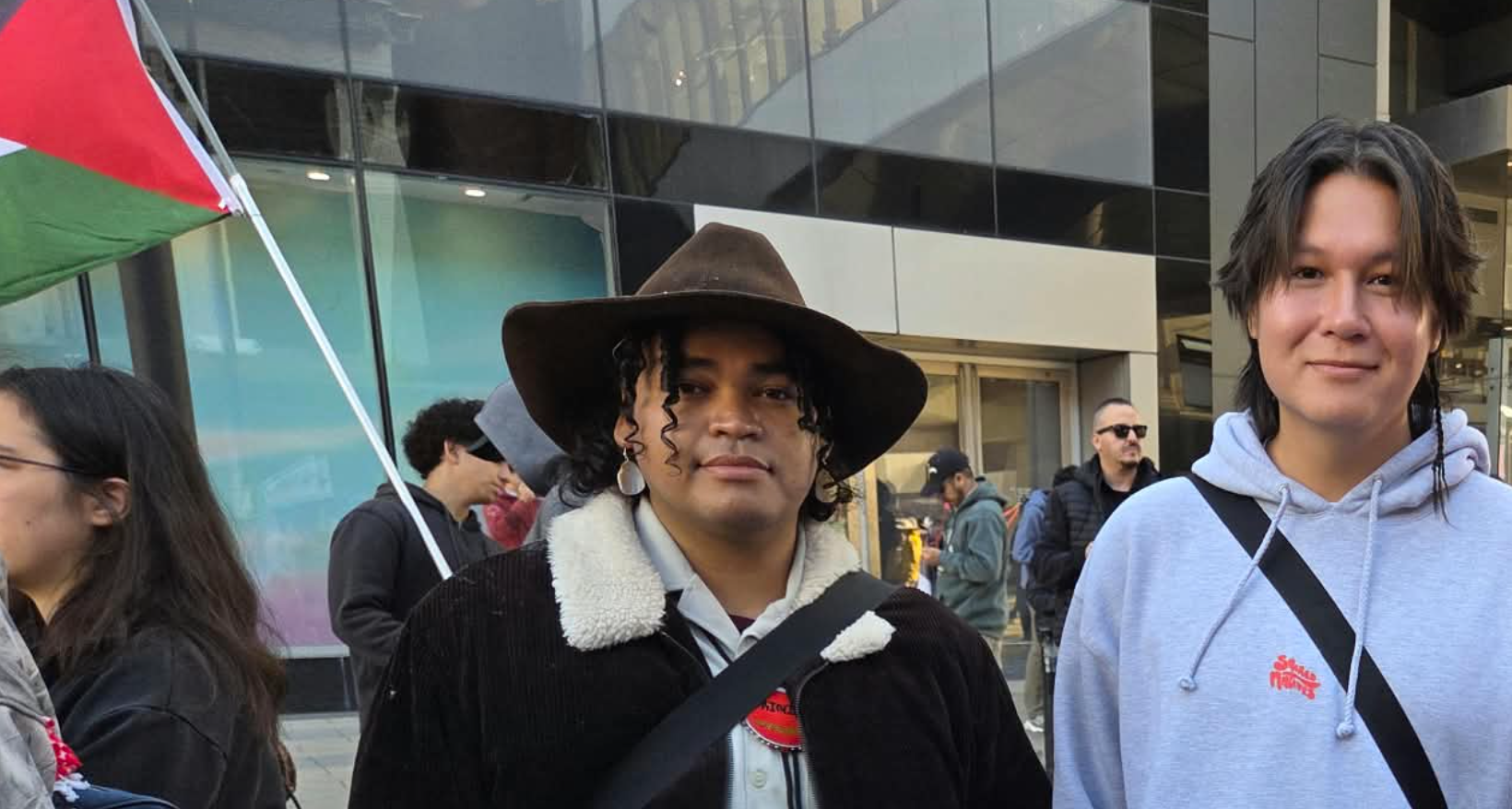
Photo: Attawapiskat land and environmental defenders Ramon Kataquapit and Jeronimo Kataquapit in Ottawa, October 2026.
Indigenous Cree land and environmental defender Ramon Kataquapit from the Attawapiskat First Nation and founder of the Okiniwak youth movement testified against Bill C-39, the Building Canada Strong Act, at a Special Senate Committee hearing on Bill C-39 held in Ottawa on November 17, 2026.
CBC News explains: “The act gives cabinet powers to designate entire zones as regions of national interest, giving Ottawa broad authority to approve future activities. One example of such an area that could be a candidate is the Ring of Fire, a mineral-rich and ecologically sensitive area of northern Ontario. Environmentalists have referred to these areas as ‘sacrifice zones where projects could get rubber stamped’.”
Okiniwak has posted on Instagram video of the testimony presented by Kataquapit to the Senate committee.
Kataquapit says: “What will happen after this and the voting that you will do will affect people’s lives, my family’s lives, my life, my future descendants, my people, but also your people as well. Because if we’re seen as someone that will get in the way of the national interest, what will happen when you are? Who will speak up for you?”

He continued: “So when it comes to a certain provision with Bill C-39 and establishing a region of national interest without proper consultation with the First Nations or pushing forward without the United Nations Declarations on the Rights of Indigenous People for free and prior informed consent, that is absolutely, that’s utterly stupid. If you’re listening to me, please cut this bill and put a halt to it.”
Burial sites at risk
Kataquapit and his cousin Jeronimo Kataquapit, the founder of the youth-led grassroots movement Here We Stand, also spoke this week against Bill 140. CTV News explains: “Known as the Building Ontario Faster Act, Bill 140 proposes to fast-track infrastructure projects by reducing red tape for significant projects like the mineral-rich Ring of Fire development.”
That article highlights: “Ramon and Jeronimo are concerned that Indigenous burial sites will be at risk, especially near the Ring of Fire.”
CTV News quotes Jeronimo Kataquapit commenting (likely in response to a question from a reporter, what will you do if burial sites are at risk): “Same thing anyone would do if they went to a cemetery where your family are buried and they try to build something over it. What would you do then? I already know what my family would do. We’d go protect it because that’s where they’re laid to rest.”
Chief Gary Quisess of the Neskantaga First Nation has also previously stated: “Our ancestors are buried along the Attawapiskat River. Our lives depend on these waters. We will not allow the province to fast-track development while our community is still fighting for clean water and adequate health care.”
Risks faced by land protectors
Peace Brigades International-Canada is attentive to the risk of criminalization and attacks against Indigenous land and environmental defenders opposed to the mining of their traditional territories in the Ring of Fire area.
We note that media reports have indicated that the Canadian mining company Juno Corp., the largest mineral claim holder in the Ring of Fire, says it met with US defence officials for the first time in May 2025 (Canadian Press), and that the Australian mining company Wyloo says it has also had initial discussions with the U.S. Department of Defense regarding the critical minerals in the Ring of Fire (The Sault Star).
We also recall Jeronimo Kataquapit posting on social media in October 2026: “Ontario is considering new measures that raise serious concerns about freedom of expression, peaceful assembly, expanded police powers, and the protection of Indigenous and Treaty rights. These proposals could have consequences for Indigenous land defenders working to protect their lands, waters, and rights. …Those who protest on the road, development— and more will be open to immediate arrest.”
In this context, we are attentive to the “Shaykachiwikaan” encampment established by Here We Stand with the Neskantaga situated where one of the bridges for the proposed Northern Road Link (being built to facilitate Ring of Fire mining) would cross the Attawapiskat River 90 kilometres down river from Neskantaga.
When PBI-Canada asked Neskantaga Elder Alex Moonias in July 2025 if he is concerned that the Ontario Provincial Police will intervene on Neskantaga lands just as the Royal Canadian Mounted Police (RCMP) has on Wet’suwet’en territory in northern British Columbia, he poignantly replied: “That is their way.”
We continue to follow this.
Further reading: Have the recommendations of the Ipperwash Inquiry following the killing of Indigenous land defender Dudley George by an OPP officer been implemented? (PBI-Canada, January 28, 2026).

