


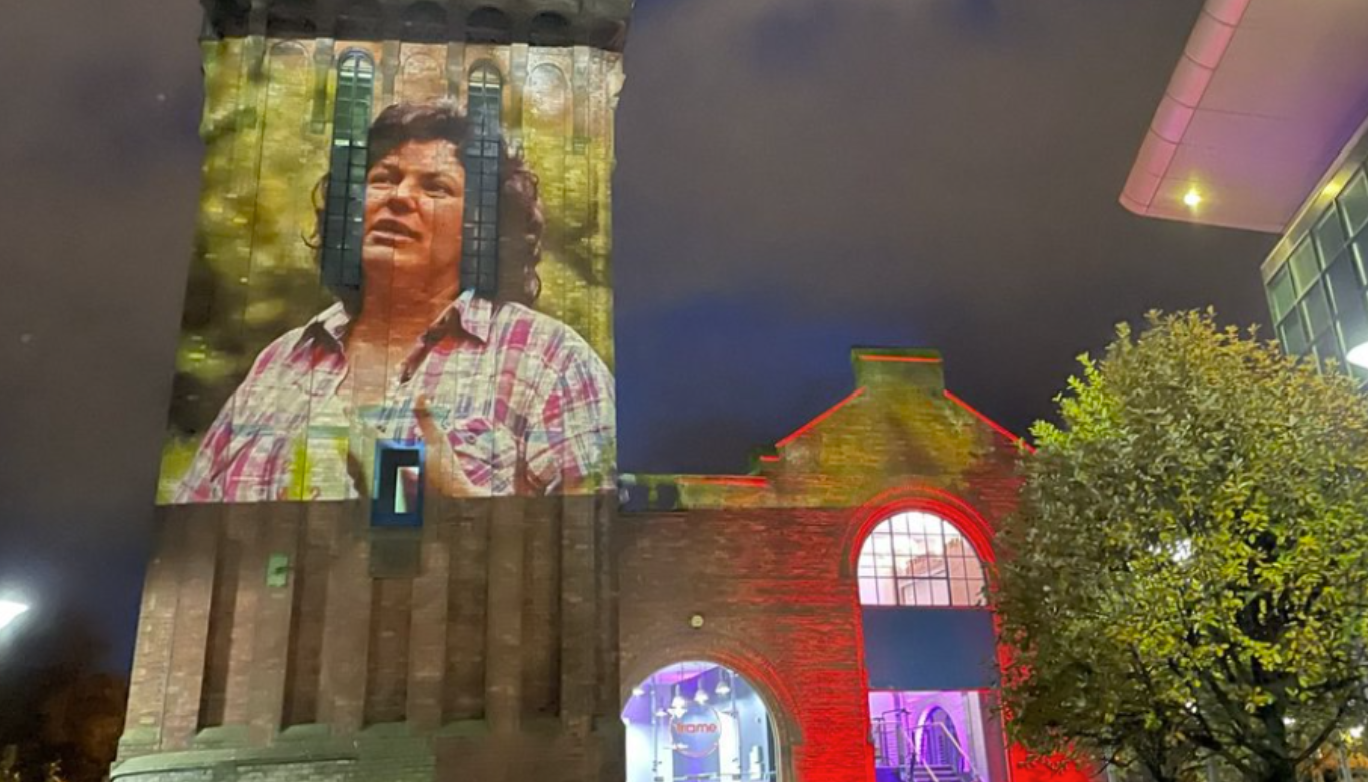
Image of Indigenous Lenca environmental defender Berta Caceres, killed on March 3, 2016, projected on a building during COP26.
An 18-page draft decision was published by Australia, the chair of the United Nations COP31 climate negotiations in Turkiye, on Monday November 16.
That draft text can be read here.
That draft text makes no reference to land and environmental defenders.
In March 2019, the United Nations Human Rights Council affirmed that “human rights defenders, including environmental human rights defenders, must be ensured a safe and enabling environment to undertake their work free from hindrance and insecurity, in recognition of their important role in supporting States to fulfil their obligations under the Paris Agreement” negotiated at COP21 in December 2015 to limit global average temperature increases to 1.5 degrees Celsius.
PBI-Canada has amplified the calls from civil society for COP25 (Madrid), COP26 (Glasgow), COP27 (Egypt), COP28 (United Arab Emirates), COP29 (Azerbaijan) and COP30 (Brazil) to include language on the protection of environmental defenders.
Global Witness has documented the killings of at least 124 land and environmental defenders in 2025, bringing the total number to 2,375 defenders since 2012, when COP18 took place in Doha, Qatar.
An 18-page “Briefing for UNFCCC COP31 on Environmental Human Rights Defenders (EHRDs)” released by Global Witness, Amnesty International and others last month, states: “All too often, land and environmental defenders continue to pay with their lives to protect their lands, territories, natural resources, and communities.”
And on November 6, 2026, the CIVICUS global alliance called on the Member States and Parties attending COP31 to “recognise that climate ambition cannot be separated from the protection of the people who defend the forests, rivers, lands and territories on which climate solutions depend”.
Their recommendations include: “Adopt or strengthen national and regional protection mechanisms for human rights and environmental defenders, including protocols for investigating attacks, ending impunity, and repealing or reforming laws misused to criminalise legitimate activism, including SLAPP [Strategic Lawsuits Against Public Participation]-style litigation.”
We remain concerned that the lack of mention of environmental defenders is an exclusion rather than an omission. Ginger Cassady from Rainforest Action Network has stated that in the closing days of the COP30 climate talks last year, there were interests seeking to “sideline environmental defenders”. She noted at that time that the Amazon-wide Indigenous Political Declaration called for “Protections for defenders, who face rising threats across Amazonian countries”.
The COP31 talks are set to conclude this Friday November 20.
We continue to follow this.

