
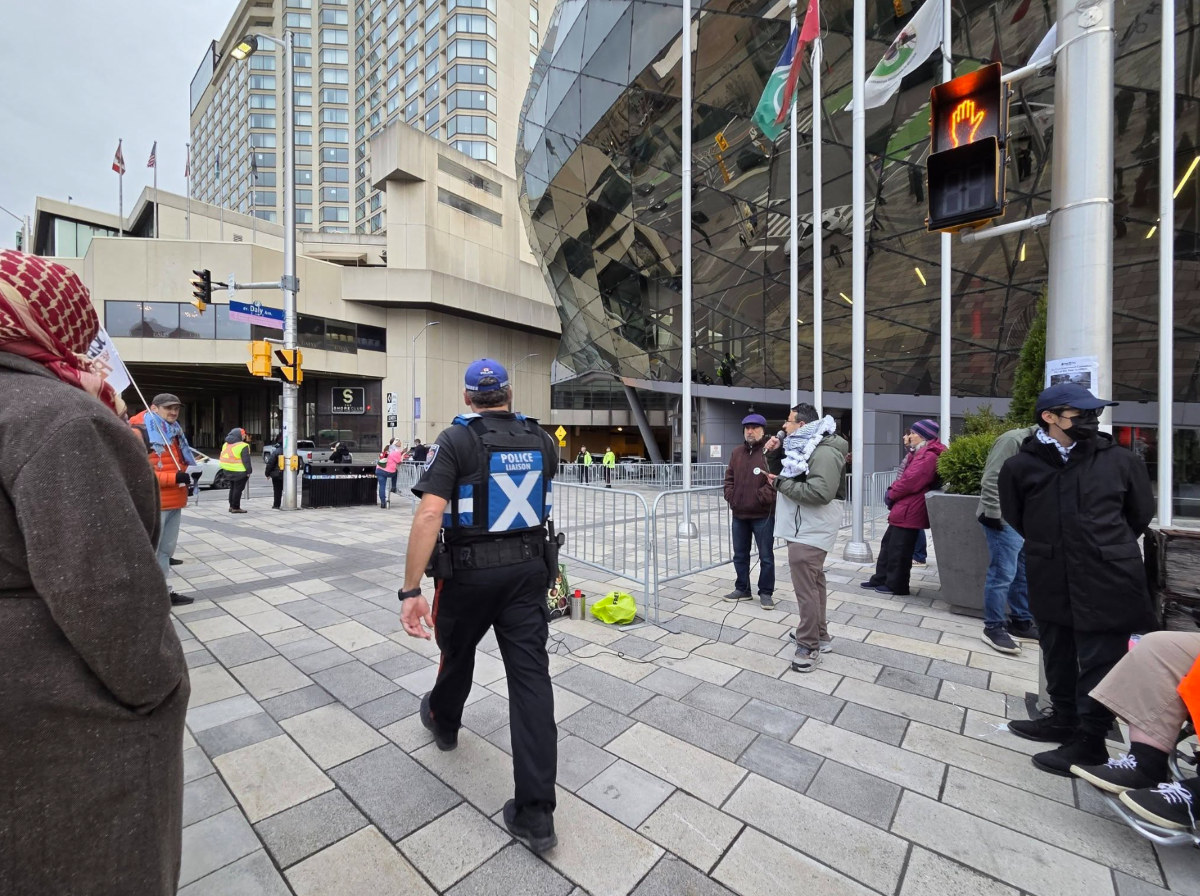
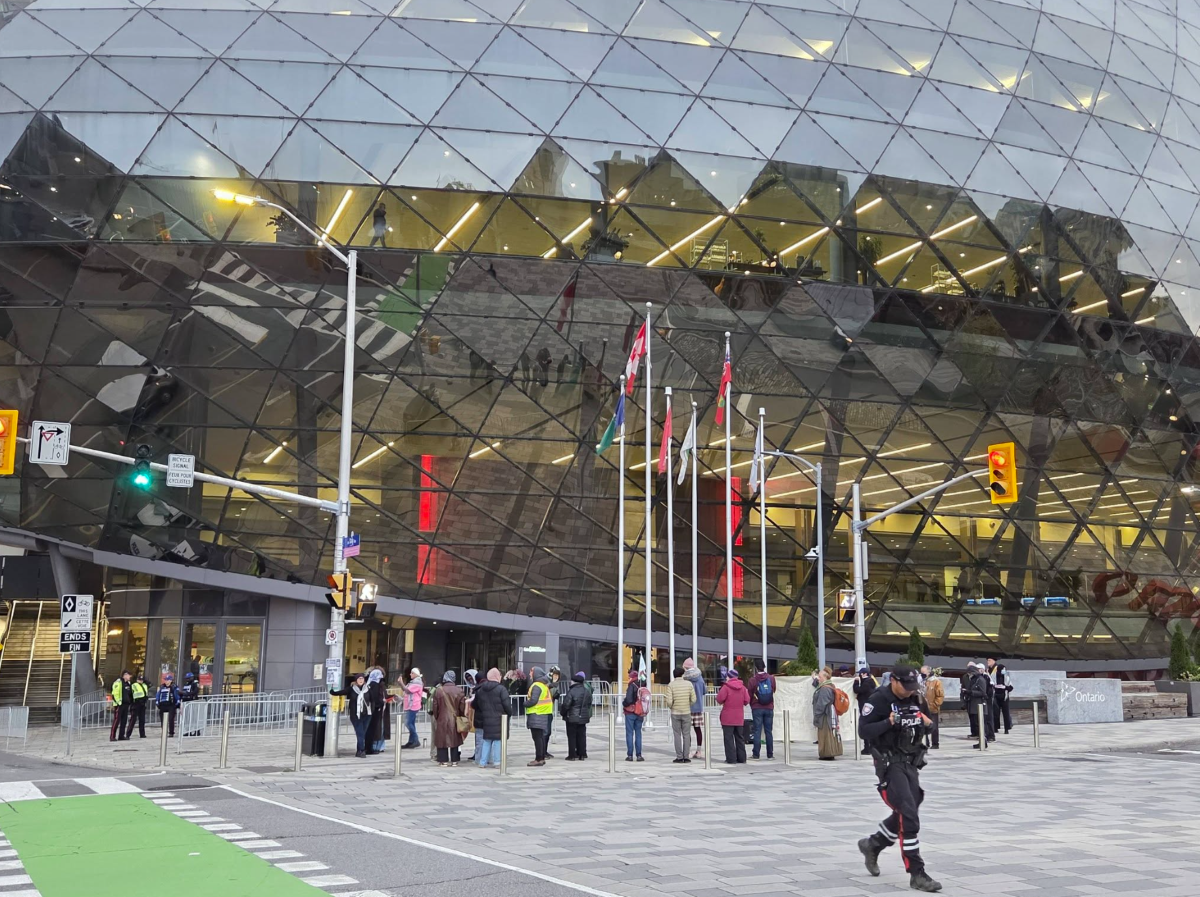
Defence Construction Canada held their “Building Defence 2026” conference in Ottawa on November 9-10, 2026.
Their promotion highlighted: “This national, strategic event is a must for those wanting to meet and connect with Department of National Defence and Defence Construction Canada decision-makers; those who plan, procure and deliver Canada’s ambitious defence infrastructure program.”
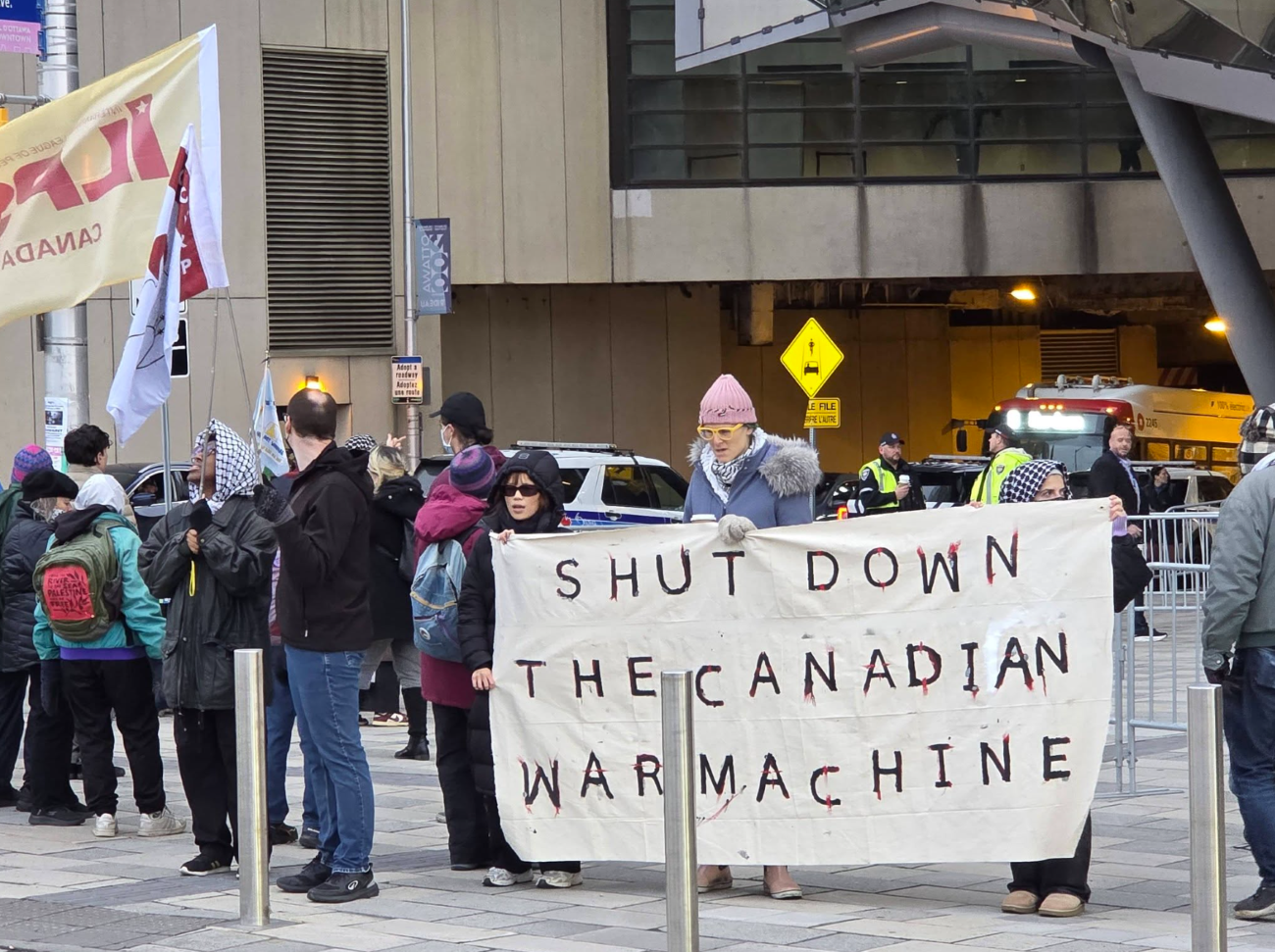
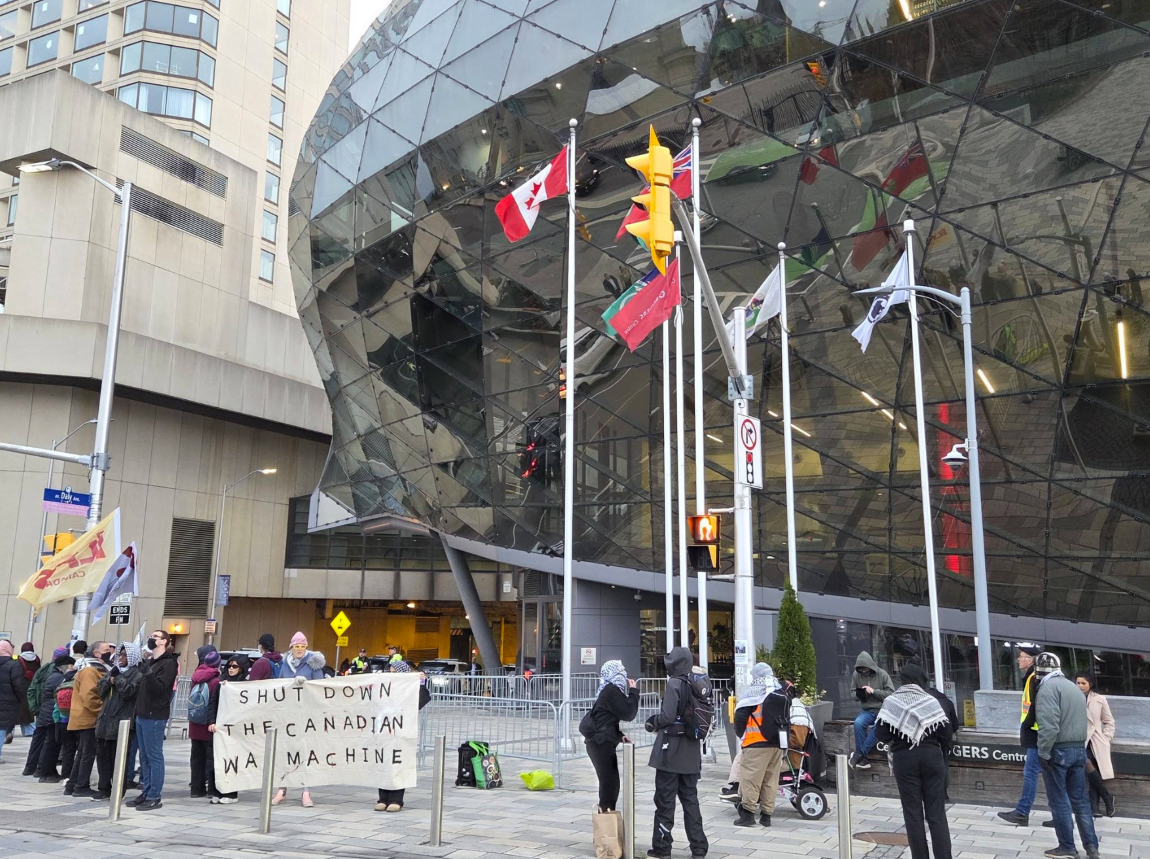
In contrast, the Shut Down CANSEC social media post calling for people to protest this conference highlighted that Defence Construction Canada is “responsible for expanding the footprint of canadian militarism on stolen lands”.
Defence Construction was formed as a Crown corporation in 1951, became Defence Construction Canada in 1980, then reached $1 billion of construction contract expenditures in 2017, and now reportedly has about $8 billion in active defence infrastructure contracts. Its head office is located in the Constitution Square building in Ottawa.
In May 2026, the Canadian government proposed moving Defence Construction Canada under the purview of the Defence Investment Agency (DIA) with the intention to make the DIA a stand-alone entity overseen by a new cabinet minister “with expanded authorities” to move projects along more swiftly.
Militarization of northern territories
It appears from public postings that the “Building Defence 2026” conference could have had a focus on the construction planned to increase the presence of the Canadian military in the Northwest Territories, Nunavut and Labrador.
Defence Construction Canada had posted on social media: “At Building Defence 2026, gain firsthand insight into northern projects and industry opportunities that support Arctic and North American Aerospace Defence Command (NORAD) priorities and a sustained defence presence in the region.”
This could also connect back to Prime Minister Mark Carney’s statement earlier this year at Davos about Canada having “boots on the ice”.
That reference to “boots on the ice” could mean infrastructure upgrades at the “Forward Operating Locations” in Yellowknife and Inuvik (Northwest Territories), Iqaluit (Nunavut), as well as the “Deployed Operating Base” in Goose Bay (Labrador).
The Government of Canada has pledged to spend $32 billion on these forward operating locations and 5 Wing Goose Bay to “support NATO Allies and NORAD continental defence” and “build both military power and economic strength”.
The construction elements of those upgrades include airfield improvements; new and/or repurposed aircraft hangars; ammunition compounds; fuel facilities; and warehousing, multi-purpose locations, information technology and more.
The potential focus on the construction of military infrastructure in the Arctic could also explain why the listed speakers at Building Defence 2026 included the Vice President of Agnico Eagle Mines Limited (based Nunavut) and the CEO of Tlicho Investment Corporation (in the Northwest Territories).
Agnico Eagle is the largest mining company in Canada and operates the Hope Bay gold mine project located about 160 kilometres north of the Arctic Circle. In May 2026, Agnico Eagle and the Department of National Defence signed a “co-operation agreement” to “facilitate knowledge transfer opportunities” on “delivering large infrastructure projects in the North and addressing Arctic construction constraints”.
The Tlicho Investment Corporation is the business arm of the Tlicho Government of the Dene peoples in the Northwest Territories. The Tlicho Government is also involved in the “Arctic Economic Security Corridor”, a major project involving the construction of an all-season road to a deep-sea port at Grays Bay on the Arctic Ocean that would serve as a “deepwater export terminal for minerals” with an airstrip that would have both “dual-use civilian and military potential”.

‘Militarization threatens the well-being of Inuit cultural security’
In an article published by Canadian Dimension earlier this year, Tamara Lorincz (PhD, Wilfrid Laurier University) wrote: “In 2022, the Inuit Circumpolar Council (ICC) that represents 180,000 Inuit and Yupik peoples in Canada, U.S., Greenland/Denmark and Russia passed the Ilulissat Declaration that affirmed ‘the Arctic shall continue forever to be used exclusively for peaceful and environmentally safe purposes, and shall not become the scene or object of human conflict or discord.’”
That Declaration from the ICC, that works to advance Inuit rights, also recalled: “The interrelated issues of climate change, marine vessel traffic, industrialization, militarization, and other activities that continue to threaten the well-being of our environmental, cultural, food, and socio-economic security.”
Lorincz argues that the militarization of the Arctic undermines the principles of cooperation articulated in the Ilulissat Declaration.
Innu land and environmental defenders
Peace Brigades International-Canada recalls the historic opposition of Innu land defenders to NATO low-level fight testing for the cruise missile in the late 1980s. More than one hundred Innu land defenders and their supporters were arrested at re-occupations of the Goose Bay airfield and the Minipi Lake bombing range.
The Government of Canada is now committing up to $8 billion for upgrades at 5 Wing Goose Bay on Innu lands.
In the 1980s, Innu Elder Tshaukuesh (Elizabeth) Penashue commented: “In the 40 years that the military has been in Goose Bay, the Innu’s culture has collapsed. The use of our lands by others, without our being consulted, has caused stress in our family relationships and links to our family violence. The Innu did not welcome foreign domination. It happened against their will.”
A Peace Brigades International-North America Project team spent two and a half months with Innu communities in Goose Bay, beginning in March 1995, to document the ongoing structural violence experienced by Innu peoples.
We continue to follow this.







Video: Innu Elder Tshuakuesh Elizabeth Penashue in the Channel 4 documentary “Hunters and Bombers” (1990).