


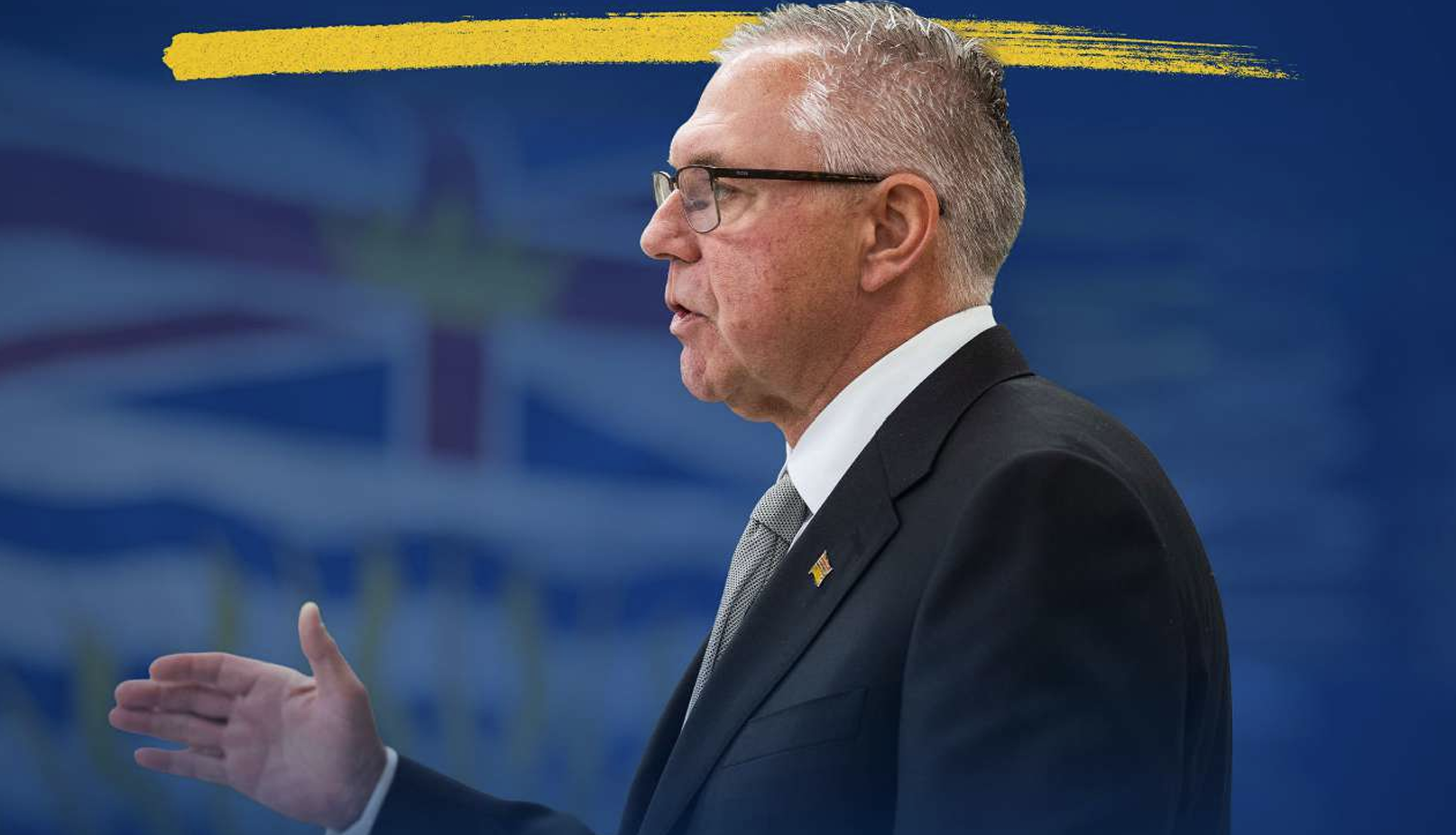
Photo: Conservative Party leader Lorne Doerkson.
The Conservative Party of British Columbia has won a majority in the 93-seat Legislative Assembly of British Columbia. The Conservatives are projected to have won 64 seats (up from 36), the NDP have 27 seats (down from 47) and the Greens have won 2 seats, including for their leader Emily Lowan.
The Conservative election platform “Ready to Deliver” promises to “Make BC an energy superpower by expanding natural gas and LNG development, doubling natural gas production by 2032 and tripling it by 2035.”
Their 9-page “BC Energy Superpower Plan” includes a pledge to: “Harmonize project permitting, approvals and consultation to align with Bill C-39 to ensure BC led projects are approved within the new federal one year time frame. This will be directly supported by a 120 Day Approval Process in legislation.”
The Conservative plan to “Build More Faster” also includes: “Get the North Coast transmission line built on a fixed deadline”, expediting the Ksi Lisims LNG project to “a final go-ahead for construction”, and “Back the pipeline expansions already in motion: Coastal GasLink’s second phase, Prince Rupert Gas Transmission and Enbridge’s Sunrise expansion on the Westcoast system”.
On October 1, 2026, Conservative party leader Lorne Doerkson (soon to be Premier Doerkson) also welcomed the Government of Canada’s designation of the Pacific Link Pipeline as a project of national interest.
The Conservative platform also highlights: “Keeping mines open and opening new mines to access the materials and critical minerals the world needs is imperative for BC, for Canada, and for the free world.”
The platform further notes: “Bring headquarters and corporate activity home by encouraging global mining companies and exploration operations to locate in British Columbia.”
And the Conservative platform states: “We will honour constitutional rights and respect the duty to consult and accommodate where required.”
CRCC review of the C-IRG to be released soon
One of the first issues that Premier Doerkson and his Minister of Public Safety and Solicitor General may have to contend with is the CRCC report on RCMP enforcement actions related to major projects.
The Ottawa-based Civilian Review and Complaints Commission (CRCC) launched a ‘systemic investigation’ of the Royal Canadian Mounted Police (RCMP) Community-Industry Response Group (C-IRG) on March 9, 2023, after receiving 572 public complaints related to the RCMP’s enforcement of civil injunctions.
The CRCC received 300 public complaints related to RCMP enforcement actions during the construction of the Coastal GasLink fracked gas pipeline on Wet’suwet’en territory in northern British Columbia.
That long-awaited CRCC report was to be released on Wednesday September 23 but was delayed when Premier Eby called the election on Tuesday September 22.
At that time, the CRCC commented: “To ensure the report receives appropriate consideration and to avoid any perception of interference in the election period, we have decided to delay publication until a new government has been sworn in and normal government operations have resumed.”
The date when Mr. Doerkson will be sworn in has not been publicly announced. Given the final count on the vote is expected to be November 6-10, and return day is November 18, the swearing-in day could be around Thursday November 19.
That could mean the CRCC report could be released the week of Monday November 23 or perhaps more likely sometime in December or even January-February 2027. PBI-Canada has asked the CRCC for its new release date.
The RCMP C-IRG was formed in 2017, the year that both Christy Clark (Liberal) and John Horgan (NDP) were premiers of British Columbia. It received a three-year funding arrangement under David Eby (NDP) in November 2022.
The RCMP changed the name of the C-IRG to the Community Response Unit-British Columbia (CRU-BC) on January 1, 2024.
The Conservative party platform promises: “500 more RCMP”.
The Green party platform had promised: “Disband CRU-BC, the Critical Response Unit, a branch of the RCMP tasked with protecting industrial interests at the expense of public and Indigenous rights.”
We continue to follow this.

