


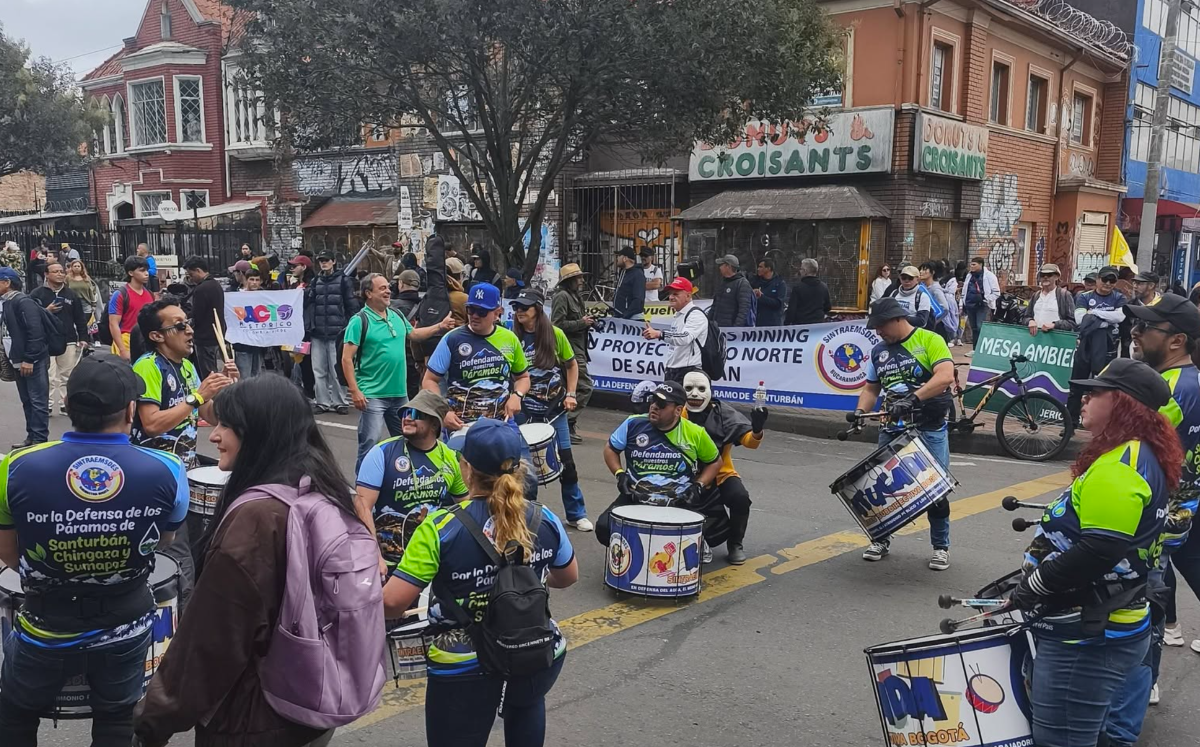
The National Union of Workers and Employees of Public Services, Autonomous Corporations, and Decentralized and Territorial Institutes of Colombia (Sintraemsdes Bucaramanga) has posted on social media:
“From the capital, we are mobilizing to reject the government’s EXTRACTIVIST policies—policies that seek to hand over the territory and the #water of millions of people to TRANSNATIONAL MINING CORPORATIONS. We will not allow them to contaminate our water sources. Abelardo restore protection to Santurbán!”
Yesterday they also posted:
“We demand immediate protection for the #Santurbán Páramo. This government has repealed three resolutions that protected the water supply for 2.5 million people in the greater Santander region—all to open the door to Canadian transnational mining corporations.”
Aris Mining and the Soto Norte project
Gran Colombia Gold Corp. was renamed GCM Mining then merged with Aris Gold in September 2022 to become Aris Mining.
The Aris Mining website says: “Aris Mining is a Canadian gold mining company with four core assets in South America, operating two underground mines in Colombia — Segovia and Marmato — and advancing two long-life development projects: Toroparu in Guyana and Soto Norte in Colombia.”
The Soto Norte project is located in the California–Vetas mining district in the department of Santander approximately 55 kilometers northeast of Bucaramanga.
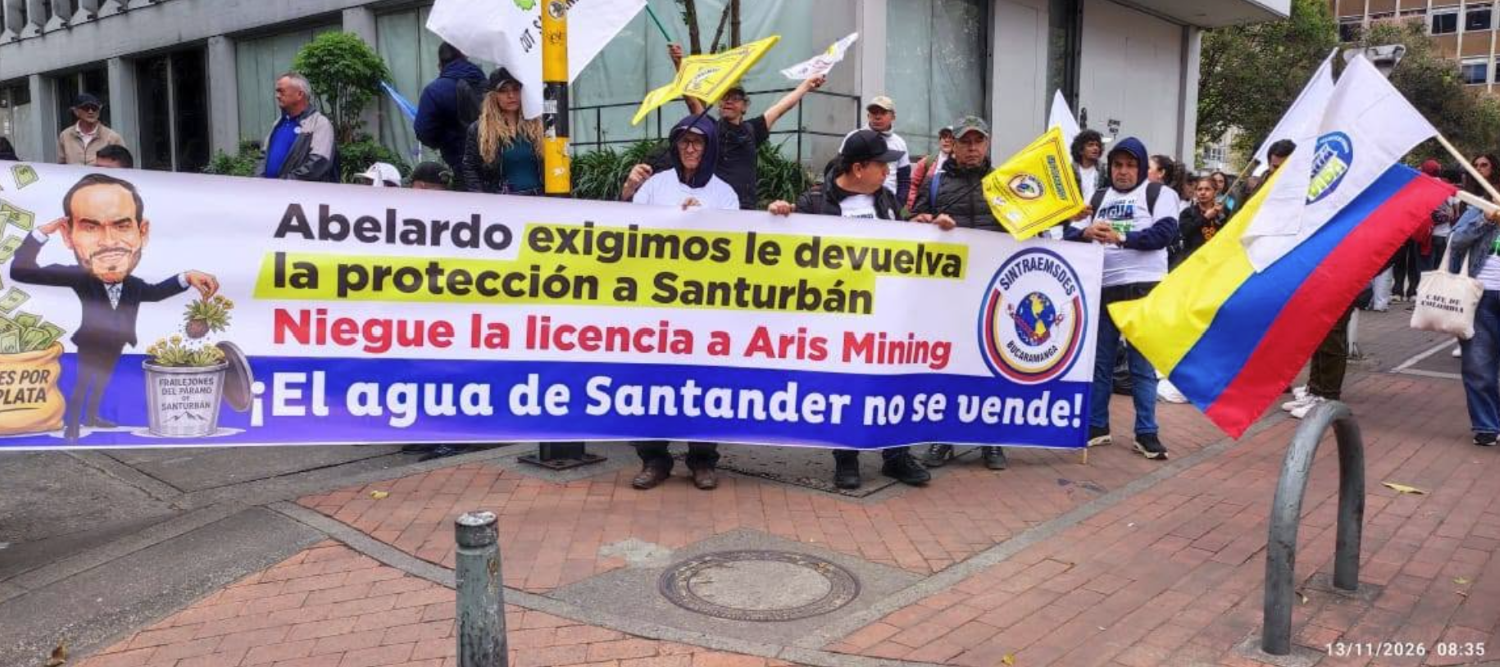
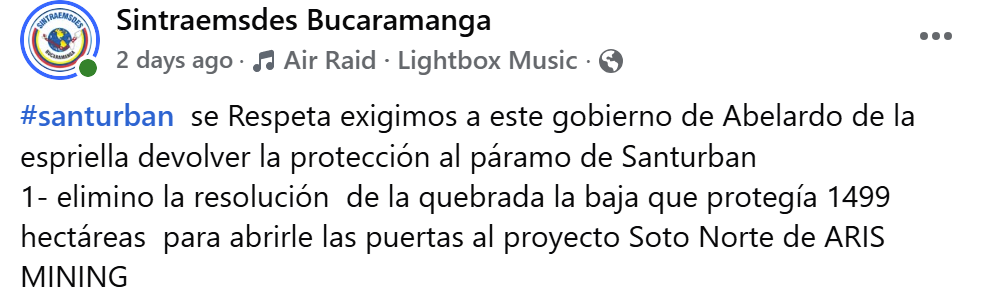
Sintraemsdes Bucaramanga has posted on social media: “We demand that this government—which we hold accountable—restore protection to the Santurbán páramo.” The union further notes: “It [the government] revoked the resolution concerning the Quebrada La Baja area—which protected 1,499 hectares—in order to open the door to the Soto Norte project by Aris Mining.”
La Silla Vacía reports: “Less than a week after the inauguration of Abelardo De la Espriella, the way began to be cleared for mega-mining in the vicinity of the Santurbán páramo. …The mining company that owns the securities is called Aris Mining, which projects gold sales of 10,400 million dollars during 21 years of exploitation.”
Land and environmental defenders
In May 2024, Mining.com reported: “The governor of Colombia’s central-northern department of Santander, Juvenal Díaz, has denounced the presence of members of the Gulf Clan, also known as the Gaitanista Army of Colombia (EGC), in the Santurbán moor. The EGC is a neo-paramilitary group and likely the country’s largest drug cartel… The Santurbán moor is a protected area of the Andes mountains. …It is also the area surrounding the $1.2-billion Soto Norte gold project.”
In September 2026, InSight Crime noted: “The Gaitanistas, also known as the Gulf Clan, Urabeños, and Gaitanist Self-Defense Forces of Colombia (Autodefensas Gaitanistas de Colombia – AGC), emerged from the ashes of Colombia’s paramilitary movement to become the dominant criminal force in Colombia, with national reach.” The article also indicates the AGC is in Santander.
Colombia continues to be the most dangerous country in the world for land and environmental defenders.
Global Witness documented the killings of 39 land and environmental defenders in Colombia in 2025 alone.
We continue to follow this.
Further reading
–As communities prepare to oppose extractive projects, Canada reaffirms the ‘strengthening’ of the mining-energy sector in Colombia (PBI-Canada, October 21, 2026)
–On sidelines of UN nature summit in Colombia, Canadian mining companies pillage (Lital Khaikin, The Breach, December 6, 2024)
–Toronto gold miners unfazed by paramilitaries’ brutal reign (Joshua Collins, The Breach, October 6, 2022).

