


On August 16, the Peace Brigades International-Guatemala Project posted on social media:
“Next week, the family of #LuzLeticia is expecting the closing arguments to begin in the #CasoLuzLeticiaYOtros [Luz Leticia and others] case.
We’d like to share Luz Leticia’s story and her family’s struggle to demand truth and justice for her #EnforcedDisappearance in 1982.
#PBIaccompanies”

Who was Luz Leticia?
Verdad Justicia has posted: “Luz Leticia was born on November 22, 1957, the same day she was detained-disappeared, when she was 25 years old. Her family remembers her as a woman, she was a very intelligent, affectionate woman, such a beautiful smile and a hard worker.”
Mirtala has shared in an interview with El Salto that Luz Leticia was a member of Nuestro Movimiento (Our Movement). She explains: “The organization originated as a militant guerrilla group whose goal was to defend the people against poverty, abuses of power, and the actions of the security forces.”
The state agent accused in her disappearance
On the accused Juan Francisco Cifuentes Cano, Prensa Libre also reports: “Cifuentes Cano was the director of a police division and worked closely with the Army in counterinsurgency operations during the de facto government of the dictator Efraín Ríos Montt (1982-1983), as explained by the Prosecutor’s Office before the Fifth Criminal Court of First Instance. The ex-commander is accused of the forced disappearance of the university students Luz Hernández and Ana López, who 40 years later have still not been located.”
Judge expected to issue sentence soon
On August 13, Prensa Comunitaria reported: “The oral and public trial for the disappearance of university student Luz Leticia Hernández Agustín, 44 years ago, which is taking place in the Eighth Criminal Court against Juan Francisco Cifuentes Cano, reaches its final phase. On Tuesday, August 18, the last witness will be heard by videoconference, then the legal representation of Luz Leticia’s family, the prosecution and the defense of the accused will issue their conclusions before the judges issue a sentence.”
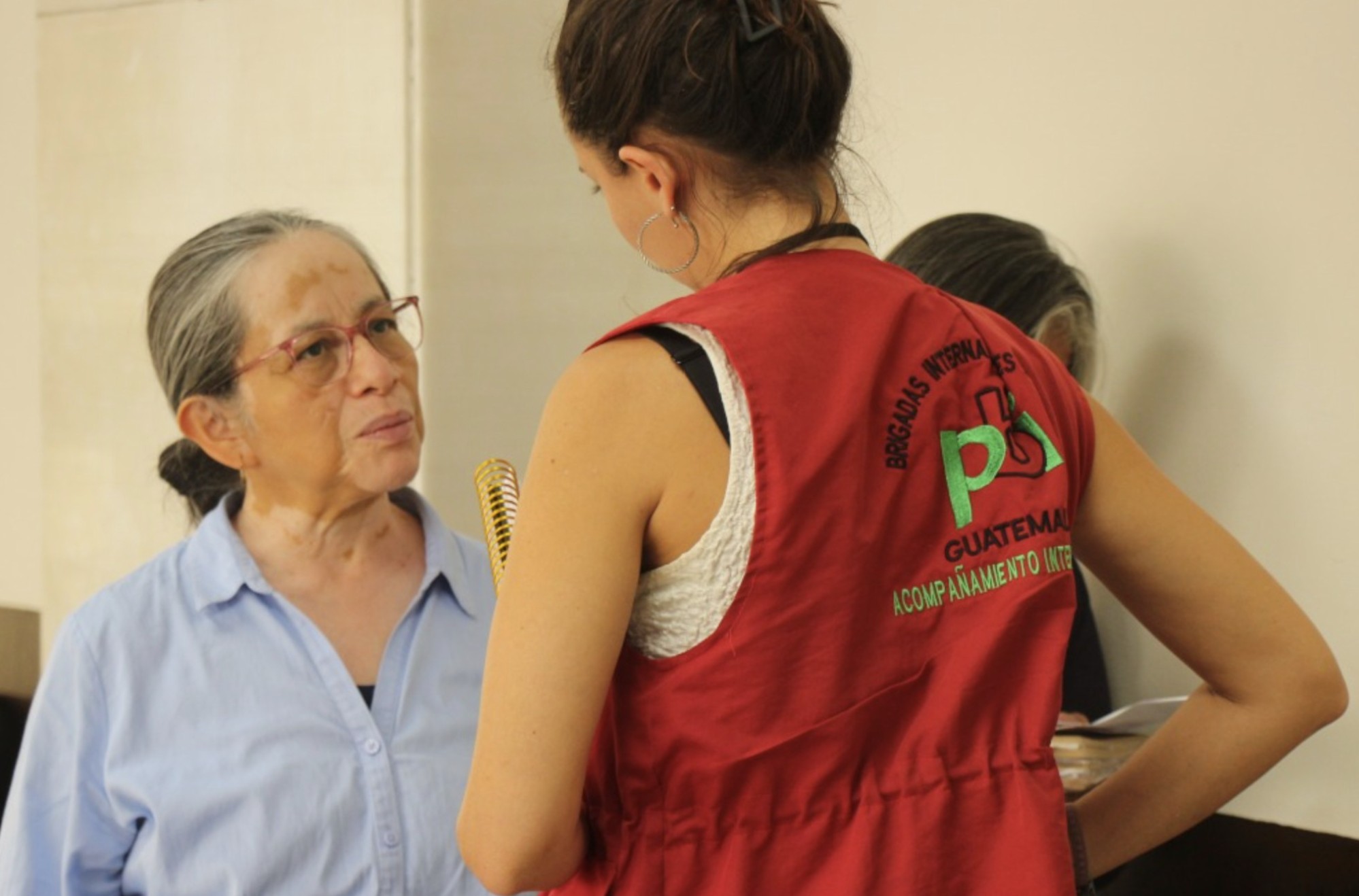
PBI accompaniment
This week, PBI-Guatemala posted ten slides – that can be read here – including this one that says:
“The Luz Leticia case has finally reached the courts thanks to the tremendous efforts of her family: ‘Our sister’s despair cut deep into our family, and in order to heal we need to recover Luz Leticia’s remains and ensure that her killers are brought to justice once and for all.’
PBI continues to support Valentina, Marta and Mirtala, Luz Leticia’s mother and sisters.”

Luz’s sister in Canada
PBI-Guatemala had also previously accompanied another sister during the 1980s before she had to go into exile in Canada.
Mirtala further explains to El Salto: “In 1987, my sister was a political exile in Canada, and my mother went to be with her. My sister took a job with the Canadian government, and with her salary, they decided to launch this legal battle. They hired legal counsel from the human rights law firm led by Edgar Pérez Archila, one of the attorneys handling several cases related to the genocide in Guatemala.”
Two years ago, Publico reported: “In addition to resolving their sister’s case, the family is fighting to create a museum that tells the story of repression in Guatemala. [Mirtala says] ‘We want the museum to be built in a military base in the capital, but the right wing is intransigent with this.’”
We continue to follow this.

