Home Blog Page 62

Lockheed Martin F-35 fighter jets arrive in Israel days before airstrikes on Gaza resume killing 400+ people

Photos: Israel has reportedly deployed Lockheed Martin F-35 fighter jets in “beast mode” (carrying internal and external weapons weighing up to 22,000 pounds); Palestinian families grieving following airstrikes on Gaza last night.

On March 18, Aljazeera reported: “At least 404 Palestinians have been killed and 562 wounded as Israel launched a massive assault on Gaza, shattering the fragile two-month-old ceasefire with Hamas. Tuesday’s attack took place across Gaza, including in Khan Younis and Rafah in southern Gaza, Gaza City in the north, and central areas like Deir el-Balah.”

The airstrikes reportedly began around 2 am Gaza time on Tuesday morning (8 pm Monday night in Ottawa).

New F-35s manufactured by Lockheed Martin

Just two day ago the Israeli Air Force (IAF) posted on X: ‘Three “Adir’ (F-35I) fighter jets, manufactured by @LockheedMartin, landed last week at Nevatim Airbase. The three jets will join the IAF and the 116th Squadron, bearing the IAF insignia. The expansion of the ‘Adir’ fleet significantly enhances the lethal capabilities of the IAF.”

We now see this social media post from a Palestinian journalist and commentator.

“Over 15,000 operational flight hours”

The American Friends Service Committee (AFSC) has previously noted: “The world’s largest weapons manufacturer, Lockheed Martin supplies Israel with F-16 and F-35 fighter jets, which Israel has been using extensively to bomb Gaza.”

Now, the Israeli daily newspaper Israel Hayrom reports: “[The arrival of the F-35s last Thursday follows] months of conflict that have seen the Israeli F-35 fleet accumulate over 15,000 operational flight hours across multiple combat theaters. …Originally designed to carry weapons internally to maintain stealth characteristics, the Israeli F-35i’s capabilities have been expanded during the current conflict. The Flight Test Center, working jointly with Lockheed Martin and the Pentagon’s F-35 program, successfully developed the ability to mount external JDAM precision-guided munitions on the aircraft’s wings.”

“Beast mode” includes 2,000-pound bombs

TWZ, “an essential resource for the defense industry”, further reports: “The Israeli Air Force has confirmed that it’s the first F-35 operator to use the ‘beast mode’ in combat. The exact configuration used is unclear, although a photo published … on X shows … four external 2,000-pound class GBU-31 JDAMs [plus] a single AIM-120 AMRAAM air-to-air missile can be seen in one of the internal weapons bays…”

Transfers of weapons likely violates international law

On February 23, 2024, thirteen United Nations Special Rapporteurs along with several Independent Experts and Working Group members issued a statement, endorsed by others including the Special Rapporteur on human rights defenders Mary Lawlor, that says: “Any transfer of weapons or ammunition to Israel that would be used in Gaza is likely to violate international humanitarian law and must cease immediately.”

Mary Lawlor.

While the statement from UN experts highlights the responsibilities of States, calls for them “to immediately halt arms transfers to Israel”, notes that military exporters to Israel include Canada, it further affirms: “Arms companies contributing to the production and transfer of arms to Israel and businesses investing in those companies bear their own responsibility to respect human rights, international humanitarian law and international criminal law.”

Human rights defenders killed

The Ministry of Health in Gaza reports that at least 48,577 Palestinians have been confirmed dead and 112,041 wounded since October 2023.

Among the dead are human rights defenders.

In its Global Analysis 2023/24 released in May 2024, Front Line Defenders stated: “Those defending the right to health and the right to life as doctors, nurses, or ambulance workers, those exposing and documenting war crimes as journalists, and those providing humanitarian support as volunteers or employees of aid agencies were all specifically targeted by Israeli bombs or guns.”

On January 16, 2025, Ihab Marwan Kamal Faisal of the Palestinian Centre for Human Rights (PCHR) and his family were killed by an Israeli airstrike in Gaza City.

In February 2024, in two separate incidents, two of PCHR’s lawyers, Nour Abu Al-Nour and Dana Yaghi, were also killed along with their families by Israeli airstrikes.

“Aiding and abetting” crimes

Just prior to the DSEI arms show in London, UK in 2019, Amnesty International commented: “Legal concepts of ‘corporate complicity’ in and the ‘aiding and abetting’ of international crimes continue to evolve and could in the future apply to arms companies that continue supplying weapons in the knowledge that they may be used to commit or facilitate serious violations of international human rights or humanitarian law.”

The CANSEC arms show

Lockheed Martin and other weapons companies identified by the American Friends Service Committee (AFSC) as “profiting the Gaza genocide” will be present in Ottawa this coming May 28-29 for the CANSEC arms show.

We note this mobilization being planned to challenge this arms show.

We continue to follow this.
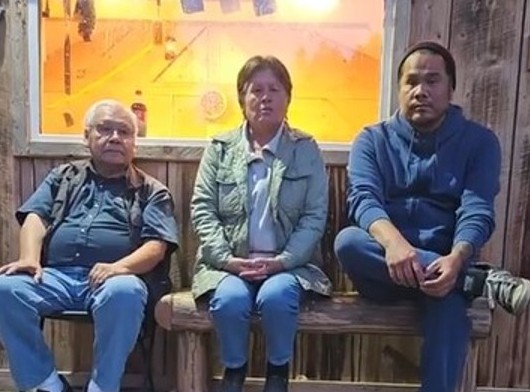
PBI-USA begins “Trump Watch” as rights-violating Executive Orders assault civil and human rights in the United States

Image from PBI-USA website.

The e-mail subject line of the most recent Peace Brigades International-USA e-newsletter is “Trump Watch has begun”.

PBI-USA notes: “It has been almost two months since Trump’s inauguration and the beginning of his issuance of a slew of rights-violating Executive Orders and each week we are facing a new assault against civil/human rights and the social safety net in the U.S.”

They add: “As the Trump administration continues its assault against our rights, it’s even more important that we come together in community to strengthen our ability to stand in solidarity when we are needed most.”

Photo: PBI-USA director Amelia Parker.

Implications for PBI accompanied defenders

A new feature article by PBI-USA titled Trump administration targets those lawfully in the U.S. (March 17, 2025) highlights: “The Trump administration’s targeting of those with temporary or even permanent legal status has immediate impacts on PBI-USA as a key part of our work is supporting the visits of human rights defenders to the U.S. for meetings with U.S. and international officials.”

Photo: PBI-USA hosts a visit from PBI-Mexico accompanied defender Mariana Azucena Villarreal Frías of the Network in Defence of Indigenous Territories of Sierra Tarahumara (REDETI), October 24, 2023.

Trump targets protest leader Mahmoud Khalil

The PBI-USA article also cites the example of Mahmoud Khalil.

They note: “On Saturday, March 8, reports began to surface of the arrest by U.S. Immigration and Customs Enforcement officials of a student protest leader at Columbia University, Mahmoud Khalil, who has legal permanent resident status and is now a graduate of the university.”

Image and video from Democracy Now!

“Epic first amendment battle”

Yesterday, The Guardian reported: “Khalil, a Columbia University graduate who became a leader of pro-Palestinian protests on the campus, was arrested on 8 March by immigration agents. After his arrest, immigration officials said they were seeking to deport him under a provision of federal law that gives the US secretary of state, currently Marco Rubio, the power to deport someone if their presence in the country is deemed to ‘have potentially serious adverse foreign policy consequences for the United States’.”

Monitoring Trump’s policies

The PBI-USA article concludes: “We will continue to monitor Trump’s immigration policies, especially as it relates to our ability to host our partners and the human rights defenders we accompany.”

Implications for Canada

PBI-Canada is also monitoring the implications of Trump’s policies on Canada, including for migrant rights and Indigenous rights.

Photo: Heavily armed RCMP officers onboard a Black Hawk helicopter near the Alberta-Montana border, January 29, 2025.

In the context of Trump’s comments about US-Canada border security, threats about the U.S. annexing Canada (as the 51st state) and the imposition of tariffs of Canadian products imported by the U.S. we have posted these articles:

1- Trump’s threats to annex Canada for critical minerals could put Indigenous land defenders at increased risk (March 17, 2025)

2- The integration of Canadian and US military production puts Canada at risk of complicity in violence against human rights defenders (March 5, 2025)

3- The rush to deploy “frontline personnel” to the border to avoid Trump’s tariffs overlooks human rights concerns about militarization (February 4, 2025)

4- Implications of pause and possible closure of USAID on HRDs in Mexico, Guatemala, Honduras and Colombia (February 3, 2025)

5- What implications might the Trump presidency have on PBI’s accompaniment of human rights defenders? (January 20, 2025).

Stay in touch with PBI-USA

You can find the PBI-USA website here and their BlueSky social media here.

To subscribe to the PBI-USA e-newsletter, click here.

Trump’s threats to annex Canada for critical minerals could put Indigenous land defenders at increased risk

Photo: 6,000 people took part in the Land Defence Alliance “March for the Land” in Toronto, September 27, 2023. The Ojibwe nation of Neskantaga, Kitchenuhmaykoosib Inninuwug (KI-Big Trout Lake), Ojibways of Onigaming, Muskrat Dam, Asubpeeschoseewagong-Grassy Narrows and Wapekeka First Nations, are part of First Nations Land Defence Alliance.

CBC reports: “The Ring of Fire in northwestern Ontario has become a key figure in the battle to control critical minerals, which experts say is the heart of U.S. President Donald Trump’s threats to annex Canada.”

“U.S. President Donald Trump is now eyeing Canada’s rich mineral deposits as America can’t produce enough of its own, said Elizabeth Steyn, an assistant law professor at the University of Calgary.”

“The Ring of Fire contains minerals including nickel, chromium, palladium and platinum, said Steyn, who teaches a course on critical minerals, regulatory frameworks and geopolitics. These minerals are highly appealing to the U.S.”

This CBC article further notes: “Potential development has faced pushback from some First Nations, which have previously said they haven’t been properly consulted and see it as a potential threat to their traditional ways of life.”

Photos: On March 29, 2023, The Narwhal reported: “As incoming Neskantaga Chief Chris Moonias and his predecessor, Chief Wayne Moonias, called to [Ontario] Premier Doug Ford from [the Queen’s Park legislature] balcony [in Toronto], Ford stared straight ahead and refused to acknowledge them.” They were then ejected from the legislature by security. Photos by Carlos Osorio/The Narwhal

In late-February, Ontario Premier Doug Ford stated: “As we face down the threat of President Trump’s tariffs, we need to do more, and we need to do it faster. To protect Ontario, we have to get our critical minerals out of the ground, processed and shipped to factory floors. We have to double down on working with First Nations to speed up approvals and get shovels in the ground on critical mineral projects.”

His government has pledged to “unleash the economic potential of the Ring of Fire and Ontario’s critical minerals” by “designating regions where multiple critical mineral deposits are present or likely to be present, including the Ring of Fire, as regions of strategic importance for Ontario’s economy and security…”

And earlier this month, Northern Ontario Business reported: “Premier Doug Ford is ready to shove Ottawa out of the way to make progress in the Ring of Fire. Fresh off last week’s provincial election win and armed with a strong majority, an emboldened Ford appeared at the PDAC mining show in Toronto, March 3, ready to pick a fight with the feds in order to expedite critical minerals production in the face of a looming trade war with the U.S.”

Photo of Ontario Premier Doug Ford.

In response to statements like these, Grand Chief Alvin Fiddler of the Nishnawbe Aski Nation (NAN) has stated: “Premier Ford’s promise to ‘unlock’ the Ring of Fire and fast-track development is a direct attack on the Inherent, Treaty, and Aboriginal rights of First Nations who have governed and stewarded these lands since time immemorial. …These are not ‘Ontario’s minerals; they exist within our territories…”

The Nishnawbe Aski Nation (NAN) represents 49 First Nations with a total population (on and off-reserve) of approximately 45,000 people.

Photo of Grand Chief Alvin Fiddler.

UN Special Rapporteurs on the Ring of Fire

The Report of the Special Rapporteur on the rights of Indigenous Peoples, José Francisco Calí Tzay (July 2023) and the Report of the Special Rapporteur on the human rights to safe drinking water and sanitation, Pedro Arrojo Aguda (September 2024) following their visits to Canada recommended:

Cali Tzay: “Suspend large-scale mining and other business activities in the Ring of Fire region and cease construction or operation of the Coastal GasLink, Trans Mountain and Line 5 pipelines, until the free, prior and informed consent of the Indigenous Peoples affected is secured.”

Arrojo-Aguda: “Suspend large-scale mining and oil and gas pipeline projects, such as mining in the Ring of Fire and the Coastal GasLink, Trans Mountain and Line 5 pipelines, until the necessary processes of assessing the impact of long-term risks to human rights, the environment and biodiversity, and guaranteeing the right of the Indigenous Peoples concerned to respect for the principle of free, prior and informed consent, have been completed.”

Indigenous land defenders at risk

While there is no indication at this point of risks to the lives of Indigenous land defenders opposed to the Ring of Fire megaproject, there is a worrisome global context.

Global Witness has reported that 2,106 land and environmental defenders were killed between 2012 and 2023. The Washington, DC-based organization further highlights: “Worldwide, Indigenous Peoples and Afrodescendents continue to be disproportionately targeted, accounting for 49% of total murders.”

Their September 2024 statement also notes: “While establishing a direct relationship between the murder of a defender and specific corporate interests remains difficult, Global Witness identified mining as the biggest industry driver by far, with 25 defenders killed after opposing mining operations in 2023.”

That statement adds: “In total, 23 of the 25 mining-related killings globally last year happened in Latin America. But more than 40% of all mining-related killings between 2012 and 2023 occurred in Asia – home to significant natural reserves of key critical minerals vital for clean energy technologies.”

We continue to follow this.
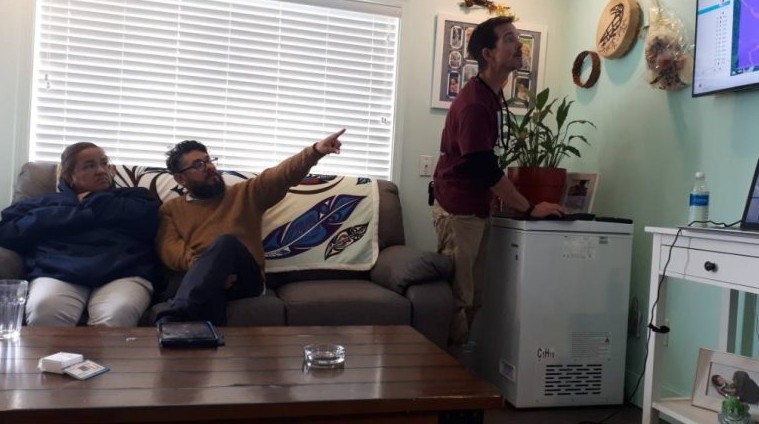
PBI-Colombia accompanies the joint work of CIJP and Adispa at Amazon Pearl Campesina Reserve Zone in Putumayo

PBI-Colombia has posted on Instagram:

On March 8 and 9, the Women’s Assembly and the Youth Assembly of the Amazon Pearl Campesino Reserve Zone (Putumayo, Bajo Cuembí) met. On this occasion, we accompanied the joint work of CIJP [the Inter-Church Justice and Peace Commission] and Adispa [the Association for the Integral Sustainable Development of the Amazon Pearl] in the framework of the international women’s day and the environmental, social and territorial planning activities of the community. We also met with representatives of CIJP and Adispa to articulate advocacy and accompaniment strategies for this year.

Jani Silva is the legal representative of the Association for the Integral Sustainable Development of the Amazon Pearl (ADISPA). She is accompanied by the Inter-Church Justice and Peace Commission (CIJP) which is accompanied by PBI-Colombia.

Map.

The Amazon Pearl Campesina Reserve Zone says the zone (ZRC) is located “in the township of La Perla Amazónica, municipality of Puerto Asís”, “has an area of close to 22 thousand hectares”, and is made up of “23 villages: Agualongo, Alea, Angostura, Bajo Cuembí, Bajo Mansoyá, Bajo Lorenzó, Baldío, Belén, Bocana del Cuembí, Buen Samaritano, Camios, Comandante, Chufiyá, Guadalupe, Juvenil, La Española, La Frontera, La Piña, La Rosa, Puerto Playa, San Salvador, Sevilla and Toayá.”

Libero Copper

This past week, Vancouver-based Libero Copper noted: “At the core of Libero Copper’s portfolio is the Mocoa copper-molybdenum porphyry deposit in Putumayo, Colombia—a cornerstone asset where the Company is actively drilling.”

The deposit is situated approximately 10 kilometers north of the town of Mocoa, which is located about 75 kilometres north of Puerto Asis. This also places Puerto Asís, which is located on the Putumayo River, downstream from Mocoa.

Impact on Indigenous peoples

Mongabay has reported the Libero Copper mining project in Putumayo has “been framed by proponents as a green project” but that “for many Indigenous people from the surrounding Inga, Kametsa, and Nasa communities, and for environmental activists, the protection of this region from deforestation should be the priority.”

Map.

Gran Tierra

And in a recent feature piece about Silva, Montreal-based journalist Lital Khaikin writes that the Calgary-based oil company Gran Tierra operates in the Putumayo region of Colombia. She further notes that campesina leader Jani Silva is accompanied by “volunteer, unarmed bodyguards with the Peace Brigades.”

In January 2025, Gran Tierra posted in a media release: “The Company plans to drill 5-7 gross development wells in the Cohembi oil field located in the Southern Putumayo Basin of Colombia. …A rig is currently being mobilized to the Cohembi North pad, with first production expected by the end of the first quarter of 2025.”

Map.

Amazon Watch has documented: “The eastern-most hamlets of the Zone overlap the Platanillo oil concession. Much of the rest of the Zone is also covered by the PUT-8 concession.”

Map: GeoPark/Amerisur.

Impact on Indigenous peoples

In April 2022, the CIJP also noted: “The Canadian company Gran Tierra Energy has ignored the territorial autonomy of the Ksxa’w Nasa Cabildo that lives between the municipalities of Puerto Asís and Puerto Caicedo, Putumayo. Operating companies and contractors of Gran Tierra entered the territory of the council without consultation, installing equipment and elements to carry out environmental studies, has carried out tours and examined species of fauna and flora of vital importance for the Nasa people.”

The context of PBI accompaniment

Late last year, Andrew Miller (who is with PBI-USA) noted in this Amazon Watch article: “Jani Silva from Colombia’s Amazon Pearl region denounced the death threats she and others in her organization have received over the years from criminal armed groups that operate in the interests of oil companies in the region.”

In May 2022, Amazon Watch also noted: “’The Border Command has focused on controlling the almost 23 kilometers of the Puerto Vega-Teteyé corridor, a strategic area for the production and trafficking of cocaine to Ecuador. Oil companies also have a presence there, and are forced to pay extortion to the criminal group in order to operate there.’ This would implicate GeoPark in the PUT-8 block and Gran Tierra in the Suroriente bloc.”

Silva says: “The threats we confront as an organization that defends our territory and environmental rights are due to the denunciations we make against pollution and exploitation in our territory. We can’t deny the evident complicity between armed groups and oil companies, through the company’s sub-contractors. The threats continue against peasant, Afro and Indigenous leaders that share the objective of defending their territory.”

We continue to follow this.
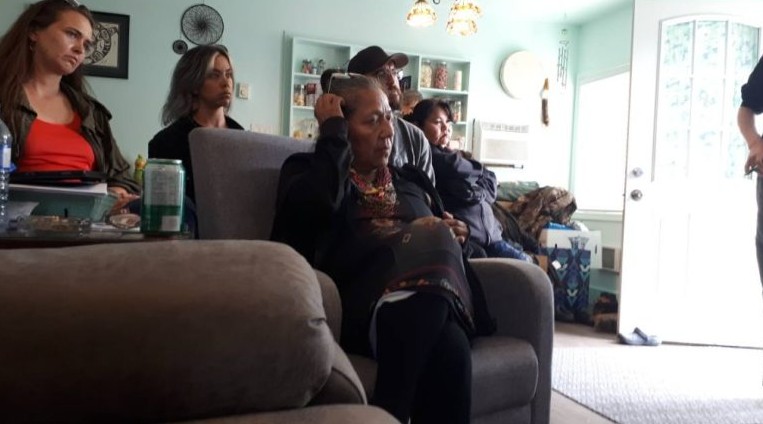
Wet’suwet’en land defender Molly Wickham speaks to The Breach Show podcast about RCMP C-IRG violence and spying

Image from The Breach Show.

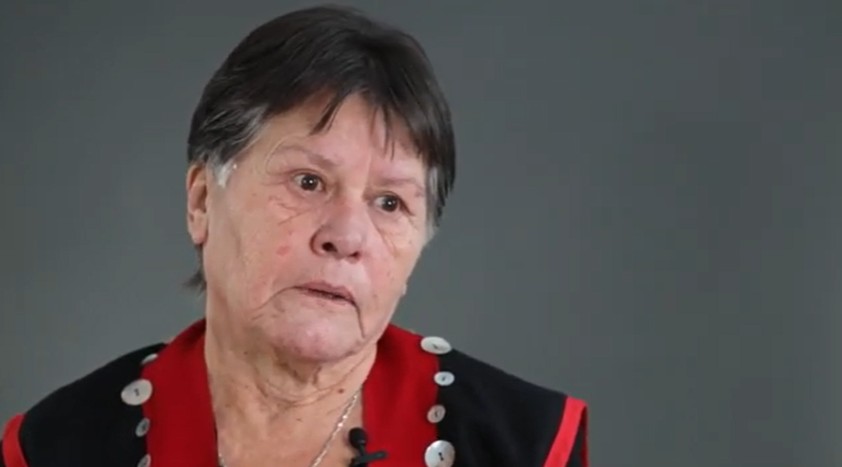
Wet’suwet’en land defender Molly Wickham, also known as Cas Yikh wing chief Sleydo’, recently met with journalist Desmond Cole in Toronto for an interview about the resistance to the Coastal GasLink pipeline for The Breach Show podcast.

The full interview can be found here.

Key excerpts from this interview include Wickham telling Cole:

Court injunctions do not consider “the risk of police violence or state violence to Indigenous people”

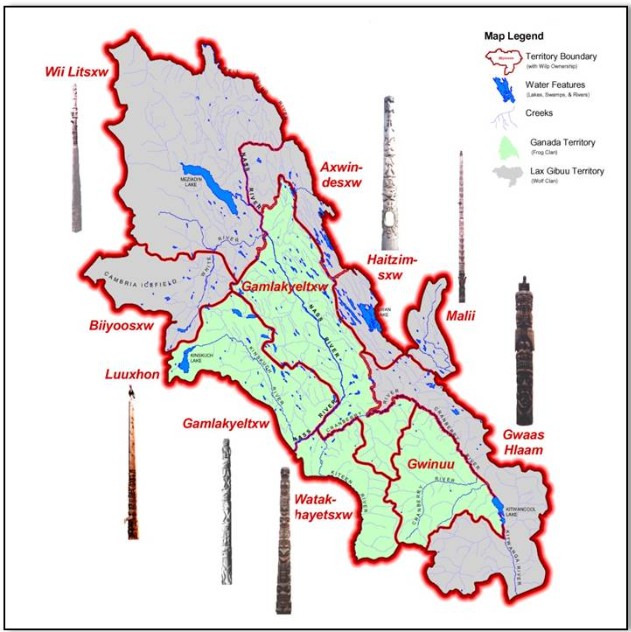
“Within the colonial court system, they work within silos, so the Supreme Court of Canada decision [that the clans of the Wet’suwet’en nation, hold title to 22,000 square kilometers of land] is not being taken into account in this injunction case. That makes injunctions really dangerous to Indigenous people and all people, because the test for it is very narrow. They only look at the economic impact and harm that could be done to a company. They don’t look at our access to our land, our culture, our way of life, the risk of police violence or state violence to Indigenous people, if there is an injunction in place.”

We know that “the police don’t care about Indigenous women”

“We just know that the police don’t care about Indigenous women. They talked about us like monsters, like animals. That’s how they see us. I think the fact that nothing is happening to them is just indicative of the situation that we find ourselves in. Through colonialism and colonization, they had to undermine the authority of the women. They had to dehumanize us so that they would only deal with the men, and they did that in really violent ways. Through the priests, through the RCMP, throughout our whole history.“

C-IRG force against civilians “should be alarming to people”

“[John] Brewer, who is the gold commander of C-IRG, which is now—they’ve changed their name to the Critical Response Unit—he’s the gold commander of that special industry unit of police. The fact that they have to use that kind of force, that they’re using that kind of force against civilians in so-called Canada, I think this should be alarming to people. I think that it indicates that, one, we’re a real threat, but also that we are a police state, and that nobody’s going to be free from the kinds of violence and repression that are coming if we don’t fall in line with the status quo and extract every little last resource on this planet.”

C-IRG spying and harassment is “a tactic to try to drive us off the land completely”

“Since the police have started coming around, they’ve really honed in on a few individuals, and really looked at and followed what the hereditary chiefs are doing.  We’ve even had spies in our feast halls, police officers who’ve worked in the community that have been actually spying for the government on our people. We know that that’s been an ongoing thing for years, and then with C-IRG coming into play, it’s just been exponential, to the point where it’s actually just a tactic to try to drive us off the land completely. We’re threatened, followed around everywhere, threatened with arrest all of the time.”

For the full interview, go to ‘Inherently racist’: Wet’suwet’en leader on the crime of defending her land (The Breach Show, March 14, 2025).

Filipino human rights defenders hold rally at Philippines Embassy in Canada as Duterte faces crimes against humanity charges

Photo: Ikulong translates as Imprison.

Filipino human rights groups held an emergency rally outside the Embassy of the Philippines in Canada in downtown Ottawa this evening.

ICC arrest warrant

The International Criminal Court (ICC) has explained: “On 10 February 2025, the Office of the Prosecutor of the ICC applied for an arrest warrant against Mr Duterte for the crimes against humanity of murder, torture and rape.”

“The Chamber assessed the material submitted by the Prosecution and found reasonable grounds to believe that Mr Duterte is individually responsible as an indirect co-perpetrator for the crime against humanity of murder, allegedly committed in the Philippines between 1 November 2011 and 16 March 2019.”

The ICC continues: “The warrant of arrest against Mr Duterte was issued by the Chamber as ‘Secret’ on 7 March 2025 and reclassified as ‘Public’ on 11 March 2025. On 12 March 2025, Mr Duterte was surrendered to the International Criminal Court after being arrested by the authorities of the Republic of the Philippines in accordance with the warrant of arrest. He is currently in ICC custody.”

A police presence was visible during the rally.

30,000 killed in the so-called “War on Drugs”

The Guardian has reported: “Since [Duterte’s] election [in 2016], between 12,000 and 30,000 civilians are estimated to have been killed in connection with anti-drugs operations, according to data cited by the ICC.”

That article adds: “The ICC’s investigation into the anti-drugs killings covers alleged crimes committed from November 2011 to June 2016, including extrajudicial killings in Davao City [when Duterte was the mayor], as well as across the country during his presidency up until 16 March 2019, when the Philippines withdrew from the court.”

Human rights defenders killed

In February 2019, the World Organization Against Torture (OMCT) noted: “The number of land and environmental defenders, as well as journalists, killed in the Philippines has increased dramatically during Duterte’s presidency. From July 2016 to November 2018, at least 76 land and environmental rights defenders and 12 journalists were killed in connection with their work. Labour rights activists have also been the target of attacks and at least eight of them have been killed on Duterte’s watch.”

Human rights violations continue

Duterte’s presidency ended on June 30, 2022.

The Amnesty International Annual Report 2023-2024 notes: “Unlawful killings under the ‘war on drugs’ continued and impunity for thousands of past killings remained entrenched. …The practice of ‘red-tagging’ human rights defenders and others persisted, and counterterrorism legislation was increasingly used against humanitarian workers. Freedom of expression continued to be restricted. Enforced disappearances of environmental activists and Indigenous persons were reported.”

Global Witness has also documented that 17 land and environmental defenders were killed in the Philippines in 2023 and that 298 were killed between 2012 to 2023.

During the rally an official car entered the Embassy.

The export of Canadian “military goods” to the Philippines

During Duterte’s presidency, Canada exported about $7 million in military goods to the Philippines ($6,050,640.67 in 2016, $3,219.78 in 2017, $175,497.00 in 2018, $458.00 in 2019, $18,100.00 in 2020, $399.95 in 2021, and $385,000.00 in 2022).

Despite these ongoing human rights violations in the Philippines, Canada exported $514,604.48 of military goods to the Philippines in 2023. The figures for 2024 will be made public by Global Affairs Canada around the time of the CANSEC arms show in Ottawa this coming May 28-29.

Further reading: ICC arrest of Duterte raises questions about CANSEC and the export of “military goods” to the Philippines (March 12, 2025).

Image from Shut Down CANSEC on Instagram.

Pretrial hearing on September 23

Deutsche Welle further notes: “The court has scheduled a pretrial hearing for September 23rd, when they will determine if there is enough evidence to continue with a full trial. If convicted, he would face a maximum sentence of life imprisonment.”

We continue to follow this.
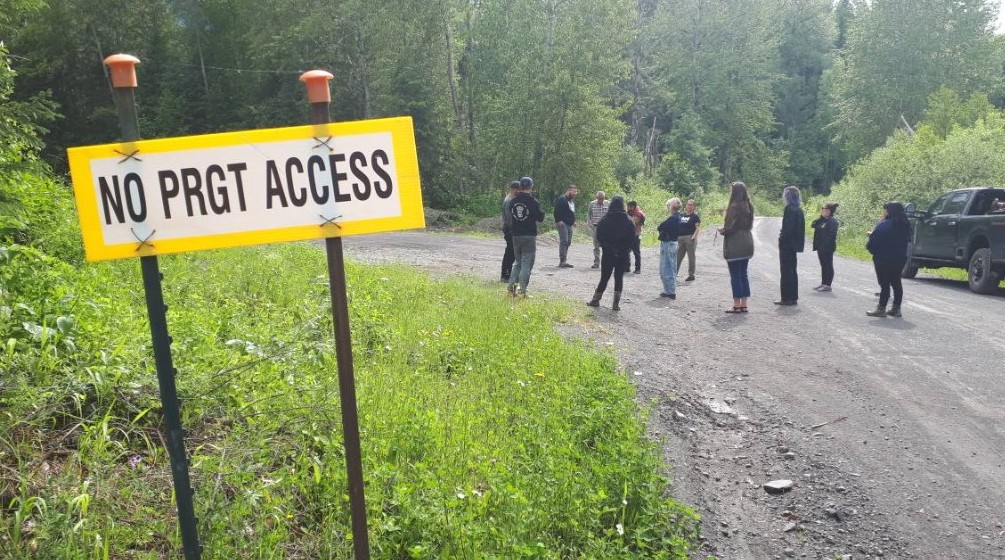
PBI-Colombia accompanies Nomadesc at meetings with state authorities in Bogota given threats faced by trade union leaders

The Association for Social Research and Action (Nomadesc) has posted on social media:

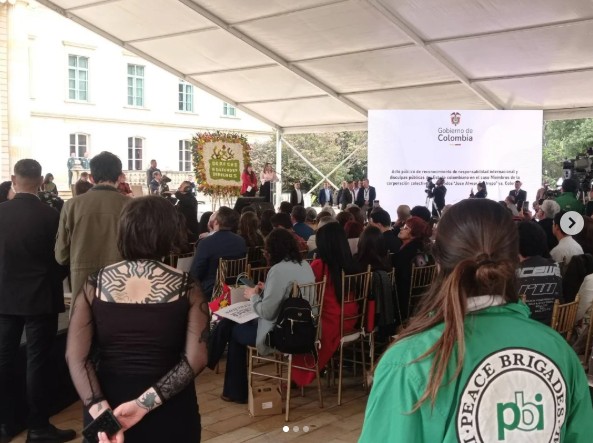
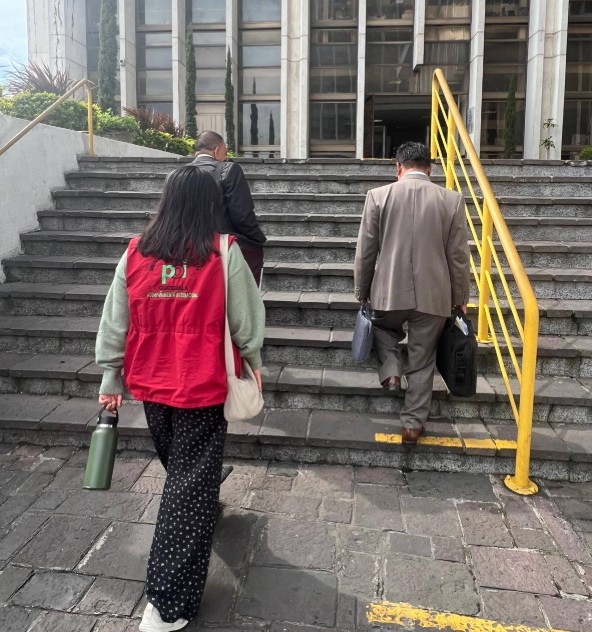
“Delegation of trade union organizations and human rights defenders of the Valle del Cauca [Cauca Valley], we meet in Bogota with the competent entities in the implementation of prevention and protection actions for human rights defenders and trade union leadership. We emphasized the imminent risk that human rights defenders live in the Colombian southwest, the urgency of respect and public recognition of our work. We urge the State to comply with international and national legal standards for the protection of human rights that lead to overcoming impunity and stigmatization of our exercise.”

“Sintraunicol receives threats from FARC dissidents”

On March 13, the Verifico platform noted: “By means of a pamphlet, signed by the Jaime Martínez Mobile Column of one of the FARC-EP dissidents, the board of directors of the Union of University Workers and Employees of Colombia (Sintraunicol), of the Cali sub-directive, is declared a military target.”

“This armed group, which claims to be present in the mountains of the department of Valle del Cauca, especially in Jamundí, threatens to take their lives, and says that it is not responsible for their properties. In addition, they prohibit them from ‘proselytizing in the region, meetings with the civilian population of rural and urban areas, putting them against the organization.’”

The Verifico article further notes: “Of the four threatened, two have a security scheme and the other two are unprotected, including the president of the union. Méndez says that with this threat, which puts organizational and union work in distress, he must take self-protection measures, since he has not been benefited by the National Protection Unit (UNP) to provide him with the necessary security.”

Sinaltrainal receives death threats

The National Union of Food  Workers (Sinaltrainal) has been on strike against the Swiss transnational corporation Nestlé for more than 300 days in the municipality of Bugalagrande in Valle del Cauca. According to a statement recently shared by the union, it is demanding: “End of harassment and threats: they denounce that the members of the union have received death threats, and demand guarantees for their safety.”

Following a November 2024 visit to Colombia, the Canadian Union of Public Employees (CUPE) noted: “Our delegation met with members of Sinaltrainal in the town of Bugalagrande.”

CUPE explains: “The union has been in a labour dispute with Nestlé de Colombia S.A. since the company banned union representatives from engaging with workers. In April 2024, union members set up an encampment outside the gates of the Nestlé plant, and they have stood strong despite attempts to dismantle their camp.”

On February 27, 2025, Periferia reported: “More than 300 days ago, the Bugalagrande sub-directive of Sinaltrainal installed a ‘resistance tent’ outside the plant that the multinational Nestlé has in that municipality of Valle del Cauca, where around 1,200 workers work… Today the tent and union members are still there in protest against the company’s refusals to renegotiate the collective agreement that expired on May 31, 2024.”

“Nestle exploits workers”

“According to reports from the National Trade Union School, delivered to the Truth Commission in 2020, 3,240 trade unionists were killed in Colombia between 1971 and 2018. Sinaltrainal counts 39 members who were victims of the homicidal crusade, the first in 1989 and the most recent in 2018.”

That article further notes: “An investigation is still open against five Nestlé executives into the murders committed by paramilitary groups against two Sinaltrainal executives: Luciano Enrique Romero in 2005, and Víctor Eloy Mieles Ospino in 1999; both were declared crimes against humanity.”

Luciano Romero

The European Center for Constitutional and Human Rights has noted: “On 10 September 2005, trade unionist, human rights activist and former Nestlé-Cicolac employee Luciano Romero was kidnapped, tortured and murdered by members of a paramilitary group. His murder came after a number of death threats that arose in the context of a long-standing labor dispute between the Colombian trade union Sinaltrainal and the Nestlé factory Cicolac.”

Accompaniment

Peace Brigades International has accompanied NOMADESC since 2011 and its president Berenice Celeita since 1999.

We continue to follow this.
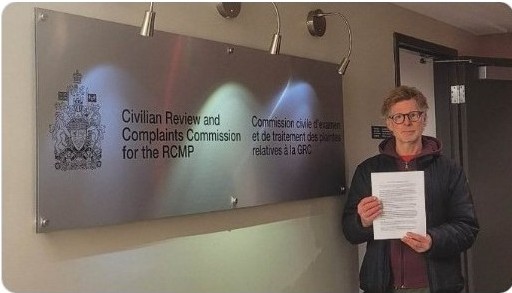
Portugal cancels purchase of F-35 fighter jets, planned purchase coming under scrutiny in Germany and Canada

Poder Aereo reports: “Portugal’s Minister of National Defence, Nuno Melo, announced that the country will not acquire F-35 fighters from the United States, considering the current geopolitical context and the unpredictability of US policy.”

“The minister emphasized that … allied predictability is a crucial factor in deciding on the replacement of combat aircraft.”

The article also notes: “[Melo] mentioned that European production alternatives are being considered, also aiming at economic benefits for Portugal.”

In an interview with Publico, Melo also commented: “And this ally of ours, which for decades has always been predictable, may bring limitations in use, maintenance, components, everything that has to do with ensuring that aircraft will be operational and will be used in all kinds of scenarios.”

Under scrutiny in Germany

EU Today also reported this past weekend: “Germany’s planned acquisition of 35 American F-35 fighter jets has come under scrutiny following concerns that the United States, under President Donald Trump, could disable the aircraft remotely.”

For now though, as Euronews reports: “A spokesperson from the German ministry of defence, however, told Euronews Next that there is no plan to cancel the purchase of F-35 fighter jets in light of the concerns raised.”

Calls to reconsider in Canada

About a month ago, CBC reported: “The government’s facing calls to reconsider or cancel major Canadian contracts with the U.S. including a more than $19-billion deal to buy 88 F-35 fighter jets with U.S. defence company Lockheed-Martin.”

At that time, Global News noted: “One of the biggest joint Canada-U.S. projects, the $73.9 billion purchase of 88 F-35 fighter jets, is not a contract that would be ripped up, according to [Bill Blair] the minister [of defence].”

That article added: “Procurement Minister Jean-Yves Duclos told reporters … that the government was only looking at limiting non-defence federal contracts to Canadian firms as part of any retaliation.”

As new Liberal leader Mark Carney is sworn in as prime minister tomorrow (March 14), Duclos has reportedly been dropped from cabinet.

Carney has not commented specifically on the planned F-35 purchase yet, but in early-February, CBC reported that: “Carney said 80 per cent of defence purchases made by this country involve the U.S. and that has to change.”

Social media post by Andrew Coyne.

Interview with Lloyd Axworthy.

Quip by Parliament Hill journalist Glen E. McGregor.

If not cancelled, fewer fighter jets for Canada?

Boyko Nikolov has argued in this commentary that Canada will not cancel the F-35 purchase, but concedes: “Some critics might argue that Trump’s unpredictability makes relying on American tech a liability. What if he slaps export controls on F-35 parts or strong-arms Canada into concessions? It’s a fair question.”

He then notes: “But the reality is that the program’s too big and too multinational for even Trump to derail.”

That said, Brent M. Eastwood, the Senior Defense Editor at the National Security Journal, suggests: “It would be a surprise if Canada purchased the full batch of 88 airplanes. The political will is not there. Defense policy will change with a different prime minister after elections are held.”

Eastwood concludes: “The desire to buy the F-35 may fade, or disappear entirely. The deal is too expensive, and funds must be left to rejuvenate other service branches. Canada’s military bureaucracy does not lend itself well to large military purchases. Canada might end up buying only a handful of F-35s.”

We continue to follow this.
To see this petition, click here.

PBI to screen documentary on environmental destruction, militarization and displacement in West Papua

PBI-Germany is co-sponsoring this screening of My Name is Pengungsi (Refugee) on March 16 in Berlin, while PBI-Netherlands is co-sponsoring this screening on March 26 in Utrecht. The 38-minute documentary was made in 2023 by Yuliano Lantipo.

The PBI-Netherland social media post highlights: “This film highlights the worrying situation in West Papua, where there are thousands of internally displaced people, due to civil and armed conflict and ongoing large-scale environmental destruction from mining and logging industries [threatens the livelihoods of the indigenous population].”

And the PBI-Germany promotion notes: “Created by local activist filmmakers, they also tell positive stories of peaceful resistance, struggles for social justice, and the fight against environmental destruction.”

The Walrus has previously noted: “Three of the world’s richest gold mines are now located in the region: Lihir, on Lihir Island [in New Ireland province, operated by the Australian company Newcrest]; Grasberg, next door in West Papua [Mimika Regency, near Puncak Jaya, operated by the American company Freeport-McMoRan]; and, of course, the PJV [Porgera Gold Mine near Porgera, Enga province, operated by the Canadian company Barrick Gold].”

Notably, Global Witness has documented that at least 20 land and environmental defenders were killed in Indonesia between 2012 and 2023, Global Affairs Canada reports that Canada has exported CAD $30 million in “military goods” to Indonesia between 2019 and 2023, and that a Canada-Indonesia Comprehensive Economic Partnership Agreement (CEPA) could be signed this year that is projected to increase Canadian imports of mineral products from Indonesia by 42 per cent by 2040 and imports of metal products by 18 per cent.

In his review, ‘Alopi Latukefu writes: “My Name is Pengungsi (Refugee) follows the lives and families of two children, both named ‘refugee’, born and currently being raised in parts of West Papua distant from their families’ places of origin. Their displacement is clearly correlated with the increased presence of extractive corporate interests backed in and supported by a military presence. In both children’s cases this has been enabled by the gradual breaking up of the region of West Papua into first two, and now five, separate provinces.”

SA PU NAMA PENGUNGSI is available with English subtitles here.

Further reading: Indigenous environmental defender Adolfina Kuum on “the destruction of our people’s rivers, our forests and way of life” in West Papua (March 10, 2025).

PBI-Colombia accompanies CREDHOS and FEDEPESAN as they receive visit from UN Women in Barrancabermeja

Photo by CREDHOS.

CREDHOS has posted on social media:

“In Barrancabermeja, we received the visit of a delegation from UN Women, in an exercise of socialization of experiences in the framework of #WomenChangingTheirWorld.

This space allowed to know firsthand, the actions developed by the allied organizations, especially FEDEPESAN, in their exercise of water defense; through community monitoring, in the Rosario and San Silvestres streams, political advocacy and the commitment to eco-tourism.”

More to come.

PBI-Canada visited with CREDHOS and FEDEPESAN on the San Silvestre wetland on June 30, 2022, and we continue to follow and help amplify their work.

Peace Brigades International has accompanied the Regional Corporation for the Defence of Human Rights (CREDHOS) since 1994.