Home Blog Page 57

PBI-Honduras accompanies ARCAH in El Merendón as it rejects the privatization of drinking water services

PBI-Honduras has posted: “Today, on International Earth Day, we celebrate the important advocacy work ARCAH does to protect water. Recently, we accompanied members of ARCAH in an activity in El Merendón (Choloma, Cortes), in which concern was expressed about the privatization of water in Honduras. From PBI, we remind you that those who defend water in Honduras continue to receive threats for their work. In that sense, adherence to the Escazu Agreement could mean an improvement in the protection of persons defending the land and territory in the country.”

On March 22, ARCAH posted: “Today on World Water Day we demand the non-privatization of water in Honduras.”

In September 2022, Criterio.hn reported:

“At least 92 of Honduras’ 298 municipalities have reportedly privatized drinking water services through a scheme in which banks in the national financial system and transnational corporations have become the main administrative managers.

This was denounced by the Alternative for Community and Environmental Reclamation (ARCAH), an environmental platform opposed to the expansion of the extractive model of natural resources in Honduras.

The environmental organization denounced, through a statement, the execution of a privatization model of the drinking water service and warned of a gradual extinction of the National Autonomous Service of Aqueducts and Sewers (SANAA).

The organization denounced that the process of expansion of privatization has been promoted by national and transnational companies that ‘indirectly finance the gradual disappearance of SANAA.’”

The statement from ARCAH to the national and international community at that time further highlighted: “ARCAH once again denounces the process of privatization of water in Honduras, we strongly emphasize that water is a sacred element that, putting its future in the hands of the private sector, is nothing more than a hard blow to the peoples, which perpetuates the extractivist, mercantile and accumulating view of capital with which Ficohsa bank and other financial companies involved see the common goods of nature.”

The Dutch entrepreneurial development bank FMO has also noted: “Banco Financiera Comercial (Banco Ficohsa) is the largest bank in Honduras with total assets of US$ 2.9bn. FMO currently holds a 6% equity interest in Banco Ficohsa.”

Accompaniment

The Honduran Alternative for Community and Environmental Vindication (ARCAH) is a space for community articulation and an anti-capitalist, anti-racist, anti-patriarchal, anti-colonialist and anti-classist social movement that seeks to defend territories and common goods from any project that threatens the peace and cosmovision of communities.

Peace Brigades International has accompanied ARCAH since September 2022.

The Council of Popular and Indigenous Organizations of Honduras (COPINH) notes the passing of Pope Francis

Photo: COPINH co-founder Berta Cáceres met with Pope Francis at the Vatican on October 28, 2014. The Indigenous Lenca land defender was killed less than two years later on March 2, 2016, for her opposition to the Agua Zarca hydroelectric dam on the Gualcarque River, a river considered sacred by the Lenca peoples.

The Council of Popular and Indigenous Organizations of Honduras (COPINH) has posted on social media:

We deeply regret the passing of Pope Francis, a world figure who knew how to hear the voices of the peoples and raise his own in defense of justice, dignity and life.

In October 2014, our companion Berta Cáceres shared a dialogue with him during the World Meeting of Popular Movements in the Vatican. There, Berta conveyed the word of the Lenca people, denouncing the plundering of the common goods and the criminalization of those who defend them. Francis listened attentively and acknowledged the legitimacy of our struggles.

Today we remember Francis as a voice that accompanied the excluded sectors all over the world. The publication ‘Laudato Si’, published in 2015, was a clear message against the extractivist model and a call to rethink our relationship with nature, from a perspective that integrates social, environmental and ethical. Their call to take care of our ‘common house’ gave support to the resistance of indigenous peoples and farmworkers against environmental destruction.

We will continue to walk with the certainty that another world is possible, from the bottom, with the peoples and for life.

Laudato Si’

On April 22, 2015, CatholicPhilly.com reported on the World Meeting of Popular Movements at the Vatican that Caceres attended as a delegate in October 2014 and highlighted: “Referring to the coming encyclical on ecology and climate, Pope Francis told Caceres and the others, ‘Rest assured that your concerns will have their place in it.’”

The Laudato Si’ Movement has explained: “Laudato Si’ is an encyclical [a public letter from the Pope developing Catholic teaching on a topic] of Pope Francis published in May 2015. It focuses on care for the natural environment and all people, as well as broader questions of the relationship between God, humans, and the Earth. The encyclical’s subtitle, ‘Care for Our Common Home,’ reinforces these key themes.”

The Sisters of Mercy posted this article “focusing on a few sections of Laudato Si’ that will help us move toward a new consciousness related to extractivism.”

Their overview includes this excerpt: “#182) An assessment of the environmental impact of business ventures and projects demands transparent political processes involving a free exchange of views. On the other hand, the forms of corruption which conceal the actual environmental impact of a given project, in exchange for favours, usually produce specious agreements which fail to inform adequately and to allow for full debate.”

Pope Francis advocated for Indigenous environmental defenders

Following the Pope’s death, Celia Deane-Drummond, the Director of Laudato Si’ Research Institute at the University of Oxford, commented: “For many people living in developing countries where extractive industries such as oil and gas or mining are rife, destruction of land coincides with direct threats to life. Pope Francis advocated for Indigenous environmental defenders, many of whom have been inspired to act by their strong faith.”

A complex situation

Mi’kmaw lawyer Pam Palmater has also commented: “Pope Francis has passed away. While I am not a member of the Catholic Church and am highly critical of the atrocities it has committed worldwide and the many horrific abuses against children and Indigenous peoples, I acknowledge that the situation is complex. There are many Indigenous peoples who are members of the Church and will be mourning his passing. It’s not for people on the outside looking in to judge Indigenous peoples, especially Indian residential school survivors some of whom will be critical of the Pope and some who will mourn today.”

The Doctrine of Discovery

In August 2022, Ellen Gabriel, a Kanien’kehá:ka (Mohawk) artist and environmental rights activist, wrote about her disappointment that the Pope did not renounce the Doctrine of Discovery during his visit to Canada the previous month.

She highlighted: “The Catholic Church’s Doctrine of Discovery is at the root of centuries of conflict and genocide in the Americas. …Indigenous peoples wanted to hear Pope Francis acknowledge the genocide of Indigenous peoples. …Instead, the words he spoke, perhaps in genuine earnestness, missed the mark because he did not recognize the culpability of the Catholic Church.”

She then commented: “Until the Vatican admits to its role in this genocidal project, land dispossession and the assassinations of Indigenous land defenders in the Americas will continue unabated. The Pope’s apology and public repudiation of the Doctrine would have helped all Indigenous peoples, not solely those in so-called Canada.”

Notably, about eight months later on March 30, 2023, the Vatican released this statement: “The Catholic Church therefore repudiates those concepts that fail to recognize the inherent human rights of indigenous peoples, including what has become known as the legal and political ‘doctrine of discovery’.” That statement adds: “The Church’s solidarity with indigenous peoples has given rise to the Holy See’s strong support for the principles contained in the United Nations Declaration on the Rights of Indigenous Peoples.”

In September 2023, Palmater commented: “While the repudiation itself is sorely lacking in full accountability and a commitment for reparations, the Pope does call on society to abandon ‘the colonizing mentality’ inherent in the doctrine and walk a path where Indigenous rights are respected. It is doubtful that repudiation alone will lead to immediate change, but if we put it into action, we may just forge a new path.”

Accompaniment

Peace Brigades International has accompanied the coordinators of the Council of Popular and Indigenous Organizations of Honduras (COPINH) since May 2016.

COPINH: “The Pope who opened the Vatican to social movements and listened to Berta Caceres denounce violence against indigenous peoples in 2014 dies.”

Further reading: “Heart of Compassion” for Palestine: Pope Francis Called for Gaza Ceasefire Until His Final Days (Democracy Now!, April 21, 2025).

PBI-Mexico accompanied Ejido El Bajío stands in solidarity with Ejido Carrizalillo in struggle against Canadian mining company

Photo: Partial view of the Equinox Gold Los Filos mine in Guerrero.

The Ejido El Bajío in Sonora has posted on social media: “We stand in solidarity with #EjidoCarrizalillo in their fight against the Canadian company #EquinoxGold which is waging a campaign of violence against the community to impose a new land lease agreement. Here is the statement with details.”

The link shared by Ejido El Bajío takes us to a press release from the Mexican Network of People Affected by Mining (REMA) that explains:

“The Canadian company Equinox Gold, which operates the Los Filos mine on the lands of the community of Carrizalillo, in the municipality of Eduardo Neri, Guerrero, is imposing a new agreement for the rent of these lands. The company has been pressuring by all means so that the communities that own the land it exploits, sign a totally unfavorable and abusive agreement. The bargaining conditions imposed and the company’s ongoing targeting and stigmatization of the community now put community members at serious risk.”

Then on April 1, 2025, Mining.com reported: “[The Vancouver, British Columbia-headquartered] Equinox Gold (TSX: EQX) has announced the indefinite suspension of operations at its Los Filos mine in Guerrero, Mexico. The decision follows failed negotiations for a land access agreement with the community of Carrizalillo.”

Jennifer Moore, an Associate Fellow with the Institute for Policy Studies and former Latin America Program Coordinator at MiningWatch Canada, has commented: “Now that the agreements with Carrizalillo have expired and the company has suspended Los Filos, the community has set up camp outside the mine, having previously announced that they will seek compensation and environmental restoration of their land.”

Photo: “Ejido Carrizalillo sets up camp outside Equinox Gold’s Los Filos mine.”

On April 9, ZonaDocs reported: “The ejidatarios are preparing to intensify their legal and political strategy, hoping that the federal government will intervene to force the mining company to comply with closure procedures and compensate for the damages caused by its activity. In addition, they warn that, if an agreement is not reached, the company could try to flee the country to avoid legal consequences.”

And on April 18, Paloma Martínez Méndez of Radio Canada International (RCI) reported: “Arturo*, one of Carrizalillo’s delegates, explained to RCI that the company, through its vice president in Mexico, Armando Ortega, has acted unilaterally, imposing conditions without properly consulting the community.”

RCI also explains: “Arturo is a fictitious name. The interviewee requested anonymity for ‘security reasons’. RCI granted it after verifying his identity.”

The struggle of the Ejido El Bajío

Photo: El Bajío land defenders, September 2023.

The Ejido El Bajío has explained:

“For more than 10 years we have been fighting against the Penmont mining company, owned by the fourth richest man in Mexico, Alberto Baillères González. …The Penmont mining company has carried out exploration and mining exploitation in the territories of the ejido, illegally, since the nineties. In 2009 and 2013, the ejidatarios filed a series of agrarian lawsuits against the mining company; in July 1013, former magistrate Manuel Loya Valverde issued 44 rulings in favor of the ejido, in which he ruled that the mining company must vacate the territory, must return the lands to the state prior to the mining exploitation and must compensate the ejidatarios for the payment of land rents.”

And Peace Brigades International-UK has noted:

“In May 2021, José de Jesús Robledo Cruz, human rights defender and former Ejido President, was found murdered in the middle of the desert together with his wife, María de Jesús Gómez Vega. José de Jesús had actively opposed the activities of Minera Penmont in the region. Alongside their bodies, a list with the names of 13 other anti-mining Ejido members was found. When invited by the Business and Human Rights Resource Centre to respond to the killing of José de Jesús and his wife, Minera Penmont categorically rejected that it is linked in any way with the crimes.”

Investors

Chart of investors in Fresnillo PLC.

The largest investors in Fresnillo PLC include: VanEck at a reported value of $61,301,000. in shares (with offices in New York City and Madrid, Amsterdam, Zurich), First Eagle Investments (New York City and London, Munich, Zurich), New World Fund, Inc./ managed by Capital Group (Los Angeles and London, Amsterdam, Frankfurt, Geneva, Zurich, Madrid, Milan, Melbourne, Montreal, Toronto), Global X (New York City) and Amplify ETFs/ sponsored by Amplify Investments (Maidstone/Kent, UK).

Accompaniment

Peace Brigades International has provided security and advocacy support to members of the Ejido El Bajío due to the ongoing threats they face.

For more about the struggle of the Ejido El Bajío, see their website and their Instagram, Facebook and X social media accounts.

PBI-Mexico expresses concern about threats against Nahua defender and FPDTA-MPT member Miryam Vargas Teutle

Video still: PBI-Mexico with Miryam Vargas Teutle, December 2023.

PBI-Mexico has posted:

From @PBI_Mexico we express our concern about the threats against the defender and communicator Miriam Vargas Teutle, member of @fpdtampt [the Peoples Front in Defence of Land and Water in Morelos, Puebla, Tlaxcala] and Radio Cholollan. We call on the authorities to guarantee their protection and the exercise of their rights.

PBI-Mexico shared this Article 19 alert that highlights:

On April 1 and 2, photographs of journalist Miryam Vargas were posted on Facebook pages discrediting her work as a journalist and as a human rights defender. This smear campaign seeks to discredit the work that Miryam has done for many years and that has earned her recognition within and outside her community. In an interview with ARTICLE 19, the communicator and defender reported having received intimidating messages via WhatsApp from local authorities requesting her “right to reply” and stating that the members of the radio station “must pay for the radio space they use”, otherwise it will be taken away. In addition to this, the journalist points out the continuous presence of a patrol car parked in front of her house.

The facts described here occur after Vargas made public a citizen complaint about the alleged dispossession of land by the legal advisor of the local and municipal authorities.

These facts represent information of public relevance for the community and therefore are specially protected speech under Mexican and Inter-American standards of freedom of expression.

Therefore, ARTICLE 19 demands:

-That the Attorney General’s Office of the State of Puebla carry out the necessary investigations to clarify the origin of the cyber-bullying against journalist Miryam Vargas Teutle in order to apply the corresponding sanctions and guarantee the journalist’s right to a life free of violence.

-To the local authorities of Tlaxcalancingo and municipal authorities of Cholula to refrain from any practice that could violate the journalist’s right to freedom of expression and to defend her human rights.

-The Federal Protection Mechanism for Human Rights Defenders and Journalists, of which the journalist is a beneficiary, to apply the necessary measures to guarantee the safety and integrity of Miryam and her colleagues at Cholollan Radio.

On April 16, Frontline Defenders further noted:

On 4 April 2025, journalist and WHRD [woman human rights defender] Miryam Vargas Teutle reported receiving intimidating messages and calls by local authorities of San Andrés Cholula, in the state of Puebla, as a reprisal for her community and journalistic work.

The messages and smear campaign against her come after a citizens complaint reported by radio programme Cholollan Radio, linked to a case of land dispossession, potentially involving a legal advisor to these authorities.

Front Line Defenders calls on the Mexican authorities to publicly condemn this intimidation and carry out an immediate, exhaustive and impartial investigation leading to accountability for those responsible.

They have also noted:

Miryam Vargas Teutle is a Nahua indigenous communicator and woman human rights defender from the Choluteca region. She is a member of the Frente de Pueblos en Defensa de la Tierra y el Agua – Morelos, Puebla y Tlaxcala (FPDTA-MPT) where she has been working since 2010 in defence of the territory against the implementation of the energy mega-project Proyecto Integral Morelos. She is also the community journalist of radio program Cholollan Radio.

Accompaniment

Peace Brigades International has accompanied the Peoples Front in Defence of Land and Water in Morelos, Puebla, Tlaxcala (FPDTA) since 2020.

PBI-Guatemala observes hearing of former paramilitary members accused of sexual violence against Mayan Achi women

PBI-Guatemala has posted:

“On Monday [April 14] PBI observed a hearing in the #MujeresAchí case.

During the hearing, the procedural parties were given the opportunity to present new evidence before beginning with the conclusions. The defense requested the incorporation of new evidence that sought to point out the invalidity of previously presented expert opinions. Finally, the court considered these means of evidence impertinent, among other things, because they did not meet the necessary requirements.

The court set April 24 at 8:30 a.m. for the beginning of the conclusions of the trial.”

CRN Noticias has previously explained: “The defendants [three former members of the Civil Self-Defence Patrols paramilitary force] face charges of sexual violence against more than 30 Mayan women of the Achí people during the 1980s, in the context of the internal armed conflict. [The Prosecutor’s Office has presented evidence] that the defendants sexually abused at least five women. These women were detained for more than 25 days in a military barracks in Rabinal, Baja Verapaz.”

Memoria Virtual has noted that the Civil Self-Defence Patrols (las Patrullas de Autodefensa Civil or PAC) “were paramilitary organizations … organized, armed, supervised, and directed by the military forces … [established] to monitor and defend the villages, to pursue and detect suspects of belonging to the guerrillas and to participate in military actions or punishment of the [mostly Indigenous] population.”

The internal armed conflict killed an estimated 200,000 people and displaced more than one million people between 1960 and 1996.

45,000 people are still unaccounted, including 5,000 children.

The conflict between state military forces and guerilla combatants was underpinned by the poverty, marginalization and racism against Indigenous peoples.

The United Nations-backed Commission for Historical Clarification established in June 1994 determined that the Guatemalan military was responsible for 93 per cent of the atrocities – including forced disappearances, massacres and torture – and that 83 per cent of the victims were Indigenous Maya peoples.

The Commission concluded that acts of genocide occurred during the war.

Radio FGER has noted: “The ‘Mujeres Achi’ case is emblematic of sexual violence during the internal armed conflict, evidencing the use of rape as a weapon of war by the Army and paramilitary groups to attack women and subjugate indigenous communities. …Violations in these contexts were particularly degrading, as many victims were abused while in detention, and at times, in front of family members, which intensified their suffering.”

We continue to follow this.

PBI-Canada calls for language in the COP30 text this November that would help protect land and environmental defenders

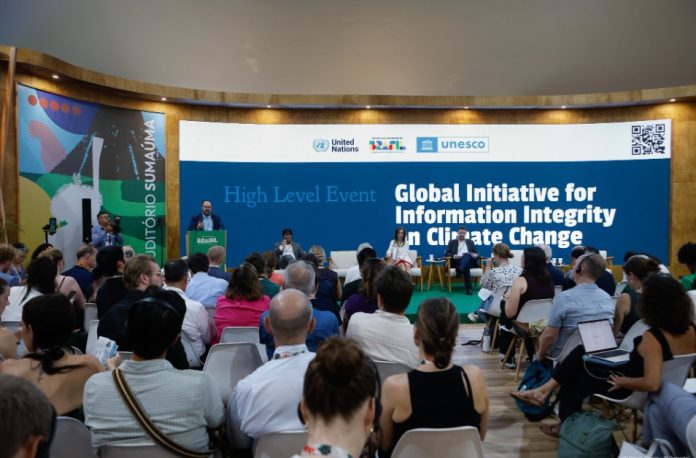
The United Nations COP30 climate change conference will take place on November 10 to 21, 2025, in Belém, Brazil.

An estimated 2,106 land and environmental defenders have been killed around the world between 2012 and 2023.

Once the 2024 and 2025 numbers are known, given the average of 175 defenders killed each year, the total could reach 2,457 by COP30.

Peace Brigades International-Canada supports the call that all State Parties at COP30 should “recognize the link between the climate crisis and growing violence and repression against land and environmental defenders and take meaningful steps to protect defenders and civic space (online and in person) to promote ambition and climate action.”

We further support the call “urging all Parties to commit to the enhanced protection of environmental human rights defenders, including reporting, investigating and seeking accountability and redress for reprisals against environmental human rights defenders, and public information about the actions taken to do so as well as public recognition of the importance of their work.”

And we support the call on world leaders to “stop the violence and criminalization against indigenous peoples, small farmers, small fisherfolk, and other environmental and land defenders. Support the work they do. Respect and listen to our defenders.”

We believe these calls are fully consistent with the United Nations Human Rights Council statement from March 21, 2019, that affirms: “Human rights defenders, including environmental human rights defenders, must be ensured a safe and enabling environment to undertake their work free from hindrance and insecurity, in recognition of their important role in supporting States to fulfil their obligations under the Paris Agreement” to limit global average temperature increases to 1.5 degrees Celsius.

They are also consistent with Target 22 of the Kunming-Montreal Global Biodiversity Framework adopted by the Conference of Parities (COP) to the Convention on Biological Diversity in December 2022.

Target 22 urges Parties and other Governments to “ensure the full, equitable, inclusive, effective and gender-responsive representation and participation in decision-making, and access to justice and information related to biodiversity by indigenous peoples and local communities, respecting their cultures and their rights over lands, territories, resources, and traditional knowledge, as well as by women and girls, children and youth, and persons with disabilities and ensure the full protection of environmental human rights defenders.”

Despite this, the final text emerging from UN COP climate conferences have never acknowledged land and environmental rights defenders.

At a PBI-Canada convened webinar held in October 2024, Michel Forst, the UN Special Rapporteur on Environmental Defenders, commented: “There are people who are willing to push for good results and at the same time we know that we also have people who are not our allies who are pushing also for counter-results and trying to delete paragraphs and good wording that some of us, some of them, would like to introduce.”

PBI-Canada is following the Peoples’ Summit, the Mesoamerican Caravan for the Climate and Life, AntiCOP organizing, and other popular and official initiatives that support protection measures for climate defenders.

We will also be amplifying messages like this one from UN Special Rapporteur Mary Lawlor on the need for defenders to have safe spaces at COP30.

UN Special Rapporteur Lawlor has highlighted: “There is a huge opportunity for #Brazil with #COP30 in Belém this year. The climate COP has historically been a hostile & risky place for HRDs. I am asking the Brazilian authorities to change that tide & make it a safe space where they can participate meaningfully.”

This coming Tuesday November 18, during COP30, we also plan to bring together a United Nations Special Rapporteur and PBI accompanied defenders to talk about the risks and protection needs of those on the frontlines challenging the extractive industries that are accelerating the climate crisis.

You can pre-register for this webinar by clicking here.

Questions and concerns about the pending export of Canadian-made armoured vehicles to the Israel Police

Video still of Roshel at CANSEC 2024 on May 29-30, 2024: “Shimonov said the company has a contract with the government of Israel to provide Senator transport vehicles.” – Toronto Star, March 16, 2024.

On March 14, 2024, CBC reported that shortly after October 7, 2023, the Israeli government sent a request to Global Affairs Canada for clearance to import about thirty armoured patrol vehicles from Brampton, Ontario-based Roshel.

At that time, Roshel said in an emailed statement: “It is our understanding that these vehicles are not to be used for military purposes, but solely for domestic police operations. This has been communicated to the government of Canada.”

Then on March 16, 2024, the Toronto Star reported: “[Roshel] says its shipments destined for police use in Israel, not military use in Gaza, have been delayed without explanation by the federal government. …It’s not clear if the company’s plan to supply Israeli police with bulletproof security vehicles is specifically caught by the Trudeau government’s decision to pause exports to Israel of military goods and technology.”

By March 20, 2024, The Maple, referencing the article by CBC News cited above, reported: “In response to a message from The Maple, Roshel CEO Roman Shimonov said the buyer of the vehicles was not Israel’s ministry of defence, but did not say which branch of the Israeli government planned to buy the goods.”

Months later, on August 7, 2024, PressProgress reported: “In a statement to PressProgress, a spokesperson for Global Affairs Canada said there are no open permits for ‘exports of lethal goods to Israel.’ They did not confirm whether or not armoured vehicles are included within the scope of that term.”

What has happened since then?

The “Our Customers” section of the Roshel website currently lists Israel Aerospace Industries (IAI), the U.S. Department of Homeland Security, U.S. Customs and Border Protection, the Canadian Commercial Corporation (CCC) among others.

On December 13, 2024, Roshel announced it had opened its first U.S.-based production facility in Shelby Township, Michigan. The company stated: “By establishing this state-of-the-art plant, Roshel is well-positioned to meet the growing demand from U.S. defense and law enforcement agencies, who now constitute the majority of our orders.”

On December 16, 2024, Roshel CEO Shimonov told the Financial Post: “Definitely, [the new production facility outside Detroit] is related to [U.S. president Donald] Trump’s administration and also definitely to potential changes in the way tariffs are working. As of today, we are getting most of our orders from the U.S. government.”

On March 10, 2025, the Markham, Ontario-based Canadian Defence Review, “Canada’s leading defence magazine”, announced that it had named Roshel CEO Shimonov “Canada’s Defence Executive of the Year for 2025”.

That article leads with: “Prior to moving to Canada in 2012, Roman Shimonov had worked in the defence and security sector in Israel. His family immigrated there from the Soviet Union when Shimonov was 12 years old. ‘I served in the Israeli Ground Forces and started my career over there,’ said Shimonov.”

Shimonov further comments: “Our expansion into the United States is not over, plus we are expanding into Europe. We are increasing our product lines and the verticals that we’re acting in. And we are waiting for numerous major contract awards that we are extremely optimistic about this year.”

Human rights concerns

Palestine

Roshel has stated its armoured vehicles would be used for “domestic police operations”, which would include occupied East Jerusalem and the West Bank.

On March 11, 2025, CNN reported: “Mahmoud Muna looked on in disbelief as plain-clothes Israeli police officers rifled the shelves in his decades-old bookstore in occupied East Jerusalem. …Witnesses to the raid said police were looking for any book containing the word ‘Palestine,’ a Palestinian flag, its colors, or any symbol of Palestinian national or political identity.”

The Guardian article on the police raid adds: “The confiscated books included titles on the work of British artist Banksy, and others by the Israeli historian Ilan Pappé and the US academic Noam Chomsky.”

On March 25, 2025, ABC News reported that after “an attack by settlers on local Palestinian families… Palestinian Academy Award-winning filmmaker Hamdan Ballal … the co-director of ‘No Other Land’ was detained by the Israel Police… Israel Police confirmed to ABC News in a statement that Ballal was arrested and taken to Kiryat Arba police station. The force said Ballal was under investigation.”

The New York Times adds: “Despite a handful of high-profile prosecutions, a vast majority of police investigations into attacks by Israelis on Palestinians are closed without charges, according to Yesh Din, an Israeli rights group.”

In July 2024, BBC reported: “The International Court of Justice (ICJ) said Israel should stop settlement activity in the occupied West Bank and East Jerusalem and end its ‘illegal’ occupation of those areas and the Gaza Strip as soon as possible.”

The Amnesty International 2023/24 report documented: “In the West Bank, Israeli policing operations were the most lethal since 2005, with 110 Palestinian children among those killed. Detentions of Palestinians without charge or trial reached record levels. …Throughout the year, Jenin refugee camp in the north endured Israeli law enforcement operations that killed at least 23 Palestinians between January and July. …[Israel Police have also] imposed bans on anti-war protests in Palestinian communities.”

Israel

On March 20, 2025, the Jerusalem Post reported: “Large protests for the hostages and against the firing of Shin Bet (Israel Security Agency) Director Ronen Bar in Jerusalem and Tel Aviv this week were marked by extensive use of police force, including officers punching and kicking protesters and violent dispersals of groups.”

That article adds: “Footage from a Tuesday night protest calling to end the Israel-Hamas War showed multiple instances of police punching and kicking protesters as they attempted to disperse them.”

The United States

While Roshel lists the U.S. Department of Homeland Security and U.S. Customs and Border Protection as customers, it has not been documented how Roshel armoured vehicles could be used by these agencies.

On March 1, 2025, The Washington Post reported: “Defense Secretary Pete Hegseth has ordered about 3,000 active-duty troops to the southern U.S. border, including soldiers from a motorized brigade equipped with 20-ton armored Stryker combat vehicles, defense officials familiar with the effort said.”

That article adds: “Several thousand U.S. troops are already involved, primarily assisting U.S. Customs and Border Protection (CBP) in the detection and apprehension of migrants seeking to enter the United States illegally.”

While Stryker combat vehicles are made by General Dynamics Land Systems (GDLS), it signals a context of concern on how other armoured vehicles could be used by U.S. Customs and Border Protection, the U.S. Department of Homeland Security, as well as U.S. Immigration and Customs Enforcement (ICE).

Roshel sponsors CANSEC, May 28-29

Roshel is listed by the Canadian Association of Defence and Security Industries (CADSI) as a sponsor of CANSEC 2025.

Peace Brigades International-Canada is examining the relationship between CANSEC, the arms industry and their impact on the safety and security of human rights defenders, including land and environmental defenders.

Under the UN Guiding Principles on Business and Human Rights, all companies, including those that produce “military goods”, must assess and address human rights risks and abuses arising in all aspects of their business, including how clients such as national armies and police forces use their weaponry and related services.

Additionally, the legal concepts of “corporate complicity” in and the “aiding and abetting” of international crimes could in the future apply to arms companies that continue supplying weapons in the knowledge that they may be used to commit or facilitate serious violations of international human rights or humanitarian law.

We are also following @shut.down.cansec on Instagram.

What implications could Canada-US trade and security talks have on the safety of human rights defenders?

Photo of the RCMP on Wet’suwet’en territory by Dan Loan: With the mining of critical minerals, fast-tracked resource projects and energy corridors potentially on the horizon, the controversial RCMP CRU-BC remains positioned as a “national best practice”.

On April 15, Ottawa-based CBC Senior reporter on defence and security Murray Brewster noted: “Talks between Canada and the U.S. on a renewed trade deal are expected to get underway in the first week of May.”

And back on March 28, the CBC had also reported: “The prime minister [Mark Carney] said he and [US President Donald] Trump agreed to sit down and negotiate a comprehensive ‘new’ economic and security relationship between the two countries should Carney win next month’s federal election [on April 28].”

What could the talks include?

Washington-based CBC News correspondent Alexander Panetta has speculated that “a new economic and security arrangement with the United States” could include the US demanding “more market access for [dairy] farmers in Wisconsin”, an end to the “digital services tax, which penalizes U.S. tech giants”, and “new measures to keep Chinese products out of supply chains — from steel to cars”.

Panetta also suggests we should expect US calls “more military spending, and faster, especially in the Arctic”, “ramped-up talk about developing Canada’s critical minerals”, and potentially “ballistic missile defence”.

Energy corridor

Toronto-based CBC Senior Reporter Mark Gollom has also recently highlighted: “Liberal Leader Mark Carney and Conservative Leader Pierre Poilievre are offering similar sounding energy development plans that would fast-track regulatory processes and create energy corridors to develop natural resource projects. …Both Poilievre and Carney said their plans would help reduce reliance on the U.S, particularly in the wake of the tariffs imposed by U.S. President Donald Trump.”

Savanna McGregor, the Grand Chief of the Algonquin Anishinabeg Nation Tribal Council, has written in The Toronto Star: “Speaking for the Algonquin, we would sooner go to court than accept a corridor which fails to meet our needs.”

The RCMP CRU-BC/C-IRG

The BC Supreme Court recently found that the Royal Canadian Mounted Police (RCMP) Community-Industry Response Group (C-IRG), now rebranded the Critical Response Unit-British Columbia (CRU-BC), had violated the Charter rights of three Indigenous land defenders resisting the construction of the Coastal GasLink pipeline on Wet’suwet’en territory in northern British Columbia.

The RCMP C-IRG is also currently the subject of a “systemic investigation” by the Civilian Review and Complaints Commission (CRCC) to “examine whether relevant policies, procedures, guidelines and training” are “consistent with applicable jurisprudence/case law and the Canadian Charter of Rights and Freedoms.”

Despite this, the issue of this militarized police unit repeatedly used against land and environmental defenders has not emerged in recent media reports about the push for energy corridors, pipelines, the extraction of critical minerals that are likely to encounter Indigenous opposition.

For example, an article published today on calls to reform the RCMP by CBC reporter Catharine Tunney, there is no reference to the C-IRG/CRU-BC.

That article notes that Prime Minister Carney says “I view the RCMP as central to the security of Canadians”, an NDP spokesperson said they “remain committed to strengthening the RCMP’s ability to serve communities effectively and respond to public safety needs”, while the Conservatives did not comment.

Five areas of concern

Five potential areas that could impact the safety and security of human rights defenders, notably Indigenous land defenders in this country:

1- Increased military spending in the Arctic could mean the militarization of Indigenous territories with Arctic military bases and infrastructure (such as radar installations) that could impact human rights, the environment and wildlife.

2- The rapid development of critical minerals, most notably in the Ring of Fire region in northern Ontario, could also impact human rights and the environment, especially if Indigenous land defenders seek to block major extractive projects that they see as lacking consultation and free, prior and informed consent.

3- Increased border militarization, including the continuation of RCMP Black Hawk helicopters patrolling Canada’s southern border with the US could impact the rights of migrants fleeting persecution and rights violations.

4- A closer military/security partnership between Canada and the US would likely undermine the calls for greater transparency on the export of Canadian-manufactured “military goods” to the US, notably the lack of control over those goods being re-exported and used to commit human rights violations.

5- An energy corridor, cutting wait times and fast-track approvals for major resource projects, as well as deeming extractive megaprojects such as pipelines in the “national interest” have the potential to collide with Indigenous rights and could see communities mobilizing to defend their land and waters.

Within these areas of concern is the potential for the continued use or even expansion of the C-IRG/CRU-BC that was described in early-2024 by RCMP senior media relations officer Staff Sergeant Kris Clark as a “national best practice”.

We continue to follow this.

As Canadian company sells mine in Oaxaca, we remember the territorial defenders killed while opposing it

Photo by Educa Oaxaca. “March 21, 2012: CPUVO members and Mexican human rights organizations hold a protest in front of the Canadian embassy in Mexico City and at the Canadian Consulate in Oaxaca city to denounce the responsibility of the Fortuna Silver Mines Company in the murders of human rights advocates in San José del Progreso.” – Civilian Observation Mission Report.

Yesterday, April 14, 2025, Vancouver-based Fortuna Mining Corp. announced “the successful completion of the sale of its 100 percent interest in Compañia Minera Cuzcatlan S.A. de C.V. to JRC Ingeniería y Construcción S.A.C., a private Peruvian company…”

The company notes that in the deal: “Fortuna retains a 1.0 percent net smelter royalty on production from the San Jose Mine concessions payable after the first 6.1 million ounces of silver and the first 44,000 ounces of gold or 119,000 gold equivalent ounces have been mined or extracted from the property.”

The mine has a controversial and deadly history.

On February 15, 2012, Dawn Paley reported: “It’s been almost three years since hundreds of people took direct action to temporarily shut down Vancouver-based Fortuna Silver’s gold and silver mine near Oaxaca City, Mexico.”

Paley added in that article: “Three people have been killed so far, most recently, Bernardo Mendez Vasquez, who was shot seven times on January 18, 2012, by a municipal police officer. Locals say municipal authorities ordered the police to attack residents who were refusing to allow a new water system to be installed on their land because they feared it would be used to supply the mine with water.”

Less than two months later, Ottawa-based MiningWatch Canada posted: “On March 15th, Bernardo Vásquez Sánchez, an Indigenous Zapotec community leader and member of the Coordinating Committee of the United Peoples of the Valley of Ocotlán (CPUVO) in San José del Progreso, Oaxaca, was murdered in an ambush by a group of some three gunmen. Bernardo was an outspoken leader against the mining operations of Vancouver-based Fortuna Silver Mines in San José del Progreso, Oaxaca, known locally by the name of its Mexican subsidiary, Minera Cuzcatlán.”

Photo: Bernardo Vásquez Sánchez.

On March 22, 2012, La Jornada reported: “Members of environmental and human rights organizations yesterday symbolically took over the Canadian embassy to protest the murders of Bernardo Méndez Vásquez and Bernardo Vásquez Sánchez who opposed the activities of the Canadian-Mexican mining company Cuzcatlán.”

Photo: Protest at Canadian Embassy in Mexico City.

Just a few months earlier in November 2011, the Peace Brigades International-Mexico Project had commented: “Fortuna Silver is a Canadian company that operates through the Mexican subsidiary Cuzcatlán. Mexican and international organizations report that the company obtained a permit for extraction from local authorities, without informing the community, violating their rights to consultation and to free, prior and informed consent.”

PBI-Mexico highlighted: “Since then, the sector of the community that is against the mine has been subjected to constant attacks, including threats, arbitrary arrests, and campaigns against human rights defenders.”

By November 19-22, 2012, Brent Patterson and Meera Karunananthan, both now with Peace Brigades International-Canada, were part of a three-day international observation mission, accompanied by PBI-Mexico, to examine the situation with the mine. 

Allegations of paramilitary groups

The Civilian Observation Mission Report that was developed after that visit noted:  “The testimonies gathered often report the presence of armed civilians who do not serve as official police. They point out that, beyond the municipal police, there are extra-official paramilitary groups acting as a shock group promoting company interests. This results in a highly confusing environment characterized by impunity in the cases of violation of human rights, and by mining company financing in the municipality.”

In her eulogy for Vasquez, Paley stated: “He was well aware that a paramilitary group was operating in San José Progreso, Oaxaca, and that it was organized to snuff out opposition to a gold mine, owned by Vancouver based Fortuna Silver. … One thing is clear: this was a political hit. Bernardo was murdered because he dared to speak out, ignoring the climate of fear imposed upon his people.”

One year after Bernardo’s murder, the Mexican Network of People Affected by Mining (REMA) also stated: “On repeated occasions, members of the CPUVO denounced that the mining company was financing armed groups in the community with the endorsement of the municipal president of San José del Progreso, Alberto Mauro Sánchez.”

Intellectual authors

On the one-year anniversary, the Oaxacan Collective in Defence of Territories demanded “punishment for those materially and intellectually responsible for the murders of Bernardo Vásquez Sánchez and Bernardo Méndez Vásquez, defenders of the territory.”

In March 2016, the Oaxacan Collective in Defense of Territories noted on the fourth anniversary of the murder of Bernardo Vásquez Sánchez: “To this day, the masterminds of Bernardo’s murder have not been investigated. In 2015, the Oaxaca Attorney General’s Office allowed Bartolo Aguilar, Domingo Aguilar, and Albino Hernández, accused of being the material authors of the crime, to be released.

Company denial

In May 2019, Luiz Camargo, the director of finance and general affairs of the Cuzcatlan mine, told Radio-Canada: “The mining company has not and has never had any participation whatsoever in violent acts.”

We continue to follow this.

PBI-Guatemala observes two-day court hearing that grants retired military officer alternative measures in the Emma & Antonio Molina Theissen case

On April 10, PBI-Guatemala posted:

Today PBI observes a hearing in the Molina Theissen case in the First Room of the Court of Appeals. Tried the review of coercion measures requested by Hugo Ramiro Zaldaña Rojas, sentenced in this case for crimes of duties against humanity, forced disappearance of Marco Antonio and aggravated sexual violence against his sister Emma Molina Theissen.

The defense argues humanitarian rights, human rights and health care of the 83-year-old ex-serviceman according to his deficient rating. Zaldaña Rojas is facing substitute measures at the Military Hospital for the sentence issued in 2018 to 58 years in prison.

The MP [Public Ministry], the PGN [the Attorney General’s Office] and the adhesive plaintiffs argued against this request, for several reasons, among them, according to the due process code, the offences of which he is convicted for their severity do not allow a change of sentence; that a change of coercive measures would be against of a resolution of the Inter-American Court of Human Rights in this same case; which follows the danger of obstruction of the truth by the fact that the convicted military never disclosed the whereabouts of Marco Antonio, missing from the family home when he was 14.

The First Room convened for tomorrow Friday at 10am to announce its resolution.

Then on April 11, PBI-Guatemala posted:

Today PBI observes the resolution hearing on review of coercion measures in Molina Theissen case

Hugo Ramiro Zaldaña, accused of crimes of duties against humanity, enforced disappearance and aggravated sexual violence, requested the modification of coercion measures imposed against him.

The magistrates have considered that the age of the accused, (82 years), his state of health and the absence of the risk of escape, justified the modification of restrictive liberty measures, allowing him telematical control and mobility to his home and health centers.

Accompaniment

PBI-Guatemala has long followed this case. In April 2016, PBI-Guatemala noted: “This month we observed the Molina Thiessen family press conference.” And in October 2017, PBI-Guatemala further noted: “The Molina Thiessen trial will begin on March 1, 2018.”

Context

The Guardian has previously explained:

[On September 27, 1981, 21-year-old social and political activist Emma Guadalupe Molina Theissen] was taken for interrogation to a military base in Quetzaltenango, western Guatemala, but refused to collaborate.

She was given electric shocks to the eyelids, was raped by her captors, and deprived of food and water to create sensory disorientation. Emma escaped by slipping through the cell railings because she had lost so much weight.

She fled to Mexico a few weeks later, unaware that her little brother [14-year-old Marco Antonio Molina Theissen] had been taken [on October 6, 1981], most likely in retaliation for her audacious escape.

Photo: Emma Guadalupe Molina Theissen (left) and her mother Emma Theissen Álvarez de Molina hold a photo of Marco Antonio. 

This past February, NISGUA noted: “On February 6, 2025, an appeal hearing of the 2018 sentence of the Molina Theissen case was held. This sentence sentenced Benedicto Lucas García, Manuel Callejas y Callejas, and Hugo Zaldaña Rojas to 58 years in prison for crimes against humanity, forced disappearance and aggravated sexual violence, as well as Francisco Luis Gordillo Martinez to 36 years in prison for the same crimes. The appeal filed by the defense of the former soldiers seeks to annul this sentence.”

Photo: Francisco Gordillo Martinez, Hugo Ramiro Zaldana, Manuel Antonio Callejas and Edilberto Letona Linares.

On April 11, Prensa Libre further reported:

The alternate magistrates of the First Chamber of the Court of Appeals of the Criminal Branch of Higher Risk Processes revoked the preventive detention issued against retired military officer Hugo Ramiro Zaldaña Rojas, prosecuted in the Molina Theissen case, under the argument of his current state of health. For this reason, they will enjoy a substitute measure at home, under telematic control.

Although Zaldaña Rojas was convicted in 2018, along with other retired military officers, for the disappearance of Marco Antonio Molina Theissen and the rape of his sister, Emma Guadalupe, events that occurred in 1981, the sentence has not yet become final due to legal appeals filed.

Zaldaña Rojas was sentenced to 58 years in prison for the crimes of duties against humanity, forced disappearance and aggravated sexual violence.

For their part, the lawyers of the Molina Theissen family affirmed that the resolution of the magistrates is “plagued with illegalities,” at the end of the hearing to review coercive measures.

We continue to follow this.

Excerpt from April 2016 PBI-Guatemala monthly information pack.

Further reading: Marco Antonio Molina Theissen: “Mom, what are they going to do to us?”: Despite the fact that more than 43 years have passed since that day, when two men invaded the residence of the Molina Theissen family, in the capital’s zone 19, his mother Emma remembers exactly the details of the last time she saw Marco Antonio, on October 6, 1981. (eP investiga, April 11, 2025)