Home Blog Page 42

As the Canadian prime minister travels to Mexico, PBI highlights the continuing dangers faced by human rights defenders and journalists

Photo: Irma Galindo Barrios, a 41-year-old member of the Indigenous Mixtec people, was forcibly disappeared on October 27, 2021, as she worked to protect the communal Ñuu Savi Forest from logging.

BNN Bloomberg reports: “Prime Minister Mark Carney is expected to sign a strategic partnership agreement with Mexican President Claudia Sheinbaum during his visit to Mexico, which starts today. The agreement will cover infrastructure, trade, health, agriculture, emergency preparedness and security, senior government officials say.”

CBC News adds: “The trip is expected to produce an agreement on a new Canada-Mexico comprehensive partnership and a security dialogue focused on issues such as transnational crime and drug-smuggling.”

The following week, two Mexican human rights defenders will be in Ottawa to meet with Global Affairs Canada officials, Members of Parliament, and others to highlight the security situation faced by human rights defenders and journalists.

Photo: Elizabeth Guadalupe Mosqueda Rivera and Héctor Hugo Arreola Galván.

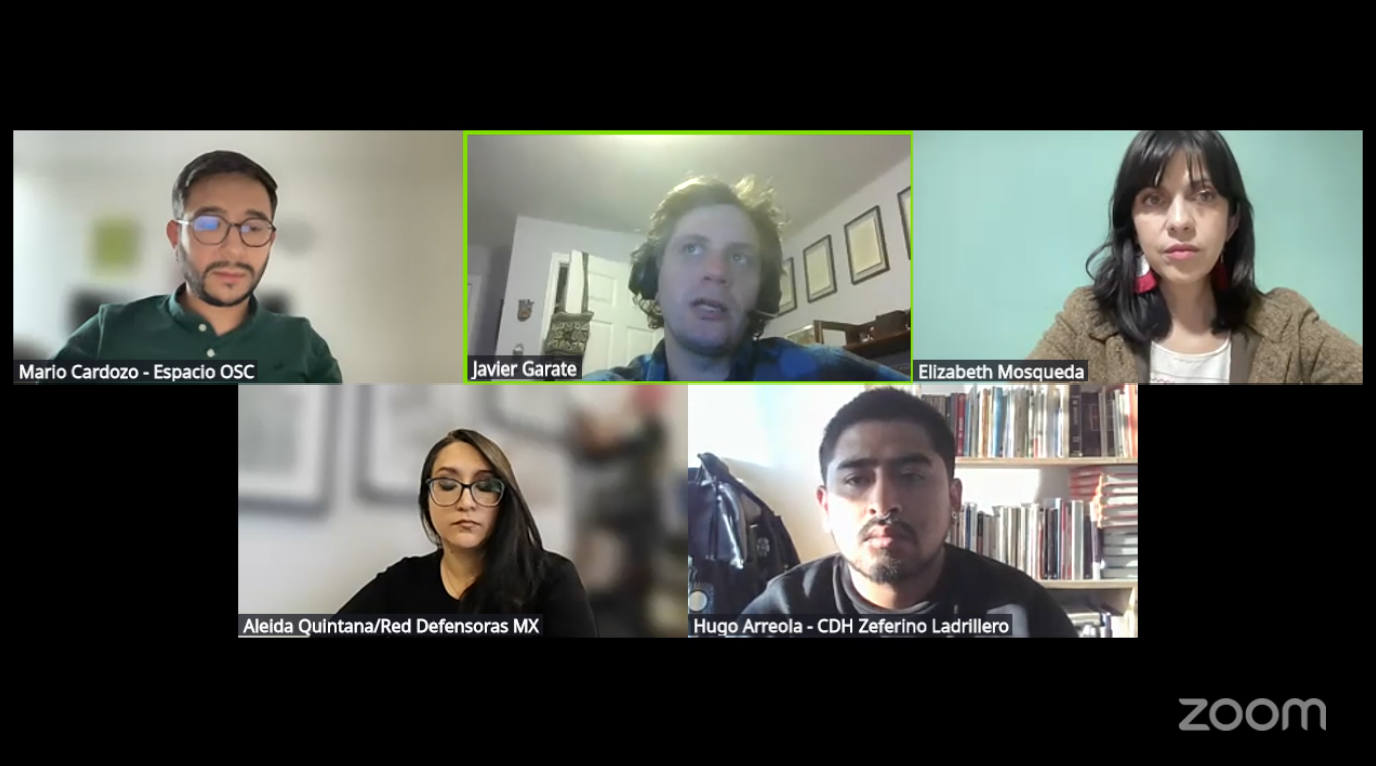
Elizabeth Guadalupe Mosqueda Rivera is with the Consortium for Parliamentary Dialogue and Equity Oaxaca (Consorcio Oaxaca) and Héctor Hugo Arreola Galván is from the Zeferino Ladrillero Human Rights Center (CDHZL).Both Elizabeth and Hugo are members of the Civil Society Space of Organizations for the Protection of Human Rights Defenders and Journalists (Espacio OSC).

110 Indigenous land defenders killed

The latest figures from the Global Witness database indicate that over the 13-year period of 2012 and 2024 at least:

– 222 land and environmental defenders were killed or disappeared in Mexico

– 110 of the 222 defenders killed were Indigenous (in a country where 19% of the population is Indigenous)

– 17 of the 110 Indigenous defenders were killed by the police or private military actors

– 15 of the 110 Indigenous defenders killed were in a struggle related to mining and extractives

– 42 of the 222 defenders killed involved mining and extractives

– 28 of the 222 defenders were killed by the police or private military actors.

The Protection Mechanism

During their visit to Ottawa, Elizabeth and Hugo will highlight concerns about and proposals for the Protection Mechanism for Human Rights Defenders and Journalists.

Mexico first created a Protection Mechanism for journalists in Autumn 2010. Two years later, the Law for the Protection of Human Rights Defenders and Journalists was passed in June 2012. That law obliges both federal and state authorities to protect the rights of journalists and human rights defenders.

The Government of Canada has recently expressed concern about the Protection Mechanism during the United Nations (UN) Universal Periodic Review (UPR) of Mexico and made recommendations for its strengthening.

At the UN UPR session held on January 24, 2024, Canada recommended that Mexico: “Strengthen, from an intersectional and gender perspective, the federal Protection Mechanism for Human Rights Defenders and Journalists, specifically in the areas of prevention, protection, investigation, and reparation.”

Prior to this session, Canada had also asked Mexico: “How will the new General law to respect, protect, guarantee, and promote the rights of human rights defenders and journalists address key challenges under the current mechanism, including in achieving results, improving federal-state-municipal cooperation, and promoting prevention of violence against human rights defenders and journalists?”

“Notable deficiencies” in the Protection Mechanism

Years before the UN UPR, Peace Brigades International (PBI) had commented in March 2020: “the Mechanism continues to demonstrate notable deficiencies and concerning failures.”

The year before that, PBI also highlighted: “The Mechanism can’t possibly address its shortcomings with its current budget and staffing levels. Providing additional funding would be the first step the Mexican government can take to ensure the Mechanism has the resources necessary to manage its rapidly growing caseload.”

Irma Galindo Barrios

Photo: Irma Galindo Barrios

Because of her work protecting communal forests from logging, Mixtec land defender Irma Galindo Barrios had faced “intimidation, harassment, persecution, smear campaigns and death threats” by public officials since 2018.

She had been scheduled to virtually attend a meeting on October 29, 2021, in Mexico City to join the Protection Mechanism for Human Rights Defenders and Journalists.

Despite this history of multiple attacks against Irma, the Protection Mechanism risk analysis had stated her situation was “ordinary”, meaning that “she can wait” and that “her life is not in danger”.

Irma was forcibly disappeared on October 27, 2021, two days before the meeting with Protection Mechanism was to take place.

Peace Brigades International is bringing Hugo and Elizabeth to Ottawa in the hope of addressing this situation for land and environmental defenders, human rights defenders, and journalists who continue to face risks for their work.

Global Witness report: 18 killings and one disappearance of land and environmental defenders in Mexico in 2024

Photo: Carmen López Lugo was a member of the Chol indigenous community of Tila. On the night of January 12, 2024, Carmen was murdered by members of organized crime with weapons for the exclusive use of the army.

The Global Witness “Roots of Resistance: Documenting the global struggles of defenders protecting land and environmental rights” report released this week notes:

Reprisals continued in Mexico, where we documented 19 cases in 2024 – 18 killings and one disappearance.

(Between 2012 and 2024, the total is 222 defenders n Mexico.)

According to data gathered by Mexican organisation Centro Mexicano de Derecho Ambiental (CEMDA), 2024 was the second most lethal year of the past decade. It reported that defenders were also subjected to intimidation, harassment, stigmatisation, defamation – and the growing problem of criminalisation.

Nine killings occurred in the border region of Chiapas. Territorial disputes between armed groups and organised crime syndicates are reported to have increased since 2021, as they seek to control the area’s rich natural resources.

Defenders protecting access to land have been caught in the struggle after challenging the attempts of illegal groups to control access to these resources. In  2024, seven family members were massacred after denouncing the presence of organised crime and challenging attempts to control mining operations in the region.

The report further notes: “In total, 10% of all murdered (13) or  disappeared (one) defenders in 2024  were women – five of them from Mexico.”

This chart also suggests that the defenders killed in Mexico in 2024 included 6 relatives of persons targeted for repression, 5 small-scale farmers, 3 Indigenous peoples, and 5 other.

This chart also suggests that of the 19 defenders killed in Mexico, in 6 cases the perpetrators were hit men, 5 were organized crime/mafias, 3 were private military actors, and 5 were other.

Global Witness also notes that globally the deadliest sectors are:

And the report highlights: “Many of the countries with the highest numbers of documented killings and disappearances – including Colombia, Brazil, Mexico and Honduras – now have state mechanisms to protect defenders from the worst reprisals. But while they are a safeguard for many, these measures are far from infallible.”

In March 2024, Amnesty International and the Committee to Protect Journalists (CPJ) documented that eight journalists have been killed while enrolled in the Protection Mechanism over the last seven years.

Then in March 2025, Reporters without Borders noted: “Kristian Zavala’s murder is an alarming sign of the challenges facing journalist protection mechanisms in Mexico. He is the second journalist killed while under state protection in 2025.”

For more on this, please see MEXICO’S MECHANISM TO PROTECT HUMAN RIGHTS DEFENDERS AND JOURNALISTS: Progress and Continued Challenges (Peace Brigades International and WOLA, May 2016).

CEMDA report

Earlier this year, the Mexican Center for Environmental Law (CEMDA) reported that 25 environmental and territorial defenders lost their lives in Mexico in 2024 due to the work they carried out.

CEMDA further specifies in their 11th Report on the situation of environmental human rights defenders and communities in Mexico that 21 defenders were murdered and four were killed by extrajudicial execution, that is, with the participation of agents of the state security forces.

CEMDA documents 94 aggression events in which the State was the main aggressor in 62 of the events, private companies in 25 events, and organized crime in 17 events. In the 62 events involving State agents, the federal government was present in 18; some type of police force in 13; prosecutors’ offices in another 13; state governments in 9; the National Guard in 3; municipal governments in 2; the Secretariat of the Navy in 2; the Ministry of National Defense in 1; and other authorities in 1.

CEMDA further establishes that the sectors that were the deadliest for environmental human rights defenders in 2024 were mining (11 fatalities), forestry (5), urban (1), pollutants (1), agriculture (3), roads (1) and others (3).

Mexican HRDs visit Ottawa

Next week, two human rights defenders from Mexico will be in Ottawa to meet with Government of Canada officials, Members of Parliament, and social movement and civil society allies, to raise awareness of the situation of human rights defenders and journalists in Mexico and find ways to support them.

Elizabeth Guadalupe Mosqueda Rivera is from the Consortium for Parliamentary Dialogue and Equity Oaxaca (Consorcio Oaxaca) and Héctor Hugo Arreola Galván is from the Zeferino Ladrillero Human Rights Center (CDHZL).

Both Hugo and Elizabeth are members of the Civil Society Space of Organizations for the Protection of Human Rights Defenders and Journalists (Espacio OSC).

Photo: Elizabeth Guadalupe Mosqueda Rivera and Héctor Hugo Arreola Galván.

Canada’s position

The Government of Canada expressed concern about the Protection Mechanism during the United Nations (UN) Universal Periodic Review (UPR) of Mexico and made recommendations for its strengthening.

At the UN UPR session held on January 24, 2024, Canada recommended that Mexico: “Strengthen, from an intersectional and gender perspective, the federal Protection Mechanism for Human Rights Defenders and Journalists, specifically in the areas of prevention, protection, investigation, and reparation.”

Prior to this session, Canada had also asked Mexico: “How will the new General law to respect, protect, guarantee, and promote the rights of human rights defenders and journalists address key challenges under the current mechanism, including in achieving results, improving federal-state-municipal cooperation, and promoting prevention of violence against human rights defenders and journalists?”

Stay tuned for updates about this visit.

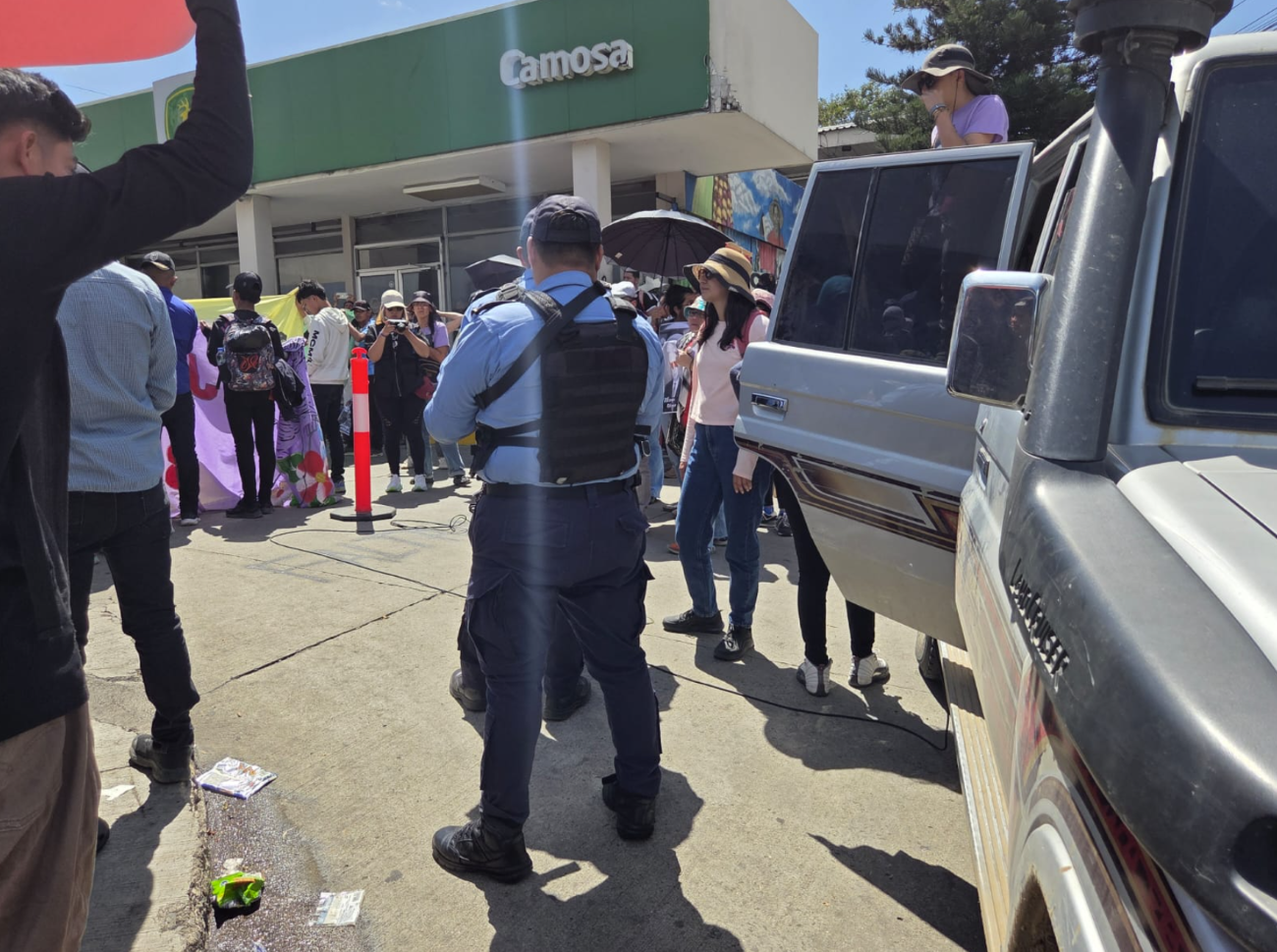
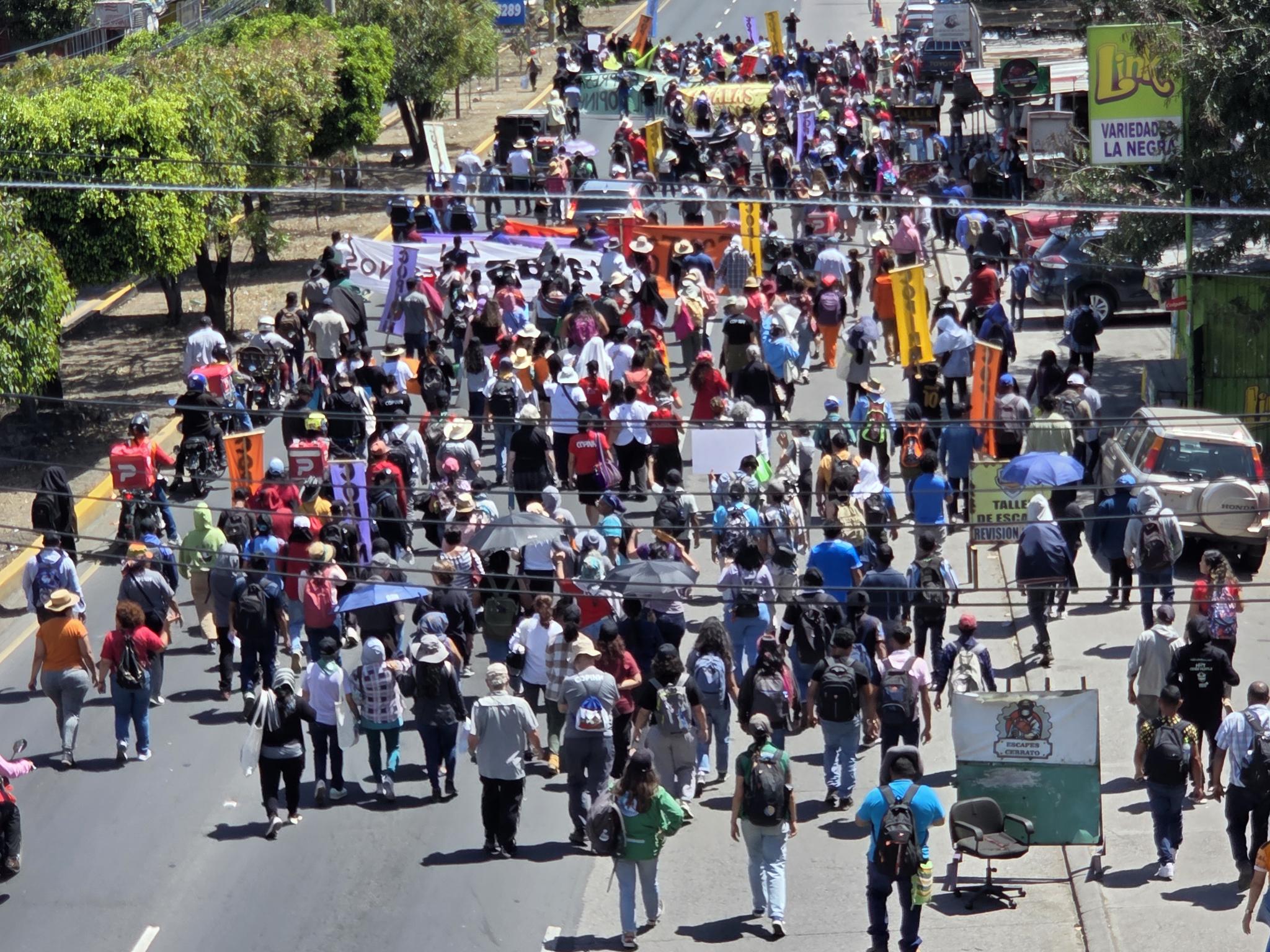
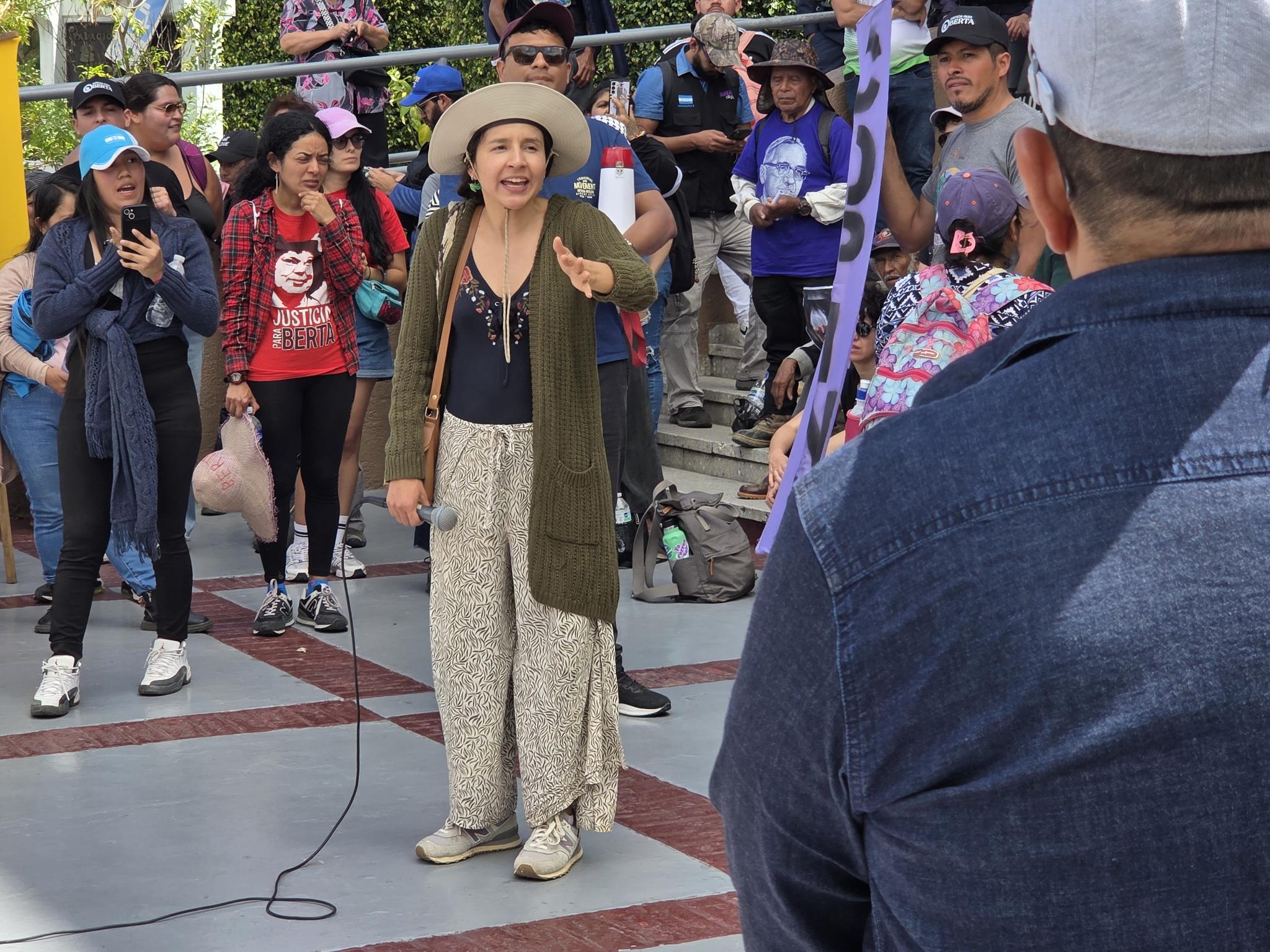
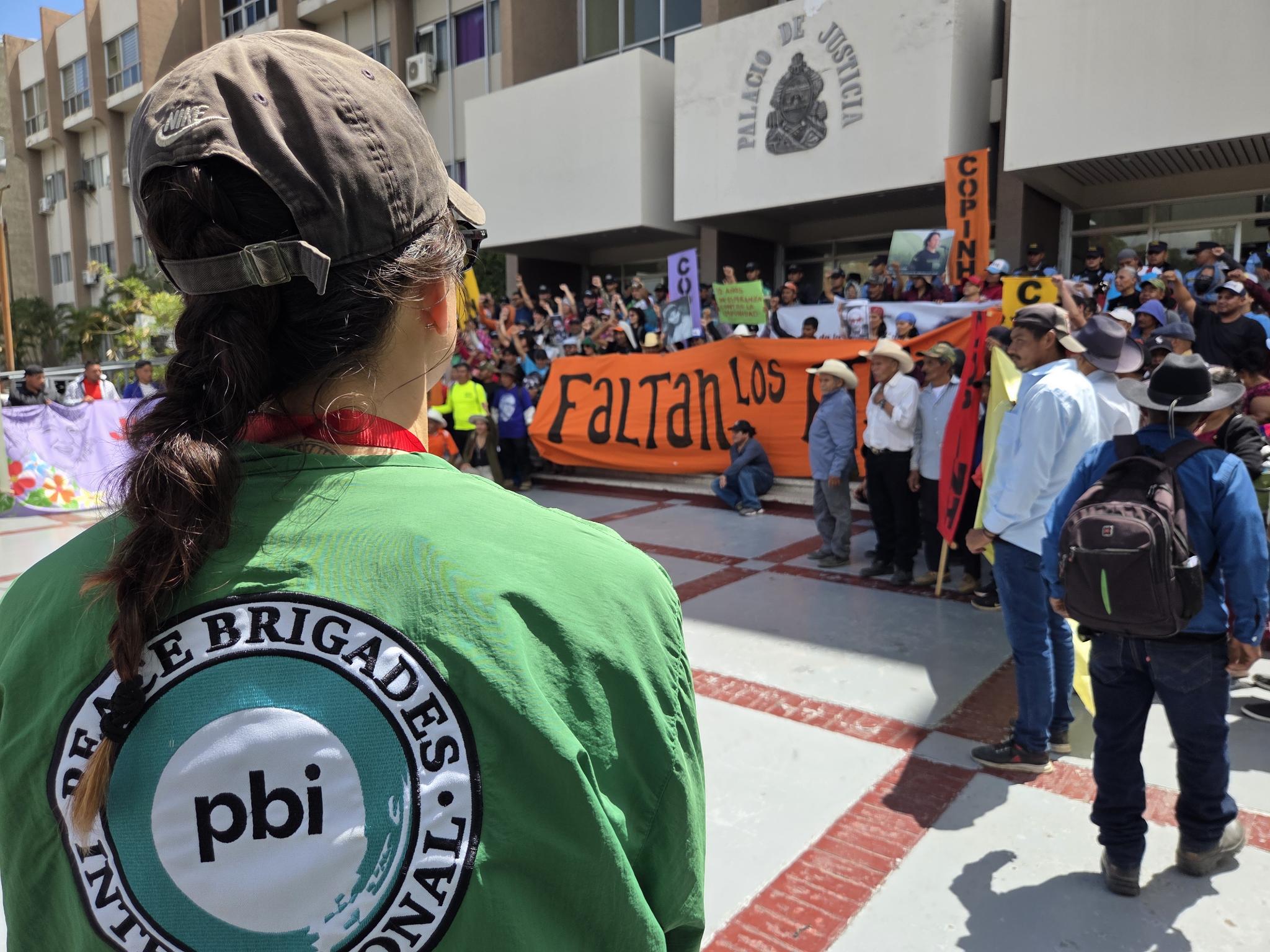
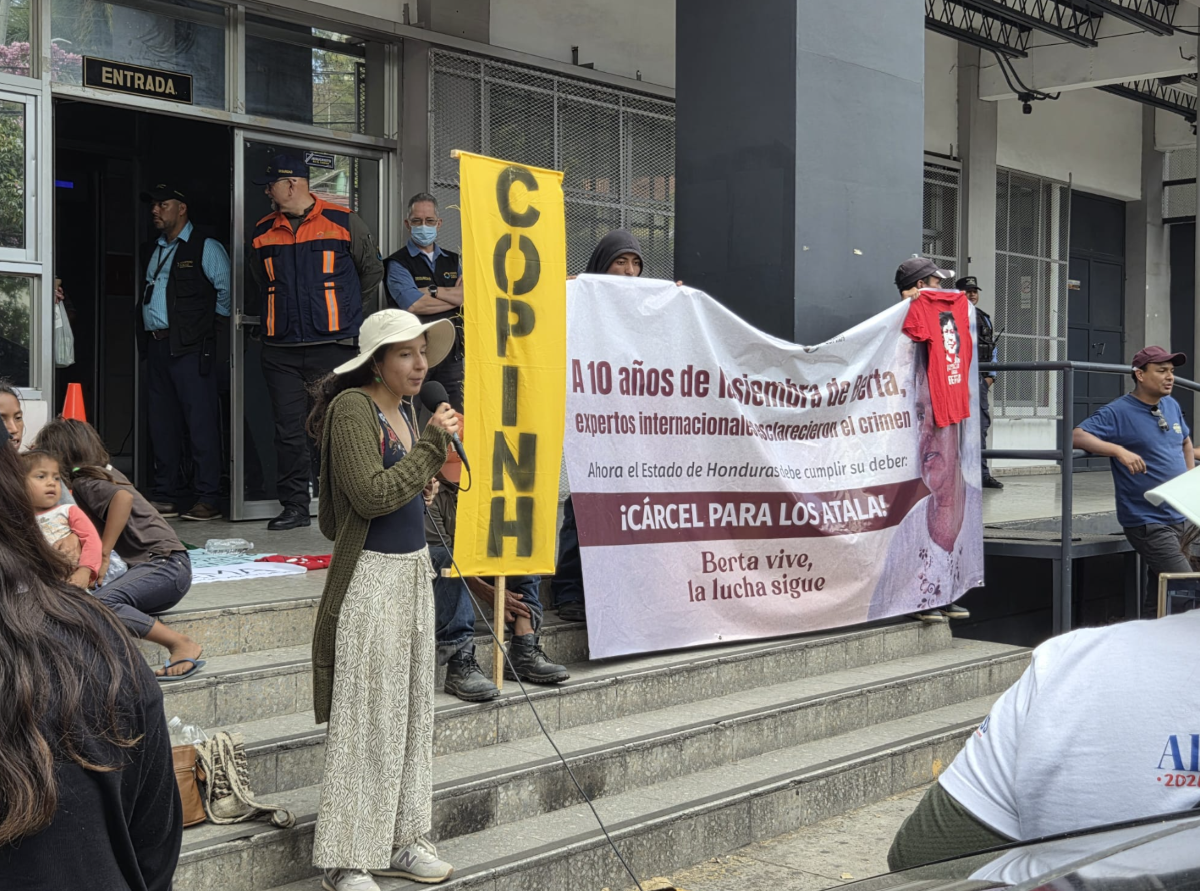
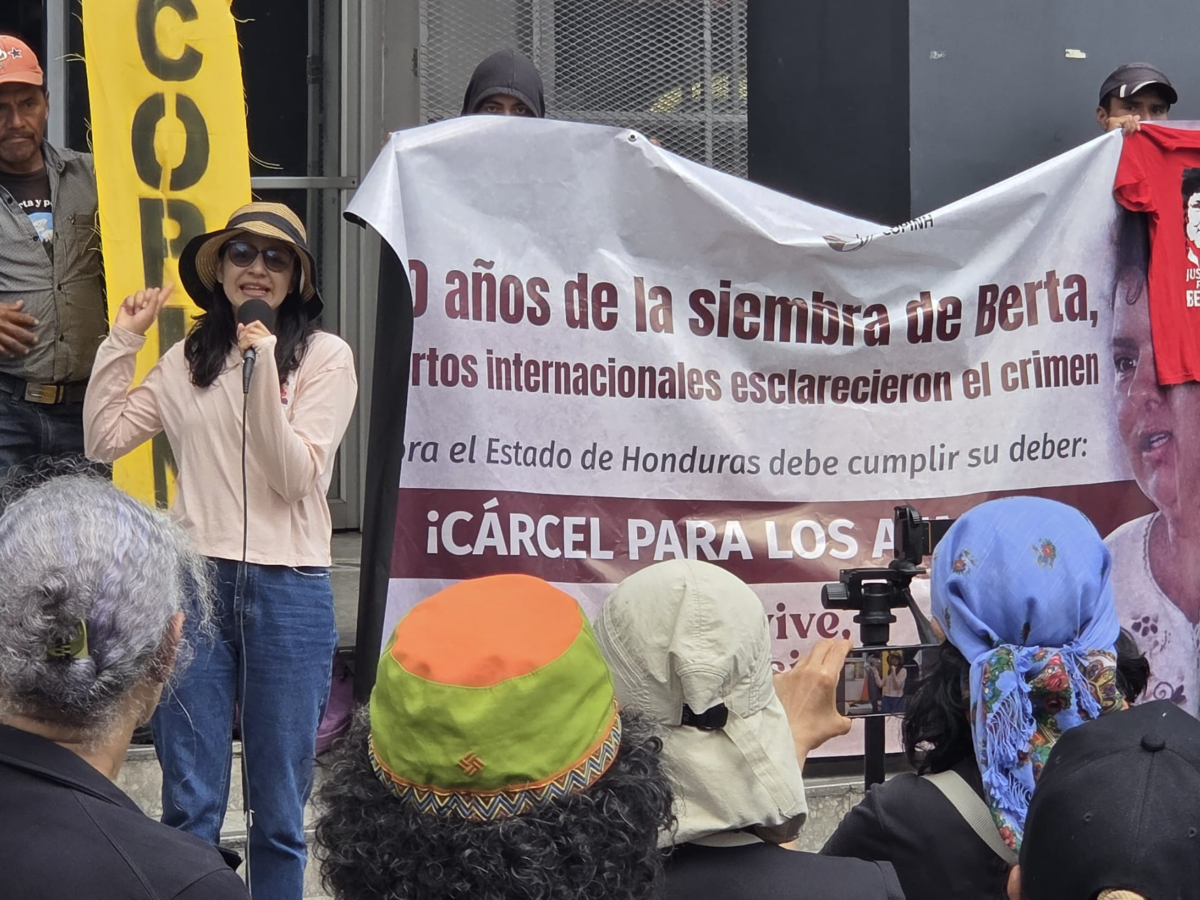
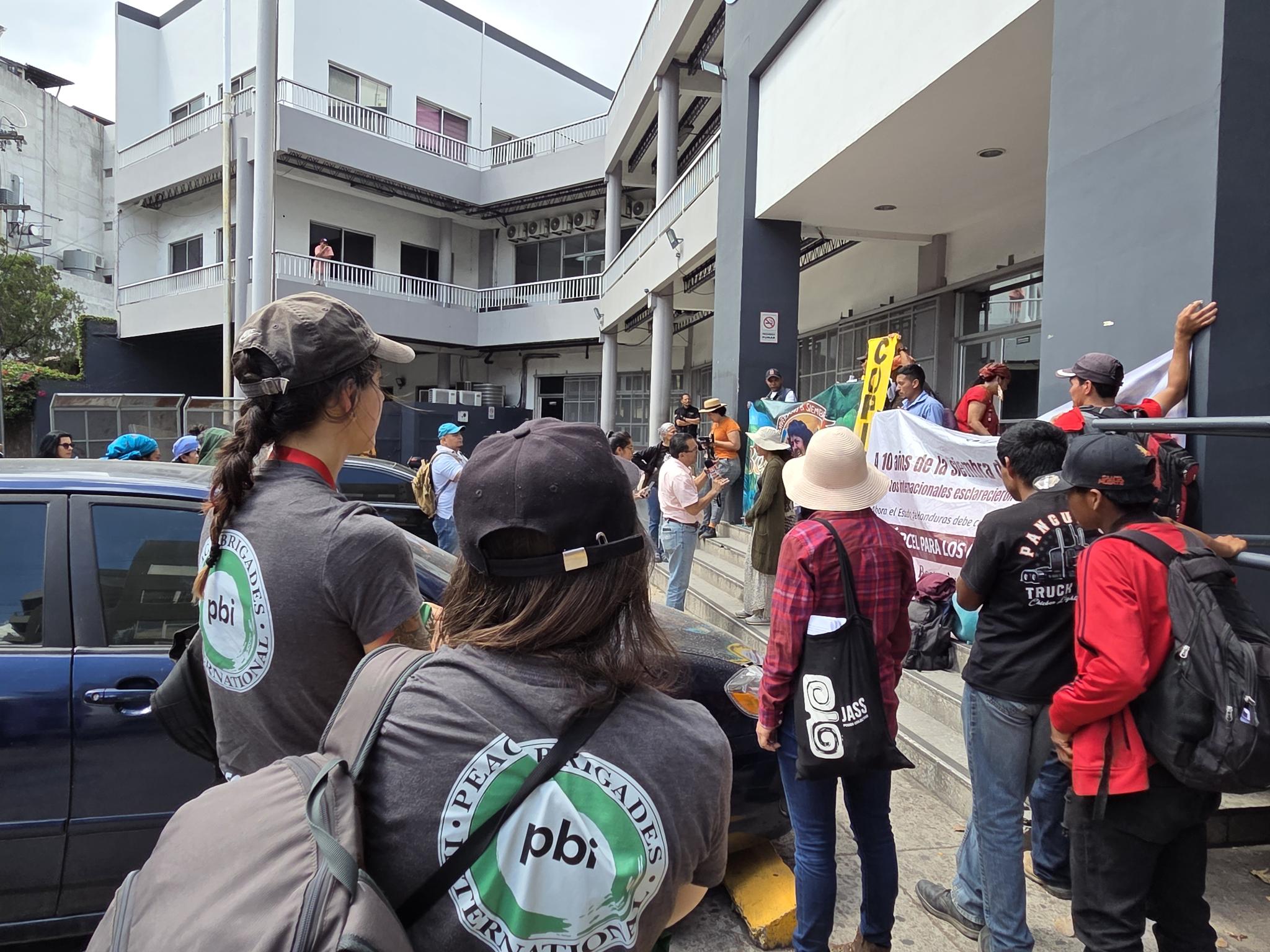
PBI-Honduras accompanies activities on the one-year anniversary of the murder of environmental defender Juan Antonio López

On September 14, PBI-Honduras posted on social media:

“Today we join the thousands of voices from all corners of Honduras and the world calling for justice not only for Juan López but also for the forests and rivers he defended. Juan’s legacy lives on stronger than ever.”

Social media photos: “On the 365th day since the crime, the National Commission for Integral Ecology, grassroots communities, and the Catholic congregation held the Pilgrimage of Hope and Justice in his memory.”

On that day, Criterio.hn reported: “The socio-environmental defender and councillor of Tocoa, Juan Antonio López, was murdered a year ago and those who financed the crime continue to enjoy impunity. Ironically, the mining project that López denounced so much continues to apply for mining concession permits and environmental licenses, without the authorities putting a stop to the illegal project.”

That article quotes Christopher Castillo of the Alternative for Community and Environmental Reclamation of Honduras (ARCAH) who says: “Juan was a person who was constantly in communication with us, because his bet was precisely to permanently articulate with the peoples, he had a great function of bringing together. His voice was highly respected. …Apart from being an honest person, he was a supportive person, because solidarity is sharing information, sharing thought, sharing analysis.”

The article also quotes Edy Tábora, a lawyer of the Justice for the Peoples Law Firm, who says: “We believe that at the level of evidence, there are sufficient elements so that a conviction against the material authors can be guaranteed in trial.” Tabora says the intellectual authors of the crime must also be held accountable.

Social media photo: “One year has passed since the murder of environmentalist Juan López; the Catholic Church and various organizations ask the prosecutor to capture the intellectual authors.”

Graciela Martínez and Adeline Neau in Amnesty International’s Central America team further explain in El Pais: “The alleged perpetrator of the shooting and two alleged accomplices, already formally charged, are in pretrial detention awaiting trial. However, those who may have ordered his murder have not yet been held accountable.”

Last month, Contra Corriente reported: “Six months [after the murder of Juan Lopez], the media outlet Infobae published that Adán Fúnez was pointed out as the mastermind of the crime, bringing to light that they had seized a video from a security camera in which the mayor could be seen talking with one of the hitmen hours before killing Juan. The Public Prosecutor’s Office has refused to give information about its investigations. Mayor Adán Fúnez is still not wanted and has not been expelled from the Libre Party, as is Carlos Zelaya, brother-in-law of the president of Honduras.”

Accompaniment

In their “Roots of Resistance” report released this week, Global Witness documents that five defenders were killed and one person was disappeared in Honduras in 2024. They further note: “One of the killings was of renowned anti-mining activist, Juan López, who was working to protect the Guapinol and San Pedro rivers  which serve water to hundreds of people.”

Amnesty International has also explained: “Juan López was the coordinator of the CMDBCPT, an organization comprised by dozens of communities, religious groups and local environmental organisations from the municipality of Tocoa who since 2015 have been peacefully challenging the legality of the iron mining concessions granted to Inversiones Los Pinares (ILP), arguing that they have adversely affected the water quality of the Guapinol and San Pedro rivers, as well as the protected Montaña de Botaderos Carlos Escaleras Mejía National Park.”

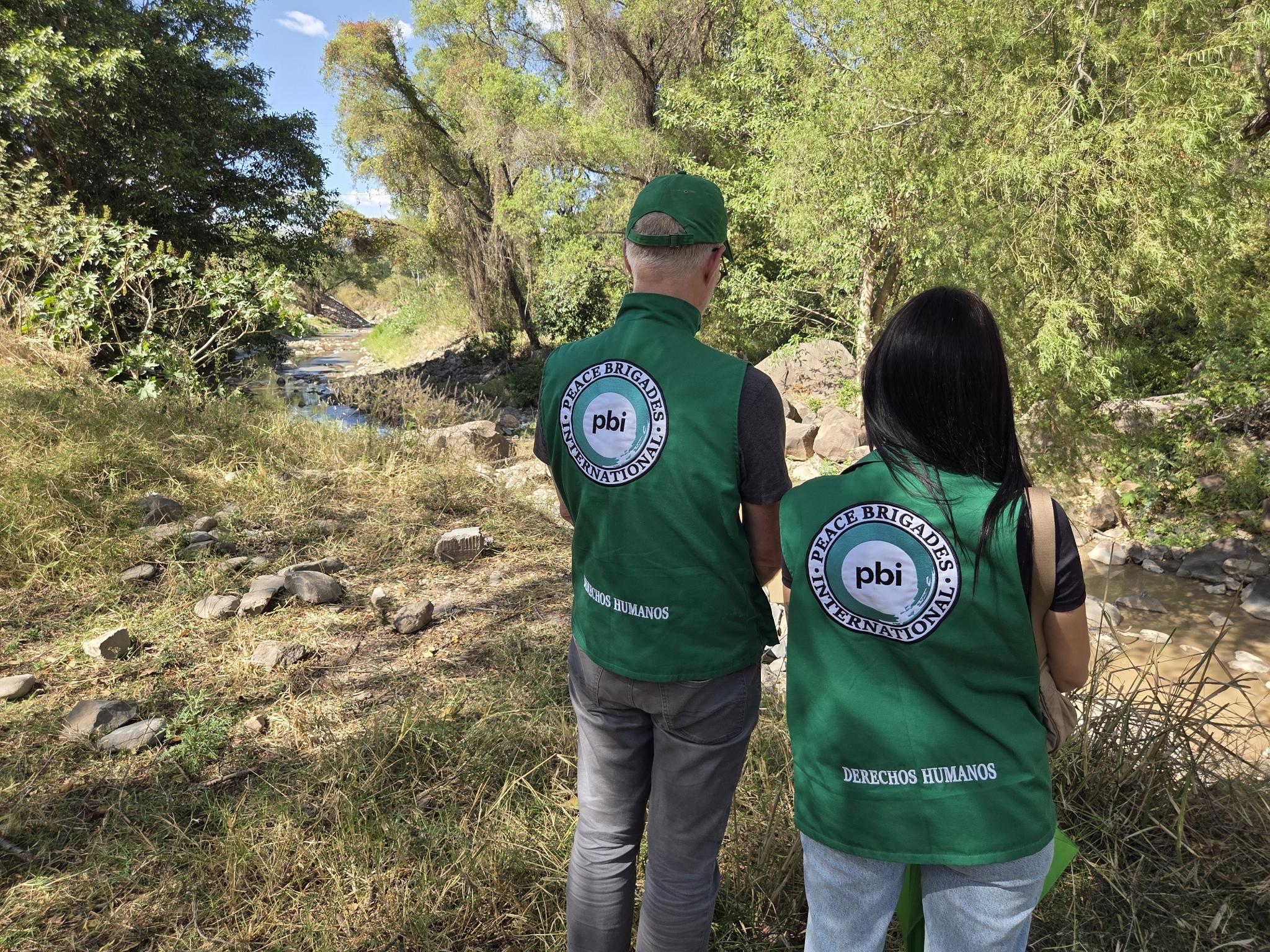
Peace Brigades International has accompanied Municipal Committee for the Defence of Common and Public Goods of Tocoa (CMDBCPT) processes and Guapinol River defenders since January 2019.

We continue to follow this.

Further reading: Murder of Juan López: the State ignored 25 complaints against Los Pinares and the mayor’s office of Tocoa (Criterio.hn, September 17, 2025).

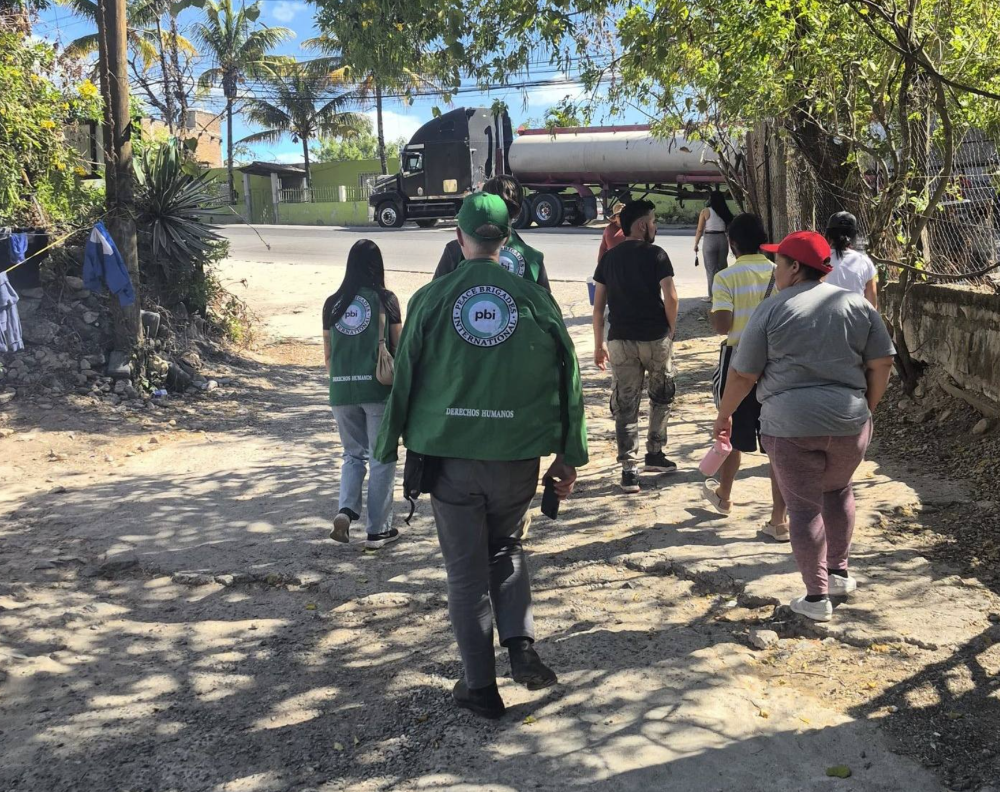
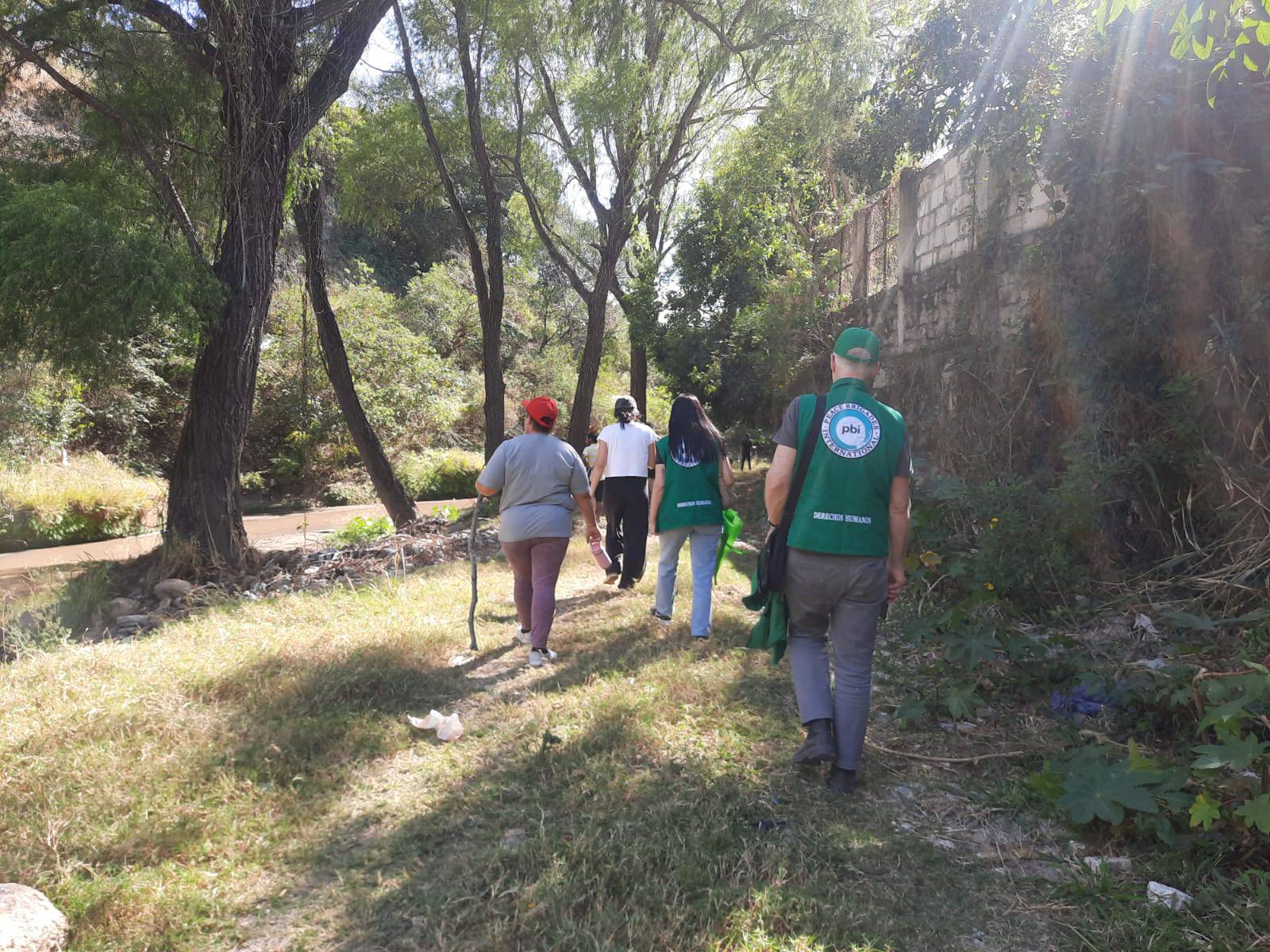
Photo: PBI-Canada visited Tocoa and Guapinol on October 29-30, 2024.

Colombian environmental defender Jani Silva receives Hessian Peace Prize in Germany for protecting the Amazon Pearl campesina reserve

Photo: Jani Silva receives peace prize at the Hessian State Parliament. Photo by Stefan Krutsch.

Colombian environmental defender Jani Silva has been awarded the Hessian Peace Prize in the Hesse state parliament in the city of Wiesbaden (which is located about 30 kilometres west of the city of Frankfurt).

The parliament’s media release highlights: “For her commitment [to social justice, environmental protection and social cohesion in the Putumayo Amazon region for more than 40 years, 62-year-old], Silva has been exposed to death threats from armed militias for years, who are trying to kill her and her family.”

Stern now reports: “The German ambassador to Colombia, Martina Klumpp, said in her laudation: ‘Jani Silva shows children and young people on the ground how important the protection of life is and how short-lived and dangerous the path of supposedly easy money as a member of armed groups is.’”

The article continues: “The diplomat referred to more than 100 local leaders who have been murdered in Colombia this year alone: ‘Those who defend human rights are under enormous pressure in Colombia: For years, it has been considered the most dangerous country in the world for environmental activists.’”

And the Spanish news agency EFE notes: “The Colombian activist for the environment and peace has made a decisive contribution to the creation of a protected area in the Amazon that allows small farmers access to agricultural land and offers them a perspective away from the war on drugs and violence, says the Parliament of the federal state of Hesse. where the ceremony took place, in a statement.”

That article also explains: “Silva, 62, president of Adispa, the Perla Amazónica Association for Integral Sustainable Development, an organization based in the La Perla Amazónica reserve, inhabited by small farmers, expressed her gratitude for the award and said that the granting of this award, endowed with 25,000 euros, is a recognition of all women in her region and even throughout Colombia.”

“Caught in a battleground”

In an essay published in the Global Witness “Roots of Resistance” report this week, Silva comments: “Over the years, we’ve found ourselves caught in a battleground where control over land and resources is the goal. I have long resisted the intrusion of mining and oil companies, as well as armed groups seeking to control our territories and drug corridors in the southwest of Colombia.”

Silva further notes: “ Foreign fossil fuel giants – like Amerisur Exploración Colombia Limitada, a Colombian subsidiary of UK-headquartered Amerisur Resources – have sought to drill oil from the reserve. In 2009, Amerisur Exploración Colombia Limitada secured a license to exploit 55 oil wells in our territory, before selling it to GeoPark Limited – a Chilean oil company.”

The Royal Bank of Canada is among the institutional investors in GeoPark Limited (with about $667,000. in shares in August 2025).

Last year, Silva also explained: “The threats we confront as an organization that defends our territory and environmental rights are due to the denunciations we make against pollution and exploitation in our territory. We can’t deny the evident complicity between armed groups and oil companies, through the company’s sub-contractors. The threats continue against peasant, Afro and Indigenous leaders that share the objective of defending their territory.”

After learning of an assassination plot against her, Silva was forced to leave her community in July 2021.

She says: “Being away from my community has made everything harder. Challenging corporations and illicit actors is hard enough. Having to do that far from my community while consistently watching my back is emotionally draining. I miss the tranquillity, the fresh air, being surrounded by nature. I also miss my neighbours – people who are attached to the land, as I am. They have also been harassed and threatened.”

Photo: Silva discusses the risks of travelling back to her home in the Perla Amazónica Peasant Reserve Zone after receiving threats from illegal armed groups operating in the Putumayo region. Photo by Erika Piñeros / Global Witness.

Accompaniment

Jani is accompanied by the Inter-Church Justice and Peace Commission, which in turn has been accompanied by Peace Brigades International since 1994.

Photo: Jani Silva with Hereditary Chief Na’Moks and Sleydo’ on Wet’suwet’en territory in northern British Columbia, June 2025.

Global Witness report: 146 land and environmental defenders murdered or disappeared in 2024

The findings of the just-released Global Witness “Roots of Resistance” report include:

“In 2024, 146 land and environmental defenders around the world were murdered or disappeared.”

“On average, around three people were killed  or disappeared each week throughout 2024. This brings the total figure to 2,253 since we started reporting on attacks in 2012.”

“Indigenous Peoples and small scale farmers are the worst affected, with 45 defenders killed or disappeared in each of these categories in 2024.”

In countries where Peace Brigades International accompanies land and environmental defenders, 102 were killed or disappeared in 2024. That represents 69.8 per cent of the global total last year.

The categories of those killed.

COLOMBIA: “Colombia remains one of the world’s deadliest countries for land and environmental defenders, with a third of all lethal attacks globally documented happening here in 2024. We recorded 48 killings across the country.”

For more, read the section on Jani Silva in Preventing attacks Living under state protection in Colombia (pages 54-63).

GUATEMALA: “Guatemala experienced a sharp increase in the number of killings, jumping from four documented cases in 2023 to 20 in 2024. This figure excludes at least three other documented attacks against land and environmental defenders, which we verified but omitted from our dataset due to fear of future reprisals against the victims’ families.”

MEXICO: “Reprisals continued in Mexico, where we documented 19 cases in 2024 – 18 killings and one disappearance.”

HONDURAS: “In Honduras we recorded six cases in 2024, compared to 18 in 2023. Five defenders were killed, while one person disappeared. …One of the killings was of renowned anti-mining activist, Juan López, who was working to protect the Guapinol and San Pedro rivers  which serve water to hundreds of people.”

The report also documents killings in INDONESIA, NICARAGUA and numerous other countries.

Deadliest sectors

“Once again, mining emerged as the deadliest sector, with at least 29 related cases in 2024. Next came logging with eight cases and agribusiness with four. Road-building and infrastructure projects, poaching and hydropower have also driven deadly attacks in 2024.”

Perpetrators of violence against defenders

“Just under a third of all cases we recorded last year were linked to organised crime. …States are also active perpetrators of  violence, with armed forces, police and other government entities linked to 17 killings. Investigating reprisals against defenders is further complicated by the frequent connections between organised crime, government and corporate interests.”

Those responsible for the killing of defenders (2012 to 2024).

United Nations COP30 climate conference, November 10 to 21

“The protection and meaningful participation of land and environmental defenders at COP30 and beyond is an essential element of the fight against climate change. It must become a core principle of the Parties to the UN Framework Convention on Climate Change (UNFCCC) and the Convention on Biological Diversity process.”

“UNFCCC parties and the secretariat must commit to a systemic, long-term approach that prioritises the recognition, protection and participation of land and environmental defenders.”

Among its recommendations, Global Witness says UNFCCC Parties should:

“Champion defender-focused language in COP outcomes, securing explicit commitments to defender protection and participation. Formally and publicly recognise the role of land and environmental defenders in advancing climate solutions and justice and acknowledge the violence they face globally.”

To read the full report, go to Roots of resistance: Documenting the global struggles of defenders protecting land and environmental rights (September 17, 2025).

PBI-Colombia joins with Nomadesc in mourning the murder of 17-year-old social leader Alan Josué Valencia Cuero

Photo: Alan Josué Valencia Cuero.

The Association for Social Research and Action (Nomadesc) has posted on social media:

“In common union for life, with pain and deep determination, the people of Buenaventura cry out, ‘Alan Lives’. From the seed that is sown today springs the hope of a free and peaceful Buenaventura.

Alan, in the arms of his ancestors, will continue to plant the resilient seed of the treasured medicinal plant Siempre Viva, which borders his beloved territory of Bahia Malaga.”

Infobae reports: “The community in Buenaventura (Valle del Cauca) is dismayed and outraged by the murder of Alan Josué Valencia Cuero, a 17-year-old boy. …He lost his life when he was passing through the Los Pinos neighborhood on Thursday, September 11, when he was the victim of an armed attack.”

“The student was on his way home when, according to accounts provided by the authorities, he was shot several times from a moving vehicle.”

That article by Infobae further notes: “Alan Josué Valencia Cuero, originally from La Plata, Bahía Málaga, had moved to Buenaventura to begin his university training in Systems Engineering at the Universidad del Pacífico.”

And it provides this important context: “The reactions following the murder of Alan Valencia Cuero have highlighted the seriousness of the violence faced by youth in some regions of Colombia and have revealed the urgency of implementing effective measures to protect the lives of young social leaders. …The murder of Valencia Cuero was the 117th case of social leaders murdered in Colombia so far in 2025.”

Image by Indepaz.

El Tiempo also explains: “Everything points to gangs being involved in the murder of Alan Josué Valencia Cuero.” This newspaper article also notes the complex web of armed groups in the area could include “FARC dissidents of the ‘Jaime Martínez’ front [as well as] the ‘Gulf clan’, the ‘Second Marquetalia’ and the ELN. These groups have established feared alliances with ‘the ‘Shottas’ and ‘the Espartanos’…”

And El Espectador reports: “[The Institute for Development and Peace Studies] recalled the alert of the Ombudsman’s Office about the extreme risk to which social leaders are exposed in several areas of the country, including Buenaventura.”

PBI-Colombia accompanies Bahia Málaga through Nomadesc.

PBI-Canada recalls visiting Buenaventura and Alan’s community of Bahia Malaga with a delegation of Canadian union activists in July 2022.

Peace Brigades International joins with Nomadesc in mourning the loss of Alan Josué Valencia Cuero and many other social leaders in Colombia.

Research on the involvement of Vancouver-based Radius Gold in the La Puya mine in Guatemala

Peace Brigades International began accompanying the Peaceful Resistance of La Puya in November 2012.

The story of the Peaceful Resistance begins with the Vancouver, Canada-based mining company Radius Gold securing an exploitation licence from the Guatemalan Ministry of Energy and Mines in 2011.

Prensa Comunitaria has explained: “In 2011, the MEM [Ministry of Energy and Mines] issued an exploitation license to the entity Exploraciones Mineras de Guatemala [the Guatemalan subsidiary of Vancouver-based Radius Gold], called Progreso VII Derivada, for the exploitation of gold and silver in an area located between the municipalities of San José del Golfo and San Pedro Ayampuc, without consulting the communities. There are Kaqchikel and Xinka indigenous people in the area, who opposed the project from the beginning.”

On March 2, 2012, residents from San José del Golfo and San Pedro Ayampuc – an area known as La Puya, about 30 kilometres north of Guatemala City – set up a 24-hour a day blockade at the entrance of the Radius Gold Inc. owned El Tambor mine also known as the Progreso VII Derivada mine.

By August 2012, the Canadian company sold El Tambor to US-based Kappes, Cassiday & Associates, but retained an economic interest in the mine (including quarterly royalty payments on the gold production from the mine).

More specifically, Radius Gold says of this sale: “KCA agreed to repay approximately US$400,000 owing to the Company (US$100,000 paid upon signing and approximately US$300,000 to be paid once KCA has commenced shipment of gold produced from the property). Also upon commercial production, KCA agreed to make quarterly payments to the Company based on the then price of gold and the number of ounces produced from the property.”

On Sunday May 7, 2023, PBI-Canada and PBI-Guatemala visited with Doña Licha and the Peaceful Resistance of La Puya at a roadside site that it has maintained at the entrance to the “El Tambor” Progreso VII Derivada gold mine.

We continue to follow this struggle.

The CSPP remembers Colombian union leader Luciano Romero Molina on the 20th anniversary of his murder

Peace Brigades International (PBI) remembers union leader Luciano Romero Molina on the 20th anniversary of his murder.

The Committee for Solidarity with Political Prisoners (CSPP), an organization accompanied by PBI, has posted on Instagram:

“Luciano Romero Molina was a union leader, human rights defender and member of the CSPP. As director of the CUT [Central Union of Workers] and leader of SINALTRAINAL [the National Union of Food Workers], he dedicated his life to defending the workers of the agri-food sector and to denounce the abuses of multinationals in the Cesar.

In September 2005, he was tortured and murdered in Valledupar, in a crime that evidenced the alliance between paramilitary groups and state agents to silence the voice of unionism.

His case is documented in reports from the CSPP, ASOEXCICNES and the CUT, and recognized by the JEP [Special Jurisdiction for Peace] in macro-case 08. However, nearly 20 years after his murder, there are no state and business officials sanctioned.”

Their post on September 12 adds: “Today we continue to demand truth, justice and complete reparation. Because defending human rights can’t cost a life. Because unionism in Colombia deserves to live. Because impunity can’t have the final word.”
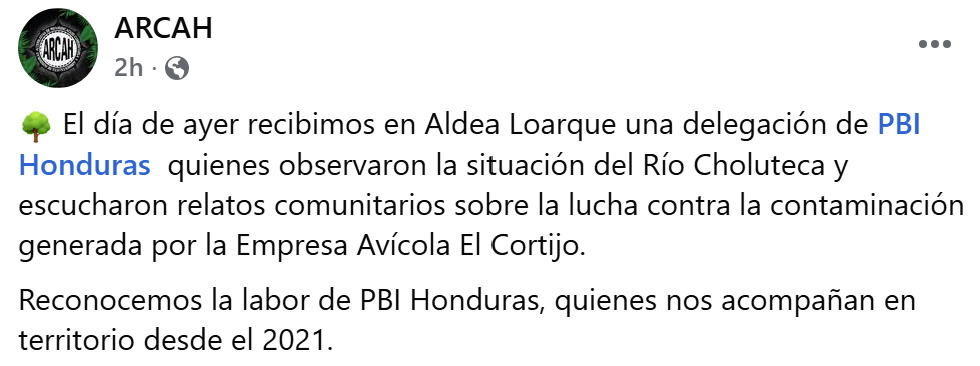
Last year, the Central Union of Workers remembered: “On September 11, 2005, his body was found tied hand and foot and with serious signs of having been tortured, since about 40 wounds were inflicted on him with sharp weapons.”

They further noted: “Due to the death threats to which he had been subjected, he had precautionary measures and at the end of 2004, he was welcomed by the Asturian Programme for Temporary Relocation (PAV) focuses on human rights defenders (PAV-DDHH), leaving the country for a prudent time with the same purpose of protecting his life.”

In June 2015, the PBI accompanied José Alvear Restrepo Lawyers’ Collective (CAJAR) commented: “Luciano’s death is a crime against humanity because it is part of a systematic and unpunished persecution that aims to exterminate Colombian trade unionism.”

Those threats continue against union members in Colombia.
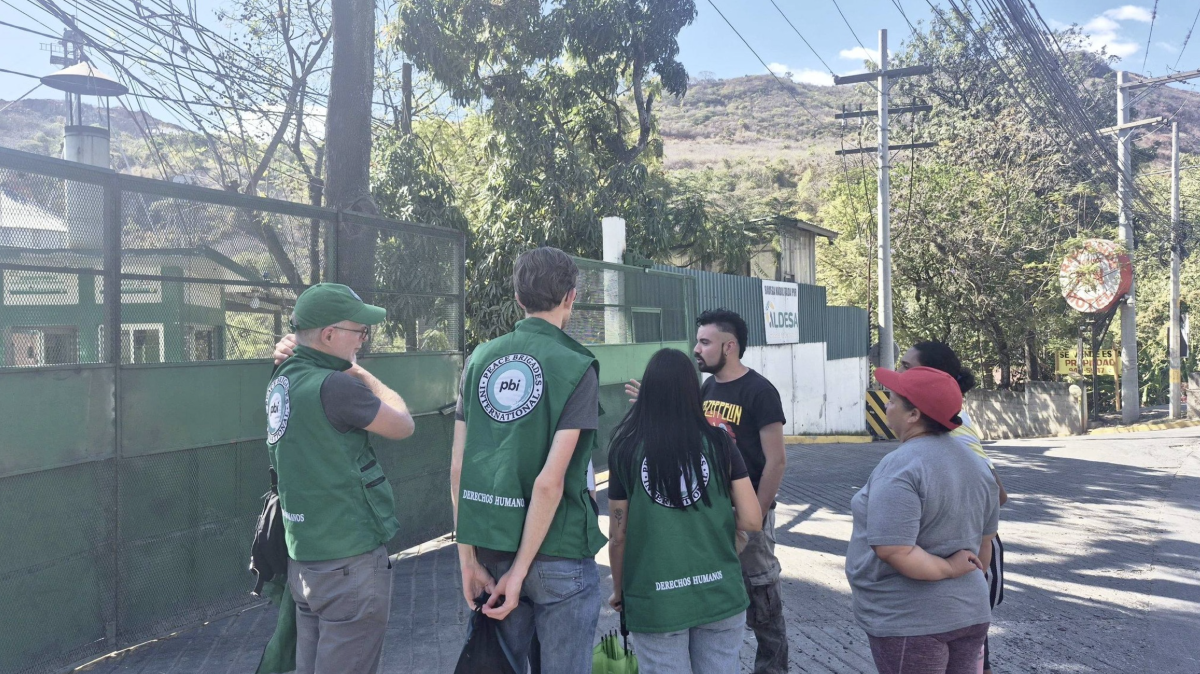
This past February, the National Union of Food  Workers (Sinaltrainal) demanded: “End of harassment and threats: they denounce that the members of the union have received death threats, and demand guarantees for their safety.”

On February 27, 2025, Periferia reported: “According to reports from the National Trade Union School, delivered to the Truth Commission in 2020, 3,240 trade unionists were killed in Colombia between 1971 and 2018. Sinaltrainal counts 39 members who were victims of the homicidal crusade, the first in 1989 and the most recent in 2018.”

That article in Periferia further noted: “An investigation is still open against five Nestlé executives into the murders committed by paramilitary groups against two Sinaltrainal executives: Luciano Enrique Romero in 2005, and Víctor Eloy Mieles Ospino in 1999; both were declared crimes against humanity.”

We continue to follow this.

The governments of British Columbia and Canada back Ksi Lisims-PRGT fracked gas megaproject despite Indigenous opposition

Photo: Peace Brigades International visited Haida, Gitxsan, Gitanyow and Wet’suwet’en territories in June 2025 and learned about the on-the-ground resistance to extractive megaprojects, including the PRGT pipeline.

The Canadian Press now reports: “The British Columbia and federal governments have announced their support for a massive LNG export facility [the Ksi Lisims LNG terminal project] floating in waters off the province’s northwest, despite opposition from some First Nations and environmentalists.”

The fracked gas to be processed at the LNG terminal is to be supplied by the Prince Rupert Gas Transmission (PRGT) pipeline. The British Columbia government approved the construction of this 900-kilometre pipeline in June 2025.

In July 2025, the Western Standard reported:  “Prime Minister Mark Carney on Sunday [July 6] said the Prince Rupert Gas Transmission (PRGT) pipeline that would transport natural gas from northeastern BC to a proposed LNG facility on Pearse Island near Prince Rupert, BC, is ‘highly, highly likely’.”

CBC News has previously reported: “The [Prince Rupert Gas Transmission] pipeline was first approved in 2014 under the ownership of Calgary-based TC Energy Corp. [but] was purchased by the Nisga’a Nation and [Texas-based] Western LNG in [March] 2024 under their revised proposal for the Ksi Lisims facility.”

Photo: PBI-Colombia accompanied environmental defender Jani Silva and allies on Gitanyow territory in June 2025 receive briefing on the potential impacts of the PRGT pipeline.

Indigenous opposition

The Canadian Press notes that B.C.‘s Environmental Assessment Office acknowledges that the Lax Kw’alaams, Metlakatla and Kitsumkalum have not granted their consent for the LNG terminal. The Gitxalaa Nation did not provide a notice on consent. And the Haida Nation has stated “they do not consent to Ksi Lisims LNG or the associated vessel traffic that would transit Haida Territorial Waters.”

CBC News has also previously reported: “The construction [of the PRGT pipeline has] also faced protests led by Gitanyow hereditary chiefs, who blockaded a forest service road [beginning August 2024] in an attempt to prevent construction workers from passing through their territory.”

And the Victoria-based community organization Dogwood now highlights that those resisting this megaproject on the ground also include:

Concerns about RCMP violence against land defenders

Tara Marsden, Wilp sustainability director for Gitanyow Hereditary Chiefs, has previously commented: “Our learning is that consent only works when we say yes, if we say no, even if we say no with science behind us, and our knowledge and our laws behind us, then we will be met with force from the C-IRG, from militarized invasion and occupation and intimidation and harassment.”

It is in this context that we also highlight a recent article titled Controversial B.C. RCMP unit to police opposition to fast-tracked resource projects by Shiri Pasternak and Tia Dafnos (The Breach, August 21, 2025).

Pasternak and Dafnos write: “A RCMP [Royal Canadian Mounted Police] unit criticized for violent and unlawful conduct will be involved in enforcing new laws in British Columbia that will fast-track resource and infrastructure projects…”

They explain: “Newly obtained documents show the RCMP’s Community-Industry Resource Group (C-IRG) will work with secretive provincial committees that monitor and respond to opposition to major projects…”

U.S. ownership

The Canadian Press notes: “The project is being developed in partnership between the Nisga’a Nation, Rockies LNG Limited Partnership and Western LNG, although documents show the project’s assets will be constructed, owned and operated by wholly owned subsidiaries of Western LNG, based in Houston, Texas.”

CBC News has also reported: “Environmentalists have cited a number of reasons why they are opposed to the project — including that Western LNG, one of the project’s proponents based in Texas, have financial backing from Blackstone Inc. Blackstone is a major American asset manager whose CEO publicly endorsed U.S. President Donald Trump and contributed to his election campaign.”

And Dogwood notes: “[British Columbia’s Environment Minister Tamara Davidson and Energy Minister Adrian Dix] know this gas export megaproject is fully owned and controlled by a company in Texas. They know it’s Wall Street investors driving this risky and speculative project: [New York City-based] Blackstone and Apollo Global Management. They know that Blackstone’s CEO is one of Donald Trump’s top 10 donors. They know Apollo’s former CEO, Leon Black, paid Jeffrey Epstein $170 million.”

Timeline

Texas-based Western LNG says the LNG terminal will be operational by late 2028 or 2029. That presumably means a 3-4 year window for the construction of both the Ksi Lisims LNG terminal and the PRGT pipeline.

This approval comes just a few weeks before Indigenous land defenders will be sentenced in a B.C. court on October 15-17.

It also comes in the lead-up to the United Nations COP30 climate summit that will take place from November 10 to 21 in Brazil. Last week, Prime Minister Carney declined to endorse Canada’s greenhouse gas targets under the Paris Agreement stating his government is focused on “results, not objectives”.

We continue to follow this.

Media reports highlight the major projects that Carney and Sheinbaum are likely to discuss on September 18-19

Photo: At the G7 summit on June 17, 2025, in Kananaskis, Alberta, Prime Minister Carney and President Sheinbaum “agreed to deepen bilateral collaboration at the ministerial level, with a focus on trade, energy, agriculture, and security.”

Canadian prime minister Mark Carney and Mexican president Claudia Sheinbaum will be meeting on September 18-19 in Mexico City.

Media reports highlight that Carney and Sheinbaum could discuss:

-the second-phase expansion of the LNG Canada export terminal (that would be supplied with fracked gas via the Coastal GasLink pipeline built without consent on Wet’suwet’en territory; over a three-year period, 74 people were arrested and detained, included among others, legal observers and members of the media),

-the TC Energy Southeast Gateway pipeline (opposed by campesina, Indigenous peoples and environmental groups, including Greenpeace Mexico),

-the Interoceanic Corridor of the Isthmus of Tehuantepec (that has been linked to 226 attacks against defenders and the militarization of Indigenous territory),

-increased agricultural exports to Canada (avocado production has been linked to drug cartels and deforestation),

-Mexico importing oil from the Trans Mountain pipeline (built without consent on Secwepemc territory in northern British Columbia),

-an expanded CPKC rail network (that could possibly involve the controversial Mayan Train and Interoceanic Corridor megaprojects),

-mining (Mexico reportedly had 58 cases of mining conflicts in 2021, of which 29 were related to Canadian mining projects, according to the Observatory of Mining Conflicts of Latin America),

-a range of other issues.

Land defenders, journalists killed in Mexico

More than 203 land and environmental defenders have been killed in Mexico between 2012 and 2023. Global Witness will be releasing on Wednesday, the day before Carney departs for Mexico City, their latest annual report noting the number of defenders killed in Mexico.

According to Article 19, 163 journalists have been murdered in Mexico since 2000, and another 32 are missing. In addition to murders and disappearances, journalists are victims of verbal attacks, espionage and bogus lawsuits.

The Global Initiative against Transnational Organized Crime comments: “Article 19 found that 42 per cent of the attacks are committed by government officials, followed by criminal actors and private entities, but it is the state itself that poses the greatest threat to journalists.”  

Issues to be discussed by Carney and Sheinbaum

The Globe and Mail now reports: “Mark Carney heads to Mexico this Thursday [September 18 for a two-day trip where he will meet] with Mexican President Claudia Sheinbaum at the National Palace in Mexico City…”

The article continues:

“Business Council of Canada chief executive Goldy Hyder [says] natural gas exports are one way Canada and Mexico could deepen two-way trade through the second-phase expansion at the LNG Canada export terminal.”

“Canadian companies such as TC Energy Corp. and Bombardier Inc. have a significant presence in Mexico. TC Energy built the Southeast Gateway pipeline, a US$3.9-billion, 715-kilometre offshore pipeline that will deliver natural gas to power plants in Mexico’s southeast region. Bombardier has significant manufacturing operations in Mexico.”

“A Mexican official, speaking on background, said Mexico is eager to attract Canadian investment as it modernizes six of its ports and assembles a new shipping route with its Interoceanic corridor that runs a railway line between the Pacific port of Salina Cruz and the Atlantic port of Coatzacoalcos on the Gulf of Mexico.”

“A second Mexican official, also speaking on background, said Mexico would like to boost agricultural sales to Canada, increase two-way tourism and raise the amount of Canadian business investment in the country. The Globe is not identifying the officials because they were not authorized to discuss the matter publicly.”

Last month, Toronto Star business columnist David Olive commented: “Under Sheinbaum’s six-year ‘Plan México’ industrial strategy, Mexico aims to attract about $100 billion (U.S.) in additional annual FDI [foreign direct investment].”

Olive highlights that Alberta is interested in liquefied natural gas (LNG) exports to Mexico and the refining of Trans Mountain pipeline crude oil into diesel and aviation fuels in Mexico.

Olive suggests that talks could lead to TC Energy building more pipelines like their recently completed Southeast Gateway gas pipeline in southern Mexico, an expanded Canadian Pacific Kansas City (CPKC) railway network in Mexico, and increased Canadian investment in Mexico (the public pension fund Caisse de dépôt et placement du Québec already holds $9 billion worth of Mexican assets).

And when President Sheinbaum met with Prime Minister Carney at the G7 summit in Kananaskis this past June, Mexico News Daily reported she also met with senior executives from companies such as TC Energy, WestJet Airlines, Palliser Furniture, ATCO [that appear to have built workforce housing to enable the construction of the Coastal GasLink fracked gas pipeline on Haisla territory], BRP [manufacturing] and Element Fleet Management, all with established operations in Mexico.”

Joint statement expected on Friday

The Globe and Mail article notes: “Mr. Carney and Ms. Sheinbaum are expected to issue a statement expressing their interest in mutual investment and policy priorities such as energy, mining, mitigating climate change and mobility between the two countries, although this has not been finalized, two sources say.”

Mexican HRDs in Canada

The day after the prime minister returns from Mexico, two human rights defenders from Mexico will arrive in Ottawa to meet with Government of Canada officials, Members of Parliament, and social movement and civil society allies, to raise awareness of the situation of human rights defenders and journalists in Mexico and to find ways to support them.

Both Hugo and Elizabeth are members of the Civil Society Space of Organizations for the Protection of Human Rights Defenders and Journalists (Espacio OSC).

Stay tuned for updates about their visit.