Home Blog Page 418

PBI-Guatemala strengthens telephone contact with human rights defenders during the COVID-19 pandemic

On April 8, the Peace Brigades International-Guatemala Project noted in its most recent Monthly Information Package both the strengthening and continuation of the telephone accompaniment of human rights defenders.

PBI-Guatemala highlights: “The PBI team remains present in the country and has adapted its work according to the restrictions declared by the Guatemalan government in response to the COVID19 pandemic.”

PBI-Guatemala reports:

Due to the elevated number of security incidents the members of the Community Council of the Highlands (CCDA) – Las Verapaces Region, we continue to monitor the situation of its members closely. To do this, we have strengthened telephone contact with their coordinators.

As part of our accompaniment of the Union of Peasant Organizations (UVOC), this month we maintained contact with their members over the telephone, particularly when the farmers are traveling between the lands where they are producing their agricultural products, despite the difficulties in getting their production to the markets due to the paralysis of local transport.

We continued to monitor the worrying security situation of the New Day Chorti Campesino Central Coordinator (CCCND) closely throughout the month due to the numerous security incidents they continue to experience. We maintained regular telephone contact and met with the organization’s coordination as well as with community leaders.

We continue to monitor the situation of the Peaceful Resistance of La Puya (municipalities of San José del Golfo and San Pedro Ayampuc) through weekly calls to the members of the resistance.

Regarding our accompaniment of the Peaceful Resistance of La Laguna, in San Pedro Ayampuc, we monitored their member’s security situation through calls.

We continued to monitor the situation of the Peaceful Resistance Cahabón (Alta Verapaz), through periodic calls to its members. Currently, the Resistance has had to suspend its meetings and activities due to the measures implemented by the Government which included a declaration of a State of public Calamity in response to the COVID-19 crisis.

PBI-Guatemala’s “Monthly Information Package details the activities of PBI during every month including a short summary of relevant events regarding the human rights situation. It explains the accompaniment work realised by the volunteer team and lists all meetings with national authorities and the diplomatic corp.”

The monthly information packages are available on the PBI-Guatemala website here.

PBI-Colombia notes with concern the continued killing of people who defend peace and human rights

On April 3, the Peace Brigades International-Colombia Project signed this joint communique that supports the call for a ceasefire in Colombia.

That statement also highlighted, “With great concern, we note and warn about the continuation of killings against people who defend peace and human rights, including those who signed the Final Peace Agreement with the Farc-Ep.”

The Revolutionary Armed Forces of Colombia—People’s Army (FARC-EP) signed that peace agreement on November 24, 2016.

The Institute for Development and Peace Studies (Indepaz) has reported that between November 24, 2016 and July 20, 2019, 627 social leaders and human rights defenders have been killed and 138 former FARC-EP guerrillas in the process of reincorporation have been assassinated.

Now, Prensa Latina reports, “[On April 2 Indepaz said] that 71 social leaders and/or human rights defenders have been murdered so far in 2020. It also said that 20 ex-guerrillas were killed in the process of returning to civilian life.”

Also, on April 2, the Committee to Protect Journalists (CPJ) responded to “the Colombian National Protection Unit’s announcement that it would be suspending the country’s Risk Assessment and Protection Measures Recommendation Committee, which grants protective measures to journalists, in light of the COVID-19 pandemic.”

CPJ says, “At a moment of increasing deadly violence against human rights defenders and journalists across Colombia, the state cannot use the coronavirus as an excuse to abandon its responsibility to protect its most at-risk citizens.”

In this April 2019 report produced by several groups including PBI-Colombia, the concern had already been expressed that:

“The National Protection Unit (UNP) that is responsible for the implementation of protection measures for social leaders and human rights defenders is failing to respond to the urgent needs of social leaders and human rights defenders. It continues to have a very narrow approach, providing for example simply a bulletproof jacket and a cell phone, rather than more integrated measures designed with beneficiaries’ input, to address collective as well as individual protection needs and with differential approaches based on gender, ethnicity, and geographic location. In addition, the UNP is facing a financial deficit that is sapping its already limited ability to respond.”

The recommendations in that report included:

“Ensure that the National Protection Unit (UNP) implements collective protection measures in consultation with affected communities, with a differentiated ethnic, gender and territorial approach. Ensure in addition an independent audit of the UNP to investigate corruption and inefficient bureaucratic procedures within the UNP and to make recommendations to streamline delivery of protection measures and ensure close consultation with beneficiaries.”

Some of the human rights defenders accompanied by PBI-Colombia have also received protection measures through the National Protection Unit.

For instance, PBI-Colombia has noted, “The Foundation Committee in Solidarity with Political Prisoners (FCSPP) was granted precautionary measures by the IACHR [Inter-American Commission on Human Rights] in 1999, and some of its members have measures from the National Protection Unit (UNP) Protection Program. However, these measures will not be sufficient unless the causes behind the risks to FCSPP’s members are eliminated.”

This recent Peace Brigades International statement highlights:

“In PBI we are constantly evaluating the context and taking measures to guarantee the safety and health of those collaborating with the organisation and the human rights defenders we support. These actions include increasing digital accompaniment and virtual monitoring with the individuals and organisations we support. We will continue to provide protection for those at the frontline throughout these challenging times.”

The full International Civil Society Organizations statement supporting the call for a ceasefire signed by PBI-Colombia can be read here.

PBI-Colombia signs statement in support of United Nations call for a ceasefire

On April 3, the Peace Brigades International-Colombia Project tweeted, “@PBIColombia with organizations from the @espaciopazencol [the Cooperation Space for Peace] has signed a statement supporting the call from @ONUHumanRights [UN Human Rights Colombia] for a ceasefire in Colombia and calling attention to the continued assassinations of and threats towards human rights defenders during the #Covid_19 pandemic.”

On March 23, UN Secretary-General António Guterres called “for an immediate global ceasefire in all corners of the world. …Silence the guns; stop the artillery; end the airstrikes.”

Then on March 28, the Special Representative of the UN Secretary General in Colombia Ruiz Massieu stated, “Today I extend to Colombia the Secretary General’s call for all of us to put life above any type of consideration.”

By March 30, the BBC reported, “The left-wing National Liberation Army (ELN) rebel group in Colombia has declared a unilateral ceasefire for a month starting on 1 April.”

That same day the website for the Office of the United Nations High Commissioner for Human Rights in Colombia posted, “The Secretary-General welcomes the announcement by the National Liberation Army (ELN) of a one-month unilateral ceasefire starting April 1 to facilitate the response to the COVID pandemic- 19 in Colombia.”

That statement adds, “He hopes that this gesture, following his global call for a ceasefire, can bring relief to vulnerable communities and groups in Colombia’s conflict-affected regions, and help authorities focus on fighting the pandemic. The Secretary-General calls on other armed groups to do the same.”

The civil society statement signed by PBI-Colombia and issued on April 3 highlights, “We call on the Colombian state to take all preventive measures to protect the lives of social leaders, people who reintegrated, people deprived of their liberty, and in general those who live in areas impacted by violence and poverty.”

The statement can also be read in full on the PBI-Colombia website here.

PBI-Honduras accompanied COPINH issues alert about the possible release of the killers of Berta Cáceres

Alert! The killers of Berta Cáceres would be released amid the COVID19 crisis

On April 7, the Peace Brigades International-Honduras Project posted, “Copinh Intibucá warns that there is a possibility that two of the people convicted of the murder of Berta Cáceres will be released from prison in the framework of the #coronavirus health emergency.”

“They are Sergio Rodríguez Orellana and Douglas Bustillo, workers of the Atala Zablah family and sentenced to 30 years in prison for the murder.”

PBI-Honduras adds, “COPINH also warns of a possible release of David Castillo, one of the intellectual authors of the crime.”

The Guardian has reported, “In November 2018, the court ruled the murder was ordered by executives of the Agua Zarca dam company, Desa, because of delays and financial losses linked to protests led by Cáceres.”

That article adds, “Sergio Ramón Rodríguez, the communities and environment manager for Desa, and Douglas Geovanny Bustillo, a former Desa security chief and ex-US trained army lieutenant, were given 30 years and six months for their participation in the murder. …David Roberto Castillo, a US-trained former military intelligence officer and Desa’s president, has been indicted as an “intellectual author” of her murder.”

The COPINH alert says: “COPINH strongly denounces that the authorities of the State of Honduras and the National Penitentiary Institute led by the Honduran army intend to release these convicted murderers taking advantage of the health crisis the country is going through.”

COPINH demands that the authorities in charge clarify this situation.

Their full ALERT in Spanish and English can be read here.

The Peace Brigades International-Honduras Project began accompanying the Civic Council of Popular and Indigenous Organizations of Honduras (COPINH) in May 2016. Berta Cáceres, the co-founder and coordinator of COPINH, was killed in March 2016.

Mexican journalist María Elena Ferral murdered, PBI-Mexico calls for improvements in protection mechanisms

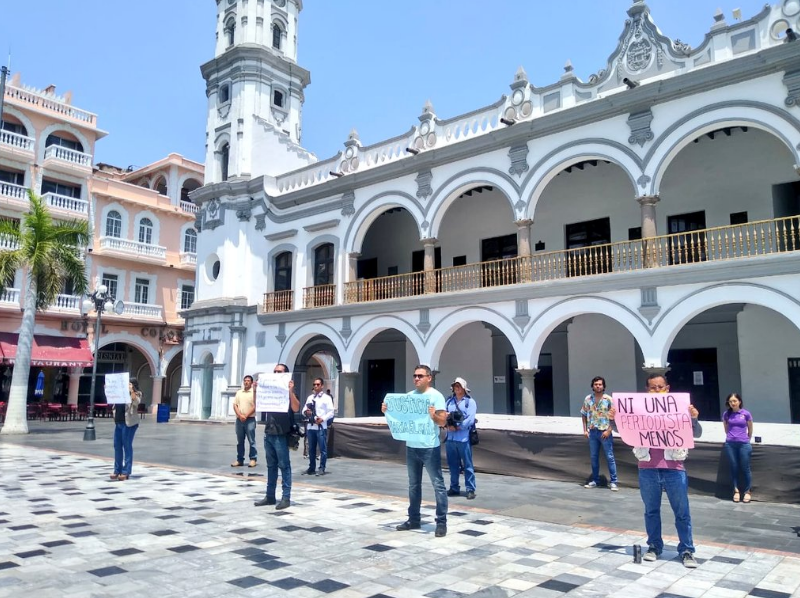
The Guardian reports that Mexican journalist María Elena Ferral Hernández was shot to death on March 30 in Papantla, Veracruz “as violent crime in the country – and attacks on the press – continue amid the coronavirus pandemic.”

That article notes, “Ferral reported for the Veracruz newspaper El Diario de Xalapa and founded the news website Quinto Poder de Veracruz, where she investigated sensitive issues such as crime, corruption and the police.”

“Threats and harassment from local politicians prompted Ferral to seek protection from a state commission for protecting journalists [the Veracruz State Commission for the Attention and Protection of Journalists, CEAPP]. The government later withdrew the bodyguards assigned to her, according to [Reporters Without Borders].”

The Committee to Protect Journalists (CPJ) adds, “Ana Laura Pérez [the president of the state commission] told CPJ that Ferral had been assigned a bodyguard and a GPS device in 2016 after having reported threats. The state Public Security Secretariat removed the bodyguards in 2017, however, without consulting with the protection committee, Laura Pérez said. She said the state government had determined that Ferral had not ‘made good use’ of the security measures, but was unable to provide further details.”

The Peace Brigades International-Mexico Project has noted that a Protection Mechanism was created for journalists in Autumn 2010. Later, the Law for the Protection of Human Rights Defenders and Journalists was signed into law in June 2012.

That law obliges both federal and state authorities to protect the rights of journalists and human rights defenders.

PBI-Mexico has commented that “the Mechanism continues to demonstrate notable deficiencies and concerning failures.”

“Between December 2018 and late-August 2019, at least 24 human rights defenders and 15 journalists had been murdered across the country; three of those killed were covered by the Protection Mechanism.” The current Mexican president Andrés Manuel López Obrador took office in December 2018.

Overall, more than 100 journalists have been killed in Mexico since the country launched a militarized crackdown on drug cartels in 2006.

A diagnostic study by the Office of the United Nations High Commissioner for Human Rights (OHCHR) in July 2019 found that, “among other suggestions, the mechanism could be more effective if it had more and better-quality resources, more efficient internal processes, and better coordination with other authorities.”

PBI-Mexico notes, “Now in 2020, we await a genuine commitment from the government to implement a holistic public policy on protection by following up on the recommendations from OHCHR’s diagnostic study, as well as through the revision of the Law for the Protection of Human Rights Defenders and Journalists.”

PBI Communications Coordinator Hannah Matthews has also commented, “The Mechanism has yet to fully develop policies and practices capable of effectively protecting journalists and human rights defenders.”

She further notes, “The Mechanism can’t possibly address its shortcomings with its current budget and staffing levels. Providing additional funding would be the first step the Mexican government can take to ensure the Mechanism has the resources necessary to manage its rapidly growing caseload.”

PBI considers it urgent that the Mexican State guarantee the security of HRDs and journalists by implementing an effective mechanism for their protection. Unless HRDs and journalists have sufficient political space and safety guarantees to be able to promote social change, Mexico’s democratic transition will be seriously compromised.

For more, please see the PBI-WOLA report Turning the Tide on Impunity: Protection and Access to Justice for Journalists and Human Rights Defenders in Mexico (March 2019).

Photo: Journalists protest the murder of María Elena Ferral Hernández.

Wet’suwet’en land defenders call for construction of Coastal GasLink fracked gas pipeline to stop during the coronavirus pandemic

The Unist’ot’en Camp has posted, “As Canadians are being told to stay home to stop the spread of Covid-19, Coastal Gaslink continues work as usual on our territories.”

“RCMP [police] continue to be flown in from across the province to escort pipeline workers onto our unceded lands, pipelines are being stockpiled, and the pipeline right of way is being cleared on Unist’ot’en, Gidimt’en and Lihkts’amisyu territories.”

On March 30, the Union of BC Indian Chiefs urged Premier John Horgan, Prime Minister Justin Trudeau and federal and provincial health ministers to tell Coastal GasLink to stay home to slow the transmission of COVID-19.

Their letter highlights, “Corporate exceptionalism cannot become a pandemic response strategy for the governments of B.C. and Canada.”

On March 31, The Tyee reported, “Across B.C., businesses have closed, restaurants have been reduced to takeout only, schools are shut down indefinitely, employees are asked to work from home and gatherings of more than 50 people are forbidden. But construction sites and work camps are not included in the 50-person rule.”

That article adds, “RCMP officers who rotate in and out from across the province continue to patrol the area. Locals fear that the rotating shifts of RCMP officers and camp workers could bring the virus to the region.”

That same day, Torrance Coste tweeted: “’It’s important that everyone do their part and stay home.’ – Justin Trudeau about four minutes after saying giant mega-projects with hundreds of workers like Trans Mountain, LNG Canada + Site C are continuing.”

The Unist’ot’en Camp is now highlighting this concern in relation to the construction of the Coastal GasLink fracked gas pipeline on Wet’suwet’en territory [which leads to the LNG Canada terminal], the Trans Mountain tar sands pipeline on Secwepemc territory, and the Site C hydroelectric dam on Treaty 8 lands.

The petition states: “While people are warned to remain at home and take precautions due to COVID 19, the oil and gas industry is continuing work along pipeline routes, and industry is pushing forward with mega-projects across Canada.”

The key concern it highlights: “Workers on these projects are living in man camps by the hundreds in tight quarters, sharing meals and housing, and are unable to quarantine, increasing the risk posed to both communities and workers.”

Winnipeg Free Press columnist Niigaan Sinclair comments, “Even with increased safety measures, the continuation of these projects place Indigenous communities – particularly First Nations but impoverished urban Indigenous communities, too – directly and primarily at risk.”

Sinclair adds, “Canada knows that the COVID-19 pandemic will spread faster on First Nations as housing is often over-crowded, fresh water is harder to come by, and immune systems are already compromised due to poverty and a lack of health care.”

To sign the petition, please click here.

To learn more, the Unist’ot’en Camp has also posted this 2-minute video on Twitter.

PBI receives peace award from Spanish town bombed by fascist forces in 1937

Peace Brigades International has been chosen as a recipient of the Gernika Awards for Peace and Reconciliation for “facilitating the transformation of conflicts and for laying the foundations for future reconciliation processes.”

PBI-Spanish State has commented, “We are deeply grateful for the recognition, not only for the value it brings to the almost 40 years of work in favor of non-violence, but also for the symbolic importance that a city like Gernika has in promoting peace culture.”

The award ceremony was to take place on April 26 but given the coronavirus pandemic an alternate arrangement is likely to be made.

On April 26, 1937, the Nazi German Luftwaffe Condor Legion and the Italian fascist Aviazione Legionaria conducted an aerial bombing of the Basque town of Gernika on behalf of Francisco Franco’s rebel Nationalist faction during the Spanish Civil War.

The BBC reports, “Gen Franco wanted to terrorise the people in the Basque region, an area of strong resistance to his nationalist forces in the Civil War. For Nazi Germany and Fascist Italy, it was an opportunity to get some practice with a new form of warfare: strategic, aerial bombing of civilians. No strictly military objectives were touched. Factories and bridges were left alone – civilians were the only targets.”

Starting at 4:30 pm that day, 25 or more Nazi German Luftwaffe bombers, accompanied by at least 20 more Messerschmitt and Fiat fighters, dropped 100,000 pounds of bombs on the town over a 3-hour period killing an estimated 300 people and wounding many more. While factories may have been spared, 70 per cent of the town was destroyed.

Franco ruled Spain until his death in November 1975. The first free election since 1936 then took place in June 1977.

In 1987, Gernika Gogoratuz (Remembering Gernika) was formed as a Peace Research Centre to develop activities within the framework of Memory and Culture of Peace.

On April 24, 1999, the German parliament formally apologized to the citizens of Gernika for the role the Condor Legion played in bombing the town.

In 2005, the Gernika Awards were established by the Gernika-Lumo city council, the German city of Pforzheim’s city council, Gernika Gogoratuz and others, to recognize work done for peace, reconciliation, human rights and social justice.

Peace Brigades International was founded in Canada (on Grindstone Island near Ottawa, which is on unceded Algonquin territory) in September 1981 and has entities in numerous countries including Spain, Germany, Italy, Canada and the United States.

One of PBI’s founders, Murray Thomson, passed away in Ottawa in May 2019. He is known to have said, “Hiroshima made me a pacifist.”

This year, the Gernika Award is also being presented to the Japanese initiative Kids Guernica, an international children’s art project the facilitates the creation of peace murals. This initiative was inspired by Spanish artist Pablo Picasso’s painting Guernica (that commemorates the bombing of Gernika, seen in photo below) and in response to the atomic bombings of Hiroshima and Nagasaki by the US military in 1945.

Why is peacebuilding an imperative during the coronavirus pandemic?

Peace Brigades International is fully committed to the values of human rights, personal dignity and individual freedom and struggles against violence – physical or structural – as a means of establishing enduring peace.

PBI endeavours to overcome injustice and violence in order to build a peaceful and humane society. Our methods include physical accompaniment, observing, reporting, building international support networks, and peace education.

When PBI was founded on unceded Algonquin territory in Canada in September 1981, its first statement highlighted, “Peace is more than the absence of war.”

Given our principles and mandate, how does this extraordinary moment in contemporary history inform the work of peacebuilding?

Language is a good place to start.

Chinese president Xi Jinping has vowed to win a “people’s war” against the coronavirus, while Donald Trump wants to be seen as a “wartime president”, and French President Emmanuel Macron has stated, “We are at war.”

Sinéad Nolan, a past volunteer with PBI-Mexico, recently wrote in The Irish Times, “Why are world leaders choosing a metaphor that engenders militancy and taking up arms, the very opposite of what is needed?”

Nolan highlights, “Behavioural scientists agree that empathy is the only emotion likely to spur us into the kind of altruistic action needed now. Not fear, not anger.”

There are also concerns about this “war talk” in the context of the emergency measures being implemented by state authorities.

University of Warwick professor Christine Schwobel-Patel writes, “The worry about over-zealous emergency powers comes from a familiarity with other forms of war talk – from the ‘war on drugs’ to the ‘war on terror’. Indeed, we appear to be in a constant state of war. There is no more peacetime or war-time, there are only different phases of escalation.”

We are also seeing government’s making decisions about what is considered essential during this time of physical distancing.

On March 19, a branch of the US Department of Homeland Security, released a list of “the essential workers needed to maintain the services and functions Americans depend on daily.” That list included the “defence industry”.

The following day the US Department of Defense deemed “the development, production, testing, fielding, or sustainment of our weapons systems/software systems, or the infrastructure to support those activities” as essential critical infrastructure.

Furthermore, Defense News has reported, “Italy’s nationwide lockdown in response to the new coronavirus has not affected the production of F-35 Joint Strike Fighter parts in northern Italy, prime contractor Lockheed Martin said [on March 10].”

And yet, George Monbiot asks in his most recent column in The Guardian, What does ‘national defence’ mean in a pandemic?

He writes, “We now know that both the UK and US governments ignored warnings about the potential scale and impacts of pandemics, and failed to invest in genuine national defence: extra capacity in the health system, beds, training, ventilators and protective equipment.”

Monbiot concludes, “If ever there were a time for brokering peace, this is it. If ever there were a time for nations such as the UK and the US to meet their disarmament commitments under the nuclear non-proliferation treaty and work with Russia and China to put their wasted billions to better use, this is it. If ever there were a time to reassess the genuine threats to our security and separate them from the self-interested aims of the weapons industry, this is it.”

Despite this plea, Los Angeles Times staff writer Don Lee has commented, “The coronavirus pandemic, in an unexpected but potentially fateful twist, has moved the United States and China a big step closer to a new cold war.”

So, what is this moment teaching us about how to build a positive peace, a world without direct violence and structural violence?

It may be reaffirming that this task should include a collective and non-hierarchical process of exploring the principles of human rights, solidarity, internationalism, inclusion (anti-racism), equality (anti-oppression), peace (anti-militarism), nonviolent action (as an approach to end violence), the right of peoples to self-determination, as well as deepening our understanding of social, economic and climate justice.

Nearly 40 years ago, the founding statement of Peace Brigades International held out this hope: “We are convinced that this commitment of mind, heart and dedicated will can make a significant difference in human affairs. Let us all join in the march from falsehood to truth, from darkness to light, from death to life.”

For more on human rights in the time of this pandemic, please see the PBI statement: Now more than ever, we must all defend human rights.

PBI-Honduras notes letter from MEPs calling for release of Guapinol water defenders from prison

The Peace Brigades International-Honduras Project has highlighted on its Facebook page, “On April 3, in the midst of the COVID crisis, 20 European parliamentarians called on the Honduran authorities to release the Guapinol human rights defenders. They expressed their concern that ‘they are arbitrarily detained, without legal justification and in retaliation for their peaceful work in defense of the right to water.’”

Nine of the Members of the European Parliament who signed the letter are in the photo above. Six of the 20 signatories are from Ireland, 4 from Spain, while the rest are from Luxembourg, Portugal, France, Germany and Denmark.

On March 11, the International Committee of the Red Cross warned, “An outbreak of COVID-19 in prison could be devastating to the population there, especially an overcrowded prison where general health is already low.”

By March 20, the Center for Justice and International Law (CEJIL), the Guatemala Human Rights Commission (GHRC/USA) and others requested the revocation of the preventive detention measure faced by defenders of Guapinol and the San Pedro sector in the context of the health emergency caused by the coronavirus outbreak.

Then on March 25, United Nations High Commissioner for Human Rights Michelle Bachelet issued this statement: “Now, more than ever, governments should release every person detained without sufficient legal basis, including political prisoners and others detained simply for expressing critical or dissenting views.”

Background

In August 2018, area residents set up a ‘Guapinol Camp in Defence of Water and Life’ in opposition to the Inversiones Los Pinares mine.

The Nation reports, “It lasted 88 days, from August 1 to October 27 of 2018.”

“The water in the Guapinol River was filling with sediment from a hydroelectric project upstream, part of the growing infrastructure for the forthcoming mine, making the prospect of using the water for drinking, cleaning, or agricultural purposes impossible.”

“[On October 27, 2018 an estimated 1,500] security forces fired volleys of tear gas before opening fire with live ammunition. In the ensuing blitz of bullets, eight civilians were injured and one activist, Levin Alexander Bonilla, was killed.”

Related to these protests, the Honduran Public Prosecutor’s Office began to pursue charges against at least 32 defenders of the Guapinol River.

Twelve water defenders presented themselves in court in February 2019. The UUSC has reported that the 12 defenders had the charges against them dropped on March 4, 2019 and were released from jail on March 6, 2019.

The Nation notes, “It was in August of 2019 that the charges against [another] seven of the protesters finally landed them in prison.”

On August 26, 2019, the Peace Brigades International-Honduras Project posted on their Facebook page, “This morning we were present at the hearing for the presentation of the accused of 7 new defendants (for illegal association, robbery and aggravated fire) in the Guapinol case for the defence of natural assets.”

The letter from the European Union parliamentarians (which can be read in full below and now online here) notes with concern that the defenders have been held “in pre-trial detention with no sound legal justification” since September 1, 2019.

Peace Brigades International-Canada shares the concerns expressed by the European parliamentarians, PBI-Honduras and others for the Guapinol human rights defenders who are now facing increased risks in prison due to the coronavirus pandemic.


When Bill Blaikie, MP rose in the House of Commons and noted the work of Peace Brigades International

As Peace Brigades International, a global human rights organization founded on Grindstone Island (on unceded Algonquin territory) on September 4, 1981, approaches its 40th anniversary, we recall notable moments in our history.

Maclean’s has reported that Karen Ridd, a 28-year-old from Winnipeg, joined Peace Brigades International and went to El Salvador in February 1989.

“As a volunteer, she received free room and board and about $60 a month for the often dangerous work of keeping watch over Salvadoran trade unionists and others whom the government and right-wing death squads consider subversive.”

“Suspected by Salvadoran authorities of aiding leftist rebels against the U.S.-backed right-wing government, [she] was abducted [on November 20, 1989], along with six other foreigners [four of whom were also PBI volunteers], by national guardsmen and later physically and verbally abused by the Treasury Police, known widely for their brutality.”

The Winnipeg Free Press adds: “The Canadian embassy obtained Ridd’s release, but she promptly went straight back into the prison to demand — and get — the release of her friend, [Colombian PBI volunteer] Marcela Rodriguez Diaz.”

On November 21, 1989, Member of Parliament Bill Blaikie (Winnipeg Transcona-NDP) rose in the House of Commons and stated:

“Mr. Speaker, I am sure I speak for all members of the House when I express relief that Karen Ridd from Winnipeg, someone who is working in El Salvador with Peace Brigades International, was released yesterday by the Treasury Police who had taken her into custody.

True to the spirit of the work of Peace Brigades International, we noticed that Karen refused to be released unless the Colombian woman who had been arrested with her was also released.

The work of people like Karen and Peace Brigades International, people who go to Central America to provide an escort service which is designed to protect Salvadorans who may be under threat of death or kidnapping, is truly in the spirit of Canada’s peacekeeping role. These are people who are real peacekeepers, who put themselves, their bodies, between the victimized and the oppressors, in this case the Cristianni government.

I think it is about time the Canadian Government showed the courage of some of its citizens like Karen Ridd in El Salvador and put itself, diplomatically, politically and economically between the United States, its puppet regime in El Salvador, and the people of El Salvador.”

Bill Blaikie was a Member of Parliament from 1979 to 2008, then a Member of the Legislative Assembly of Manitoba from 2009 until his retirement in 2011.