Home Blog Page 36

PBI-Mexico accompanies Peoples Front in Defence of Land and Water at activities and on visit to Cholula landfill

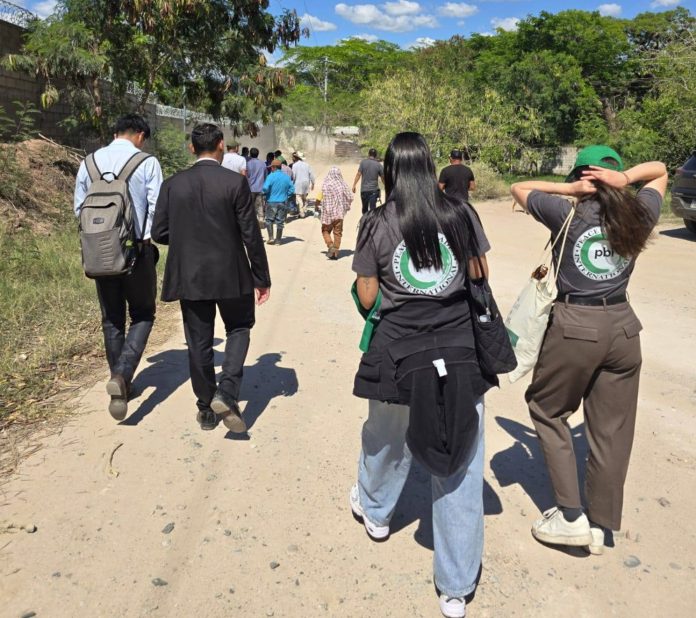
Photo: “PBI Mexico volunteers in activities to accompany the People’s Front in Defense of Land and Water, in the municipality of Nealtican, Puebla, October 2025.”

The most recent PBI-Mexico e-newsletter notes:

“During the months of September and October, PBI Mexico continued to accompany defenders and organizations in their work for truth, justice and the defense of the territory. Through actions in different states of the country and spaces of international articulation, we continue to contribute to the creation of safer environments for the defense of human rights.”

It adds:

“During October, we continued to strengthen the accompaniment of defenders and communities in different regions of the country, contributing to generating safer spaces for the defense of human rights.”

And highlights:

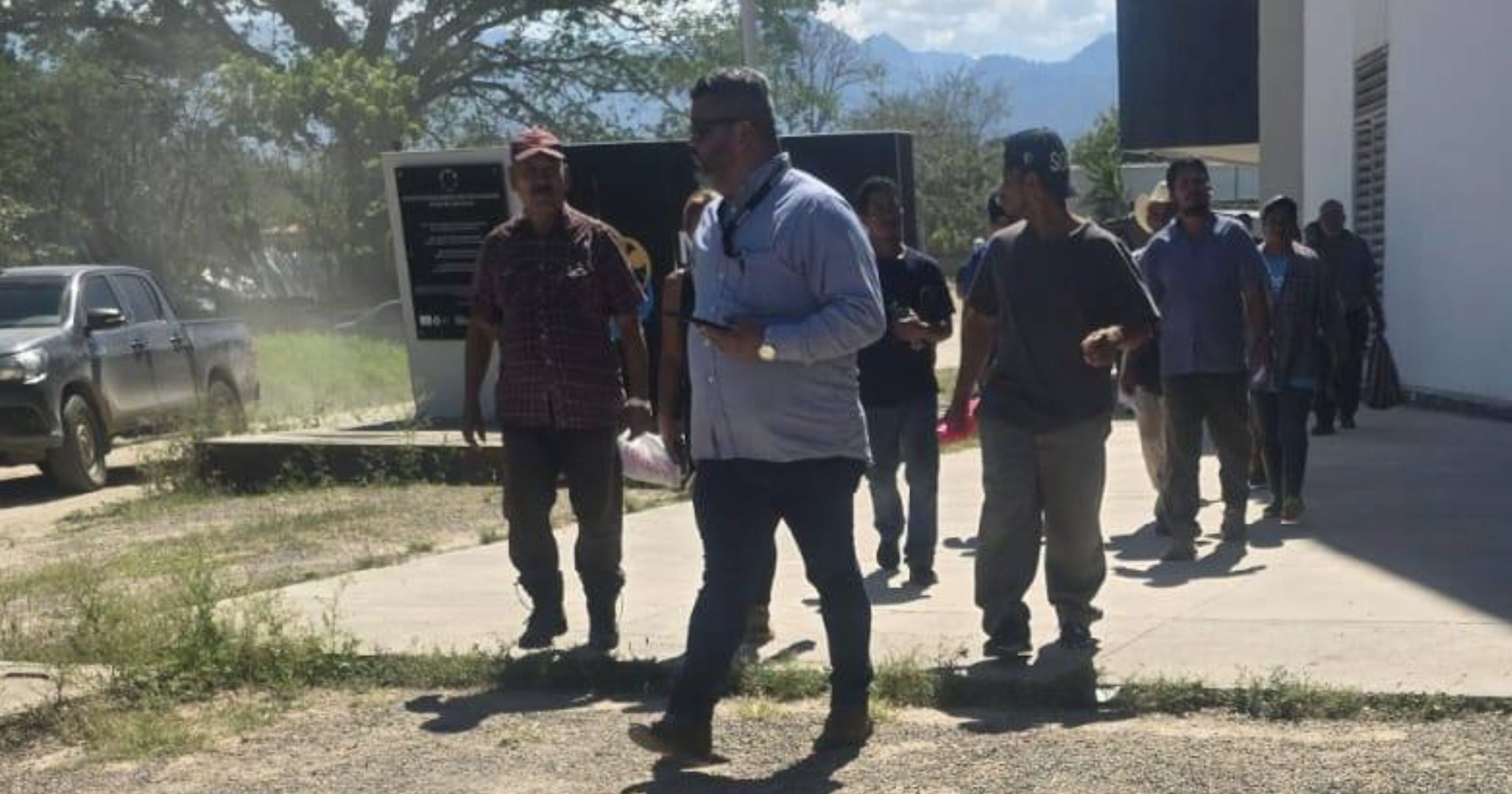
“In the state of Puebla, at the beginning of October, we participated in accompaniment activities in Nealtican and in a visit to the landfill in Cholula, following up on the environmental and human rights concerns expressed by accompanying organizations and local communities.”

In the news

On February 7, 2025, La Jornada reported: “The landfill, owned by Morena Senator Cuauhtémoc Ochoa Fernández, was closed in March of last year after complaints of contamination in the municipalities of San Pedro Cholula, San Andrés Calpan and Juan C. Bonilla. Flores Solís told La Jornada that the toxicity of the leachate endangers the aquifers of the region, located 35 meters above the ground, which supply the cholulas and part of the city of Puebla.”

On June 17, 2025, El Sol de Puebla reported: “Almost a year after its last closure, the intermunicipal garbage dump of Cholula prevails as an active source of pollution. Leachate that runs off without containment, reservoirs and deteriorated vents, added to the lack of legal certainty about their closure, exacerbate the risks to the ecosystem, crop fields, homes and, especially, to aquifers. Although three months ago the Federal Attorney for Environmental Protection (Profepa) authorized a program to proceed with the definitive closure of this landfill, it has not been executed.”

Then on October 12, 2025, El Sol de Puebla reported: “At least three clandestine garbage dumps were reported by the auxiliary authorities of San Juan Tlautla in the municipality of San Pedro Cholula, two of these are supposedly recycling centers, however, they do not have the corresponding permits, said the municipal Secretary of the Interior, Carlos Carrillo Cortés.”

And most recently on October 26, 2025, Publimetro reported: “The City of Puebla reported that the Chiltepeque landfill has five more years of useful life and currently operates at only 40% of its capacity, so there is no risk of saturation in the short term, even with the reception of waste from neighboring municipalities after the closure of the intermunicipal landfill of Cholula.”

We continue to follow this.

Accompaniment

PBI-Mexico has accompanied the Peoples’ Front in Defence of Land and Water – Morelos, Puebla and Tlaxcala since early 2020.

Additional reading

PBI-Mexico accompanies Peoples’ Front in Defence of Land and Water at highway blockade at Cholula garbage dump (PBI-Canada article, March 22, 2024).

Espacio OSC and CEHPRODEC sign statement: “Latin America demands guarantees to defend human rights”

Human rights organizations, movements and processes from numerous countries including Colombia, Honduras, Guatemala and Mexico, recently met alongside international organizations at a Meeting for the Right to Defend Human Rights in Latin America.

Two Peace Brigades International – CEHPRODEC in Honduras and Espacio OSC in Mexico – signed a statement from that Meeting that notes:

“According to the most recent reports by Front Line Defenders, Global Witness and the Inter-American Commission on Human Rights (IACHR), Latin America continues to be the most dangerous region in the world with at least 257 human rights defenders murdered and disappeared in 2024, of which 119 are environmental, representing 79.3% of murders and disappearances globally.

As the aforementioned reports highlight, in most cases, the main perpetrators are agents of the State, members of organized crime, companies and individuals who act in complicity or under the omission of the authorities.

Against this backdrop, we urgently call on States to comply with international human rights standards, respect and guarantee the work of individuals and groups that defend rights, including the Escazú Agreement, and to refrain from enacting regressive regulations.

We call for regional and international solidarity and cooperation to maintain and expand political, social and economic support for human rights defenders. Defending rights is not a crime, but a legitimate and essential act for democracy, justice and dignity.”

The full statement can be read at: Pronunciamiento del Encuentro Regional de Personas Defensoras: América Latina exige garantías para defender derechos humanos (November 4, 2025).

Photos: PBI-Canada met with the two signatory organizations, CEHPRODEC in October 2024 in Honduras, then Espacio OSC in September 2025 in Canada.

Neskantaga and Attawapiskat land defenders building village to protect sacred sites and block road construction to Ring of Fire mine in Ontario

Photo: Stand With Neskantaga – We Love Our Land: “Meeting with our elders and our land user/defenders — looking at various burial sites and sacred grounds around the Attawapiskat River” in July 2025.

On October 29, The Toronto Star reported: “Premier Doug Ford says he is ramping up plans to mine critical minerals in Ontario’s environmentally sensitive Ring of Fire after reaching a $39.5 million road-building partnership with … Webequie First Nation Chief Cornelius Wabasse [for] the proposed all-season Webequie Supply Road…”

At the time of this announcement, the Government of Ontario stated that construction of this road could begin in June 2026.

Then, just a few days after the announcement, Jon Thompson of Ricochet Media reported: “[The] Neskantaga [First Nation] has been intent to oppose the Ring of Fire at least until basic infrastructure demands are met [Neskantaga has been under a boil water advisory for 30 years]. This summer, its members, along with their neighbours downriver in Attawapiskat First Nation, began erecting a village to block road construction across the Attawapiskat River what would be the path to the Ring of Fire.”

Journalist Alan S. Hale has previously explained: “The Webequie supply road will allow mining equipment flown into the area to be transported to the Ring of Fire site.”

Hale further notes: “Three access roads [will be] needed to connect the Ring of Fire, Marten Falls First Nation and Webequie First Nation with the TransCanada Highway.”

These roads are the 190-kilometre Marten Falls community access road (from Aroland First Nation, which is about 70 kilometres north of the TransCanada highway, to Marten Falls), the 117 to 164 kilometre Northern Road Link (from Marten Falls to Webequie) and the 107-kilometre Webequie supply road (from Webequie’s airport to the McFaulds Lake area where the Eagle’s Nest mine would be located).

This past September, Thompson had also reported: “The Northern Road Link project that the Ontario government intends to build over [the Attawapiskat] river [would run] through sacred sites.” Thompson adds that the village being built to block road construction is on the north side of the river where the bridge would land.

That article further highlights: “Since June [2025], a contingent of mostly young people from Neskantaga and Attawapiskat First Nations have been living nearby, combing these lowlands to prove how this land has always been occupied – and in doing so, they’re still occupying it.”

To hear Neskantaga First Nation Chief Gary Quisses speaking to CBC Radio in September about the village encampment, the sacred sites in the area, the road and the impacts of Ring of Fire mining, click here.

While the Government of Ontario has stated that construction on the Webequie Supply Road could begin in June 2026, and the company behind the Eagle’s Nest mine says construction for the mine could begin in 2027 with production starting in 2030, Hale reported earlier this year that the three Ring of Fire access roads would take 10 years of construction and may not be completed until 2040.

We continue to follow this.

PBI-Spanish State co-organizes forum on non-violent civil resistance with the Peace Community of San Apartado, Colombia

Image: Promotion for the public forum.

On October 30, Peace Brigades International-Spanish State/ Euskal Herria co-organized a public forum on “Nonviolent civil resistance as a tool for peacebuilding”.

The forum took place in the city of Vitoria-Gasteiz, the capital of the Basque Autonomous Community in northern Spain.

The speakers included representatives from the PBI-Colombia accompanied Apartado Peace Community, Women Against War (Emakumeok Gerraren Aurka), the Sumud Global Flotilla, and Peace Brigades International.

This social media video clip posted by Emakumeok Gerraren Aurka highlights:

“We know our murderers, but we don’t hate them.” We respond with alternative and creative ways to life. ” Arley Tuberquia (member of the Peace Community of San Jose de Apartadó)

In the framework of the Colloquium “Nonviolent Civil Resistance as a Tool for Peacebuilding”, Arley reminded us that resistance is not held in hate, but in dignity, creativity and love for life. A profound lesson on how communities can build peace from the ground up, even in the midst of violence.

And this social media video clip notes:

Ledis Arteaga tells us when and why the Peace Community of San Jose de Apartadó was founded, in the framework of the Colloquium of the Nonviolent Civil Resistance as a tool for peace.

An example of how communities can build peace from the ground up, resisting and gambling for life in the midst of conflict.

More from PBI-Spanish State about the tour here.

PBI-Spanish State also highlights: “The visit to Euskal Herria is framed within a European tour organized in Italy, Germany, Switzerland, Spanish State and Belgium.”

Image: Promotion for the tour.

Additional reading

PBI-Spanish State supports the October 15 strike against the genocide in Palestine (PBI-Canada article, October 14, 2025)

Solidarity rally in Ottawa to call for release of Cree/Dene land defender Mskwaasin Agnew and all others detained from Gaza flotilla (October 8, 2025)

PBI-Colombia accompanies the one-year anniversary of the murder of two members of the Peace Community of San José de Apartadó (March 23, 2025).

Radio Canada International reports on PBI-Canada and PBI-Mexico advocacy visit with Espacio OSC on Protection Mechanism

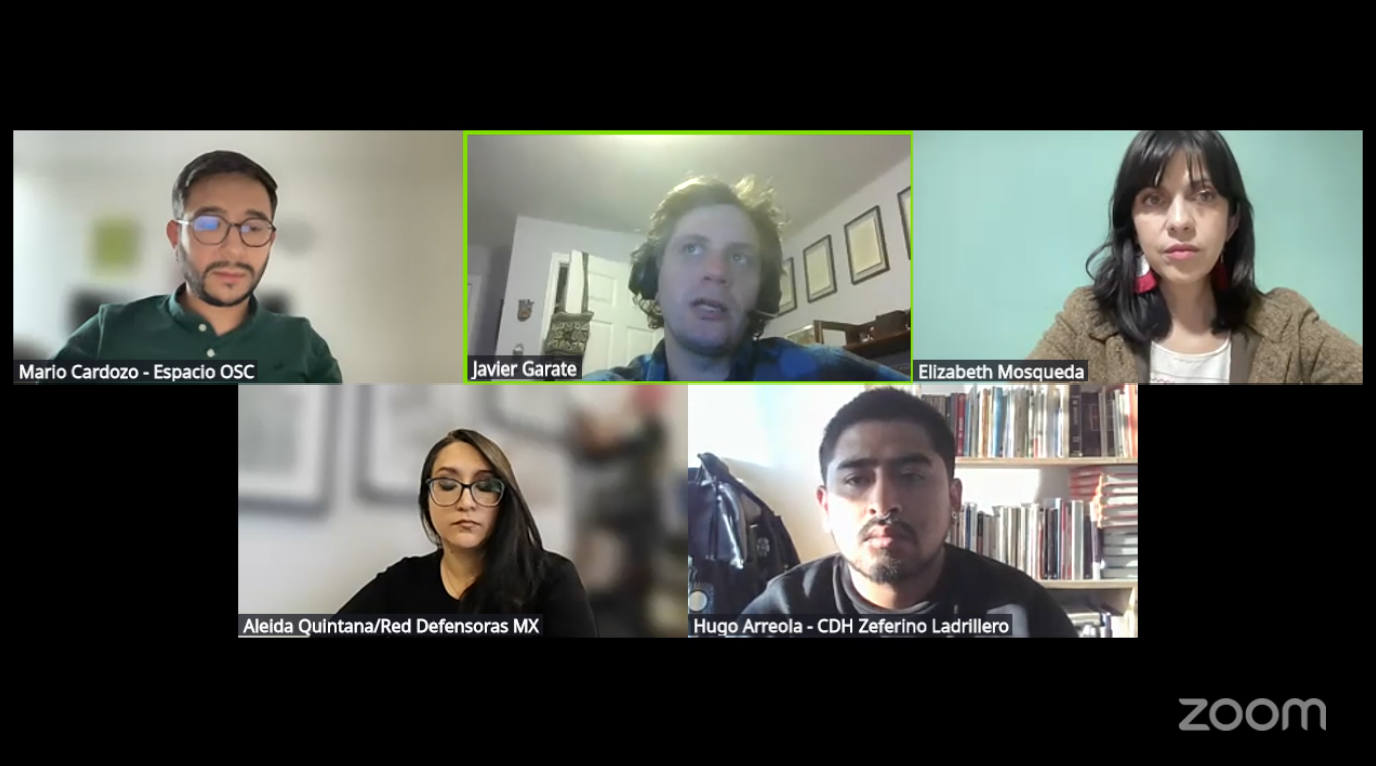
While Mexican human rights defenders Elizabeth Mosqueda and Hugo Arreola were in Canada on an advocacy visit this past September, they were interviewed by RCI journalist Paloma Martínez Méndez. Today, RCI published her feature article: Canada asked to strengthen protection for defenders and journalists.

Key excerpts from the article include:

– “Following Prime Minister Mark Carney’s visit to Mexico in September, two representatives of Mexican civil society organizations traveled to Canada to call for new alliances between the two countries to ensure the safety of human rights and freedom of expression.”

– “Mark Carney’s visit to Mexico, in which the Canada-Mexico Action Plan was agreed, took place ahead of what is expected to be difficult negotiations with the United States on the trilateral trade agreement. In Canada, the small delegation of Espacio OSC, a network of Mexican civil organizations, warns that the protection of those who defend human rights and territory cannot be left out of these bilateral agreements.”

– “The objective of the Mexican delegates’ visit to Canada is linked to the recent economic and political context. In September, when Prime Minister Mark Carney was in Mexico explained that the Canada-Mexico Action Plan contemplates millionaire investments in strategic sectors such as mining, hydrocarbons, ports and railways. Brent Patterson, of Peace Brigades International – Canada (PBI-Canada), which coordinated the visit of Elizabeth Mosqueda and Hugo Arreola, pointed out that the main attacks on human rights defenders occur in these sectors and that the situation could worsen.”

-“During the tour, delegates met with parliamentarians, academics and human rights organizations in Ottawa, Toronto and Montreal, with the accompaniment of PBI-Canada, which has been providing observation and accompaniment to Mexican defenders for years. The meetings included representatives of the main Canadian parties, students and members of civil society, which for Hugo Arreola is of great importance.”

The full article can be read in Spanish at Piden a Canadá reforzar protección a personas defensoras y periodistas (November 5, 2025).

Photo: “Elizabeth Mosqueda Rivera and Hugo Arreola during their interview with RCI. Photo by Radio-Canada / Screenshot · Zoom · Paloma Martínez Méndez”

Espacio OSC tweet: “We share the report by @RadioCanadaInfo about our recent advocacy tour in #Canadá, where we called for strengthening cooperation between Mexico and Canada to protect human rights defenders and #journalists. #RightToDefend”.

Additional reading: Photo-journal of PBI-Mexico accompanied Espacio OSC advocacy tour in Canada on Protection Mechanism (September 26, 2025).

PBI-Canada studying Budget 2025, developing an analysis on its implications for human rights defenders

Peace Brigades International-Canada is reviewing news articles and commentary from civil society allies to develop an understanding about how Budget 2025 tabled by the government of Prime Minister Mark Carney today could impact the safety and security of PBI accompanied human rights defenders.

Canada Strong: Budget 2025 can be read in full here.

Cuts to foreign aid

The Canadian Centre for Policy Alternatives (CCPA) notes: “International assistance will be cut by $800 million a year, leaving Canada’s development-to-GDP ratio from its current dismal 0.32 per cent of GDP to 0.26 per cent by 2028.”

And Toronto Star columnist Justin Ling comments: “Just months after President Donald Trump gutted America’s foreign assistance program, USAID, Canada is also slashing foreign aid spending.”

With respect to the $12.3 billion foreign aid budget being cut by $2.7 billion, the Canadian Press notes: “It’s not clear where the aid cuts will land. The budget talks of ‘leveraging innovative tools, while focusing support for countries that need it the most’ and rejigging existing agreements with specific countries.”

Cuts to Global Affairs Canada

The Canadian Press also reports:  “Global Affairs Canada’s planned spending for the current fiscal year was $8.1 billion. Tuesday’s budget forecasts $561 million in cuts in the next fiscal year, scaling up to $1.1 billion in annual savings two years later, and for each ongoing year.”

Notably, that article highlights these cuts could include “merging some embassies with those operated by like-minded countries.”

Seeking update on permanent and temporary relocation for HRDs

In July 2023, the Government of Canada announced: “the expansion of the global human rights defenders stream, doubling the number of resettlement spaces from 250 to 500 for HRDs and their family members. The initiative, propelled by the belief that no one should face persecution for championing justice, reflects Canada’s unwavering commitment to providing a sanctuary for those who risk their lives in the pursuit of fundamental freedoms.”

The announcement also noted: “We will also re-engage Canadian civil society organizations over the coming months on the development of a temporary protection pathway for HRDs in need.”

Front Line Defenders has provided this overview of the program.

We are now in the process of trying to ascertain the status of this program and the impact the cuts in Budget 2025 could have on this. We do so in the context of Global News reporting: “Canada will see cuts to temporary immigration over the next three years, the federal government said in its budget document on Tuesday, with targets effectively freezing for permanent residents.”

No news on the Canadian Ombudsperson for Responsible Enterprise (CORE)

The Canadian Press highlights: “The budget does not say whether Ottawa will fill vacant positions such as the climate change ambassador, the envoy for women, peace and security, and the ombudsperson responsible for investigating reports of forced labour abroad [CORE].”

Just two weeks ago, Canadian civil society organizations, including the Maritimes-Guatemala Breaking the Silence Network, MiningWatch Canada, Amnesty International and Unifor, urged “the trade minister to appoint a new Ombudsperson immediately” and “the Government of Canada to grant the office the independence and powers needed to conduct investigations effectively.”

1,000 new RCMP personnel

While Budget 2025 also does not appear to mention funding for the Civilian Review and Complaints Commission (CRCC) that investigates the Royal Canadian Mounted Police (RCMP), and the Chairperson position has been vacant since January 2025 thus hindering the watchdog agency’s ability to complete the systemic investigation into RCMP Community-Industry Response Group (C-IRG) conduct against land and environmental defenders, Budget 2025 does promise to hire 1,000 new personnel for the RCMP.

$81.8 billion for the military

And while foreign aid will be cut, CBC News notes: “Budget 2025 earmarks $81.8 billion for defence over five years, roughly $72 billion of which is new money.”

In June 2025, the Carney government announced its intention to increase military spending to 5 percent of Gross Domestic Product (GDP), which could mean an increase from the current $33 billion a year to $150 billion a year by 2035.

Critical minerals and “free, prior, and informed consent”

Mining.com notes: “Canada’s Liberal government plans to form a C$2 billion ($1.4bn) sovereign fund for critical minerals, earmark hundreds of millions in mining industry spending and widen exploration tax credits to a dozen other minerals, according to the federal budget presented on Tuesday.”

However, APTN also notes: “In the section discussing the new Major Projects Office, created under the One Canadian Economy Act to accelerate major energy project development, there is a notable first. A non-financial commitment, Indigenous leaders have been waiting to hear. The Carney government explicitly references free, prior, and informed consent. Previously, Carney assured the public that major projects would not move forward without agreement from all parties, but he had stopped short of using those exact words. Now, the language appears plainly in the budget.”

Budget vote on November 17

CityNews has reported: “The House of Commons sitting calendar means there would be debate days on Nov. 5, 6, 7 and 17 (the House is off the week of Nov. 10 due to Remembrance Day). The vote is set to happen on Nov. 17, which gives the governing Liberals some additional time to try to shore up support if needed.”

Further reading

Post-election budget could plunge Canada into another federal election (Canadian Centre for Policy Alternatives)

Budget 2025: Unifor welcomes gains for workers, calls for fight back to protect Canadian jobs (Unifor)

Federal Budget: Government plans deep public service cuts and weakens workers’ bargaining rights (Public Service Alliance of Canada)

Carney’s first budget gives corporations a free ride and leaves working Canadians behind (Canadian Union of Public Employees)

Canadian Friends Service Committee (Quakers’) statement on Defence spending increases (CFSC)

*At this time, we also recall that more than 40 years ago, the German activist Petra Kelly wrote in Nonviolent Social Defense: “We spend billions on weapons research and millions training our young people at military academies. Why not invest in peace studies and peace actions? We need training centers, public campaigns, and educational materials. We need to support groups like Peace Brigades International that intervene nonviolently in situations of conflict. We need to work concretely to realize peace and nonviolence in our time.”

PBI-Spanish State and PBI-Switzerland call on their governments to support environmental defenders at COP30 in Brazil

Photo: PBI at the grave of Lenca defender Berta Caceres in La Esperanza, Honduras. She was murdered on March 2, 2016, just months after COP21. More than 1,729 land and environmental defenders have been killed since her death.

Peace Brigades International teams in the Spanish State and Switzerland are calling on their governments to support environmental defenders at the United Nations COP30 climate conference in Belém, Brazil.

Global Witness has documented that more than 2,253 land and environmental defenders have been killed globally between 2012 and 2024.

COP30 is scheduled to take place from November 10 to 21.

Spanish State

PBI-Spanish State and International Development Cooperation Initiatives (ICID) have launched this website and have an online form to that allows individuals to send a message to the Government of Spain, specifically Sara Aagesen Muñoz, the Minister for Ecological Transition, with these four requests:

1- Public recognition of environmental defenders.

2- Explicit mention in COP30 outcome documents.

3- Promotion of the International Alliance for the Investigation and Denunciation of Violations against Human Rights Defenders.

4- Measures to promote the protection of women environmental defenders at the national and international levels.

Olaia Duarte López, a member of the Senate of Spain, has provided this response to a written question to the Senate.

Switzerland

Photo of the Chamber of the Swiss National Council. Photo by Peter Mosimann.

PBI-Switzerland formulated the following questions that Fabian Molina, a member of the 200-member National Council (federal assembly), has put forward to the Federal Council (the seven-member executive authority in Switzerland):

1- How does it assess the global situation of environmental and human rights defenders in light of increasing repression?

2- What responsibility does it see for states of the Global North, and Switzerland in particular, to protect these individuals?

3- How does it intend to strengthen the link between human rights and climate protection in multilateral bodies?

4- Does it plan to anchor the protection of environmental defenders more firmly in foreign policy and development cooperation?

5- How will it ensure that Swiss climate policy complies with international human rights obligations?

6- Will it advocate at COP30 for the recognition of the work of individuals and communities that protect the environment and habitats?

7- What steps is Switzerland taking to ensure that environmental defenders are mentioned and protected in the final declarations?

8- What measures will it announce at COP30 to join or support an international alliance for the protection of these actors?

COP30 webinar, November 18

Join us on Tuesday November 18 at 3 pm in Brazil (1 pm in Ottawa, 7 in Brussels) for a discussion with participants at COP30.

To register, click here.

Further reading:

The COP30 climate conference starts in two weeks; will land and environmental defenders be on the agenda? (October 27, 2025).

PBI-Canada attentive to Mesoamerican Caravan for Climate and Life as it travels to the UN COP30 climate summit in Brazil (November 3, 2025).

PBI-Canada attentive to Mesoamerican Caravan for Climate and Life as it travels to the UN COP30 climate summit in Brazil

Video still from Trochando Sin Fronteras.

The Mesoamerican Caravan for Climate and Life has travelled more than 4,000 kilometres from Mexico to Brazil in the context of the United Nations COP30 climate summit that begins on Monday November 10.

On October 31, Deutsche Welle reported: “Indigenous leaders, land defenders and activists are traveling thousands of kilometers in the so-called Mesoamerican Caravan for Climate and Life, on a long journey that crosses Guatemala, El Salvador, Honduras, Costa Rica, Panama, Colombia and Ecuador. Its objective is to denounce the impacts of the climate crisis in Mesoamerica.”

That article adds: “The initiative, which is being carried out within the framework of the next United Nations climate change summit (COP30), began on October 12 in Mexico and will end in Brazil on November 6, 2025, days before the start of COP30.”

Dianx Cantarey, one of the coordinators of the Caravan, has provided this context: “We know that no solution will come from spaces like the COP. This caravan is a space for denunciation, but also for building connections among communities that defend life and resist green capitalism.”

Mexico, Guatemala, Honduras

In Mexico, the Caravan met with representatives of the autonomous territories that make up the Supreme Indigenous Council of Michoacán on the Purépecha lands of Huáncito, Michoacán; in Guatemala they visited community members in the city of Jutiapa opposed to the Canadian Aura Minerals Era Dorada mine (formerly known as the Cerro Blanco mine); and in Honduras they met with the PBI accompanied Civic Council of Popular and Indigenous Organizations of Honduras (COPINH).

Nicaragua

The Caravan was denied passage through Nicaragua.

Mexican environmentalist Mario Quintero, a member of the coordination and organization of the caravan, told EFE: “In Nicaragua we were denied passage, they held us for four hours, they took away our passports without giving us any explanation, and then they told us that we could not (pass) and we should leave immediately.”

Costa Rica

When the Caravana was in San José, Costa Rica, Nota al Pie reported it went to “the Inter-American Court of Human Rights, where they denounced impunity for human rights violations in the territories.”

Colombia

On October 28, Trochando Sin Fronteras posted on social media: “The Mesoamerican Caravan for Climate and Life arrived in Bogota raising the voice of the peoples.”

Their fuller article reports: “The Mesoamerican Caravan for Climate and Life arrived last Friday [October 31] at the Ministry of Environment and Sustainable Development of Colombia to highlight the complaints of communities and groups defending their territory, water, and life against the advance of extractive megaprojects, wind farms, mining projects, hydroelectric dams, and gas pipelines in Indigenous, peasant, and Afro-descendant territories throughout North America.”

And Noticias Hoy reports: “The arrival of the Mesoamerican Caravan for Climate and Life in Bogotá made visible the rejection of communities from the Global South to extractive megaprojects and ‘green capitalism’, demanding climate justice that prioritizes territorial sovereignty. These conflicts are clearly reflected in the Andean páramos, strategic [high-altitude] ecosystems for water and climate.”

That Noticias Hoy article then notes: “Areas like Tota–Bijagual–Mamapacha, Chilí–Barragán and Los Nevados are the scene of disputes between conservation policies, pressures from mining and tourism, and the rights of the peasant and Indigenous communities that have historically inhabited them.”

In Los Nevados, the article notes: “The complex faces a landmark legal conflict: a lawsuit filed by AngloGold Ashanti against the Colombian government, arguing that the 2016 boundary demarcation affected its mining titles, particularly those related to the La Colosa project. This litigation, still without a final resolution, represents a clash between two development models: the extractive model, centered on large-scale metallic mining, and the model that prioritizes the protection of natural resources.”

Accompaniment

The Deutsche Welle article notes that the participants on the Caravan include Bettina Cruz Velázquez, a member of the Assembly of Indigenous Peoples of the Isthmus of Tehuantepec in Mexico; Ana Lucía Morales, a Kaqchikel Mayan from the Asociación Grupo Integral de Mujeres Sanjuaneras – AGIMS, from Guatemala; and Alí Trinidad, Dianx Cantarey and Mario Quintero, coordinators of the Caravan.

The Caravan also includes delegations from the Yaqui Tribe of Sonora, the Supreme Indigenous Council of Michoacán, the Maya people of Quintana Roo, the Binnizá people of Oaxaca, the Tz’unun Ya’ Collective and Guardians of the Land of San Pedro de la Laguna, Guatemala, and the Integral Group of Women of San Juan Sacatepéquez, Guatemala.

The Assembly of the Indigenous Peoples of the Isthmus in Defense of Land and Territory (APIIDTT) has called “on civil society throughout the region and the world to remain attentive to the route of this caravan. …We call on human rights organizations to observe, denounce and document the abuses and violations we face at the border crossing and in every community criminalized for defending life.”

Peace Brigades International-Canada has responded to that call and is attentive to the Mesoamerican Caravan’s journey.

PBI-Canada attentive to the risk posed by the G7 critical minerals agenda to Indigenous land and environmental defenders

Video still: Tim Hodgson, the Minister of Energy and Natural Resources Canada, speaks at the conclusion of the G7 meeting in Toronto, October 31, 2025.

The G7 agenda that sees the mining of critical minerals as vital to “shared national and economic security interests” along with the need to “counter China’s dominance in the sector” could pose an emerging new risk to Indigenous rights and to frontline Indigenous land and environmental defenders.

The Canadian Press now reports: “Canada announced on Friday [October 31] the first round of projects under a G7 critical minerals production alliance envisioned as a counterweight to China’s dominance in the sector.”

CBC News further reports: “Canada is [also] officially designating certain critical minerals as a national security priority under the Defence Production Act, a move that would allow the federal government to support the mining industry by guaranteeing it a buyer and a minimum price. The move was announced at a G7 energy and environment meeting in Toronto on Friday, where countries discussed countering China’s overwhelming dominance of critical mineral production.”

Canada’s Energy Minister Tim Hodgson says: “By protecting domestic production under volatile global conditions, we ensure a secure supply of critical minerals to Canadian and allied defence industries.”

This past June, the Canadian government highlighted its commitment to a new NATO Defence Investment Pledge that would see 5% of annual GDP spent on “individual and collective security”. This sets a path for increasing spending on the military from CAD $33.8 billion in 2024-25 to $150 billion a year by 2035.

Critical mineral projects

This backgrounder posted by Natural Resources Canada on October 31, 2025, lists some of the announced first round of “26 new investments and partnerships with 9 allied countries to secure critical minerals supply chains”.

Torngat Metals – Strange Lake Project

CBC News highlights: “Hodgson announced that G7 countries were investing $6.4 billion into 26 critical mineral projects across Canada [including] Torngat Metals’ Strange Lake project in Quebec.”

Naskapi News has reported: “The Naskapi Nation of Kawawachikamach and the Innu Nation worry about [the impact of the mine on] caribou habitat, sacred sites, and uranium-linked contamination. Residents of Sept-Îles have also voiced opposition to uranium waste storage near local water sources.”

That article adds: “The Strange Lake mine would produce heavy rare earth elements such as dysprosium and terbium, vital for renewable technologies—but also for military uses. Greenpeace warns that without binding regulations these materials may be diverted to weapons manufacturing. The mine is majority-owned by Cerberus Capital Management, a U.S. private equity firm with ties to the arms trade. One major client, Vacuumschmelze, supplies parts for F-35 jets, missiles, and other defense systems.”

Nouveau Monde Graphite – Matawinie Mine

The Northern Miner adds: “Nouveau Monde’s US$415-million capex Matawinie mine in Quebec is among the priority projects singled out in Friday’s statement.”

In March 2021, Ricochet Media reported on a blockade organized by the Atikamekw of Manawan First Nation in opposition to this open-pit mining project. That article further noted: “One trucker stepped out of his rig to curse the land defenders, and others pulled on their horn to try to annoy the Atikamekw.”

The role of the United Kingdom

Two weeks prior to this G7 meeting in Toronto, Tim Hodgson, Canada’s minister of energy and natural resources, was in the United Kingdom for meetings on “advancing secure critical minerals supply chains and energy security for Canada and our allies”.

While in London, Hodgson met with Chris McDonald, “the United Kingdom’s Minister for Industry in the Department of Energy Security and Net Zero and newly appointed Envoy for the Critical Minerals Production Alliance”.

The Natural Resources Canada media release also noted: “On the margins of the London Metal Exchange Week, Minister Hodgson met with major mining companies with a strong presence in the United Kingdom and a strong interest in procuring Canadian critical minerals, as well as other key investors from the United Kingdom. The Minister highlighted the opportunities of expanding mining operations in Canada and investing in Canadian critical minerals.”

In this joint policy briefing released on May 15, 2025, seventeen organizations, including Peace Brigades International, warn that the UK government’s drive to secure minerals like cobalt, nickel and lithium could “fuel environmental destruction, human rights abuses and deepen global inequalities.”

Their briefing cautions: “The mining and processing of critical minerals is frequently linked to severe human rights violations including violation of Indigenous rights including the killing of land and environmental defenders.”

Accompaniment

The Peace Brigades International Annual Review 2024 published this past week notes: “This last year also saw our team in Canada begin developing a framework to extend PBI’s protective accompaniment into a ‘Northern’ territory. This transformative proposition would mark a move away from traditional models and start to recognise and address the human rights abuses that threaten us all.”

Photo: PBI-Canada visits Unist’ot’en territory in northern British Columbia, June 2025.

As part of our emerging PBI-Turtle Island initiative, PBI-Canada remains attentive to the relationship between the mining of critical minerals and the risks this poses to the safety and security of land and environmental defenders.

We note that the Global Witness annual report on attacks against land and environmental defenders published in September 2025 documented: “Once again, mining emerged as the deadliest sector, with at least 29 related cases in 2024. Next came logging with eight cases and agribusiness with four. Road-building and infrastructure projects, poaching and hydropower have also driven deadly attacks in 2024.”

The next G7 summit, June 2026

The next G7 Summit is scheduled to be held on June 14-16, 2026, in Évian-les-Bains, Haute-Savoie, France.

The G7 is made up of Canada, France, Germany, Italy, Japan, the United Kingdom, and the United States, as well as the European Union.

We continue to follow this.

Further reading: Why Is the US War Department Buying into a BC Mining Company? (Amanda Follett Hosgood, The Tyee, October 16, 2025).

PBI-Canada concerned federal watchdog is now unable to issue report on systemic investigation of the RCMP C-IRG

Video: “Dramatic Video Shows Militarized Canadian Police Raid Wet’suwet’en Land Defenders & Journalists” on November 19, 2021 (Democracy Now!)

There are new questions and concerns about the status of the Civilian Review and Complaints Commission (CRCC) investigation into the RCMP C-IRG (now rebranded as CRU-BC) following the news that “the review body is unable to issue any decisions in the absence of a chair or other senior decision-makers.”

The investigation

On March 9, 2023, Michelaine Lahaie, the Chairperson of the Ottawa-based CRCC, initiated a systemic investigation into the activities and operations of the RCMP “E” Division Community-Industry Response Group (C-IRG).

That investigation was launched after the CRCC received nearly 500 formal complaints about the RCMP C-IRG.

As CBC journalist Brett Forester has previously reported: “More than 100 grievances accepted for investigation contain allegations of excessive force, illegal tactics, unprofessional behaviour, racism, discrimination and charter violations by the force’s Community-Industry Response Group (C-IRG).”

Photo: On March 22, 2023, PBI-Canada hand-delivered to the CRCC office in Ottawa this letter from the Abolish C-IRG coalition calling for the suspension of the C-IRG during the CRCC systemic investigation.

The last update on the CRCC systemic investigation was posted on November 23, 2023.

“Serious misconduct” by the RCMP

In February 2025, Justice Michael Tammen ruled that the C-IRG had breached the Charter rights of three Indigenous land defenders on November 18-19, 2021, during a raid on Wet’suwet’en territory. Justice Tammen commented that there were multiple offensive and discriminatory comments made by multiple officers and that this “is potentially a sign of systemic attitudinal issue within the C-IRG.”

Justice Tammen’s ruling can be read in full here.

And earlier this month at a sentencing hearing in Smithers for the three land defenders, Justice Tammen referred to the comments by the RCMP C-IRG officers as “grossly offensive, racist and dehumanizing”.

Justice Tammen added the comments amounted to “serious misconduct” and that “the need to take action is acute when the offending behaviour by state actors is racist commentary making light of the plight of the many murdered and missing Indigenous women and girls.”

Photo: PBI-Canada, Amnesty International and Front Line Defenders observed the sentencing hearing of the land defenders this past October 15-17, 2025. Photo by Brent Patterson.

CRCC unable to issue decisions

Now, CBC News journalist Catharine Tunney reports: “The watchdog body meant to investigate Mounties’ conduct has been without a chairperson for months [since January 2025], stalling investigations and weakening transparency about how the country’s police force interacts with Canadians across the country.”

The article further notes: “While teams of investigators and lawyers are still working, a spokesperson for the CRCC said the review body is unable to issue any decisions in the absence of a chair or other senior decision-makers.”

When PBI-Canada contacted the CRCC on August 21, 2025, for an update on the systemic investigation into the C-IRG, we were told: “The investigation continues and most of the material collected by the CRCC has been reviewed.”

The CRCC added: “Currently, investigators are analyzing this material and interviews with RCMP members are nearly completed. CRCC investigations consider all relevant information to make findings and recommendations, including a significant volume of records and video footage in this case.”

The C-IRG and resistance to the PRGT pipeline

This past August, Shiri Pasternak and Tia Dafnos also reported: “A RCMP unit criticized for violent and unlawful conduct will be involved in enforcing new laws in British Columbia that will fast-track resource and infrastructure projects…”

They explained: “Newly obtained documents show the RCMP’s Community-Industry Resource Group (C-IRG) will work with secretive provincial committees that monitor and respond to opposition to major projects…”

This is likely to include Gitanyow resistance to the construction of the Prince Rupert Gas Transmission (PRGT) pipeline on their territory in northern British Columbia. Just two weeks ago, Business in Vancouver reported that construction on the PRGT pipeline could “start as early as the New Year” with “a final investment decision by the end of this year…”

Photo: PBI-Canada, PBI-Colombia and the Forest Peoples Programme visited Gitanyow territory and learned about their opposition to the PRGT pipeline in June 2025. Photo by Brent Patterson.

The Ring of Fire and C-IRG as a “national best practice”

Pasternak and Dafnos also cautioned: “With its policing of pipeline and logging demonstrations having been deemed a ‘national best practice’ by the RCMP, there is potential that this model—and its criminalization of Indigenous and climate protest—could be replicated in other provinces, as resistance heats up against a wave of environmental deregulation being pushed by Prime Minister Mark Carney and several premiers.”

Photo: Neskantaga Elder Alex Moonias and Chief Gary Quisess meet with Wet’suwet’en and Gitxsan leaders, in Gatineau, Quebec, July 17, 2025. Photo by Brent Patterson.

Earlier this week, the Toronto Star reported: “Premier Doug Ford says he is ramping up plans to mine critical minerals in Ontario’s environmentally sensitive Ring of Fire after reaching a $39.5 million road-building partnership with [Webequie First Nation Chief Cornelius Wabasse].”

Northern Ontario Business further reports: “The Ford government is promising shovels will be in the ground by next spring [June 2026] to start construction on the most northerly leg of a road into the Ring of Fire.”

That article adds: “The [107-kilometre long] Webequie Supply Road is one leg of a longer, proposed road network, of several hundred kilometres, connecting the Ring of Fire and remote communities to the provincial highway system.”

Chief Gary Quisess of the Neskantaga First Nation responded: “That’s not leadership — it’s colonialism in 2025.”

Grand Chief Fiddler of the Nishnawbe Aski Nation, a political territorial organization representing 49 First Nation communities within northern Ontario, has previously told CBC News: “There will be conflict on the ground, and those that oppose it will most likely end up in jail. That is where we’re heading.”

And Ontario Member of the Legislative Assembly (MLA) Sol Mamakwa has cautioned: “What is the OPP [Ontario Provincial Police] going to do to the First Nations, once they start fighting on the land? That’s the scary part.”

We continue to follow this.