

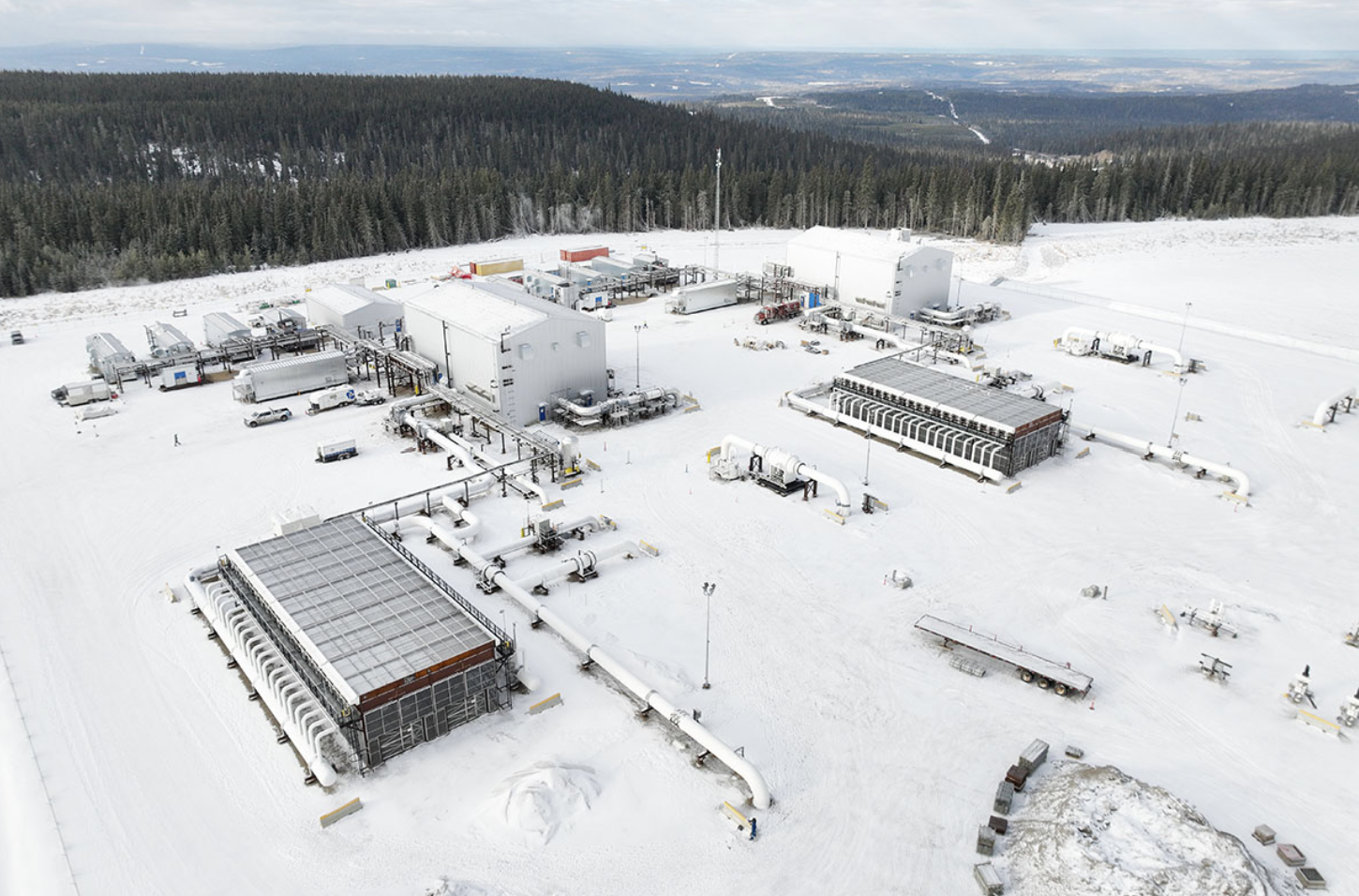
Photo: The TC Energy Emerson Creek Compressor Station. Wet’suwet’en leaders have stated that the proposed footprint of one compressor station is approximately 20 hectares. Two would be built on Wet’suwet’en territory.
At the official announcement about LNG Canada Phase 2 in Vancouver, British Columbia today, Prime Minister Mark Carney stated: “Canada is building big again. Today’s investment, as you know, over $30 billion in LNG Canada 2 will make LNG Canada the second largest facility of its kind in the world.”
He then noted: “Thanks to LNG Canada’s decision today, TC Energy is moving forward with its own multi-billion-dollar phase two of the coastal gas link pipeline.”
CGL Phase 2
In the TC Energy media release issued earlier in the day, they stated: “CGL [Coastal GasLink pipeline] Phase 2 will nearly double the existing capacity by adding new compressor stations…”
Wet’suwet’en leaders reject Phase 2
In May 2024, Wet’suwet’en hereditary leaders Dinï ze’ Na’Moks,Dinï ze’ Woos, and Tsakë ze’ Howilhkat stated: “We are aware that CGL is pursuing Phase 2 of the project alongside LNG Canada, seeking to build additional compressor stations as part of a plan to increase capacity of the pipeline.”
They added: “This includes the Titanium Peak Compressor Station in the Regional District of Bulkley-Nechako, one of two stations in unceded Wet’suwet’en territory, approximately 85 km southwest of Houston, BC. This station would be near the Unist’ot’en healing centre bordering Gidimt’en territory and on Liksamysu territory.”
Photo: PBI-Canada and PBI-Colombia visit the Unist’ot’en healing centre, June 2025.

Wet’suwet’en leaders have also stated: “The proposed footprint of one compressor station is approximately 20 hectares, which is equivalent to 17 soccer fields.”
They further noted: “Wet’suwet’en Hereditary Chiefs oppose and do not give consent to build these compressor stations and will pursue avenues to challenge these permits and construction.”
RCMP arrest Indigenous land defenders
The Narwhal article on the final investment decision on LNG Canada Phase 2 reminds us: “Coastal GasLink, which was built between 2019 and 2024 by Calgary-based TC Energy, faced widespread opposition in support of Wet’suwet’en Hereditary Chiefs, who argued the company did not receive free, prior and informed consent from the Aboriginal title holders to land intersected by the pipeline. When Indigenous land defenders and their supporters tried to stop construction, a series of infamous RCMP raids led to dozens of arrests and solidarity protests across the country.”
Photo: Heavily-armed RCMP C-IRG officers on Wet’suwet’en territory in November 2021. Photo by Michael Toledano.
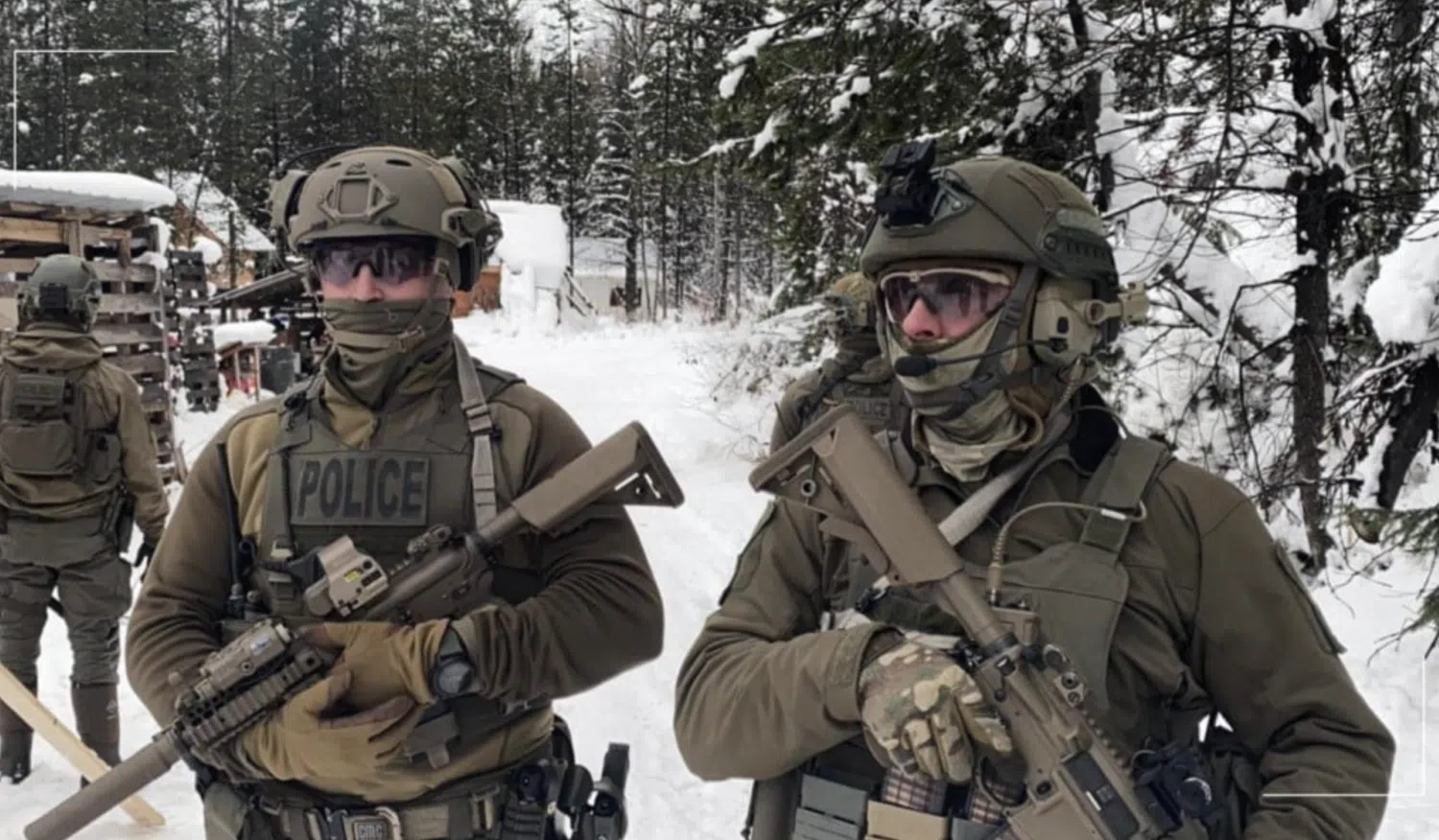
PBI-Canada further notes that the release of the Civilian Review and Complaints Commission (CRCC) systemic investigation of RCMP CRU-BC (C-IRG) enforcement actions on Wet’suwet’en territory was delayed last week to an unspecified time after the provincial election in British Columbia.
Construction timeline
The Narwhal also reports: “Construction on the pipeline and at the Kitimat facility will begin immediately, Carney said in his speech. According to the company, around 4,000 workers will be hired to build the expansion at the plant and around 2,000 people will build the pipeline compressor stations.”
OilPrice.com also reports: “Construction is expected to begin in early 2027, with the expanded system targeted to enter service in the early 2030s.”
We continue to follow this.

