


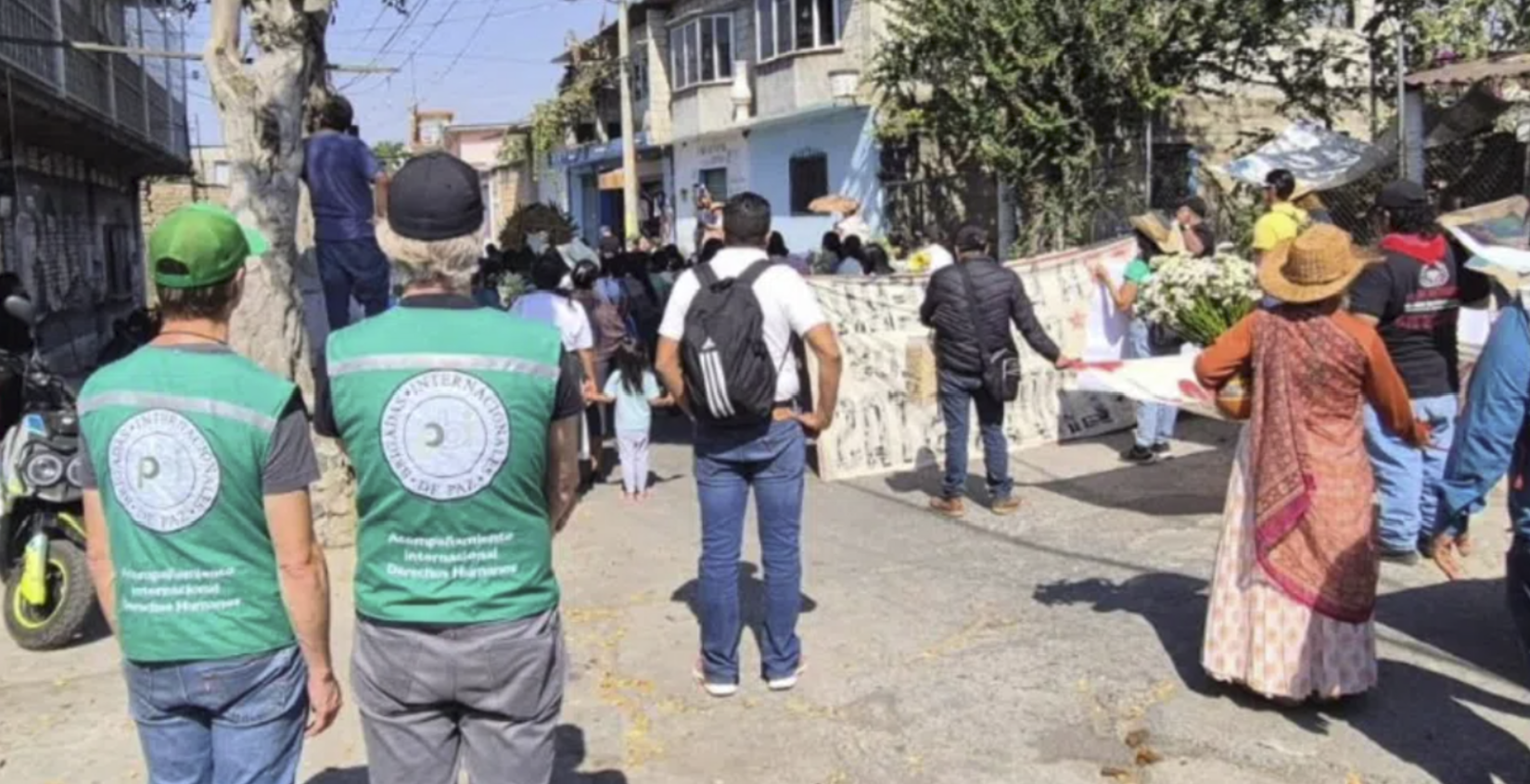
Photo: Indigenous Náhuatl environmental defender Samir Flores Soberanes was killed for his opposition to the PIM megaproject and Morelos Gas Pipeline. PBI accompanied a commemoration of his life on February 20, 2026.
Starting today (November 9 to November 20, 2026), representatives of more than 190 countries, including Canada, are meeting for the United Nations Conference of Parties (COP) 31 climate talks in Antalya, Turkiye.
CBC News reports: “Canada does not appear to be shying away from the UN process despite its recent climate-policy rollbacks [Canada is now more than 20 years behind reaching its 2030 emissions target and is backing the construction of the Prince Rupert Gas Transmission fracked gas and Pacific Link heavy crude and diluted bitumen pipelines on Indigenous lands]. A significant diplomatic contingent, led by federal Environment Minister Julie Dabrusin, will attend COP31, along with a dedicated Canada Pavilion hosting side events involving government, think tanks and NGO groups.”
The climate crisis continues to worsen.
The COP21 talks in December 2015 in Paris committed to keeping a global temperature rise this century well below 2 degrees Celsius above pre-industrial levels and to pursue efforts to limit the temperature increase even further to 1.5 degrees Celsius.
The Royal Meteorological Society says the global average temperature during 2024 was 1.6°C above the estimate of the pre-industrial level. Analysis from Carbon Brief indicates the 2°C threshold will likely be exceeded between 2034 and 2052 in the highest emissions scenario, with a median year of 2043.
And Production Gap documents: “Governments, in aggregate, still plan to produce more than double the amount of fossil fuels in 2030 than would be consistent with limiting warming to 1.5°C.”
Key issues remain unaddressed at the UN climate talks.
Fiona Harvey, environment editor at The Guardian, comments: “It was not until 2023 at Cop28 that the final agreement directly addressed fossil fuels for the first time, due to long-term strident opposition from producing countries.”
The Resource Justice Network has also noted: “Transition minerals entered the draft negotiating text at COP30 for the first time last year, but explicit governance provisions were dropped from the final agreement.”
And Ellie Kinney, a campaigner with the Conflict and Environment Observatory, has highlighted: “If the world’s militaries were a country, they would be the fourth largest emitter in the world.” On COP31, Kinney says: “With no thematic peace day, and no peace-related presidency initiatives, this year the topic risks slipping even further down COP’s agenda. This is both at odds with and perhaps explained by the current climate of geopolitical instability and rising militarism.”
Environmental defenders are paying with their lives.
Global Witness has documented the killings of at least 124 land and environmental defenders in 2025, bringing the total number to 2,375 defenders since 2012, when COP18 took place in Doha, Qatar.
Additionally, the Resource Justice Network specifies: “Globally, 329 allegations of transition mineral-related abuses and 42 attacks against human rights and environmental defenders were documented in 2025 alone.”
An 18-page “Briefing for UNFCCC COP31 on Environmental Human Rights Defenders (EHRDs)” released by Global Witness, Amnesty International and others last month, states: “All too often, land and environmental defenders continue to pay with their lives to protect their lands, territories, natural resources, and communities.”
Calls to protect environmental defenders marginalized.
Ginger Cassady from Rainforest Action Network has stated that in the closing days of the COP30 climate talks last year, there were interests seeking to “sideline environmental defenders”.
In the lead-up to COP29, Michel Forst, the UN Special Rapporteur on Environmental Defenders, told PBI-Canada in a similar context: “There are people who are willing to push for good results and at the same time we know that we also have people who are not our allies who are pushing also for counter-results and trying to delete paragraphs and good wording that some of us, some of them, would like to introduce.”
Efforts continue at COP31.
Three days ago, the CIVICUS global alliance called on the Member States and Parties attending COP31 to “recognise that climate ambition cannot be separated from the protection of the people who defend the forests, rivers, lands and territories on which climate solutions depend”.
Their recommendations include: “Adopt or strengthen national and regional protection mechanisms for human rights and environmental defenders, including protocols for investigating attacks, ending impunity, and repealing or reforming laws misused to criminalise legitimate activism, including SLAPP [Strategic Lawsuits Against Public Participation]-style litigation.”
Next steps.
Peace Brigades International-Canada remains concerned that the expansion of fossil fuel production, weapons production driving an increase in mining for critical minerals, and the omission of environmental defenders from the commitments emerging from these annual United Nations COP climate talks means continued criminalization, judicialization, intimidation, harassment, surveillance, forcible disappearances and armed attacks against frontline environmental defenders.
PBI continues to stand with organizations, defenders and communities by providing holistic protective accompaniment to attempt to mitigate the risk of harm against them and to help protect the space for them to do their work.
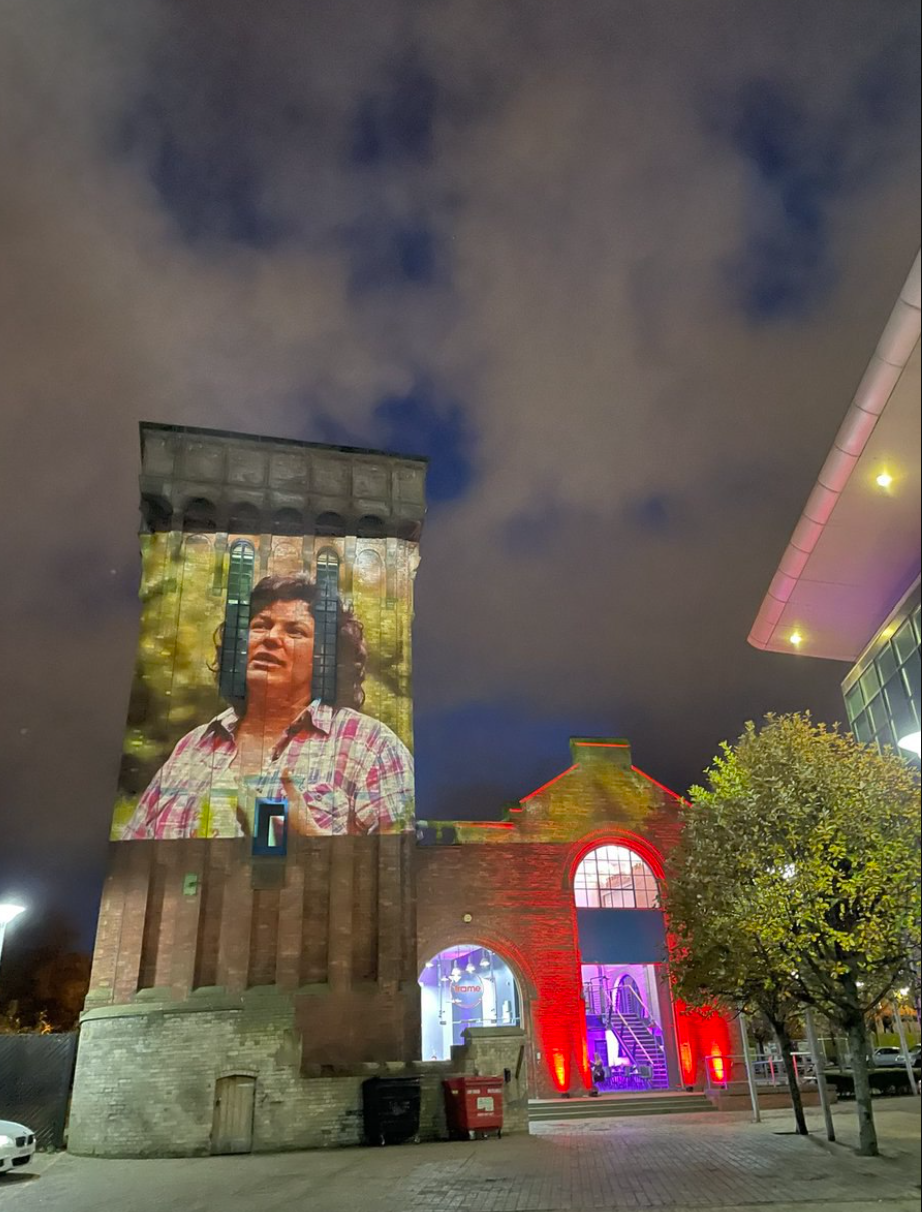
Photo: “Our Mother Earth – militarized, fenced-in, poisoned, a place where basic rights are systematically violated – demands that we take action.” The image of Indigenous Lenca environmental defender Berta Caceres was projected on a building in Glasgow during the COP26 summit, November 2021.
Further reading: Remembering Colombian land defender Hernán Bedoya (Brent Patterson, Rabble.ca, August 16, 2019).

