
On October 12, 2026, the 12th session of negotiations of the UN Treaty to regulate transnational corporations under Human Rights law began at the United Nations Human Rights Council in Geneva, Switzerland.
The Updated draft legally binding instrument to regulate, in international human rights law, the activities of transnational corporations and other business enterprises submitted by States during the ninth, tenth and eleventh sessions of the open-ended intergovernmental working group (OEIGWG) can be read here.
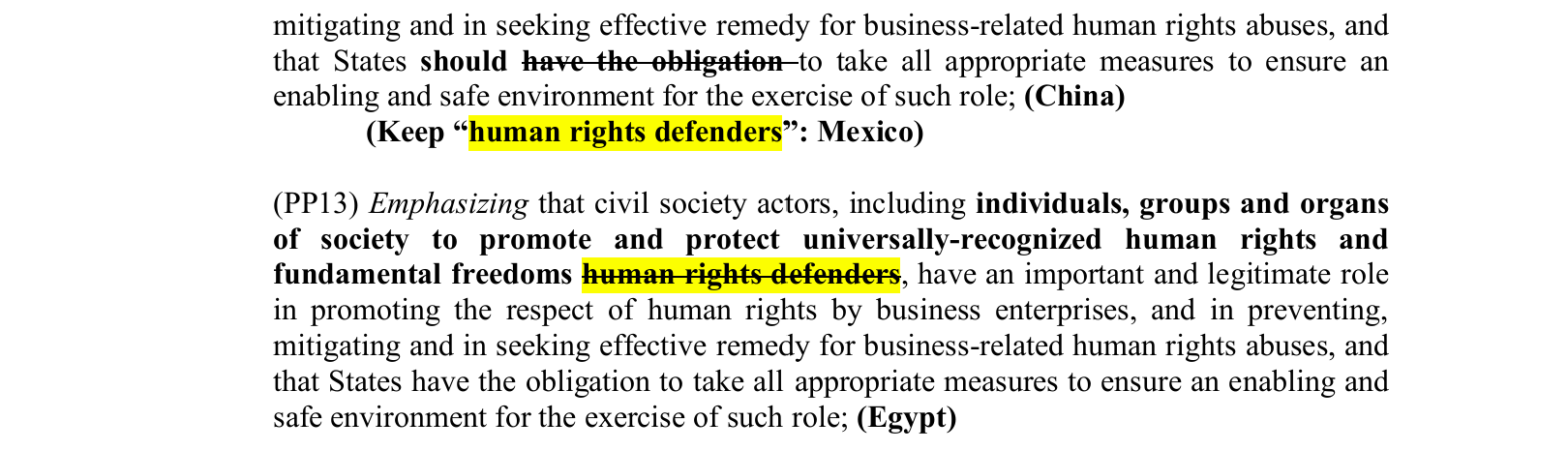
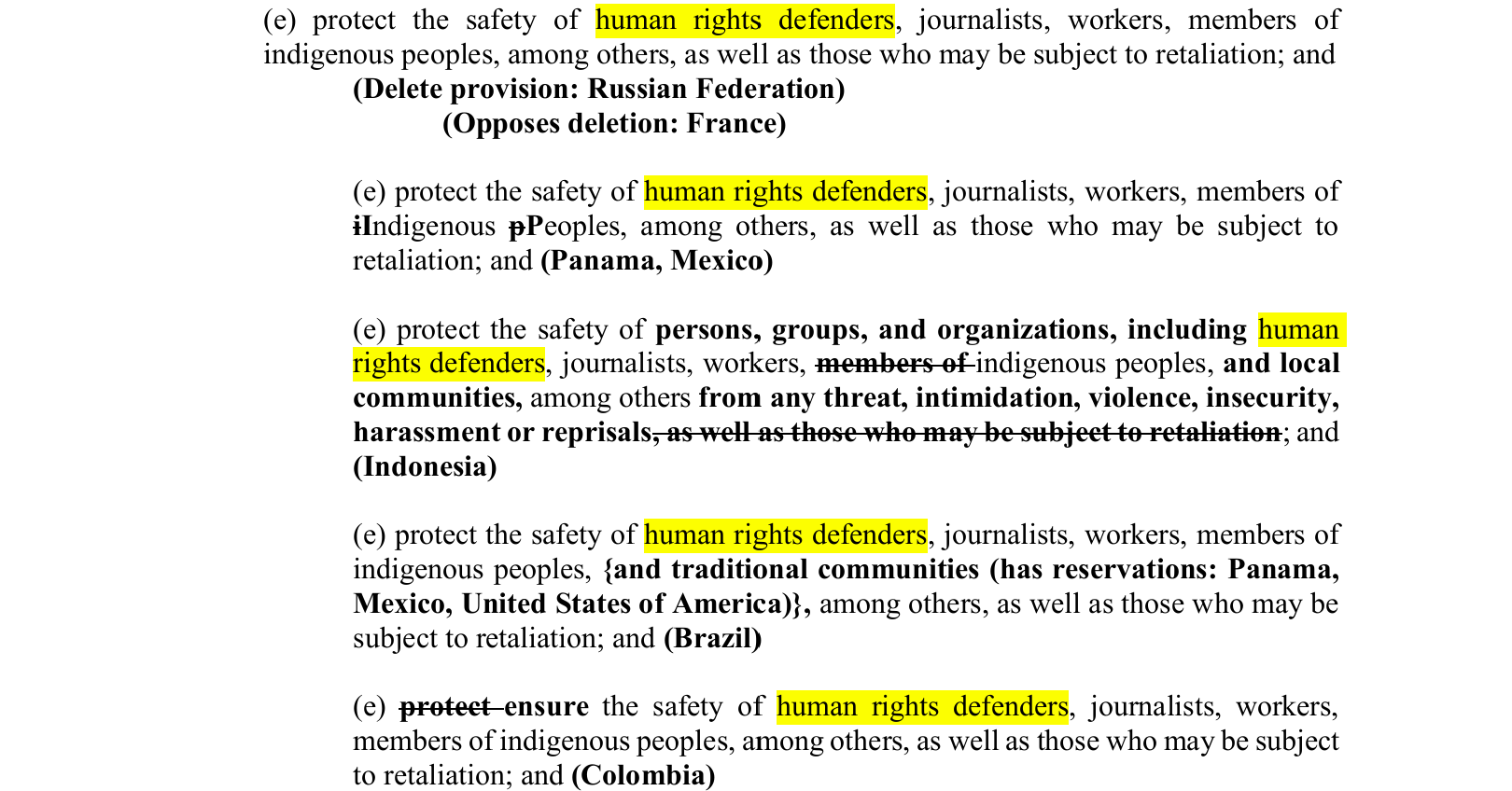
In the two main areas where “human rights defenders” are mentioned, there does appear to be some effort by specific States to weaken the language.
This can be seen in Preamble 13 and section 6.4 (e).
Preamble 13
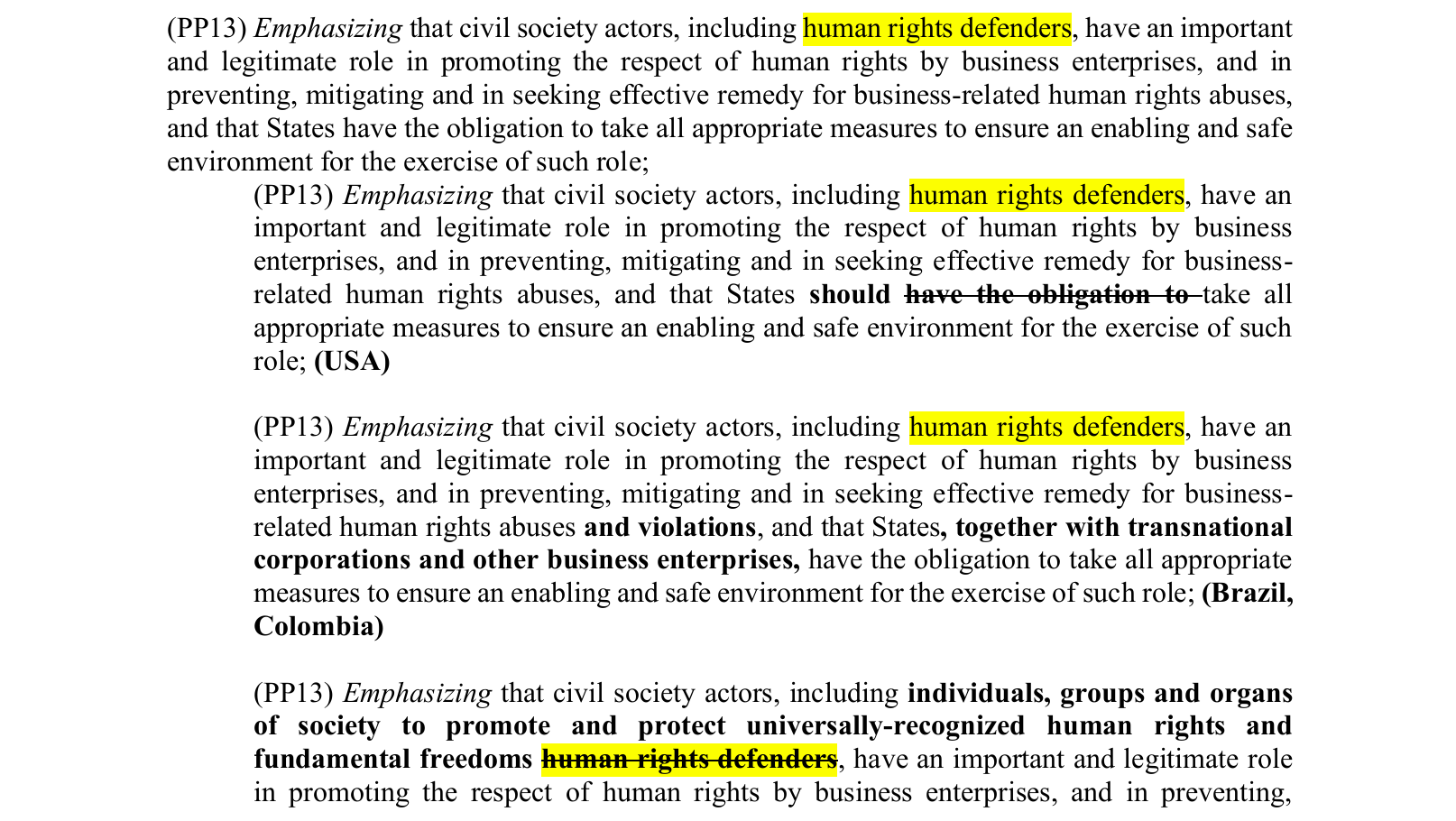
6.4 (e)
Commentary
Overall, Lawyers for Human Rights and partners have commented: “The Updated Draft Treaty’s language has shifted from stronger language typical of international human rights law instruments to softer terms found in the United Nations Guiding Principles on Business and Human Rights (UNGPs), which contain obligations for states and responsibilities for corporations, and other similar soft law frameworks.”
Still they note: “The ongoing negotiations in 2026 presents an opportunity to highlight the gaps in the current Updated Draft Treaty that requires addressing if the final version of the treaty is to be meaningful for those it is envisioned to protect, namely frontline communities, including indigenous communities and human rights defenders, who have historically borne the burden of harmful practices by business.”
The Checkmate campaign
ESCR-Net – the International Network for Economic, Social and Cultural Rights, announcing the launch of the Checkmate global campaign, has also stated: “A strong Binding Treaty must establish clear and enforceable obligations for States to regulate corporate activities, prevent human rights violations, ensure access to justice and effective remedies, and protect affected communities and human rights defenders.”
Canada and the Binding Treaty
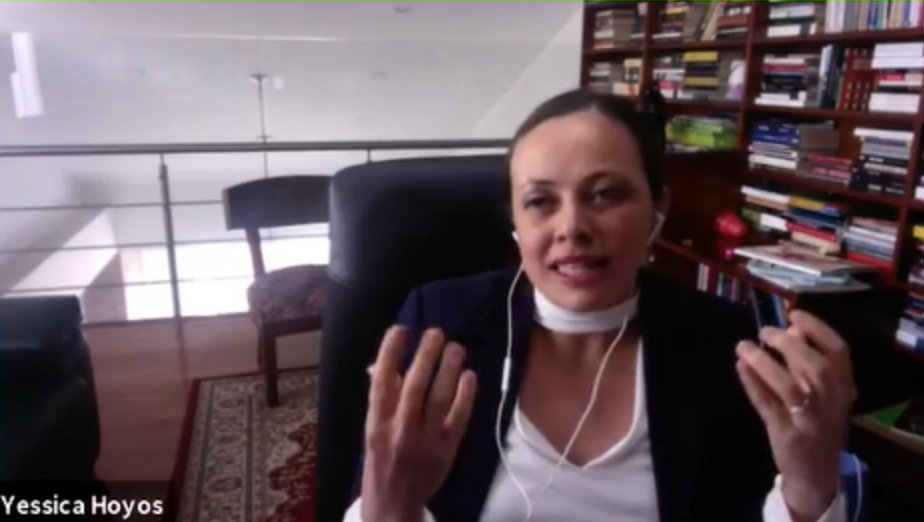
On a PBI-United Kingdom webinar in July 2020, PBI-Colombia accompanied Yessika Hoyos from the Jose Alvear Restrepo Lawyers Collective (CCAJAR) commented: “Many companies together with the states have been blocking this issue.”
Those countries reportedly include Canada, the United States, the United Kingdom, Japan, Australia, Brazil, Russia and China.
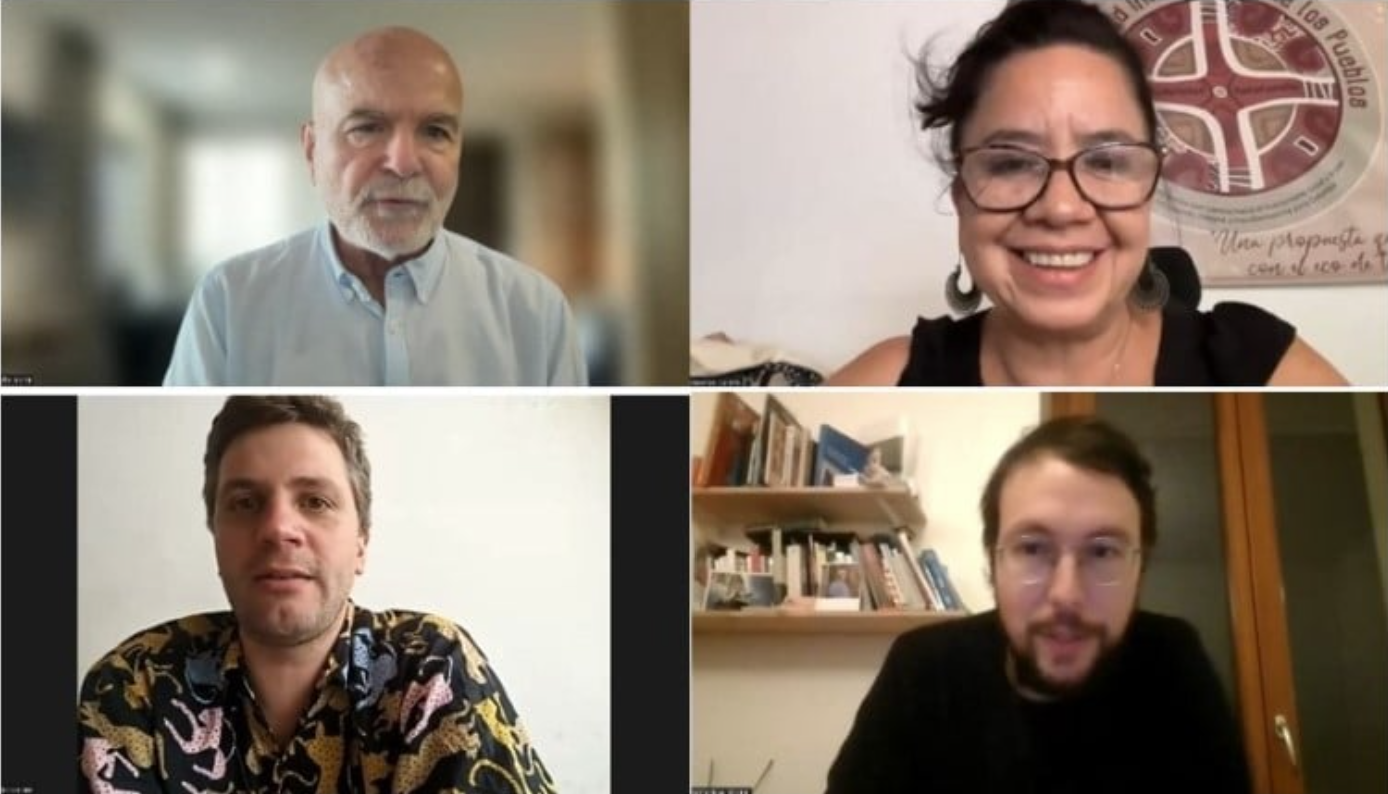
Video still: Yessika Hoyos commenting on the Binding Treaty.
Canada has been long seen as obstructionist in achieving a Binding Treaty.
In October 2023, Via Campesina noted: “The countries who have not engaged or directly reject and have tried to stop the process are the United States, Japan, Canada and Australia, as well as other highly industrialized countries with a high number of TNCs [transnational corporations] headquartered in their territories.”
PBI supports the promise of a Binding Treaty
Speaking in March 2018, prior to the 4th session on the Binding Treaty, PBI-Switzerland stated: “PBI reiterates the importance of the participation of civil society and human rights defenders as crucial to the success of the process.”
And in September 2018, PBI-Mexico commented: “After 7 years of the Guiding Principles being in force, PBI has not witnessed an improvement in the situation of risk for human rights defenders on the ground.” The MEP then noted: “PBI believes that a Binding Treaty could potentially lead to greater protection of human rights defenders working on business and human rights cases.”
PBI-Canada continues to follow this.
Further reading
–PBI-Canada follows the UN talks on a Binding Treaty on business and human rights in Geneva, October 20-24 (PBI-Canada, October 22, 2025)
–PBI-Canada hosts webinar on UN COP and Binding Treaty processes and the protection of environmental defenders (PBI-Canada, December 3, 2024).