


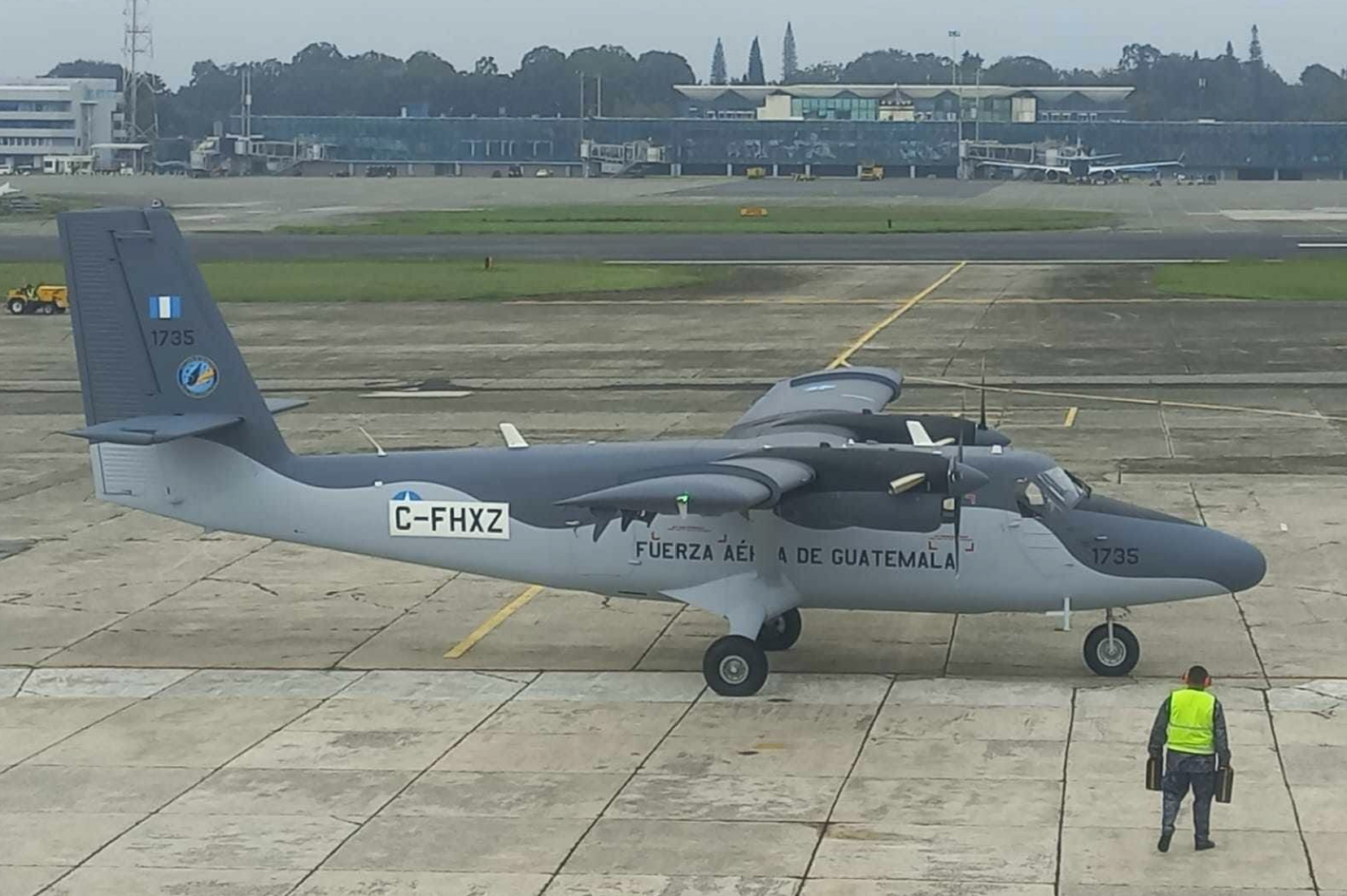
Photo: Fuerza Aérea Guatemalteca DHC-6 Twin Otter. Photo from IPMS/Guatemala Facebook page, October 12, 2026.
On June 22, 2026, the Canadian Commercial Corporation (CCC) published an article titled: CCC to Accelerate Canadian Defence Exports to Guatemala.
That article notes: “CCC is pleased to announce the signing of a Memorandum of Understanding (MoU) with the Ministry of National Defence of the Republic of Guatemala. The agreement establishes a government-to-government (G2G) framework to support Guatemala’s expedited procurement of Canadian defence and security solutions.”
With this announcement, it is likely that Guatemala will be one of the 100+ international delegations that attend the CANSEC arms show in Ottawa on June 2-3, 2027 where “$1B+ in business deals happen every year”.
The CCC also highlights: “This agreement builds on CCC’s growing defence export relationship with Guatemala, including a recent contract to supply a Canadian-built Twin Otter Classic 300-G aircraft.”
Pentagon Buys Canadian Transport Aircraft for Guatemala
In June 2025, Defense Post reported: “The US Department of Defense has awarded a $10.1-million contract to Canadian manufacturer De Havilland to supply a transport aircraft to Guatemala. The deal, part of a foreign military sale, includes one DHC-6 Twin Otter Classic 300-G, spare parts, and ferry flight services. Work will be carried out in Calgary, Alberta, through December 2025.”
No CCC follow-up on human rights violations
In May 2018, Ottawa Citizen reporter David Pugliese reported: “The Ottawa-based CCC, which helps Canadian exporters get contracts with foreign governments acknowledges it conducts no follow-up to ensure exported Canadian-built equipment isn’t being used to abuse human rights.”
US weapons sales to Guatemala
On September 29, 2026, the Guatemala Human Rights Commission (GHRC) also documented: “For the first time in more than four decades, Guatemala has purchased weapons from the United States and, in the words of the State Department, is ‘building one of our hemisphere’s most extensive migration partnerships.’”
Their article continues: “On September 21, Guatemala received the first shipment of weaponry from the United States government in decades, following the lifting of restrictions that had limited US military sales to the Guatemalan Army. The $5.03 million acquisition, made through the US Foreign Military Sales program, included 2,699 M4A1 rifles, 59 M240 machine guns, 57 grenade launchers, and 11,220 30-round magazines. A prior delivery of grenade launchers was made in June.”
M4 rifles are made by US-based Colt’s Manufacturing Company, and M240 machine guns are made by FN America (the US subsidiary of Belgian firm FN Herstal) and the US-based company Ordnance.
Human rights violations in Guatemala
The GHRC also provides this historical context: “Foreign Military Sales to Guatemala were restricted in 1977 because of the egregious human rights violations committed by the Guatemalan Army during the internal armed conflict, and the restriction was maintained for decades because of ongoing concerns about human rights violations and about the misuse by the Army of US-provided equipment.”
The Fenix mine
The GHRC further highlights: “In 2021, jeeps [provided by the United States] were reportedly used to repress a protest of the Fenix mine.”
According to reports from the U.S. Government Accountability Office (GAO), on October 24, 2021, Guatemalan security forces misused specialized Jeep J8 vehicles against the Indigenous Maya Q’eqchi’ land defenders.
Giovanni Batz, an Assistant Professor at the University of California Santa Barbara, has written in ReVista Harvard Review of Latin America: “According to the U.S. Government Accountability Office (GAO), the Guatemalan government has misused on several occasions military equipment and aid donated by the United States. For example, on October 24, 2021, the Guatemalan government misused jeeps donated by the Department of Defense against anti-mining protestors in El Estor, according to GAO reports.”
The Progressive has reported: “Police raided the houses of Carlos Choc and Juan Bautista Xol [on October 26, 2021], both local correspondents for the independent media outlet Prensa Comunitaria, as well as the offices of local radio station Xyaab’ Tzuultaq’a. The attacks on the press have raised concerns from international press freedom and Guatemalan human rights organizations.”
Accompaniment of Carlos Choc
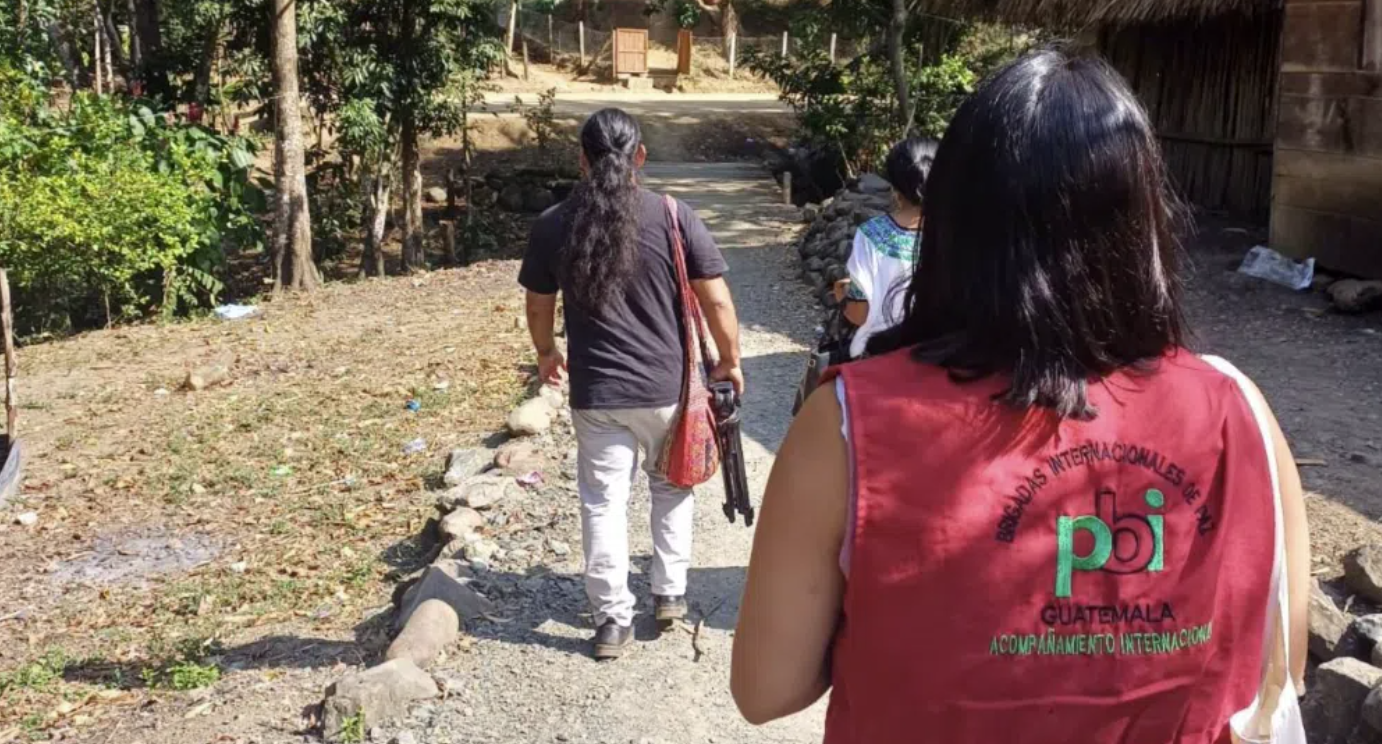
PBI-Guatemala has noted: “Carlos Choc has been criminalized and prosecuted because of his journalistic work, which he has used to report on human rights violations against the Q’eqchi’ people and the environmental pollution caused by the Fenix mine in the El Estor municipality. We began accompanying him in April 2025.”
Photo: PBI-Guatemala accompanies journalist Carlos Ernesto Choc to meet with women’s cooperative in El Estor (PBI-Canada, February 24, 2026).
PBI-Canada research on arms exports and HRDs
Peace Brigades International-Canada, within our commitment to the holistic protective accompaniment of organizations, defenders and communities, continues to monitor, research and analyze the implications of the export of military goods produced in Canada on the lives and safety of the human rights defenders, journalists, lawyers and workers movements accompanied by Peace Brigades International.
We continue to follow this.
Further reading: Guatemala buys arms from U.S. after decades of embargo against the army for human rights violations (Associated Press, September 21, 2026).

