

The Peace Brigades International-Honduras Project has posted on social media:
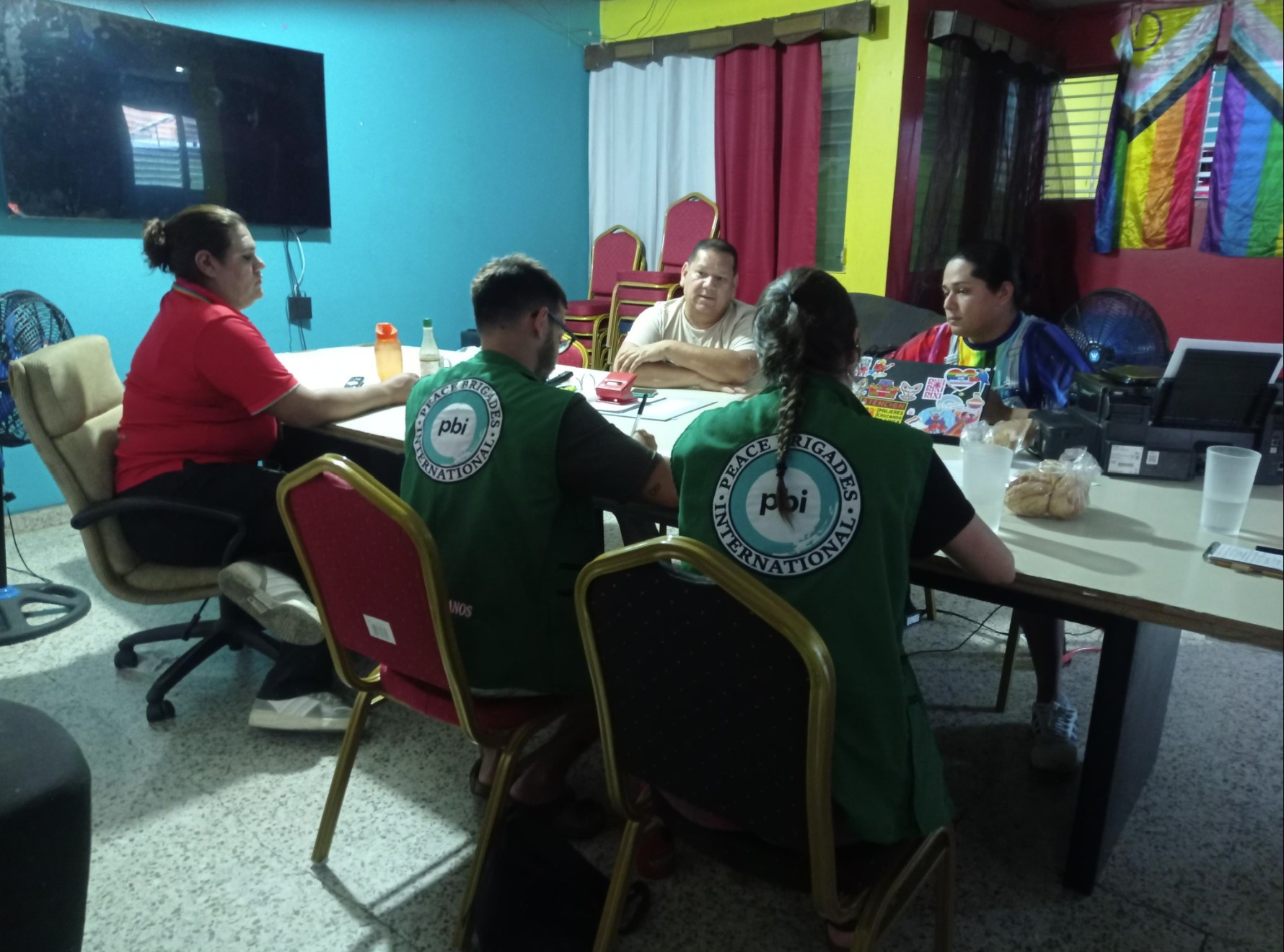
“This week, we met with Arcoíris to get an update on the security situation facing the LGBTI+ community in Honduras and to assess the status of compliance with the reparations measures ordered in landmark rulings such as the Leonela Zelaya case.
The Inter-American Court of Human Rights’ ruling established the implementation of a procedure for the recognition of gender identity, which would allow transgender people to update their information on identity documents.
At PBI, we express concern over the delay in implementing these reparations measures and emphasize that the right to life, dignity, security, and access to justice are fundamental human rights.”

Leonela Zelaya detained, assaulted by the police
Outright International has explained: “Leonela Zelaya was a trans woman living in Tegucigalpa, Honduras. She was 34, a sex worker, and lived with HIV—conditions that, in 2004, placed her in the direct line of routine policing and abuse. The record reflects that she was detained repeatedly that year, and the Court accepted that she was assaulted by police officers in the context of those detentions. On the night of September 6, 2004, she went out to work; in the early hours of 7 September, a street vendor found her body in Comayagüela, just outside Tegucigalpa—bearing indications of a violent death.”
Vicky Hernández killed by security forces
Outright International has also noted: “Vicky Hernández was a trans woman, a sex worker, and an activist with the Colectivo Unidad Color Rosa, a group working on the human rights of trans people and on HIV prevention. In the early hours after the June 2009 coup d’état in Honduras, as a nationwide curfew took effect and military and police forces flooded the streets, Hernández went to a friend’s house; the next morning, she was found dead. From the outset, the authorities’ handling of the case reflected the prejudice the Court would later identify: in official records she was initially registered as an ‘unknown’ male, despite information that should have allowed her to be identified.”
In June 2021, The Guardian reported: “In a landmark ruling for transgender rights, the Honduras government has been found responsible for the 2009 murder of the trans woman and activist Vicky Hernández.”
“The Costa Rican-based Inter-American court of human rights … has ordered Honduras, which has the world’s highest rate of murders of trans people, to pay reparations to Hernández’s family and implement a sweeping range of measures designed to protect trans people, including anti-discrimination training for security forces and state collection of data on violence against LGBTQ+ people. It also ruled that the state must allow people to alter their gender identity on identification documents and public records. This could set an important precedent for Central America, where most countries do not allow people to legally change their gender.”
Security forces a major threat
On November 1, 2024, PBI-Canada coordinator Brent Patterson met with Jennifer Cordoba, the director of the Muñecas (Dolls) Collective, and Donny Reyes, the director of Asociación Arcoiris, at the Arcoiris office in Tegucigalpa.
Reyes has stated: “The biggest problem that we face is the violence of the state security forces towards the LGBT+ community: the armed forces, the police, the criminal investigation police, military police, municipal police.”
As noted above, Hernández was murdered on June 28, 2009, the first night of the coup. On July 30, 2009, about a month after the coup, The Globe and Mail reported: “Canada is still providing training to members of the Honduran army.”
By February 17, 2015, Sandra Cuffe reported in Ricochet: “Militarization, impunity, and human rights abuses have dominated Honduras since the coup. …Since 2011, Canada has provided the Northern Triangle (Honduras, Guatemala and El Salvador) with $5 million in surveillance and criminal investigation equipment and training to investigate homicides and violent crimes, wrote Department of Foreign Affairs, Trade and Development spokesperson John Babcock in an email to Ricochet.”
That article adds: “Given the alarming frequency of threats and attacks against human rights activists, farmworker movement participants, Indigenous leaders, journalists and others in Honduras, training in surveillance raises concerns. Bertha Oliva, coordinator of the Committee of Relatives of the Detained-Disappeared [COFADEH] in Honduras takes it for granted that human rights activists and social movement organizations are under heavy surveillance.”
PBI-Honduras COPINH coordinator Bertha Zúñiga Cáceres has commented: “We have an army in a country where there’s no armed conflict with any other country. The only conflict in Honduras is a conflict of interests of the richest people with the most historically impoverished people.”
She has backed the proposed US legislation titled The Berta Cáceres Act, named in honour of her mother who was assassinated in March 2016, that states: “The Honduran police are widely established to be deeply corrupt and to commit human rights abuses, including torture, rape, illegal detention, and murder, with impunity.”
It calls on the United States to suspend all “security assistance to Honduran military and police until such time as human rights violations by Honduran state security forces cease and their perpetrators are brought to justice.”
PBI-Canada has highlighted that with Canada exporting $1 billion of “military goods” to the United States every year for the production of weapons there that The Berta Cáceres Act should also apply to Canada.
Accompaniment
The Peace Brigades International-Honduras Project has accompanied Arcoíris, the LGTB Association of Honduras, since July 2015.


