Home Blog Page 375

PBI-Canada to host webinar on International Women Human Rights Defenders Day, November 29

Peace Brigades International-Canada will be hosting a webinar on Sunday November 29 to mark International Women Human Rights Defenders Day.

To register for the webinar, please click here.

The webinar will feature:

Tatiana Triana is a member of the Social Corporation for Community Advisory and Training Services (COSPACC) in Colombia that accompanies victims of human rights violations, including the social leaders criminalized by Toronto-based Frontera Energy.

Sophia Sidarous is a Mi’kmaq from the Metepenagiag First Nation in New Brunswick who has been a key organizer of numerous resistance actions in Ottawa (unceded Algonquin territory) in support of the Mi’kmaq, Algonquin, Wet’suwet’en and Secwepemc peoples.

Maryanne Kasina is a writer and the convener of Women in Social Justice Centres movement in Kenya. She is the co-founder of Kayole Community Justice Centre in Nairobi that organizes against gender-based violence and police brutality.

Meera Karunananthan is the Ottawa-based Director of Blue Planet Project, a global initiative aimed at promoting water justice around the world, and a PhD candidate in geography studying feminist urban water justice struggles. She is also a member of the Peace Brigades International-Canada Board of Directors.

United Nations special rapporteurs have highlighted in this statement the significant role played by women human rights defenders, but also the specific and additional risks of threats, attacks and violence they face as women.

In 2019, 465 PBI volunteers from 28 countries supported about 700 women human rights defenders. 70% of PBI volunteers in 2019 were women.

International Women Human Rights Defenders Day started in 2005 at the First International Consultation on Women Human Rights Defenders in Sri Lanka.

To register for this webinar, please click here.

PBI expresses solidarity with people affected by Tropical Storm Eta

Photo: Erick Alexander Cano Roque/Prensa Comunitaria.

On November 5, the Peace Brigades International-Honduras Project posted: “We express our solidarity with the people affected by the tropical storm Eta in the country and we continue to monitor the situation in the most affected areas.”

Global News reports that torrential rains pummeled Honduras on November 5 damaging hundreds, if not thousands, of homes. Reuters adds that a UNICEF representative in Honduras has estimated that 1.5 million children will be affected.

Reuters also reports that “around 100 people were killed by a landslide” when the storm hit the village of Queja in the central Guatemalan region of Alta Verapaz and “mudslides swallowed around 150 houses.”

The PBI-Guatemala accompanied Verapaz Union of Campesino Organizations (UVOC), an Indigenous and peasant organization dedicated to the defence and promotion of access to land for peasants, has tweeted that Eta has left 50 Mayan Q’eqchi’ families homeless on the ancestral territory they seek to recover after a series of dispossessions, including by the Military Zone 21 army base built on their lands in 1968.

UVOC adds: “Resistance residents of Chicoyou have made it known that they need support with food, clothing, medicine, supplies and sheets to rebuild their homes.”

Rights Action has tweeted: “Hurricane Eta brings torrential rains, mudslides & flooding to Caribbean coasts of Honduras, Guatemala & Nicaragua, further devastating lives of already impoverished & discriminated Indigenous & campesino communities.”

Rights Action, which has worked in Guatemala for more than 25 years, has tweeted about their Emergency Fund that “channels your funds directly to dozens of community organizations implementing their own human rights, territorial, environmental, democracy and justice defense struggles and emergency relief projects.”

Mechanism to receive complaints of human rights violations by Canadian companies expected to launch in late November

On November 3, iPolitics reported: “A new office formed by the Trudeau government to handle complaints of human-rights abuses perpetrated by Canadian companies operating overseas is set to go operational this month — but without the power to compel firms to hand over evidence.”

“The Canada Ombudsperson for Responsible Enterprise (CORE), which was first announced in January 2018, is close to finalizing its operating procedures, and expects to launch its complaints mechanism at the end of November.”

“As it was first envisioned, CORE would independently investigate, report on, and recommend remedies for complaints of bad conduct abroad. In April 2019, the government announced that lawyer Sheri Meyerhoffer would be CORE’s ombudsperson.”

“According to the [latest draft operating procedures], the complaints mechanism would offer both parties a collaborative dispute-resolution process before the ombudsperson reviews the allegations of bad conduct. The review would require both parties to act in good faith, including by: meeting the ombudsperson’s requests for evidence; participating in joint fact-finding exercises; and not retaliating against complainants.”

“The failure of companies subject to a review to do so could result in a recommendation that Ottawa stop any trade advocacy and financial support of the firms. But there would be no legal obligation for companies to provide information.”

The iPolitics article also notes: “After a review is completed, the ombudsperson would write a report and recommend changes, including to the company’s practices and policies, and whether to refer the matter to law enforcement.”

The most recent draft of the Operating Procedures for the Canadian Ombudsperson for Responsible Enterprise can be read here.

Section 5.1 of those Operating Procedures notes: “There is no required format for making a request to file a complaint.”

It adds: “A request may be made using the online form, by email to CORE-OCRE@core-ocre.gc.ca, by telephone at (number to be established) or by postal mail to the Canadian Ombudsperson for Responsible Enterprise at following address: (to be provided).”

A media release on UN High Commissioner for Human Rights Michelle Bachelet’s visit to Canada in June 2019 had noted: “[Bachelet] encouraged the authorities to ensure the Ombudsperson will have sufficient powers to independently and effectively investigate allegations of human rights abuses under its mandate.”

Emily Dwyer from the Canadian Network on Corporate Accountability (CNCA) has commented: “[CORE] does not have the basic minimum powers that are required for it to do anything meaningful for impacted communities and workers who’ve been harmed by the overseas operations of Canadian companies.”

The CNCA’s Approach with Caution document can be read here.

PBI-Canada is a member of the CNCA. We will provide a further update when the complaints mechanism is launched. Despite the limitations of CORE, we expect that PBI accompanied organizations are likely to submit complaints to this office.

Water defenders who have challenged fracking and Veolia-operated landfill among those who receive death threat in Barrancabermeja

Photo: Oscar Sampayo and Yesid Blanco.

On November 4, El Espectador reported that 18 people, 14 of whom reside in Barrancabermeja, are named in a pamphlet from Águilas Negras (Black Eagles) that says they have 24 hours to leave the territory or they will be declared a military target.

W Radio added: “The people mentioned have denounced the environmental damage caused by the authorities in the oil port, in the Ciénaga de San Silvestre and other tributaries that supply water to more than 300,000 inhabitants of this sector.”

Now Infobae reports that six of those threatened are members of the Alliance for a Colombia Free of Fracking (including Oscar Sampayo and Yesid Blanco) and that three of those who were threatened had filed a protection action against Ecopetrol, Aguas de Barrancabermeja, Veolia and various environmental authorities just three weeks ago.

Semana Sostenible explains that the Ciénaga de San Silvestre, a wetland area that supplies drinking water to Barrancabermeja, has been contaminated for years by agriculture and livestock (notably thousands of hectares of African palm and large herds of cattle and buffalo), the Ecopetrol oil refinery, and the Esmeralda, Anchicayá and Yerbabuena garbage dumps (the latter two landfills were authorized in 2013-14).

That article in Semana Sostenible further notes that the Yerbabuena landfill is operated by Veolia (formerly Rediba SA).

In July 2019, PBI-Colombia accompanied CREDHOS on a boat tour (along with Oscar Sampayo) that included the San Silvestre marsh where this PBI-Colombia article noted: “This swamp has a worrying story to tell: massive pollution generated by leachate from the landfill site in Barrancabermeja, operated by the Rediba company.”

Yesid Blanco has noted that he has drawn “attention to mercury contamination of the city’s water supply associated with a sanitary landfill that threatens a protected wetland.” He has also previously explained that the landfill operated by Rediba is situated in the village of Patio Bonito in the district of La Fortuna in Barrancabermeja.

This past June, Vanguardia reported that dozens of residents in Patio Bonito blocked access to the now Veolia-operated landfill over the alleged failure to deliver drinking water three times a week (instead water was only being delivered once a week).

(In August, it also reported that Veolia damaged the El Monte stream of the village of Chocoa de Girón during the construction of a landfill that lacks an environmental licence.)

El Tiempo highlights that more than 80 organizations of the National Network for Democracy and Peace have demanded that “the Colombian State guarantee the appropriate political and material measures for the protection of the life and integrity of the victims of this threat [from the Black Eagles], as well as of all those who work for the defense of water, life, the environment and the territory in Magdalena Medio and in every corner of the country.”

Yesterday, PBI-Colombia tweeted its concern about this situation along with a video of CREDHOS president Ivan Madero Vergel.

PBI-Canada shares their concerns.

We recall that the United Nations General Assembly has recognized the human right to water and sanitation and acknowledged that clean drinking water and sanitation are essential to the realization of all human rights. This includes the obligation to protect that requires States to prevent third parties from interfering with the enjoyment of the right to water, notably polluting and inequitably extracting from water resources.

Canada comments on human rights in Honduras at its universal periodic review at the United Nations

At the United Nations Universal Periodic Review of the human rights situation in Honduras on November 5, Canada’s intervention, made by Rory Raudsepp-Hearne, the First Secretary at the Permanent Mission of Canada to the United Nations, stated:

“Canada thanks Honduras for its presentation and welcomes the creation of the Ministry of Human Rights represented today by Minister Cuevas. While this is an important step, we remain concerned about the overall human rights situation in Honduras.

Canada recommends that Honduras:

1- Strengthen measures for the prevention, investigation, and punishment of all sexual and gender-based violence including most specifically domestic violence and violence against LGBTI persons.

2- Protect freedom of expression by promptly investigating and prosecuting acts of intimidation, harassment and attacks against journalists, human rights defenders and Indigenous, Afro-descendant and community activists.

3- Increase efforts to ensure the independence of the judicial system, strengthening the investigation and prosecution of acts of corruption and human rights violations and prevent the criminalization of human rights defenders as well as community and Indigenous activists to ensure they are able to operate in a safe environment.

4- Investigate and bring to justice cases of human rights violations implicating military forces and create a well-defined plan to complete the reform of the police and remove the military from civilian security duties.”

Canada’s presentation can be viewed at item #31 at the 2:32:10 mark here.

PBI-Honduras has responded: “We value the recommendations of Canada as well as the rest of the States and we remember the importance of constant international observation and follow-up on these recommendations during the next five years. The next important appointment will be in the first quarter of 2021, when the Honduran State will announce which recommendations it accepts.” 

PBI-Honduras has also previously noted: “In the context [of the Universal Periodic Review at the United Nations], we have worked to visibilize the specific violence and risks faced by women defenders of land, territory and the environment to demonstrate the need for a differentiated response by the Honduran State to their protection.”

It has highlighted: “As part of the 2015 UPR, the governments of Canada, the United States, Norway and Switzerland published recommendations in which they requested that the military police [created in August 2013] be redefined as a temporary measure, and lobbied for the intensifying the professionalization of the National Police and the inclusion of human rights training as part of this process.”

Despite this, PBI-Honduras notes : “[The Military Police for Public Order] has become a normalized practice and the number of officers continues to increase.”

Since the 2009 coup d’état in Honduras, PBI has seen with increasing concern the worsening of the situation of human rights defenders. Following a request in May 2010 for accompaniment, the PBI Honduras project was established in 2013.

Thirty-one human rights defenders were killed in Honduras in 2019, including 14 land and environmental defenders, making Honduras the most dangerous country in the world per capita for land and environmental defenders.

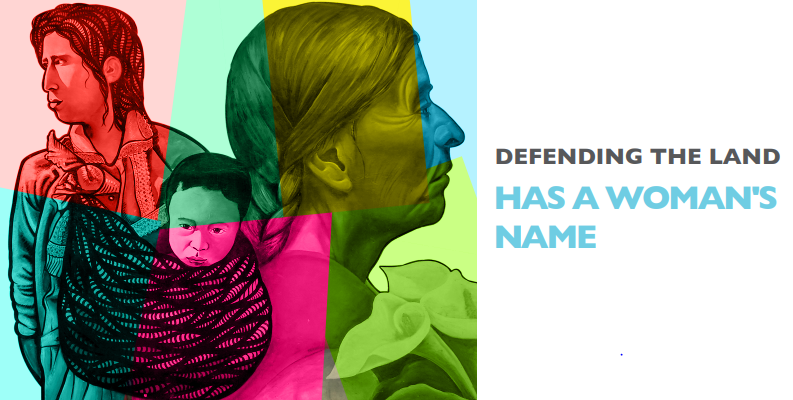
To read the PBI-Honduras report related to this UPR process, please see: Defending the Land Has a Woman’s Name. The complete list of 11 recommendations made by PBI-Honduras can be read on pages 28-29.

PBI-Colombia accompanied CREDHOS speaks against threat received by environmental leaders in Barrancabermeja

Photo: CREDHOS President Ivan Madero Vergel.

On November 4, W Radio reported that 18 people, 14 of whom reside in Barrancabermeja, are named in a pamphlet from Águilas Negras (Black Eagles) that says they have 24 hours to leave the territory or they will be declared a military target.

That article adds: “The people mentioned have denounced the environmental damage caused by the authorities in the oil port, in the Ciénaga de San Silvestre and other tributaries that supply water to more than 300,000 inhabitants of this sector.”

Two of those listed in the circular (see below) are Oscar Sampayo and Yesid Blanco, both prominent opponents of fracking.

El Espectador further reports that the commander of the Magdalena Medio Police Department assures that the document is false.

That article adds: “Iván Madero, president of Credhos Paz, affirmed through a video that there is a debate in which the authorities state that the Black Eagles do not exist and that they have no presence in Barrancabermeja or Magdalena Medio.”

But it then quotes Madero saying: “This pamphlet corroborates once again that if they are not the Black Eagles, there are some actors interested in intimidating and putting at risk the lives of public officials, environmental leaders and legal professionals who have demonstrated against of environmental effects and against fracking.”

In this 2-minute video, Madero “speaks out against the threats against social leaders of the Magdalena Medio region by the groups paramilitaries called Black Eagles.”

Madero’s reference to fracking is significant because the fracking pilot projects that could begin next year would be in the Middle Magdalena Valley.

CREDHOS has previously noted: “Blanco has argued that fracking in Barrancabermeja and the surrounding region, known as the Magdalena Medio, would have a direct negative impact on the San Silvestre environmental protection zone, which provides water to the city, and is a strategic corridor for protected species such as the jaguar.”

Significantly, the largest oil refinery in Colombia is in Barrancabermeja and, if fracking were to be fully approved, its operations would be expanded.

In July 2019, PBI-Colombia accompanied CREDHOS along with a group of people on a 3-hour boat trip to observe the pollution in the Magdalena River caused by this refinery.

At the start of the trip, Sampayo showed the group the grey-brown water pouring directly into the Magdalena River from the refinery.

Local fishers have also attributed the water pollution and deaths of fish to the decrease in the flow of the Sogamoso River (the second largest tributary of the Magdalena River) to the Sogamoso hydroelectric dam built by Isagen SA (now majority-owned by Toronto-based Brookfield Asset Management).

The boat trip also went to the San Silvestre River, the main tributary of the Sogamoso River, where the delegation saw an area where several fracking projects could happen. Mongabay has reported: “The latest threat to the wetlands [around Barrancabermeja], and the ecosystem as a whole, is hydraulic fracturing, or fracking.”

That article adds: “[Local fisher Cristo] Carrascal says he has heard that a large amount of water will be required for fracking operations. That water could come from the wetlands, just as happened with traditional oil drilling activities.”

Yesterday, Senator Iván Cepeda Castro, a human rights defender previously accompanied by PBI-Colombia, tweeted: “Today the Escazú Agreement is being debated in Congress, which seeks to protect environmental leaders. In 2019, 64 were killed in Colombia. Today the ‘Águilas Negras’ threaten a group of them in Magdalena Medio.”

PBI-Canada expresses its concern about this situation.

Manitoba Hydro dam blockaded by Treaty 5 nations in May due to health concerns now has 90+ workers in COVID-19 isolation

Photo of the RCMP presenting an injunction against a blockade of the Keeyask hydro-electric dam construction site on May 20 by Cathy Beardy.

On May 15, First Nations on Treaty 5 territory in northern Manitoba set up blockades on access to roads to the construction site for Manitoba Hydro’s Keeyask dam. They did so to stop a shift change plan to replace 600 workers on site during the pandemic with 1,000 workers from Canada and the United States.

Then on May 18, the Manitoba Court of Queen’s Bench issued an injunction ordering the blockade removed.

By May 20, the RCMP served an injunction against the blockade.

The Winnipeg Free Press has reported: “The bands blockaded access roads until Hydro agreed to improve its protocols for out-of-province workers.”

Now the newspaper reports: “[Manitoba Hydro] said its private lab found 16 positives, while another 15 got a ‘not clear’ result. They’re among the 90 workers in isolation at the plant, while another 35 are self-isolating elsewhere.”

That article adds: “[Tataskweyak Cree Nation Chief Doreen] Spence is exasperated Hydro would not boost screening of employees coming from Winnipeg as the city’s case count exploded in mid-October, while health officials have asked other chiefs not to tell band members about presumptive-positive cases.”

Chief Spence says: “We’re not even given all the facts of what’s happening, and we’re taking on the role of providing information to everybody.”

Earlier this year, the UN Special Rapporteur on the rights of Indigenous peoples, José Francisco Cali Tzay, stated: “Governments worldwide should support indigenous peoples to implement their own plans to protect their communities and participate in the elaboration of nationwide initiatives to ensure these do not discriminate against them.”

The Chair of the UN Permanent Forum on Indigenous Issues, Anne Nuorgam, had also noted that Indigenous peoples are “at disproportionate risk in public health emergencies” and that in response some are “sealing off their territories”.

PBI-Canada has signed this civil society statement that calls on all levels of government to ensure that Indigenous knowledge-keepers are active participants in bodies established by governments to coordinate responses to the pandemic.

Global Campaign reports Canada opposed to UN process for a Binding Treaty on transnational corporations and human rights

From October 26-30, the United Nations open-ended intergovernmental working group (IGWG) held its 6th session discussions on the Second Revised Draft of the Binding Treaty on transnational corporations and human rights.

On a PBI-United Kingdom webinar this past July, PBI-Colombia accompanied Yessika Hoyos from the Jose Alvear Restrepo Lawyers Collective (CCAJAR) commented: “Many companies together with the states have been blocking this issue.”

Earlier this year, the Brussels-based Equal Times news website reported: “Progress is very slow, with countries such as the United States, Russia, China and Brazil doing everything they can to block the process.”

Following the 6th session, the Global Campaign of 250 social movements supporting the Binding Treaty highlighted “the countries whose economies rely heavily on transnational corporations with overseas operations who have always opposed this UN process, such as the United States, Japan, Canada and Australia…”

The statement by the Global Campaign on Canada’s opposition to the Binding Treaty provides us with an update on Oxfam Canada’s comment that: “Canadian government officials have been largely absent from the process so far.”

Additionally, the European Coalition for Corporate Justice (ECCJ) reported: “The United Kingdom was the only state to echo the position of the International Chamber of Commerce and the International Organisation of Employers by calling the scope of the draft ‘too vague to be workable’ and the draft text ‘inconsistent with principles of international law’, without providing further explanation.”

The Global Campaign further notes: “As in previous negotiation rounds, the European Union – whose member states voted in block against resolution 26/9 [the UN resolution that launched the Binding Treaty process in 2014] – failed to contribute to the text negotiations.” The ECCJ adds: “The participation of the EU as a bloc was unsurprisingly disappointing. Even after six years, the EU still does not have a negotiating mandate, even though the revised text addresses most of the EU’s previously raised concerns.”

The ECCJ also reports that “various states, such as Cuba, the Philippines, Pakistan, Venezuela, Mozambique and Egypt, spoke in support of the legally binding process” with cautions about its scope, while “many states (Brazil, Namibia, Iran, Russia, Mozambique, Panama, Mexico, Philippines, Ecuador, Armenia, Ethiopia, Holy See and Palestine) engaged with the text with specific proposals for changes.”

The Global Campaign adds that supportive countries include South Africa, Cuba, Egypt, Azerbaijan and Namibia.

PBI & the Binding Treaty

Speaking in March 2018, prior to the 4th session on the Binding Treaty, PBI-Switzerland stated: “PBI reiterates the importance of the participation of civil society and human rights defenders as crucial to the success of the process.”

In June 2018, PBI-UK launched a Human Rights Defenders Toolbox with PBI-Colombia accompanied CCAJAR “to address the fact that, despite the existence of [the UN’s Guiding Principles], gaps in their implementation mean that human rights defenders confronting corporate interests still face escalating violence.”

In September 2018, PBI-Mexico commented: “After 7 years of the Guiding Principles being in force, PBI has not witnessed an improvement in the situation of risk for human rights defenders on the ground. PBI believes that a Binding Treaty … could potentially lead to greater protection of human rights defenders working on business and human rights cases.”

PBI-Canada is following the Binding Treaty process with great interest. This past September, we launched an Urgent Action petition calling on the Prime Minister and Canada’s representatives at the UN to support the creation of a legally-binding Treaty that recognizes the important role played by human rights defenders.


Canada to host United Nations Peacebuilding Fund conference in January 2021

On November 2, United Nations Secretary General António Guterres called on UN member states to support the Peacebuilding Fund.

Guterres stated: “I call on every Member State to make a voluntary contribution to the Peacebuilding Fund, reflecting our mutual recognition that peacebuilding and sustaining peace are core mandates of our Organization, and are inseparable from sustainable development recovery, particularly in the context of the COVID-19 pandemic.”

The UN media release on this highlighted: “During the pandemic, Fund projects have supported the protection of female health personnel, women leaders and human rights defenders in Colombia.”

It also notes: “The Peacebuilding Fund is seeking $180 million for this year, and demands are outpacing resources.”

The Chair of the UN Peacebuilding Commission is Bob Rae, the recently appointed Canadian Ambassador to the United Nations.

On November 3, this Government of Canada media release noted: “The Honourable François-Philippe Champagne, Minister of Foreign Affairs, today announced that Canada will co-host the UN Peacebuilding Fund (Fund) Replenishment Conference in January 2021.”

“The conference aims to support the UN Secretary General’s funding appeal for the Fund, securing predictable and sustained commitments for the duration of its strategy (2020-24).”

That media release adds: “The 2021 conference will be co-hosted by the UN Secretary-General, Canada, and other Fund leaders to be identified at a later date.”

Given the reference made by the United Nations media release about the role the Fund has played in protecting defenders in Colombia, Peace Brigades International-Canada will be following this conference with interest given the increased dangers faced by defenders this year during the pandemic.

PBI-Honduras recommends timeline to end the Military Police for Public Order role in public security

The Peace Brigades International-Honduras Project has posted: “This Thursday, November 5, the State of Honduras undergoes the Universal Periodic Review (UPR), where the country’s situation on human rights issues will be evaluated.”

During the UPR discussion any United Nations Member State can pose questions, offer comments, and make recommendations to the States under review.

Peace Brigades International-Canada will be watching to see what questions, comments and recommendations are made by Canada during this UN review.

The UPR will be webcast live on UN Web TV here.

PBI-Honduras has noted: “In this context [of the Universal Periodic Review at the United Nations], we have worked to visibilize the specific violence and risks faced by women defenders of land, territory and the environment to demonstrate the need for a differentiated response by the Honduran State to their protection.”

It also highlights: “The National Network of Women Human Rights Defenders in Honduras explains that in Honduras 70% of the attacks against women defenders the aggressors are state security forces, especially police or the military.”

The Military Police for Public Order [PMOP] was created in August 2013.

“As part of the 2015 UPR, the governments of Canada, the United States, Norway and Switzerland published recommendations in which they requested that the military police be redefined as a temporary measure, and lobbied for the intensifying the professionalization of the National Police and the inclusion of human rights training as part of this process.”

But PBI-Honduras notes: “[The PMOP] has become a normalized practice and the number of officers continues to increase.”

“Civil society reports that this increase is accompanied by a rise in human rights violations, and more specifically an increase in sexual abuse.”

It then recommends: “In compliance with international human rights standards, [Honduras should] abstain from using the Armed Forces for citizen security activities and commit to the definition of a clear timeline to eliminate the PMOP as police force responsible for public security.”

Since the 2009 coup d’état in Honduras, PBI has seen with increasing concern the worsening of the situation of human rights defenders. Following a request in May 2010 for accompaniment, the PBI Honduras project was established in 2013.

Thirty-one human rights defenders were killed in Honduras in 2019, including 14 land and environmental defenders, making Honduras the most dangerous country in the world per capita for land and environmental defenders.

Canada’s commitments to women human rights defenders and land and environmental defenders are outlined in its Voices at Risk guidelines.

To read the PBI-Honduras report (published this past February) related to this UPR process, please see: Defending the Land Has a Woman’s Name. The complete list of 11 recommendations from PBI-Honduras can be read on pages 28-29.