
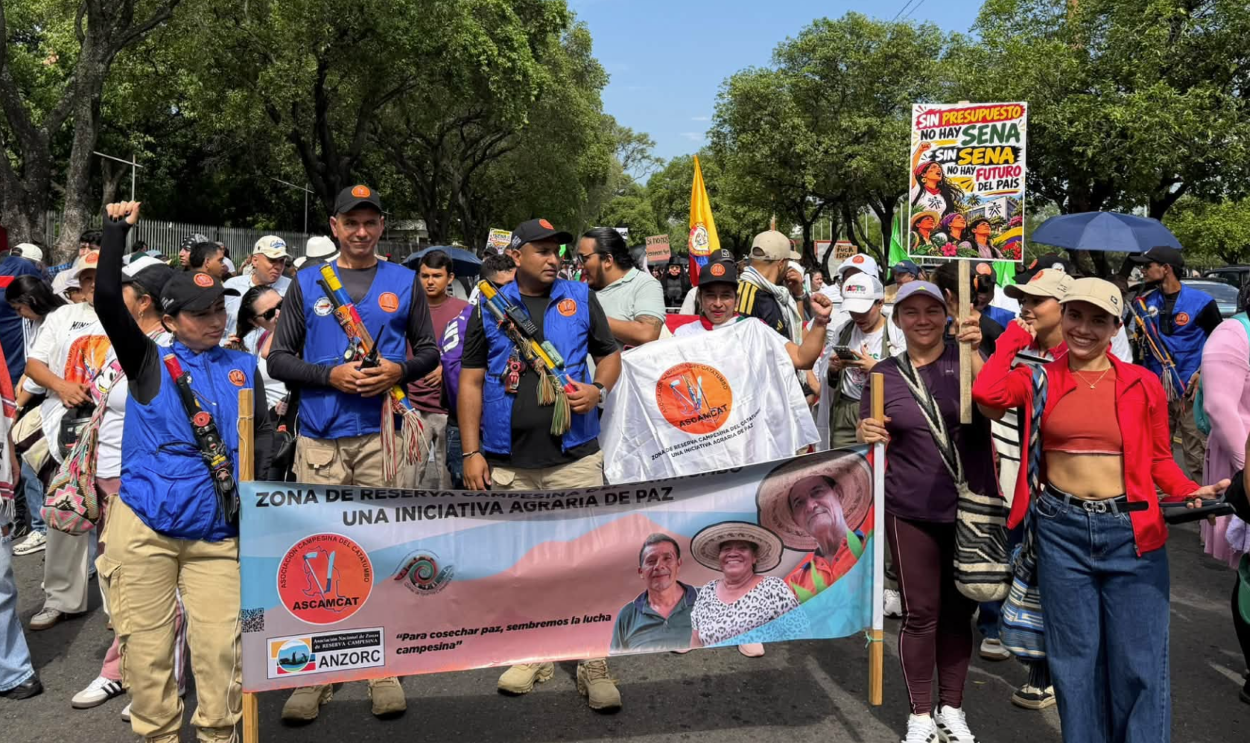
Photo: ASCAMCAT took part in mobilizations held in Cúcuta, Ocaña, and Pamplona on October 14, 2026.
Tens of thousands of trade union members, social movement activists, community members, students, and Indigenous peoples took part in a massive opposition protest across Colombia on October 14, 2026.
The Regional Corporation for the Defence of Human Rights (Credhos), the Association for Social Research and Action (Nomadesc), the Humanitarian Action Corporation for Coexistence and Peace in Northeast Antioquia (Cahucopana), and the Catatumbo Peasant Organization (Ascamcat) were among those who took to the streets.
Cahucopana, Nomadesc and Ascamcat are physically accompanied by PBI-Colombia. Credhos and the CSPP are strategic allied organizations.
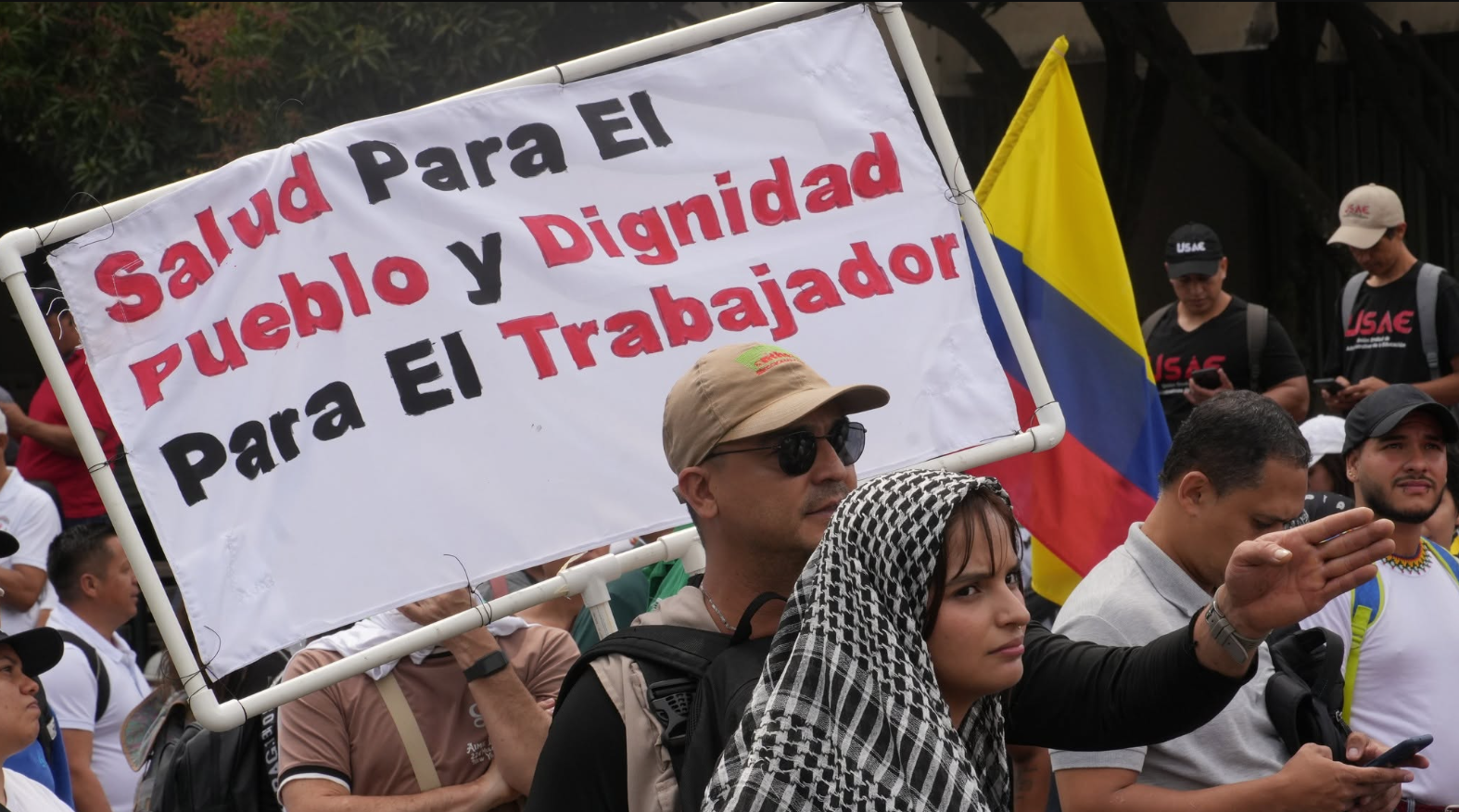
Photo: The placard at the march in Cali says: “Health for the people and dignity for the worker”. Photo by Nomadesc.
Credhos on Decree 003
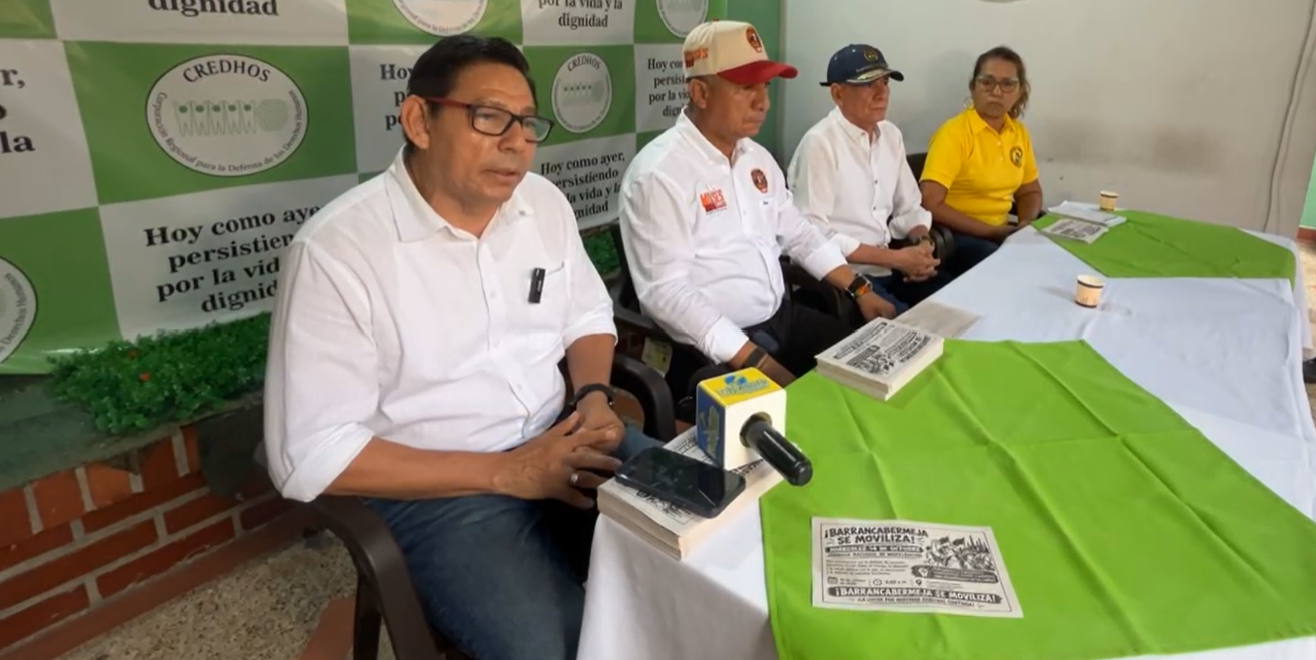
On October 9, 2026, Ivan Madero Vergel, the president of the Regional Corporation for the Defence of Human Rights (Credhos), stated at a press conference: “We are going to make use of this day of October 14 of national mobilization, the right to the Decree 003 of 2021. [We ask] the governments, the mayors, especially the mayor of Barrancabermeja and the mayors of the region of the Magdalena Medio to respect the right to social protest enshrined in the decree 003 of 2021.”
Madero Vergel highlighted: “[Decree 003] establishes in its article 12 the coordination of the districts, of the municipalities, of the mayors establish a coordination to regulate the use of the public force the presence of the police authorities and the army in the social protest but also the interlocution from the social movement and the movement of the social protest [to observe] the use of the force of the police and the army and the performance of themselves in the social protest.”
Video still: Madero Vergel speaks at press conference, October 9, 2026.
What is Decree 003?
Decree 003 was passed on January 5, 2021, by the government of President Iván Duque after nationwide strikes and protests began on November 21, 2019, and just prior to the National Strike that began on April 28, 2021.
The full text of Decree 003 can be read here.
The provisions of Decree 003 include: “Law enforcement officials involved in the monitoring of assemblies should respect and ensure the exercise of the fundamental rights of organizers and participants, while protecting journalists, observers, medical personnel and other members of the public, as well as public and private property, from harm. The basic approach of the authorities should, where necessary, be to try to facilitate peaceful assemblies.”
What is Decree 1525?
On Tuesday October 13, the day before major protests across Colombia, President Abelardo de la Espriella signed Decree 1525.
The full text of Decree 1525 can be read here.
Under Decree 1525 authorities must seek dialogue with the demonstrators, but this is not “a prerequisite that conditions, suspends or postpones the intervention actions directed individually against those who carry out acts of violence.”
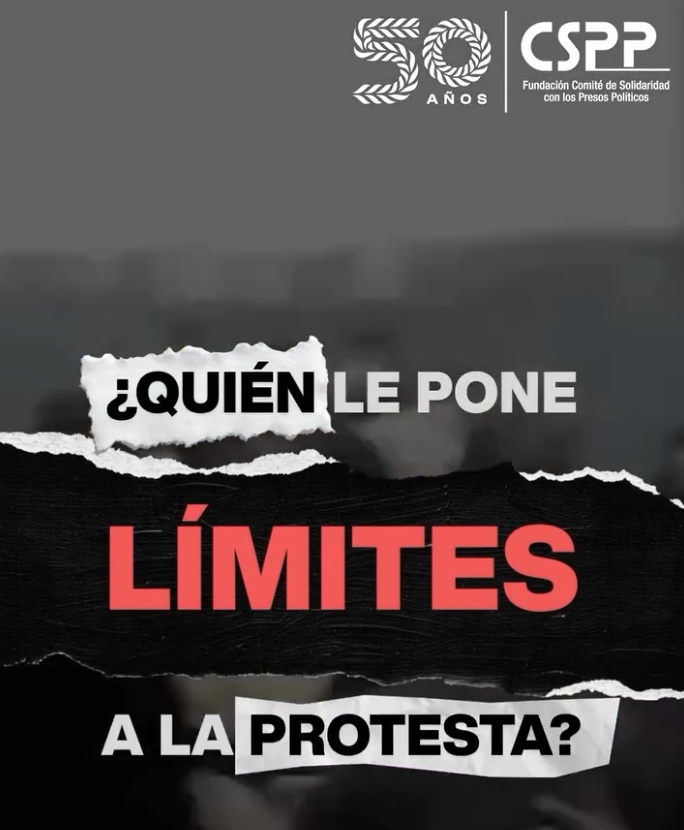
“Who sets limits on protest?” – CSPP
On October 9, the Committee for Solidarity with Political Prisoners (CSPP) posted on social media: “Who sets limits on protest? The reform to Decree 003 of 2021 raises concerns regarding dialogue, police intervention, and the participation of human rights organizations. Managing disruptions cannot be an excuse to limit mobilization. Preventing risks cannot turn into surveillance or the stigmatization of protesters. Protest is a right. Defending it means defending the ability to make demands, speak out against wrongs, and challenge the status quo.”
The 4-minute video alongside this text highlights: “It hinders the participation of … human rights organisations in the PMU [Unified Command Post, a temporary inter-institutional coordination space activated before and during public demonstrations]. The proposal contemplates the participation of economic actors, private actors, and other actors while limiting the participation of human rights organisations and civil society.”
Undmo or Esmad?
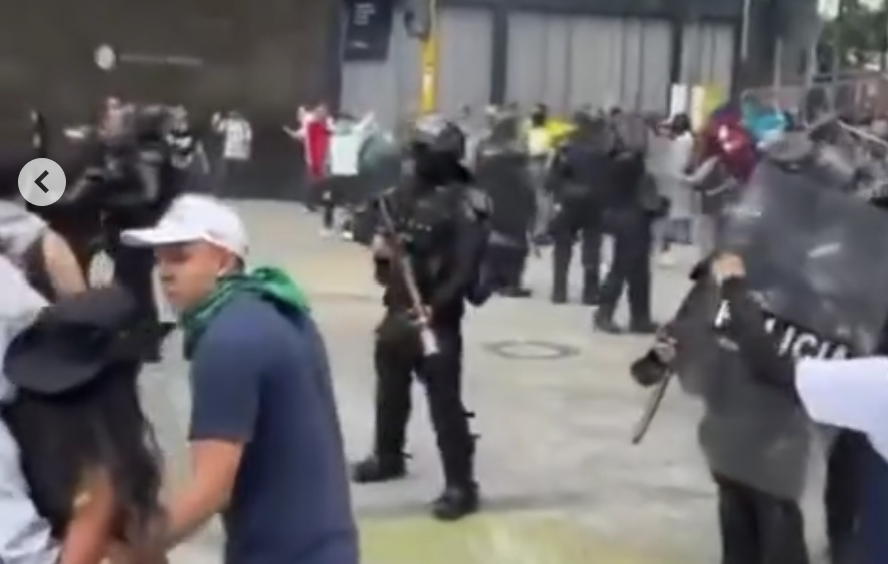
Infobae reports that at the protests that took place on October 14, “the Undmo [the Dialogue and Public Order Maintenance Unit] intervened on six occasions: two of them in Bogotá, two in Ibagué and one in Popayán and Medellín respectively…”
The Undmo is the rebranded name for the controversial Mobile Anti-Disturbance Squadron (Esmad). The government of President Gustavo Petro renamed the Esmad to the Undmo in August 2022 following the National Strike of 2021.
President de la Espriella appears to still call the unit the Esmad.
On October 15, de la Espriella commented: “Small revolts; as soon as the Esmad arrived, they were all lost. When they feel the forcefulness of the State, they know that we are going to face them with determination.”
Alert on Undmo intervention
The Committee for Solidarity with Political Prisoners (CSPP) is affiliated with the Defend Liberty Campaign.
Yesterday the Defend Liberty Campaign posted on social media: “URGENT IBAGUÉ. October 14, 2026. We are issuing an alert regarding the intervention of the Dialogue and Order Maintenance Unit (UNDMO) during the social protest taking place in Ibagué. We demand that the National Police respect and guarantee the right to social protest, refrain from the arbitrary or disproportionate use of force, and protect the lives and physical integrity of the protesters. Videos circulating on social media show the Police detaining protesters. We demand that their lives and personal integrity be respected and that their rights be fully guaranteed.”
We continue to follow this.
Video still from Defender la Libertad.