


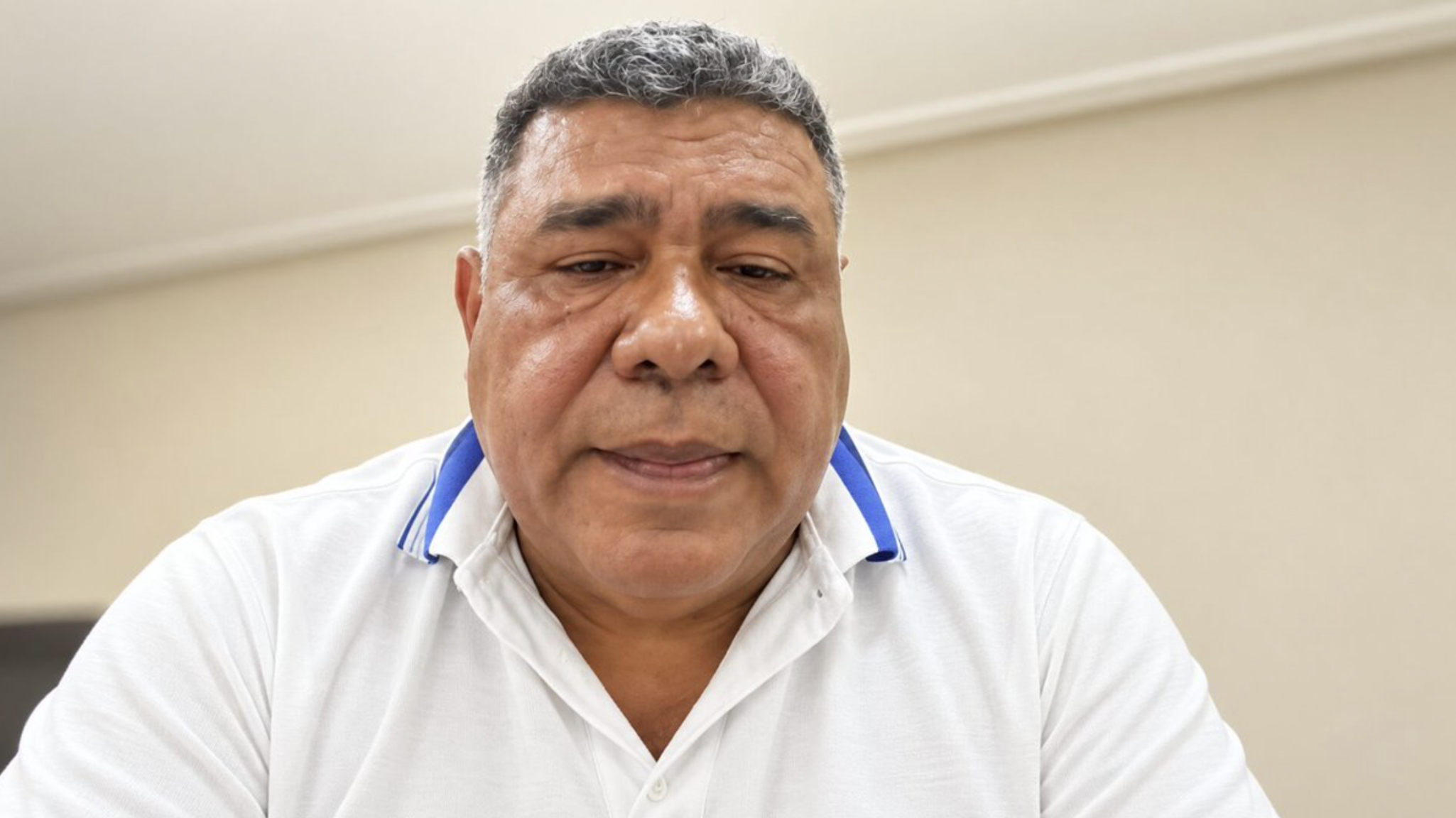
On October 6, 2026, BluRadio Colombia reported: “From words to deeds came the threats against Gonzalo Núñez, president of the workers’ union of the Triple A [SINTRATRIPLE A.S.I.] aqueduct company and head of the Human Rights Department of the CUT [Central Union of Workers] Atlántico, who is being pressured by unknown persons to resign from his positions as a union leader.”
The BluRadio article continues: “The most recent threats against Núñez came on October 2, a WhatsApp message, in which they insulted him, called him a ‘lawyer of leftists hp’ and gave him a period of 24 hours to resign from his union work. Once the deadline had expired and noticing that Núñez remained in his posts, armed men attacked the leader’s home in the southwest of Barranquilla with gunfire, hitting the windows of the room where he was with his family.”
El Espectador has also reported: “Gonzalo Núñez Payares, director of the Human Rights Department of the CUT Atlántico and president of the trade union SINTRATRIPLE A.S.I. (Union of Industry of Workers of Aqueduct, Sewerage and Sanitation Companies of Colombia), suffered an attack on his home, according to the Central Unitaria de Trabajadores (CUT).”
That article adds: “The CUT asked the National Government and the Ministry of the Interior to urgently activate the protection mechanisms of the National Protection Unit (UNP), as well as the Attorney General’s Office to speed up the investigation to identify those responsible for the threats and the attack that put the life of the union leader and his family at risk.”
The Shield of Americas as a threat to union activity
The statement from CUT notes: “With the incorporation of Colombia into the Shield of the Americas, guided by the Government of De la Espriella, and the activation of the doctrine of the internal enemy, These actions do not constitute isolated events. Trade union activity is taking place in an alarming panorama of stigmatization and persecution that seeks to silence its legitimate exercise in Colombia.”

The full statement from CUT about this attack can be read here.
Attacks against trade union activists in Colombia
On October 3, around the same time as the attack against the union leader, Mongabay reported: “The report documented 401 attacks of different kinds against defenders in the first half of the year, which represents an increase compared to the 342 events recorded in the same period of 2025.”
On September 18, Justice for Colombia reported: “Justice for Colombia reports: “At least 16 social, trade union or political activists have been killed since 7 August [the date Abelardo de la Espriella was sworn in as the 36th President of Colombia], while others have been threatened.”
Historically, union activists have faced high levels of violence in Latin America. According to the Colombian Trade Union Confederation, 1,500 union members were killed between 1986 and 1994. And since the early 1970s to the present day, more than 3,000 trade unionists have been murdered in Colombia.
Strengthening the Protection Mechanism
In December 2025, the Associated Press reported: “About 15,000 people nationwide receive protection from the NPU [National Protection Unit], the Interior Ministry said in a 2024 report. They include environmental and human rights defenders, journalists, local officials, union leaders and others facing threats, though watchdog groups say protections often fall short in rural conflict zones.”
On October 1, the United Steelworkers (USW) released a report on the Protection Mechanism in Mexico. Noting the Colombian experience, the USW highlighted: “In the face of decades of anti-union violence and sustained pressure from national and international organizations, the State developed one of the broadest protection systems in Latin America for trade unionists and labour rights defenders. …The main lesson for Mexico is that a protection mechanism should not be limited to reacting when the threat has already occurred. The Colombian experience shows the need to articulate individual and collective measures, strengthen territorial prevention, ensure coordination between labour, security and law enforcement authorities, and expressly recognize trade unionists and labour rights defenders as human rights defenders.”
Mobilization on October 14
On October 6, the CUT posted on social media: “The CUT reaffirms its opposition to the policies of the Abelardo de la Espriella government and its commitment to defending: Democracy and the social state based on the rule of law; National sovereignty; Human rights; The rights and hard-won gains of the working class; Peace and life. …It also reaffirms its commitment to the National Day of Mobilization on October 14.”
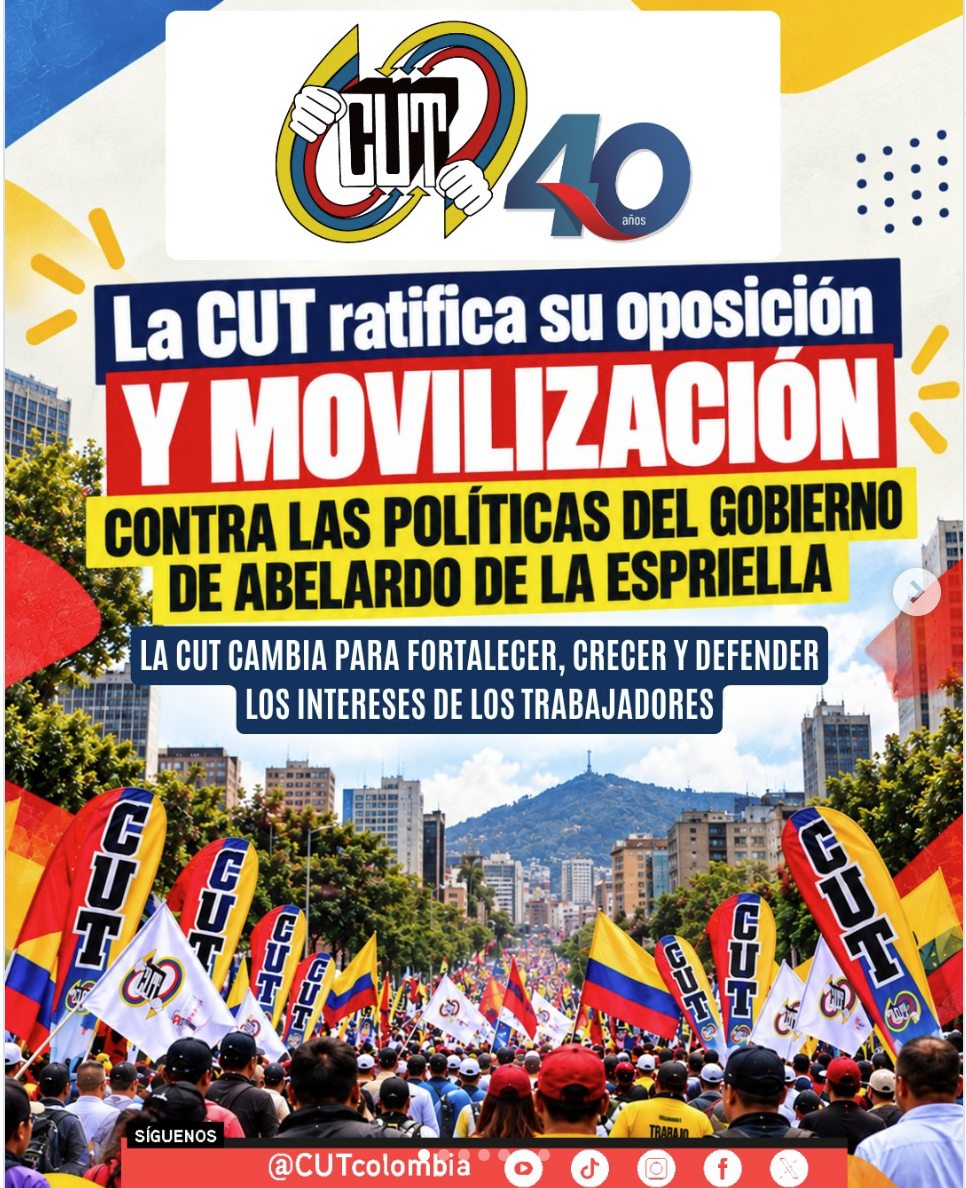
The CUT Colombia Instagram page can be found here.
We continue to follow this.

