


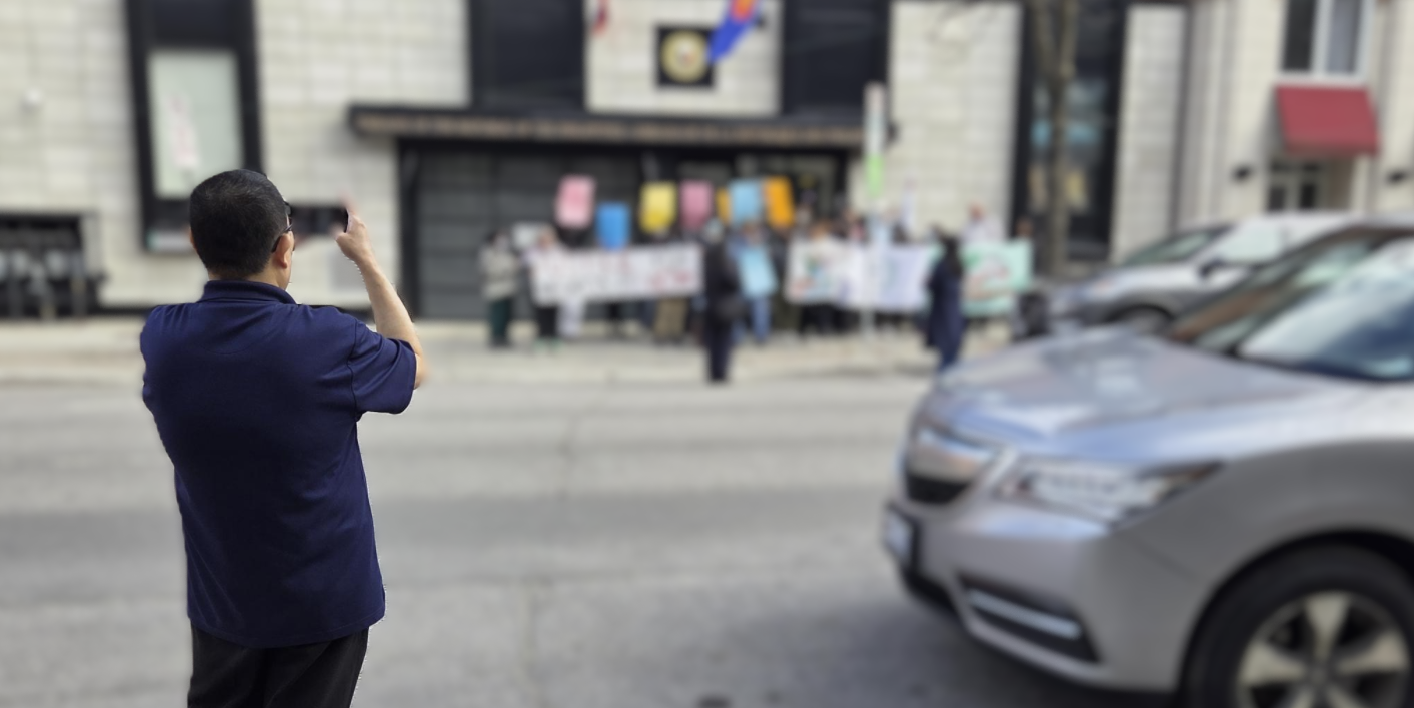
Transnational repression is an emerging issue of concern.
The McGill University-based Montreal Council on Foreign Relations (CORIM) noted in an article last year: “Transnational repression is one of the most coercive tactics of foreign interference. Foreign governments, authoritarian or with illiberal tendencies, target Canadians and temporary residents through surveillance, harassment, physical and digital threats, and even murder.”
The article further highlights: “One of the worst recent cases of transnational repression [in Canada] was certainly the murder of Hardeep Singh Nijjar in Surrey in 2023. Despite denials by the Indian government, then Prime Minister Justin Trudeau accused Prime Minister Narendra Modi Modi’s government of the killing of the Sikh leader, an affirmation corroborated by Canadian and U.S. intelligence services.”
The Montreal Institute for Global Security (MIGS) has also documented in their 72-page report on the issue published earlier this year: “This report highlights the urgent need to recognize transnational repression not merely as a set of isolated incidents, as it was long regarded, but as a systemic threat affecting thousands of people across Canada’s diverse diaspora communities.”
What countries are engaged in transnational repression?
Freedom House has documented that 48 states are using tactics of transnational repression then identify the 10 countries responsible for nearly 80 percent of incidents between 2014 and 2024: China (272 incidents), Turkey (157 incidents), Tajikistan (92 incidents), Russia (86 incidents), Egypt (57 incidents), Cambodia (55 incidents), Turkmenistan (53 incidents), and Belarus (42 incidents).
They also note Uganda (39 incidents) and Rwanda (28 incidents) as notable concerns with respect to transnational repression.
While Freedom House identified 48 states implicated in transnational repression in their February 2025 article, that number increased to 54 states in their “special report” published in April 2026.
What countries engage in transnational repression in Canada?
In Canada, some of these countries named by Freedom House have also been identified as “threat actors” within Canada: China, Russia, and Rwanda. The reports from the Montreal-based organizations also implicate India, Iran, and Algeria.
The Montreal Council on Foreign Relations (CORIM) states: “As a nation with many diaspora communities, Canada is a primary target… It should come as no surprise that the key threat actors for Canada are China, Russia, India and Iran, but small countries such as Rwanda and Eritrea should not be overlooked.”
The Montreal Institute for Global Security (MIGS) publication provides case studies of states involved in transnational repression in Canada, naming Algeria, China, India, Iran, Russia, and Rwanda (on pages 13-27 of their report).
Earlier this month, CTV News reported that A Formula for Repression, a report by the Spanish human rights group Safeguard Defenders, “claims that at least 18 Chinese overseas associations are participating as police monitoring stations in Canada. These associations may have multiple sub-branches in one city. …In Canada, the RCMP [Royal Canadian Mounted Police] says it has investigated five alleged Chinese police stations in Toronto, Montreal and Vancouver.”
A 29-page report by Canadians for Justice and Peace in the Middle East (CJPME) published in May 2026 also looks at “Israel’s activities of transnational repression” and cites among its “examples of Israeli transnational repression in Canada” the “surveillance, profiling, and doxxing of Canadians in the Palestine solidarity movement” and “the risk of Israeli spyware used to target activists in Canada”.
Other countries engaged in transnational repression
Perhaps one of the most cited examples of transnational repression is the murder of Saudi journalist Jamal Khashoggi inside the Saudi consulate in Istanbul, Turkiye in October 2018. The BBC has reported: “A report released in June 2019 by Agnes Callamard, the [United Nations] special rapporteur [for extrajudicial, summary, or arbitrary executions], concluded that Khashoggi’s death ‘constituted an extrajudicial killing for which the state of the Kingdom of Saudi Arabia is responsible’.”
Nicaragua
While not specifying the risk in Canada, the Group of Human Rights Experts on Nicaragua (GHREN) has documented: “Nicaraguan authorities have extended surveillance, harassment and attacks beyond borders, targeting exiled activists, journalists and human rights defenders.”
Civicus also notes: “In June 2025, former Nicaraguan army major Roberto Samcam was shot dead at his home near San José, Costa Rica. …His killing was at least the third of a Nicaraguan exile in Costa Rica in recent years.”
The Philippines
The Lowy Institute has noted in the context of transnational repression: “The Philippines has extended ‘red-tagging’ practices into diaspora communities overseas.” Migrante International has also cautioned: “In collusion with military and police attaches and consulates overseas, state forces have targeted Filipino migrants, OFWs [overseas Filipino workers], their organizations and their solidarity allies.”
Kenya
Civicus has also noted that Kenya was identified as using the tactic of transnational repression for the first time in 2025. Citing incidents in Uganda and Tanzania, Civicus highlights: “Kenya has become a hotspot.”
Recommendations
The “calls for action” from Civicus include: “Civil society should keep documenting cases, supporting exiled activists and their families and holding host and home governments to account.”
The Montreal Institute for Global Security (MIGS) report also includes recommendations (on pages 41-44).
Of particular interest to PBI-Canada:
– “Protect and engage diaspora communities: Establish long-term, trust-based engagement with communities known to be targets.”
– “Strengthen civil society support: Train and deploy experts to assist civil society groups facing spyware attacks; involve trusted organizations in prevention and response efforts.”
– “High-risk target protection fund: Establish a G7-funded emergency grant program to support journalists, activists, and NGOs facing digital threats. This fund would cover device audits, legal assistance, and secure communication tools.”
Freedom House has also recommended that civil society:
– “Invest in digital hygiene trainings and make digital security resources widely available to targeted communities, reaching beyond professional activists and journalists.”
– “Develop programming for individuals affected by transnational repression, including social, psychological, legal, and immigration support.”
Protective accompaniment
Can some of the recommendations noted above work with PBI’s model of holistic protective accompaniment?
The narrator in the recently-released 45th anniversary video about the formation of Peace Brigades International (PBI) says: “In 1981 on Grindstone Island, Indigenous territory of the Algonquin peoples, a group of activists met with a radical question: Can a non-violent international presence stop a bullet?”
Today, PBI teams provide holistic protective accompaniment to human rights defenders in numerous countries, including those countries implicated in the use of transnational repression such as Nicaragua (through our work with exiles in Costa Rica), Kenya, Cambodia, the Philippines, among others.
PBI-Canada is examining the issue of how PBI’s long-established methodology of in-country protection teams could apply to the threat faced by human rights defenders in the context of transnational repression.

