
PBI-Mexico has posted:
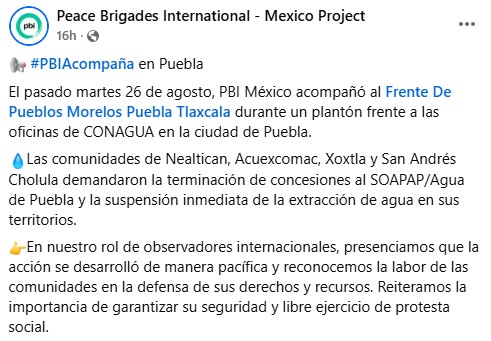
“#PBIAcompanies in Puebla
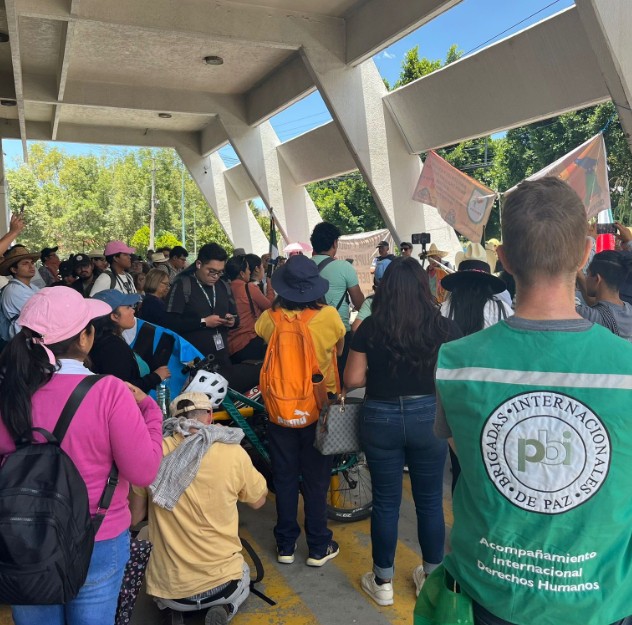
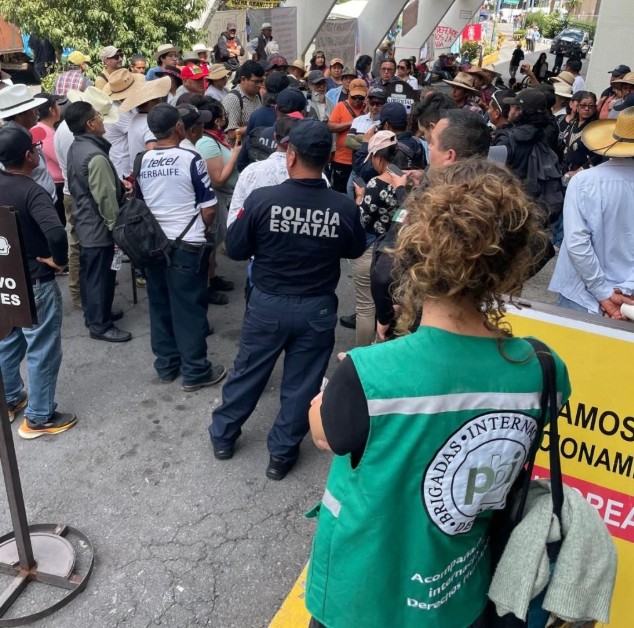
Last Tuesday, August 26, PBI Mexico accompanied the Morelos Puebla Tlaxcala Peoples’ Front during a sit-in in front of the CONAGUA offices in the city of Puebla.
The communities of Nealtican, Acuexcomac, Xoxtla, and San Andrés Cholula demanded the termination of SOAPAP/Agua de Puebla concessions and the immediate suspension of water extraction in their territories.
In our role as international observers, we witnessed that the action took place peacefully and recognize the work of the communities in defending their rights and resources. We reiterate the importance of guaranteeing their safety and free exercise of social protest.”
Terms
CONAGUA is the National Water Commission (Comisión Nacional del Agua).
SOAPAP refers to the Drinking Water and Sewerage Services Operating System of the Municipality of Puebla (Sistema Operador de los Servicios de Agua Potable y Alcantarillado del Municipio de Puebla).
Agua de Puebla describes itself as a “Concession for public drinking water, drainage, sewage, and sanitation services in the municipality of Puebla.”
News reports and further context
Prior to the protest Urbano Puebla reported:
“Under the argument that the National Water Commission (Conagua) has allowed the massive extraction of the vital liquid [water] in 22 wells of the communities of Nealtican, Acuexcomac in San Pedro Cholula, Xoxtla and San Antonio Cacalotepec in San Andrés Cholula, on August 26 indigenous communities defending natural resources will hold a forum-sit-in in front of the offices of said commission.
The objective is to demand that Conagua not authorize the renewal of the concessions of the vital liquid in Cholultec territories for the company commercially known as Agua de Puebla.
This is because the company has allegedly plundered a total of 26 billion liters of water annually from the aforementioned communities since 1994 and 1997.”
On August 27, Desinformémonos reported:
“Cholultec peoples protested on Tuesday in front of the offices of the National Water Commission (Conagua) to demand an end to water concessions to private companies and demand the right to manage the resource autonomously in their territories.
During the protest, members of the towns of Xoxtla, Nealtican and Acuexcomac affirmed that they are no longer looking for solutions from the State, but for the definitive exit of Conagua from their territories. ‘We want Conagua to disappear’, they said, and accused that since their arrival the systematic dispossession of water in favor of companies began.
The mobilization was part of a caravan of communities, who arrived at the facilities of the federal agency with banners, slogans and complaints about the exploitation of wells without the consent of the communities.
They demanded that the agreements between Conagua not be renewed and warned that they will not allow new extractions without consultation and collective decision. They affirmed that the struggle does not seek to negotiate with the State, but to reaffirm the right of the peoples to decide on water as a common good.”
And on August 28, Desinformémonos also reported on a statement from Cholultec peoples and organizations in defence of water who said:
“We demand an end to the criminalization of defenders of water and life! …They are scandalized because some windows were painted as a symbol of protest. Because you can clean your windows, but we cannot recover our ameyales and rivers that were stolen from us by taking more than 26 billion liters of water every year, for 30 years from our communities, without any permission.”
Accompaniment
Peace Brigades International has accompanied the Peoples’ Front in Defence of Land and Water – Morelos, Puebla and Tlaxcala since early 2020. In August 2022, that accompaniment was extended for another three years.
The Peoples’ Front describes themselves as an: “Organization of Indigenous Peoples of the Popocatepetl Volcano Region in the States of Morelos, Puebla, and Tlaxcala. We fight for the self-determination of peoples and in defense of life, land, and water.”
We continue to follow this.