


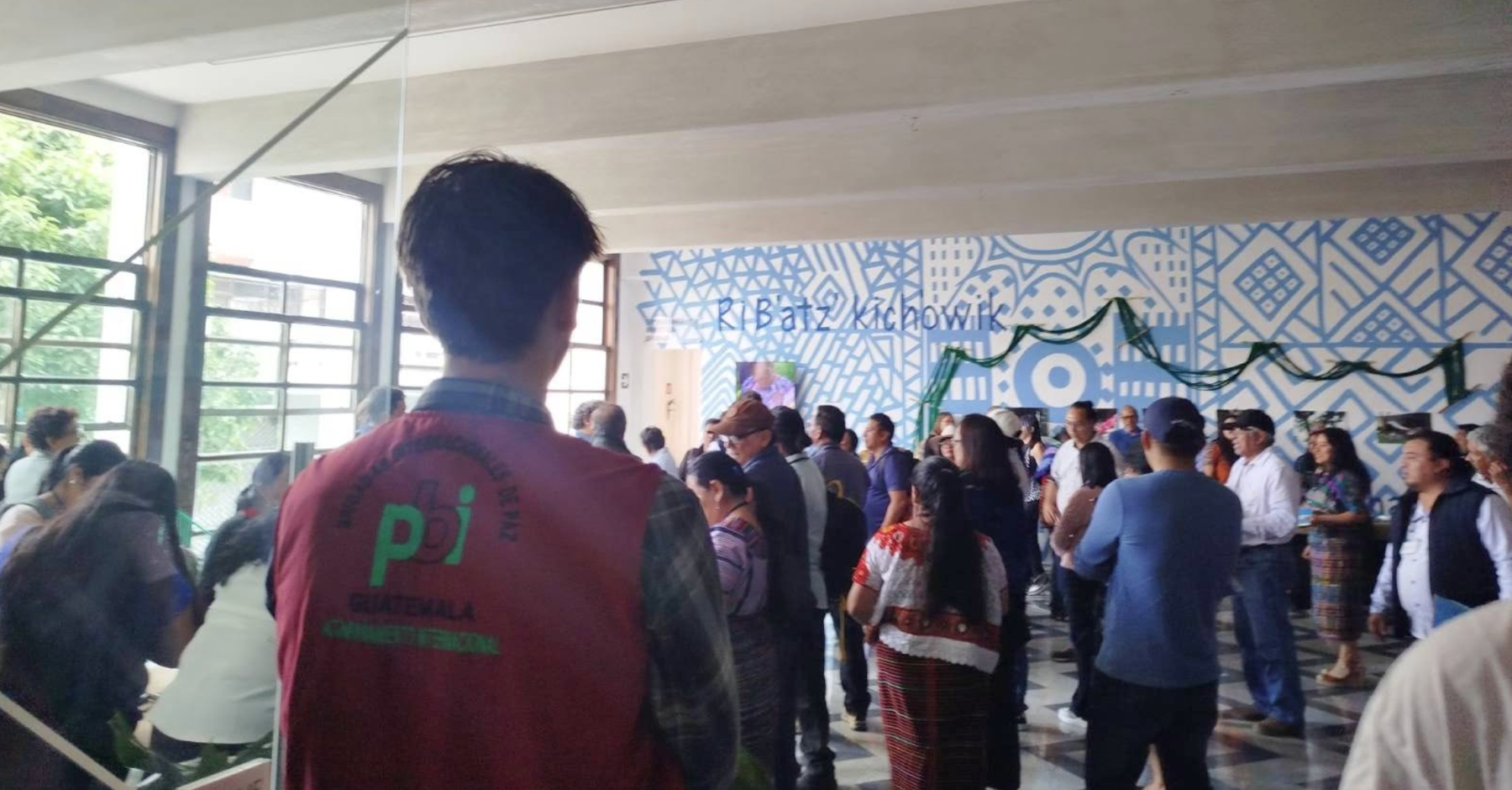
The Peace Brigades International-Guatemala Project has posted on social media:
“Today [October 28], #PBI is accompanying REDSAG [the Network for the Defense of Food Sovereignty] at an event organized by the Escazú Alliance Guatemala, titled ‘Environmental Justice and Citizens’ Tribunals’. The event aims to introduce the initiative for a ‘Tribunal of Conscience’ regarding ecocide in Guatemala, and to push for the ratification of the Escazú Agreement in light of the government’s inaction.
Around 150 people from various regions across the country have gathered at the event to speak out about their concerns, demand accountability from the authorities, and highlight environmental damage—as well as the resulting impacts on the defense of human rights.
The Tribunal of Conscience is expected to take place in February 2027.”
The two-hour video of the event this week can be seen here.
FGER has also posted on social media: “The Escazú Alliance is introducing a citizen-led mechanism known as the ‘Tribunal of Conscience for Ecocides in Guatemala’, which is scheduled for February 2027.”
What is ecocide?
The World Economic Forum has explained: “In 2021, a panel of criminal and environmental lawyers from around the world created a legal definition for ‘ecocide’ as the basis of a push to criminalize mass damage and destruction of ecosystems. …The expert panel defines ecocide as: ‘unlawful or wanton acts committed with knowledge that there is a substantial likelihood of severe and either widespread or long-term damage to the environment being caused by those acts’.”
Ecocide and environmental defenders
Dr Jorge Peláez Padilla, Lecturer in the Department of Law and Coordinator of the ‘Berta Cáceres’ Legal Clinic for Environmental Justice at Universidad Iberoamericana in Mexico City, has commented: “Across Latin America, environmental defenders and communities too often face personal and collective risks when opposing severe environmental destruction. Ecocide law places responsibility for the most serious environmental harm where it belongs: with the state and, ultimately, with the decision-makers responsible for causing that harm.”
Model Ecocide Law for Latin America
On October 1, Stop Ecocide International noted that Latin American environmental and legal experts had developed a Model Ecocide Law designed to provide a framework for countries across Latin America to criminalize severe environmental destruction. Stop Ecocide International further highlighted: “The new Model Law was developed through a public consultation, followed by online working sessions with 74 experts from 14 countries in the region, culminating in a two-day drafting conference in Mexico City involving more than 30 legal experts.”
Ecocide at the International Criminal Court
CBC News has reported: “[There is now also a proposal] to have ecocide recognized alongside the four crimes under the [International Criminal Court-ICC] jurisdiction through the Rome Statute: genocide, crimes against humanity, war crimes, and the crime of aggression. It would allow for the prosecution of individuals accused of committing the worst environmental destruction.”
That article adds: “There is ongoing diplomatic conversation around whether to include ecocide as the fifth crime under the Rome Statute, the international treaty that established the ICC. To amend the statute, two-thirds of the 125 member states must approve it, which includes Canada but not the U.S., Russia or China.”
Stop Ecocide Canada
There is a Stop Ecocide Canada campaign. In May 2024, Members of Parliament from three of Canada’s federal political parties, Patrick Weiler (Liberal), Alexandre Boulerice (NDP), and Elizabeth May (Green), affirmed their support for making ecocide a crime at the International Criminal Court.
Accompaniment
PBI-Guatemala has explained: “REDSAG is a space that brings together organizations, groups, and social and popular movements that advocate in favor of defending and building food sovereignty. PBI has accompanied members of the REDSAG Political Council since September 2025.”

