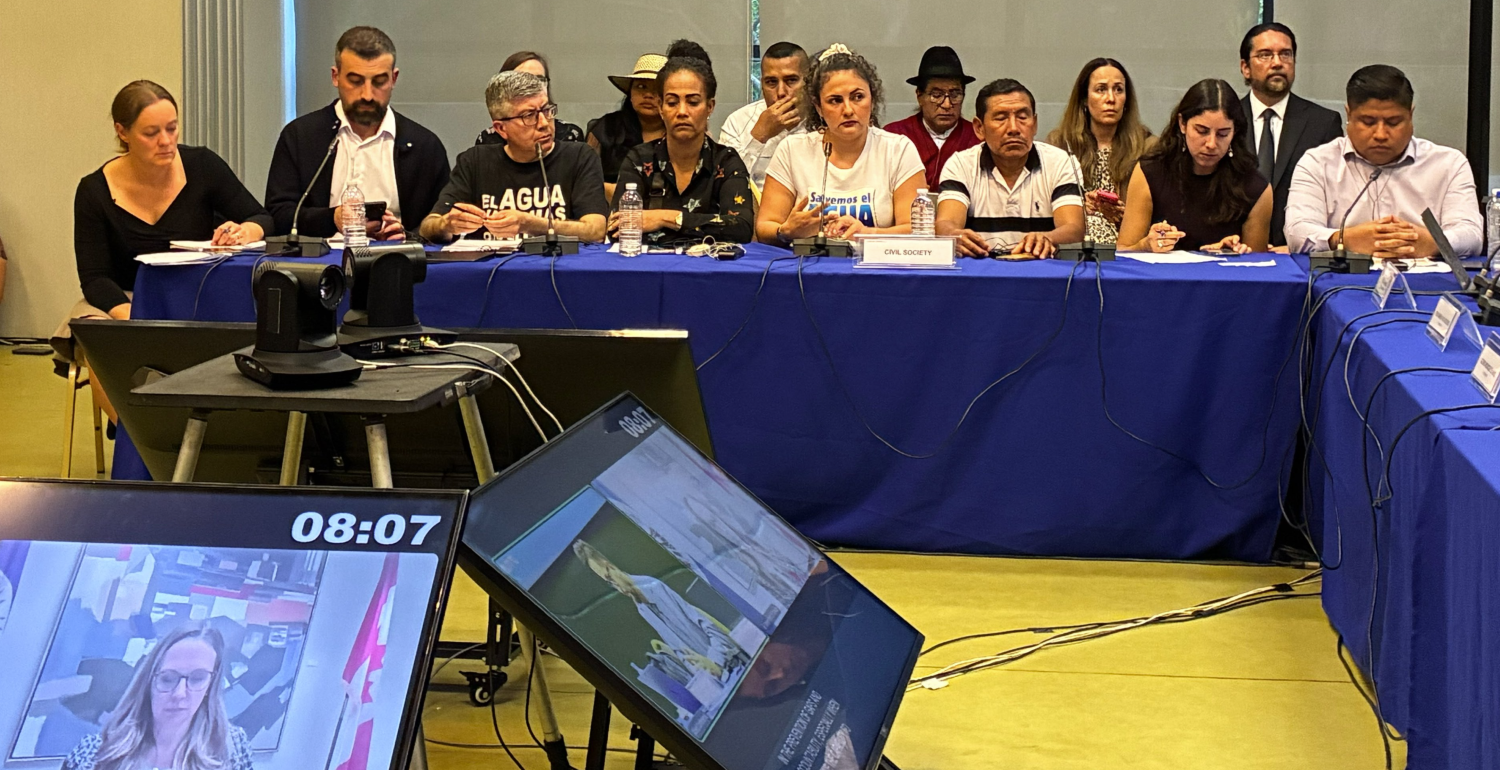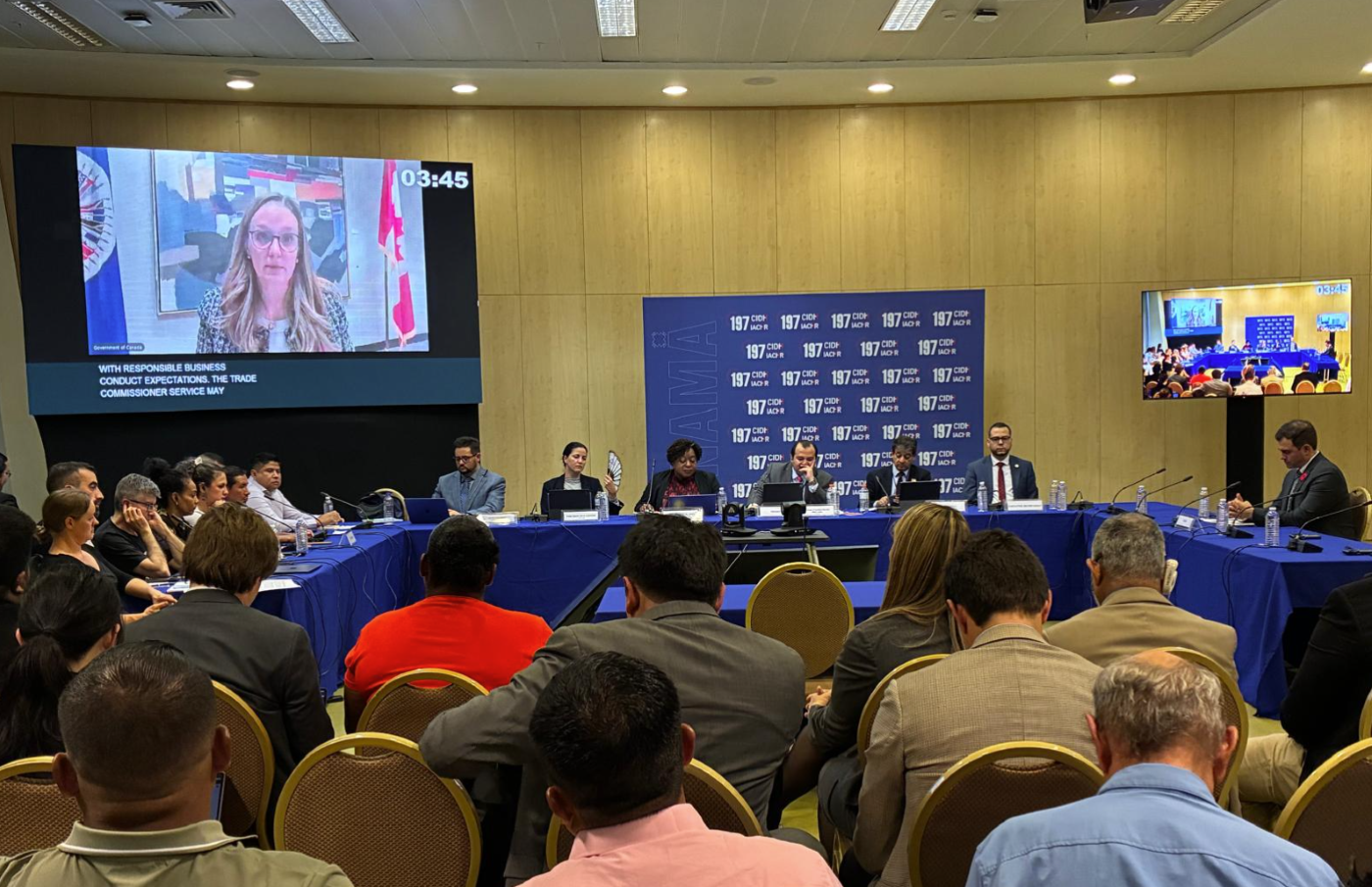
Photo: IACHR/CIDH session in Panama City on the International Obligations of Extractive Companies.
On October 27, community representatives from Mexico, Colombia, Ecuador, Panama, the Dominican Republic and Argentina presented to the Inter-American Commission on Human Rights (IACHR) in Panama City.
This joint media release noted: “Witnesses will share firsthand accounts of threats and violence against environmental defenders, the criminalization of community leaders, restrictions on freedom of movement, water contamination, and damage to health and livelihoods – all linked to Canadian mining operations.”
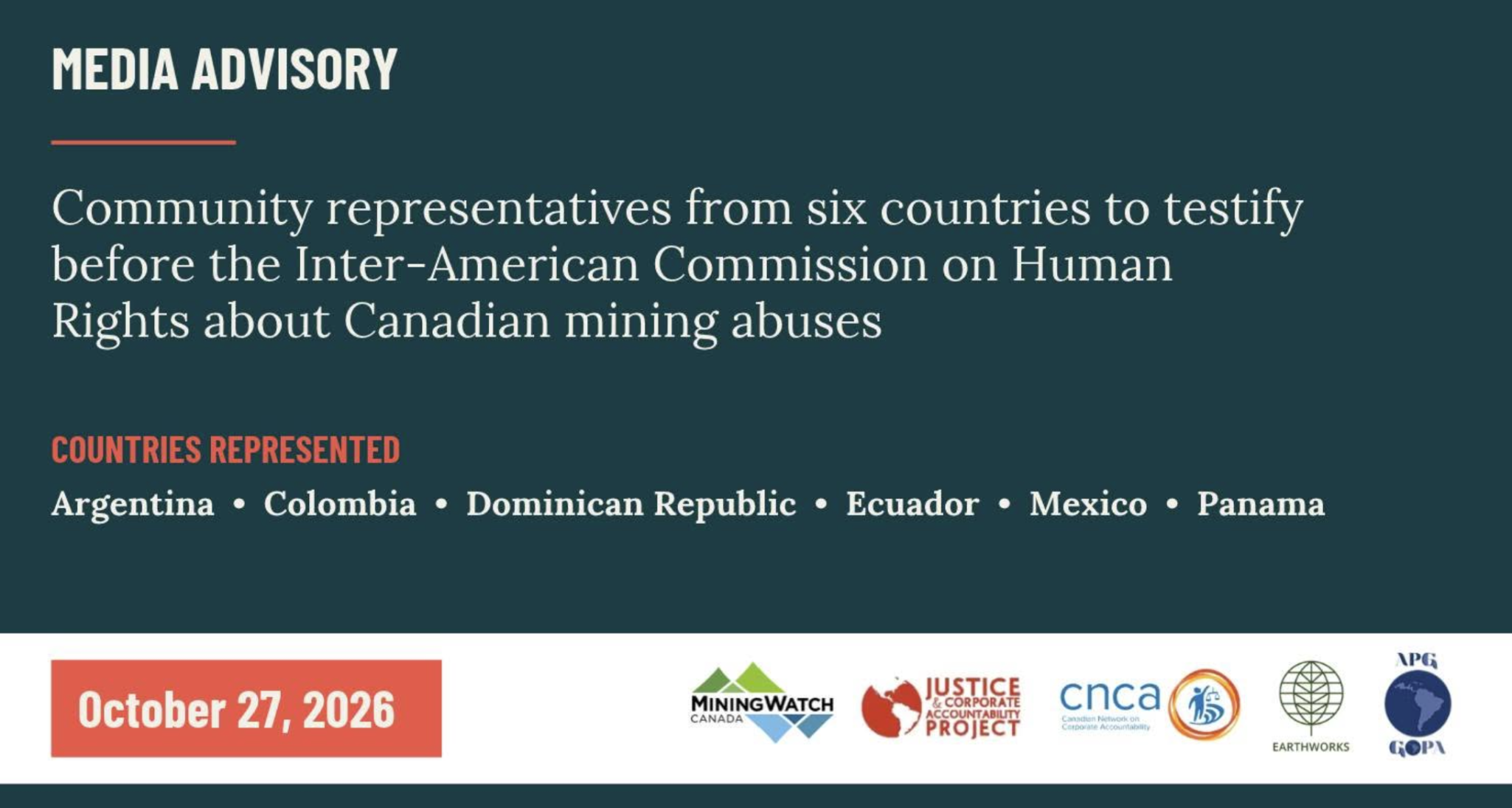
That joint media release continued: “Home to approximately half of the world’s publicly listed mining companies, Canada supports their overseas operations through diplomatic assistance, public financing, and trade and investment agreements. Yet long-established harm linked to these operations is ongoing. Affected communities continue to face steep barriers to obtaining information, securing independent investigations, and accessing justice and remedy.”
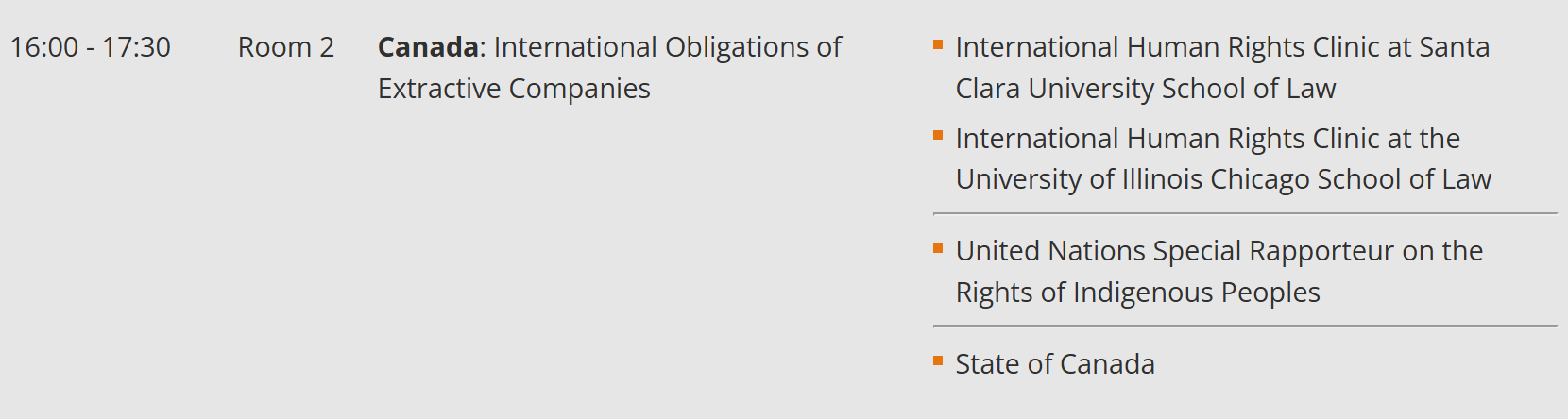
IACHR agenda, Tuesday October 27, 2026
After the session, the IACHR posted: “Civil society reported a recurring pattern of human rights abuses and environmental impacts linked to Canadian mining operations across Latin America, including water contamination and criminalization of defenders. They noted that diplomatic offices supported companies despite ongoing conflicts, urging Canada to establish effective mechanisms to hold corporations accountable.”
The IACHR social media post also summarized the response from Canada: “The State of Canada reaffirmed its commitment to responsible business conduct, international human rights standards, and Indigenous rights. Canada stated that companies abroad are expected to follow local laws and best practices, pointing to domestic legislation, export credit due diligence, its National Contact Point (NCP), and channels where stakeholders can raise concerns.”
That post concluded: “#IACHR and #REDESCA [Special Rapporteurship on Economic, Social, Cultural, and Environmental Rights] emphasized that economic development must go hand in hand with human rights and serve people, including the right to a healthy environment. They highlighted accountability gaps, calling for effective remedies, active community participation, and free, prior, and informed consent.”
Media coverage notes murder of Mariano Abarca
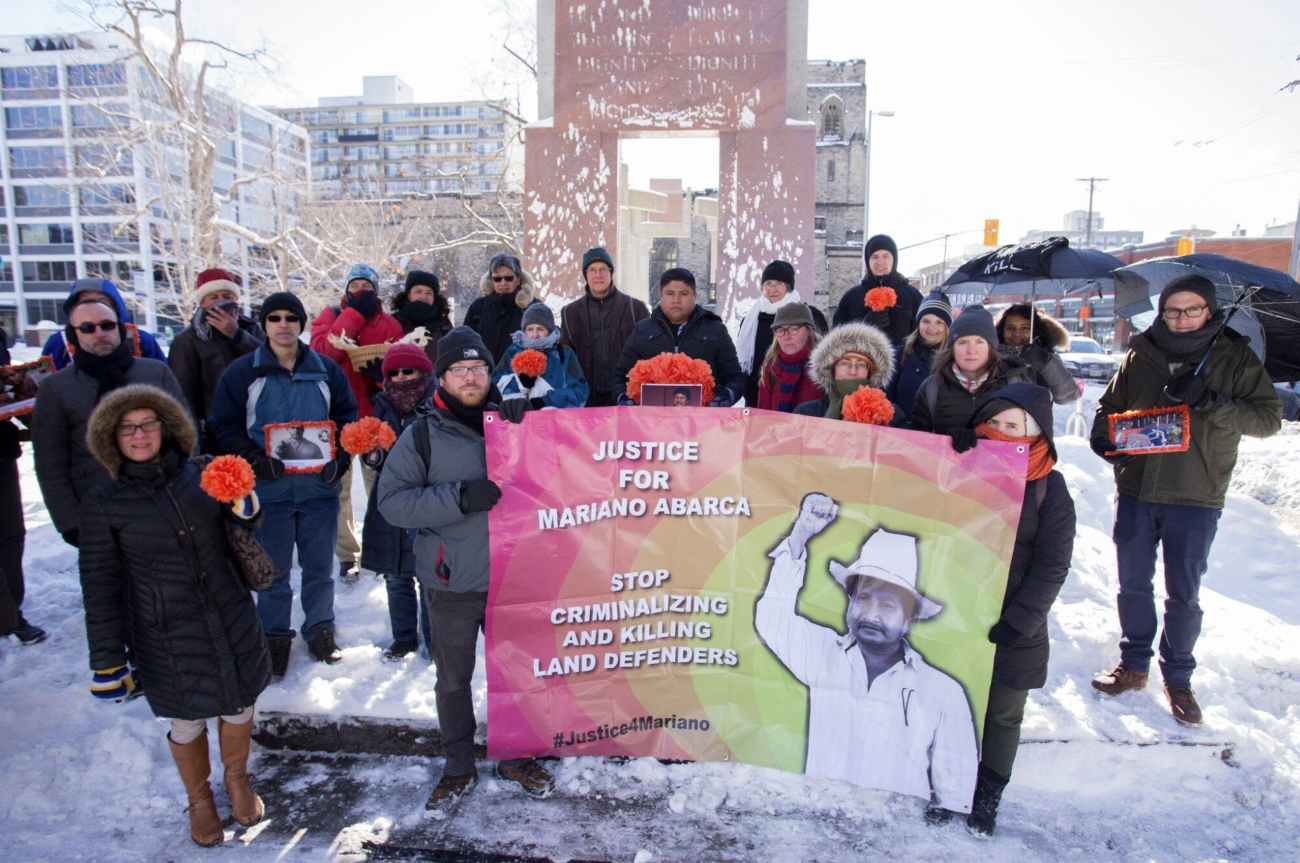
In their report on the IACHR/CIDH hearing, Prensa Latina noted: “From Mexico, José Luis Abarca, son of activist Mariano Abarca, murdered on November 27, 2009, demanded justice for his family and asked that the IACHR admit a lawsuit filed in 2023 against the Canadian government.”
Photo: Solidarity gathering at the Canadian Tribute for Human Rights in February 2018 Ottawa.
TelesurTV.net adds: “’We have come here to Panama City to request a hearing before the Commission so that a lawsuit that we have had before the Canadian government since 2023 is admitted. A demand, a struggle and a demand for justice on the part of the family, on the part of civil organizations and on the part of other human rights defenders and environmentalists,’ said Abarca.”
La Estrella de Panamá reports: “Investigations continue to find those responsible behind his murder, but his son blames the company, which has always operated in Mexico with the support of the Canadian embassy.”
We continue to follow this.