


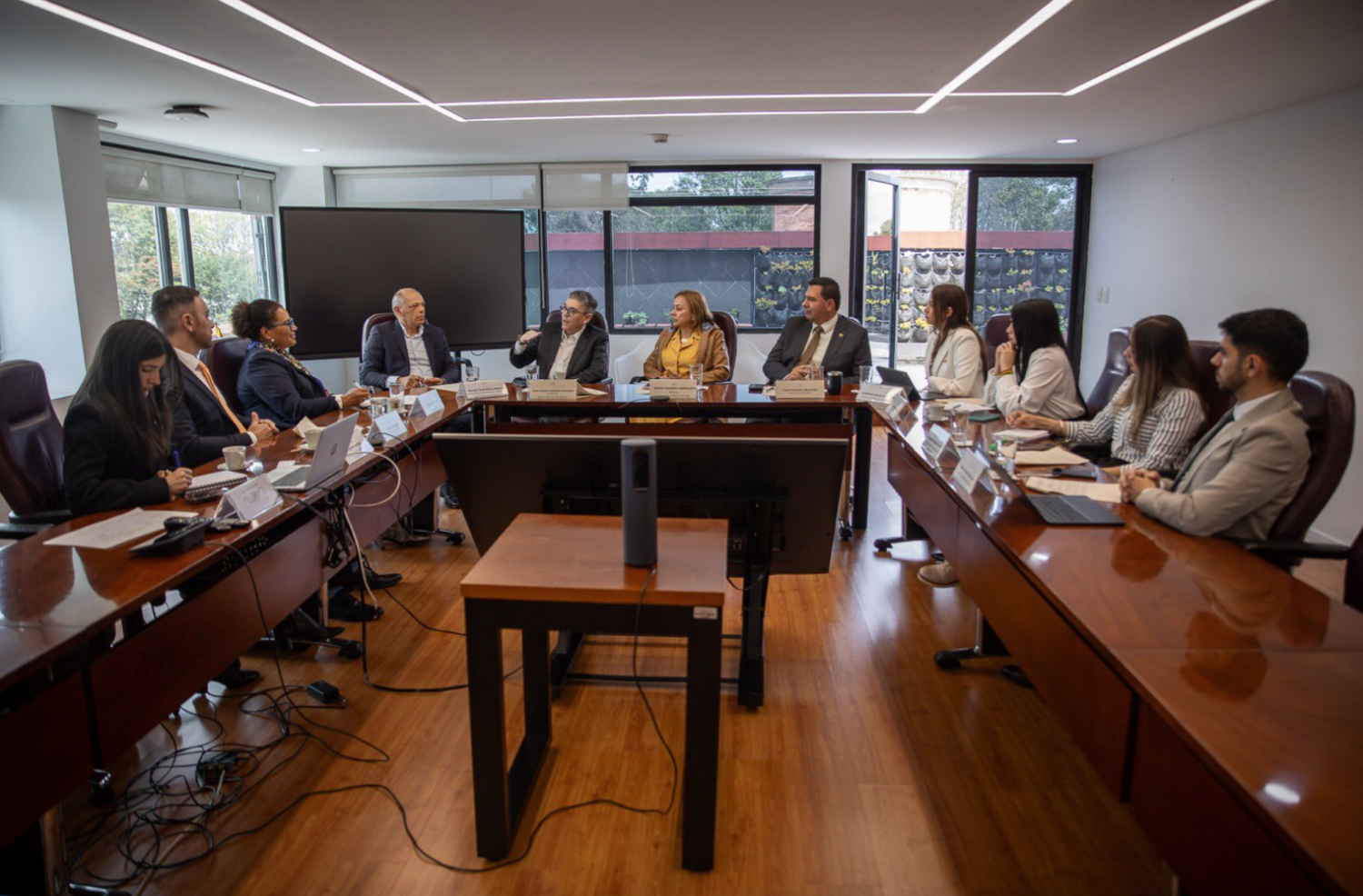
Photo: Canada and Colombia meet to discuss mining and energy on October 19, 2026. Photo from Canadá en Colombia on X.
Peace Brigades International-Canada is attentive to the implications of the mining and energy sector on the safety and security of land and environmental defenders in Colombia. Last month, the Global Witness report Collective Power documented that “Colombia remains the deadliest country for defenders”.

This week, the Embassy of Canada in Colombia based in Bogota posted on their social media accounts: “Canada and Colombia are natural partners in mining and energy. In a meeting with Minister @MinEnergiaCo María Nohemí Arboleda, Ambassador Elizabeth Williams reaffirmed Canada’s commitment to supporting Colombia’s efforts to strengthen the mining-energy sector.”

This PBI-Canada article looks at how the new Colombian government intends to “strengthen the mining-energy sector” and the risks this could pose for land and environmental defenders.
Aguawil to resist fracking
The government of Abelardo de la Espriella assumed office on Friday August 7, 2026.
That day the Associated Press reported: “Colombian President Abelardo de la Espriella on Friday pledged to revive the country’s oil and gas sector, restore state-owned energy company Ecopetrol and strengthen the electricity system, arguing that energy security would be a cornerstone of his administration.”
That article further noted: “The new president also confirmed his government would authorize fracking.”
Earlier this month, Jorge Ardila, a resident of Puerto Wilches, Colombia and member of the Committee for the Defense of Water, Life and Territory (AguaWil), told Mongabay: “Everything that surrounds this municipality would be affected by fracking. We have to resist it — and defend the wealth of our territory, including its cultural heritage, wildlife and natural environment.”
Mongabay explains: “Two research pilot projects, Kalé and Platero, were planned in the Middle Magdalena Valley by Ecopetrol, Colombia’s state-owned oil company, together with U.S. major ExxonMobil. …Under the Petro administration, fracking pilots remained suspended. Colombia, however, has never formally banned fracking.”
Toronto-based Sintana Energy held a 30 per cent non-operating share in the Platero fracking pilot project block.
Ardila cautions: “The issue is that commercial fracking is already legal. Pilot projects are not even necessary anymore.”
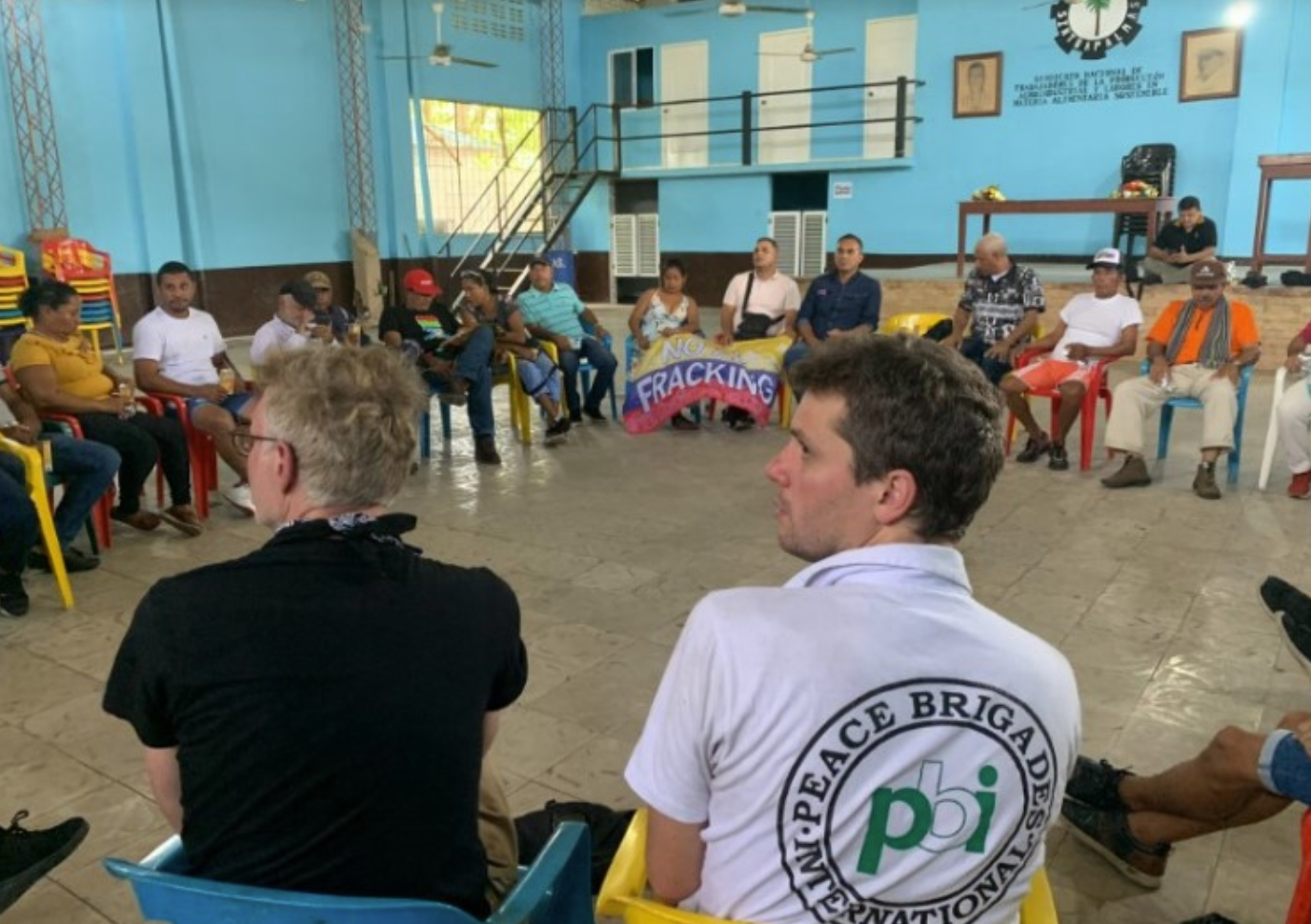
Photo: On June 28, 2022, PBI-Canada and PBI-Colombia met with a Credhos-convened meeting of social leaders in Puerto Wilches and heard their determination to stop fracking and to defend life, water and territory.
Communities oppose the Libero Copper Mocoa mine
On September 3, 2026, Mining.com reported: “Colombia’s new government has repealed 10 resolutions restricting natural resource exploration and extraction, accelerating President Abelardo De La Espriella’s push to revive mining investment and unlock the country’s largely untapped copper potential.”
The article then specifies: “The development pipeline includes AngloGold Ashanti’s (JSE: ANG)(NYSE: AU)(ASX: AGG) Quebradona, Cordoba Minerals’ (TSXV: CDB) Alacrán, Libero Copper’s Mocoa and Royal Road Minerals’ (TSXV: RYR) Guintar-Aleman-Margaritas projects.”
While AngloGold Ashanti is based in Denver, USA and London, UK, Cordoba Minerals and Libero Copper (now named Copper Giant Resources Corp.) are Vancouver-based companies, and Royal Roads Minerals is traded on the Canadian TSX Venture Exchange with its major shareholders including Vancouver-based Rio2 Limited and Canadian businessman Rob McEwen (the founder of Goldcorp).
We remain attentive to the risks faced by community members who oppose the Mocoa copper-molybdenum porphyry project in Putumayo.
Amazon Watch has commented: “Mocoa’s story is also one of persistent resistance. Indigenous, campesino, environmentalist, women’s, and youth organizations have stood firm, even in the face of corporate attempts to co-opt communities through financial incentives.”
Photo: PBI-Colombia at the Amazon Pearl Campesina Reserve Zone on the Putumayo River downstream from Mocoa.

On October 19, 2026, OilPrice.com reported: “Early last month, [Colombia and the United States] agreed to deepen cooperation on critical minerals, including rare earths, tungsten and antimony. …The timing is no coincidence. With depleted U.S. military arsenals and conflicts raging on multiple fronts, particularly in the Middle East, Washington is scrambling to secure supplies of the critical minerals needed to manufacture weapons and replenish dwindling munitions stockpiles. The agreement aims to unlock Colombia’s considerable critical-mineral potential by accelerating mining projects, improving cooperation on identifying viable deposits and mobilizing the investment needed to bring them into production.”
Colombian Vice President José Manuel Restrepo has told Caracol Radio: “We have identified strategic projects that could eventually be taken to Milagro Week in New York. We have identified projects around critical minerals [in the department of Tolima], and they can be very important opportunities to attract investment.”
ColombiaOne has further reported that Vice-President Restrepo and Minister of Trade, Industry and Tourism Mauricio Gomez Amin “will present a portfolio of 176 projects” at Milagro Week and that “the government has identified 37 of those projects as priorities” to pitch to the “nearly 300 investors, businesspeople and representatives of international funds” at this gathering.
The Milagro Week investor showcase will take place on November 16-19. Canadian investors are expected to be in attendance.
Accompaniment
This week, PBI-Southeast Asia commented: “Protection is not just about responding when threats arise. It is also about helping defenders anticipate risks, strengthen their security, care for their wellbeing, and decide for themselves what protection they need.”
This week, PBI-United Kingdom also released a new report that highlights “to truly disrupt the trend of ongoing violence” legislation is needed “to hold companies to account when they fail to prevent, identify or respond to human rights abuses and environmental harms in their operations and global value chains.”
PBI-Canada takes inspiration from these approaches and highlights the intersection between the physical accompaniment and protection of at-risk land and environmental defenders, investment in extractive megaprojects, the export markets those major projects supply, the legislation that can narrow the civic space to oppose powerful agendas (as well as the treaties and mechanisms that can hold transnational corporations accountable and strengthen the protection of human rights defenders), and the global supply chain that provides military goods, equipment and technologies that enable enforcement actions against communities upholding their rights.
We continue to follow this.
Additional reading: The Mobile Anti-Riot Squads (ESMAD), the police unit implicated in multiple killings, returns in Colombia (PBI-Canada, October 18, 2026).

