


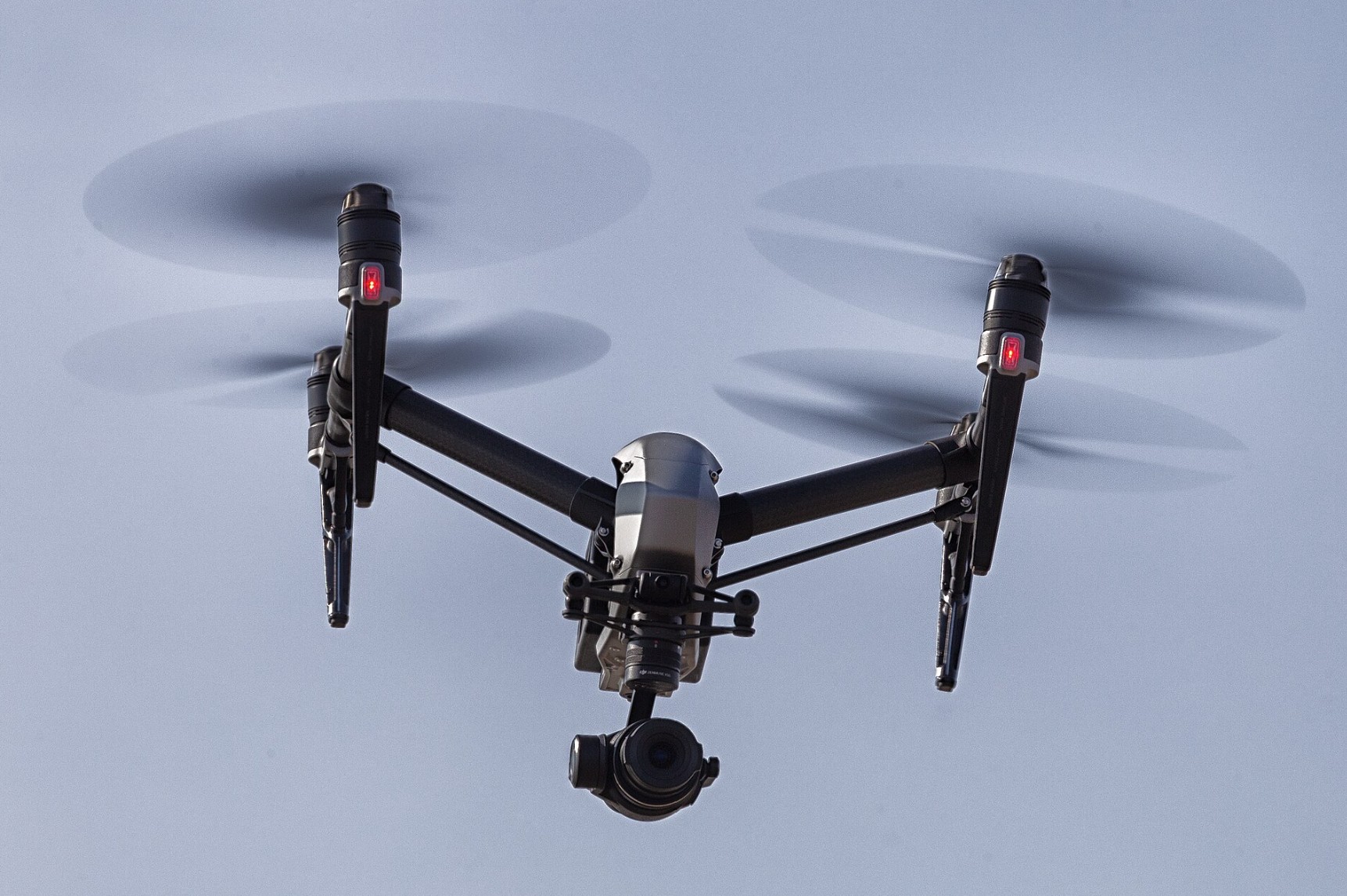
Photo: An Inspire 2 drone that can be purchased for as little as CAD $2,000. Photo by Sven Teschke.
Drones are increasingly putting human rights defenders, journalists and communities at risk in countries where Peace Brigades International is present.
Colombia
The Guardian now reports: “Drone strikes by armed groups have surged across Colombia since 2023, opening a dangerous new front in the country’s decades-long conflict. Hospitals, schools, police stations, electricity grids and homes have all been struck, and injuries now number in the hundreds.”
That article adds: “The sound of their buzzing has become a source of terror in many communities. In Putumayo, Indigenous leaders have said that armed actors used drones not only to launch attacks but to intimidate residents, hovering above villages to assert control, according to Human Rights Watch. On a recent reporting trip for the Guardian in Barrancabermeja, a drone followed and monitored this reporter while an interview about illegal armed groups was under way, forcing it to be cut short.”
Mexico
A week ago, The Guardian also reported: “Hundreds of Indigenous families have been forced to flee their homes in the mountains of central Mexico by intense attacks from a local criminal group, including drone bombings, an Indigenous rights organisation said on Monday [May 11].”
That article also notes: “The use of bomb-carrying drones and other powerful and sophisticated weaponry by Mexico’s drug cartels has become increasingly common. As violence has intensified, many poor and rural communities have been forced to flee their homes and seek safety elsewhere.”
It also highlights: “[Carlos González García from the National Indigenous Congress says] the attacks are aimed largely at the armed community police forces established by villagers to protect themselves from the drug gangs. …He accused the local government of being in cahoots with the criminal groups. There are three joint military, national guard and state police bases in the area, but according to González, they have done nothing to halt the violence in this remote part of Mexico.”
Honduras and Guatemala
Peace Brigades International-Canada has also heard first-hand testimony from community members about surveillance by drones during our visits to Honduras (in October 2024) and in Guatemala (in May 2023).
Palestine
And while PBI is not present in Palestine, we note that the Committee to Protect Journalists (CPJ) documented in February 2026 that: “Drone killings of press members are on the rise: surging from two in 2023 — the first year CPJ documented such killings — to 39 in 2025. …Of the 39 deaths involving drones that CPJ documented in 2025, 28 were by Israel’s military in Gaza.”
What is to be done?
At this point, it is unclear what can be done to deter the use of cheap commercial drones by illegal groups to surveil and attack communities.
There may be a clearer range of options and sanctions when the surveillance and attacks are committed by State actors (the police, the military) or by State actors in collusion with illegal and/or corporate actors.
PBI-Canada is committed to acknowledging/highlighting this as an emerging issue that did not exist when we were founded as an accompaniment organization and to think through credible and effective strategies to contribute to the safety and security needs of human rights defenders, communities and journalists.
At present there does not appear to be an international convention or language (for example in Canada’s “Voices at Risk” guidelines) that addresses this emerging and increasing technology threat against HRDs.


