

The Peace Brigades International-Colombia Project has posted on social media:
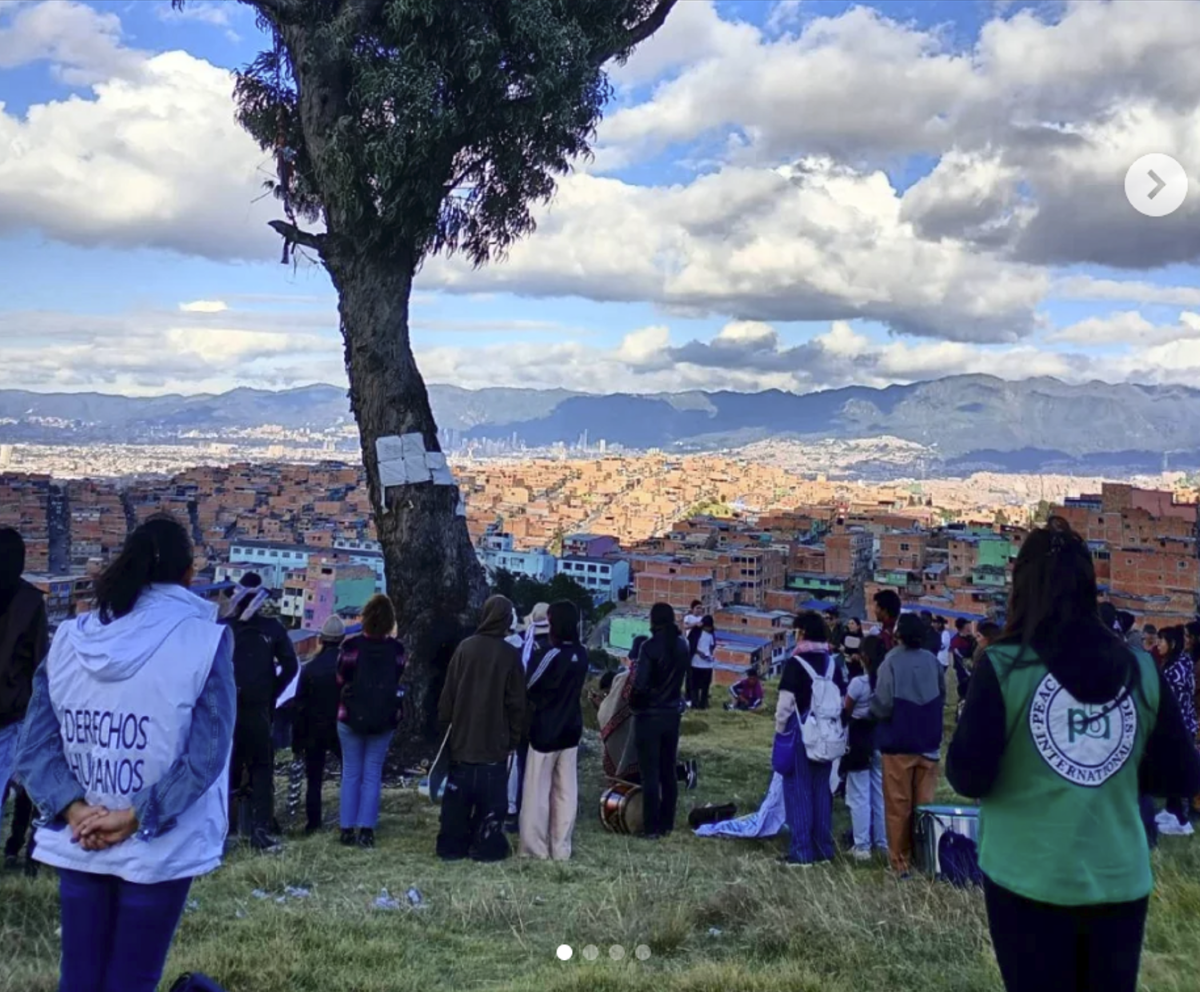
“On Wednesday, February 18, we accompanied the Inter-Church Justice and Peace Commission together with @casaculturalpotosi in a drumming ritual in defense of the Hanged Man’s Tree, a space of memory, spirituality, and resistance for the community in Ciudad Bolívar.
The ritual was held in response to the events of February 11, when the tree was damaged by a fire. This event is part of a territorial dispute between the community and a company that is currently carrying out exploitation activities in the area.
The Hanging Tree was declared a Site of Cultural Interest by Resolution 734 of August 13, 2025, recognizing its historical, symbolic, and cultural value. Therefore, any damage not only impacts the natural environment, but also the collective memory and community processes that are woven around this place.
The day was a collective gathering of drums, words, and ritual, in which the community reaffirmed its commitment to defending the territory, life, and cultural heritage.”


Cero setenta has provided this additional context: “Meters from where Bogotá ends, in the south, a solitary eucalyptus tree stands on the hill, in the middle of houses made by its own hand, and right next to a quarry. The tree is on a disputed piece of land, between urban development interests that clash with the Land Use Plan. But recently, thanks to the struggle of the environmental leaders of the area, the District has been trying to buy the property, amid threats, to make it a border park that benefits the community, made up largely of peasants displaced by the conflict or who are looking for better opportunities in the capital.”
That article also notes: “Between 2015 and 2016, the mobilization in the Potosí neighborhood managed to seal the quarry after a dump truck ran over Yineth Herrera, a resident of the sector. They also denounced attempts to cut down the tree by cutting its roots with heavy machinery. Currently, Decree 555 of 2021 legally shields the territory by classifying it as a protected area.”
It further explains: “While the company Malkenu SAS – owner of the lot – claims rights to develop a project of 75,000 homes, the properties face processes of forfeiture of ownership for alleged links with networks of ‘terreros’ and drug trafficking figures. The possession of the lot was suspended in 2025, this makes it difficult for any individual to carry out physical or commercial interventions on the land. At the same time, the Malkenu Group sued the Mayor’s Office of Bogotá for more than 2 billion pesos because a procedural ruling and the change in the Land Use Plan allegedly reduced the commercial value of the property and blocked the investment project.”
The full article can be read at El último árbol en el borde: la lucha ambiental por el Árbol del ahorcado en Ciudad Bolívar (Cero setenta; February 22, 2026).

