


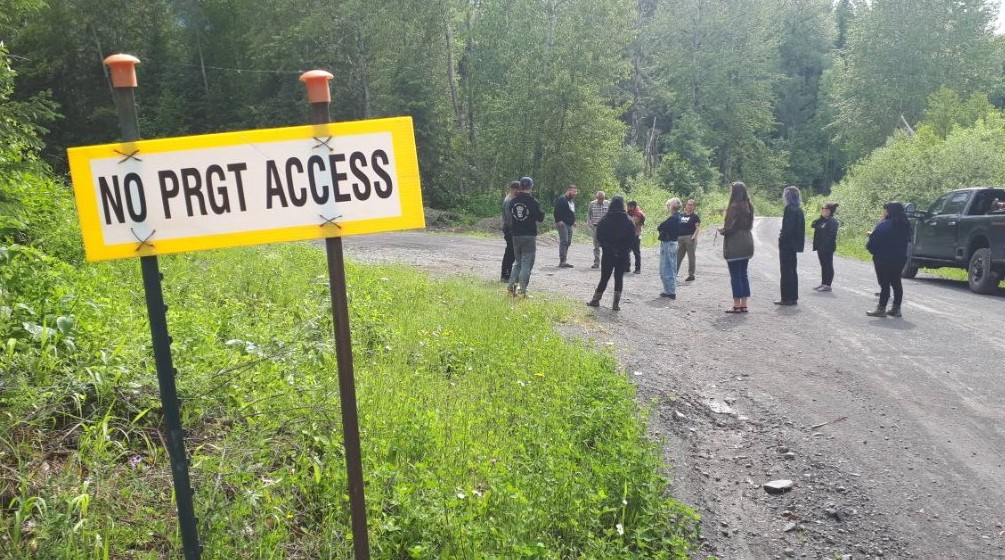
Photo: Peace Brigades International visited Haida, Gitxsan, Gitanyow and Wet’suwet’en territories in June 2025 and learned about the on-the-ground resistance to extractive megaprojects, including the PRGT pipeline.
The Canadian Press now reports: “The British Columbia and federal governments have announced their support for a massive LNG export facility [the Ksi Lisims LNG terminal project] floating in waters off the province’s northwest, despite opposition from some First Nations and environmentalists.”
The fracked gas to be processed at the LNG terminal is to be supplied by the Prince Rupert Gas Transmission (PRGT) pipeline. The British Columbia government approved the construction of this 900-kilometre pipeline in June 2025.
In July 2025, the Western Standard reported: “Prime Minister Mark Carney on Sunday [July 6] said the Prince Rupert Gas Transmission (PRGT) pipeline that would transport natural gas from northeastern BC to a proposed LNG facility on Pearse Island near Prince Rupert, BC, is ‘highly, highly likely’.”
CBC News has previously reported: “The [Prince Rupert Gas Transmission] pipeline was first approved in 2014 under the ownership of Calgary-based TC Energy Corp. [but] was purchased by the Nisga’a Nation and [Texas-based] Western LNG in [March] 2024 under their revised proposal for the Ksi Lisims facility.”
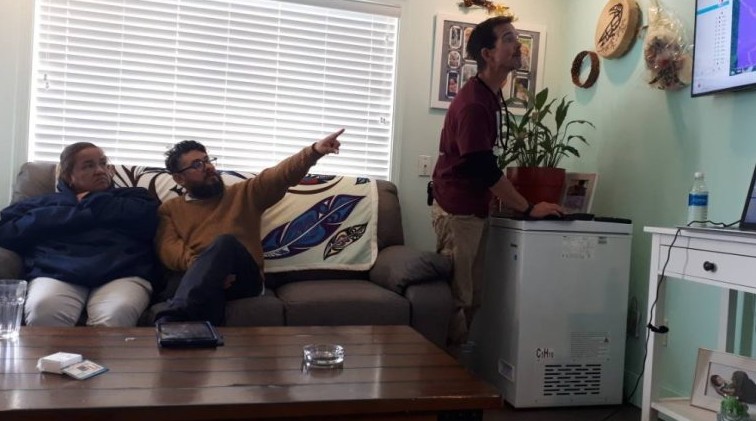
Photo: PBI-Colombia accompanied environmental defender Jani Silva and allies on Gitanyow territory in June 2025 receive briefing on the potential impacts of the PRGT pipeline.
Indigenous opposition
The Canadian Press notes that B.C.‘s Environmental Assessment Office acknowledges that the Lax Kw’alaams, Metlakatla and Kitsumkalum have not granted their consent for the LNG terminal. The Gitxalaa Nation did not provide a notice on consent. And the Haida Nation has stated “they do not consent to Ksi Lisims LNG or the associated vessel traffic that would transit Haida Territorial Waters.”
CBC News has also previously reported: “The construction [of the PRGT pipeline has] also faced protests led by Gitanyow hereditary chiefs, who blockaded a forest service road [beginning August 2024] in an attempt to prevent construction workers from passing through their territory.”
And the Victoria-based community organization Dogwood now highlights that those resisting this megaproject on the ground also include:
- Gitxsan grandmother Maas Gwitkunuxws and the dog sanctuary she’s building on her territory, Wilp Aasosxw.
- Gitxsan hereditary chief Luutkudziiwus, his house group and supporters, and the reoccupation camp they’ve built on their territory of Madii Lii.
- The Lax’yip Firekeepers, a youth group active across Gitxsan territory that is peacefully organizing resistance to the PRGT pipeline on the ground.
Concerns about RCMP violence against land defenders
Tara Marsden, Wilp sustainability director for Gitanyow Hereditary Chiefs, has previously commented: “Our learning is that consent only works when we say yes, if we say no, even if we say no with science behind us, and our knowledge and our laws behind us, then we will be met with force from the C-IRG, from militarized invasion and occupation and intimidation and harassment.”
It is in this context that we also highlight a recent article titled Controversial B.C. RCMP unit to police opposition to fast-tracked resource projects by Shiri Pasternak and Tia Dafnos (The Breach, August 21, 2025).
Pasternak and Dafnos write: “A RCMP [Royal Canadian Mounted Police] unit criticized for violent and unlawful conduct will be involved in enforcing new laws in British Columbia that will fast-track resource and infrastructure projects…”
They explain: “Newly obtained documents show the RCMP’s Community-Industry Resource Group (C-IRG) will work with secretive provincial committees that monitor and respond to opposition to major projects…”
U.S. ownership
The Canadian Press notes: “The project is being developed in partnership between the Nisga’a Nation, Rockies LNG Limited Partnership and Western LNG, although documents show the project’s assets will be constructed, owned and operated by wholly owned subsidiaries of Western LNG, based in Houston, Texas.”
CBC News has also reported: “Environmentalists have cited a number of reasons why they are opposed to the project — including that Western LNG, one of the project’s proponents based in Texas, have financial backing from Blackstone Inc. Blackstone is a major American asset manager whose CEO publicly endorsed U.S. President Donald Trump and contributed to his election campaign.”
And Dogwood notes: “[British Columbia’s Environment Minister Tamara Davidson and Energy Minister Adrian Dix] know this gas export megaproject is fully owned and controlled by a company in Texas. They know it’s Wall Street investors driving this risky and speculative project: [New York City-based] Blackstone and Apollo Global Management. They know that Blackstone’s CEO is one of Donald Trump’s top 10 donors. They know Apollo’s former CEO, Leon Black, paid Jeffrey Epstein $170 million.”
Timeline
Texas-based Western LNG says the LNG terminal will be operational by late 2028 or 2029. That presumably means a 3-4 year window for the construction of both the Ksi Lisims LNG terminal and the PRGT pipeline.
This approval comes just a few weeks before Indigenous land defenders will be sentenced in a B.C. court on October 15-17.
It also comes in the lead-up to the United Nations COP30 climate summit that will take place from November 10 to 21 in Brazil. Last week, Prime Minister Carney declined to endorse Canada’s greenhouse gas targets under the Paris Agreement stating his government is focused on “results, not objectives”.
We continue to follow this.

