The Barrancabermeja, Colombia-based Regional Corporation for the Defence of Human Rights (Credhos) has posted on social media:
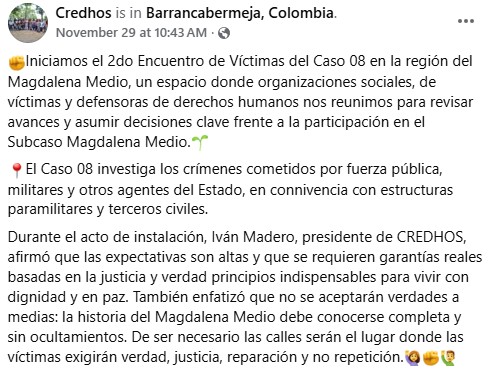
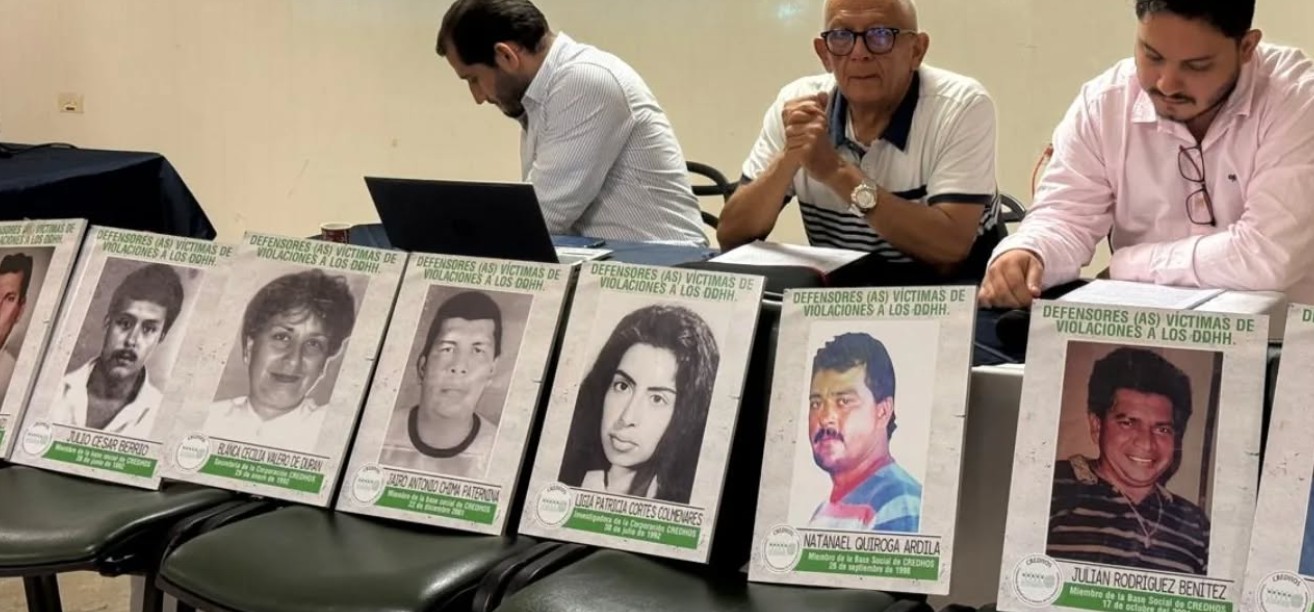
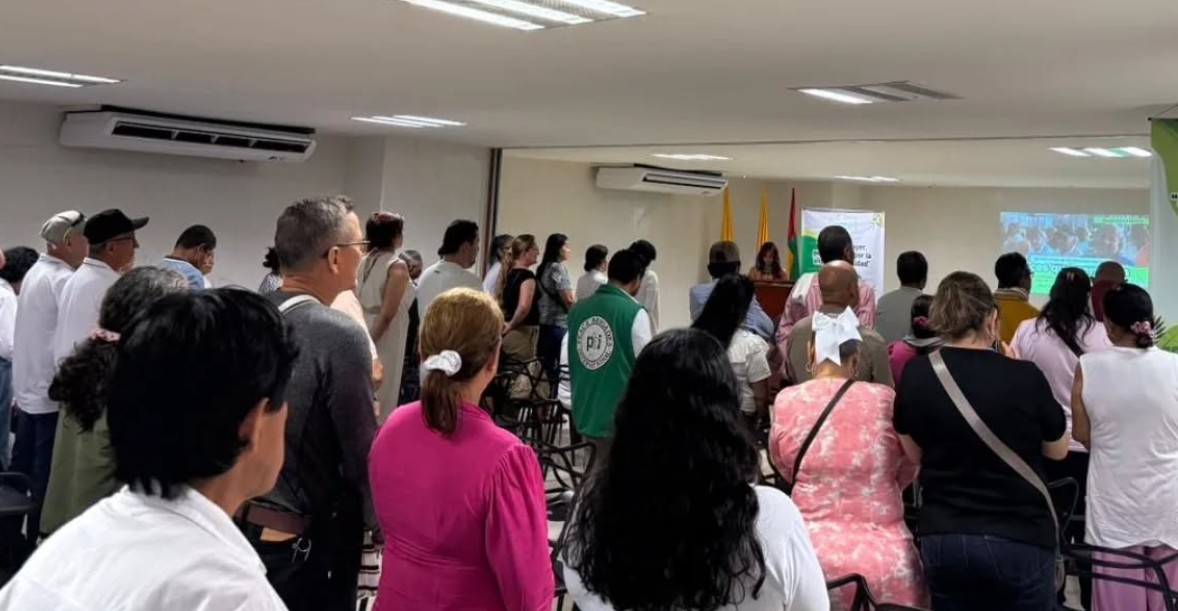
“We started the 2nd Meeting of Victims of Case 08 in the region of Medio Magdalena, a space where social organizations, victims and human rights defenders meet to review progress and make key decisions against participation in the Medio Magdalene Subcase.
Case 08 investigates crimes committed by public force, military and other state agents, in connivance with paramilitary and third civilian structures.
During the installation act, Iván Madero, president of CREDHOS, affirmed that expectations are high and that real guarantees based on justice and truth are required essential principles to live with dignity and peace. He also emphasized that half-truths will not be accepted: the story of the Middle Magdalena must be known complete and without conceals. If necessary the streets will be the place where victims will demand truth, justice, repair and not repetition.”
Case O8
The Special Jurisdiction for Peace (JEP) is a tribunal that is responsible for administrating justice for crimes committed before December 1, 2016, in the context of the internal armed conflict that began in May 1964.
The José Alvear Restrepo Lawyers’ Collective (CAJAR) has noted: “In this macro-case, crimes committed by members of the security forces and other agents of the State, in collusion with paramilitary groups or civilian third parties in the context of the conflict, are being investigated.”
CAJAR further specifies: “Figures from the JEP indicate that in this macro-case there were 15,710 victims of crimes attributed to members of the security forces, 56,502 to paramilitaries and 280 to other agents of the State. The crimes being investigated in this case are: massacres, homicides, sexual violence, illegal detentions, torture, forced disappearances, dispossession and forced displacement.”
Attacks against CREDHOS
Manuel Camilo Ayala Sandoval from CREDHOS says: “Credhos has functioned as a coordination of social movements and articulation of unions, peasant organizations, women’s organizations in defense, promotion, protection of human rights and demand for the application and respect of International Humanitarian Law.”
PBI-Colombia: “Since 1987, when CREDHOS began its work to defend and protect human rights in the city of Barrancabermeja, the organization has documented, in detail, 16 cases of extrajudicial executions against its members, perpetrated by paramilitary groups with the connivance of Colombian state agents, in addition to 10 cases of forced displacement, four assassination attempts, and arbitrary arrests. [Its report to the JEP] details incidents affecting over 80 members between 1987 and 2016”
Violence against union activists
In February 2017, Julie Wetterslev, a Researcher in the Department of Law at the European University Institute in Florence, Italy, wrote: “more than 3,000 Colombian labour unionists have been killed in the past 40 years. And the murders have generally not been investigated, much less sanctioned, because shifting governments have either implied or directly claimed that the worker’s unions are connected to the guerrilla.”
Her article further cites: “As the British NGO Justice for Colombia notes in the article Focus: Trade Union Rights in Colombia, Justice for Colombia (JFC) in International Union Rights Vol. 23, No. 1, Latin America (2016), pp. 16-17, 28: ‘The grim toll of Colombia’s war on trade unions amounts to at least 13,713 violations of the right to life and liberty since 1977 – 3062 assassinations, 233 kidnappings, 342 violent attacks, 6572 violent threats, 1890 forced displacements and 725 arbitrary detentions. Between 2000 and 2010, Colombia accounted for 63% of trade unionists murdered globally (…) Colombian organisations regularly point out that there often appears to be more time dedicated to investigating false accusations than to bringing those responsible for carrying out the murders to justice’.”
Accompaniment
Peace Brigades International has accompanied CREDHOS since 1994.
Related content: Colombia: the most dangerous country to be a trade unionist (BBC, May 1, 2013).